How Long Does Ant Bait Take to Work? A Realistic Timeline
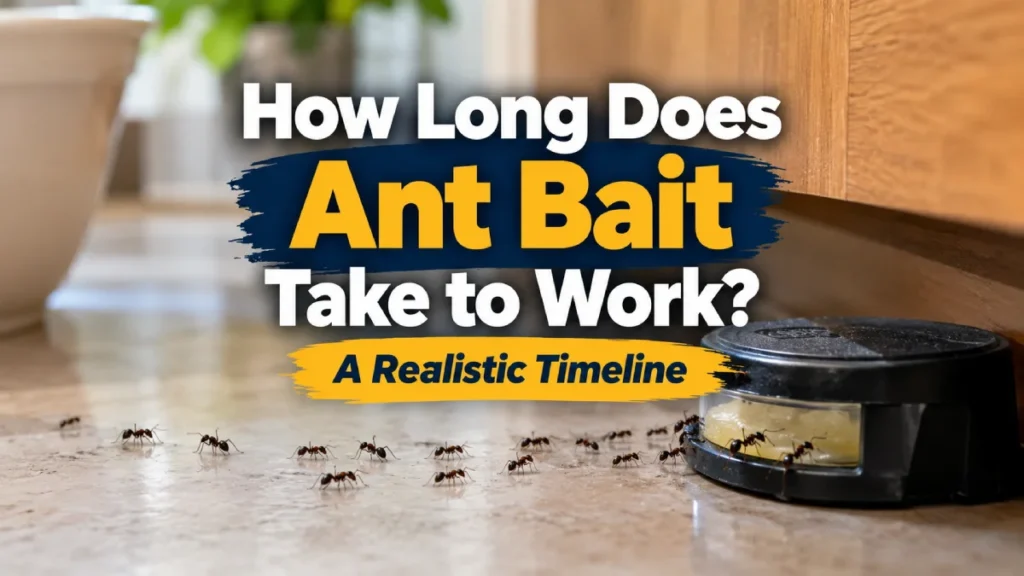
Ant bait rarely produces the clean overnight result people expect. You may see heavier traffic first, fewer ants several days later, and occasional workers after the main trail fades. That does not automatically mean the product failed.
The useful measure is a downward trend, not a fixed deadline. Species, colony size, bait freshness, food preference, and the number of nests can change the timeline. Here is how to judge each stage without disrupting a treatment that may still be working.
What the First 24 Hours Can Tell You
The first day answers one question: did foraging ants find and accept the bait? A steady line between the station and a crack is usually more useful than an immediate drop in numbers.
Do not spray, crush, or wipe away ants actively feeding. Slow-acting bait depends on workers returning toward the nest and sharing food within the colony. Fast death beside the station is not necessarily a sign of better control.
If no ant approaches, move the station closer to the established trail as the label permits. Check that it is accessible, fresh, and not contaminated by cleaner or insecticide.
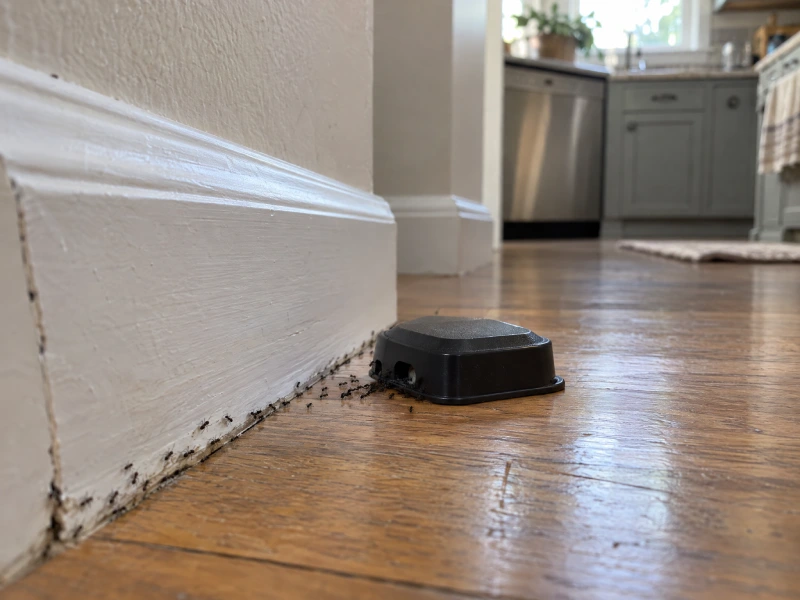
Days 2–3 May Look Busier
Workers can recruit nestmates after finding a useful food source. The station may attract a much larger group than the few ants first noticed.
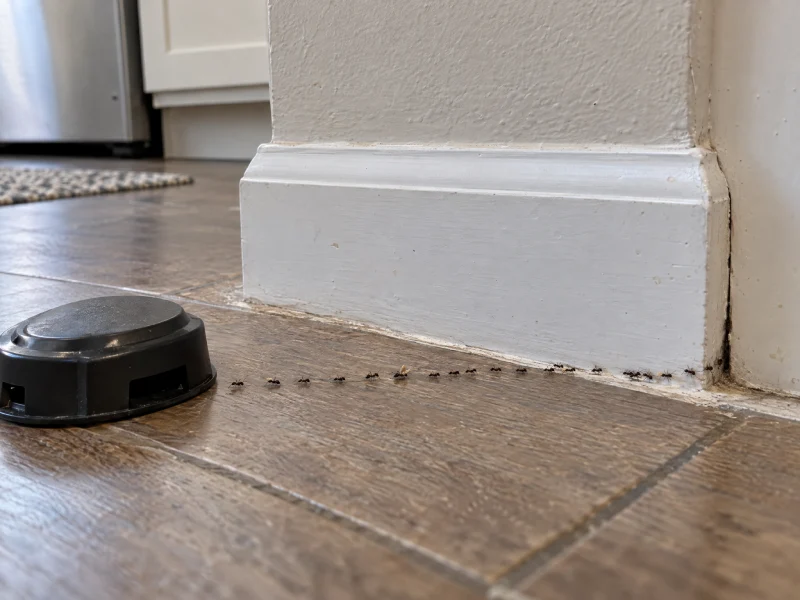
That increase should be concentrated at the bait and along a defined route. Ants spreading randomly across new rooms, emerging from several walls, or ignoring the station need a broader inspection.
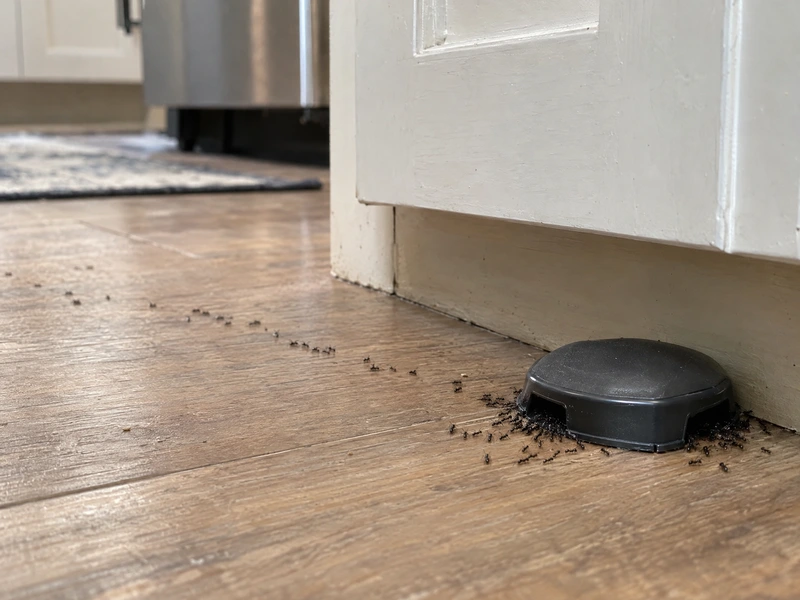
Our guide to ant bait attracting more ants separates normal recruitment from warning signs.
Days 4–10 Should Show a Direction
Many effective setups begin showing fewer foragers during this period, but the change may be uneven. Activity can drop one day and rise with weather, temperature, or a newly available food source the next.
Compare the same location at the same time each day. A quick photo and a simple light, moderate, or heavy rating are more reliable than memory.
| Time After Placement | Useful Observation | Response |
|---|---|---|
| First few hours | Ants find and feed on bait. | Leave the route undisturbed. |
| Day 1–3 | Recruitment may increase traffic. | Keep bait supplied; do not spray. |
| Day 4–10 | Overall activity should begin trending down in some infestations. | Continue monitoring and remove competing food. |
| Week 2 onward | Stragglers may remain; large colonies can take longer. | Refresh bait as labeled and inspect other routes. |
| No progress after correct use | Wrong bait, dry bait, multiple colonies, or a hidden route may be involved. | Reassess identification and placement. |
This timeline is an observation guide, not a guarantee. The product label and species-specific advice take priority.
Full Colony Control Can Take Weeks
Visible workers represent only part of a colony. Queens, larvae, and nest bound workers remain hidden. A bait must move through that system before the population collapses.
Large colonies, multiple connected nests, and ants living in wall voids can extend the process. More than one colony may also be entering the same kitchen or bathroom.
Do not keep increasing pesticide quantity to force a faster result. Use only the amount, locations, and replacement schedule stated on the label.
Five Reasons the Timeline Stalls
1. The Ants Prefer Another Food
Ant needs can shift between sweet, protein, and fat sources. A worker that investigates but does not feed may not accept that formulation.
2. Competing Food Is Easier to Reach
Grease, syrup film, pet food, trash, fruit, and crumbs can compete with bait. Clean the surrounding area while leaving the short active bait route undisturbed.
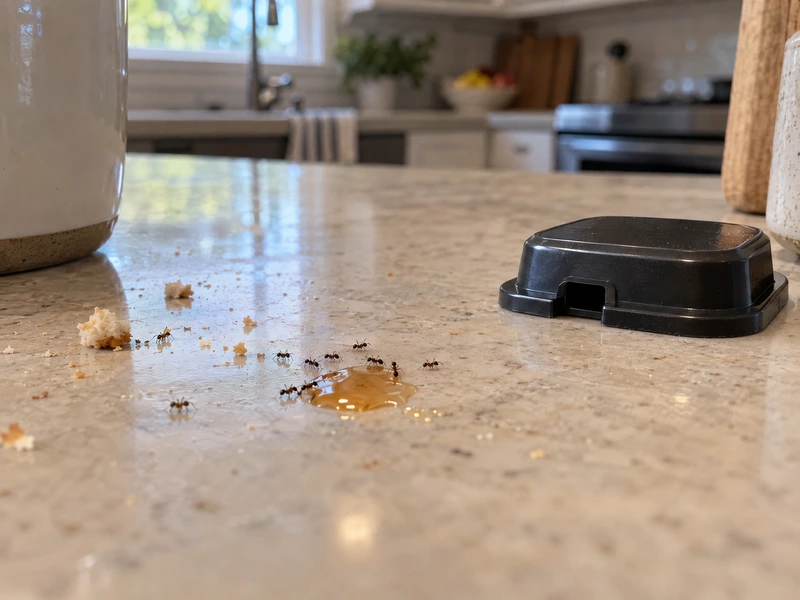
3. The Bait Dried or Ran Out
Heavy feeding can empty a small station. Liquid or gel can also dry, thicken, collect dust, or become unattractive. Check and replace it according to the label.
4. Spray Contaminated the Route
Repellent insecticide or strong cleaner near the station can stop feeding. Do not combine spray and bait unless the labels and a species-specific plan support it.
5. More Than One Route Is Active
The treated trail may decline while ants continue from another nest or opening. Map each route instead of moving one station back and forth.
Before calling the bait a failure
- Confirm that the insects are ants.
- Check whether they actually consumed the bait.
- Confirm the station is fresh and still supplied.
- Remove competing food and standing water.
- Look for a second trail or room.
- Verify that no spray was used near the route.
Do Not Change Products Every Day
Constantly moving stations and replacing products makes it difficult to tell what the colony accepted. It may also interrupt a productive feeding route.
Give an accepted bait time to work, keep it fresh, and record the trend. Change course when ants consistently refuse it, the label’s expected period has passed without improvement, or evidence points to a different ant or nest location.
If you change formulations, do so deliberately. Place the newly selected labeled bait where ants are already active and prevent children, pets, food, and water from contacting it.
Cleaning Helps—If You Do It in the Right Place
Clean food residue across the room, rinse recyclables, close trash, and store pantry goods securely. Dry sinks and repair leaks that give ants dependable water.
Avoid repeatedly cleaning the few inches between an accepted station and the entry crack while ants are feeding. After the trail stops, wash the old route with soapy water to remove scent cues.
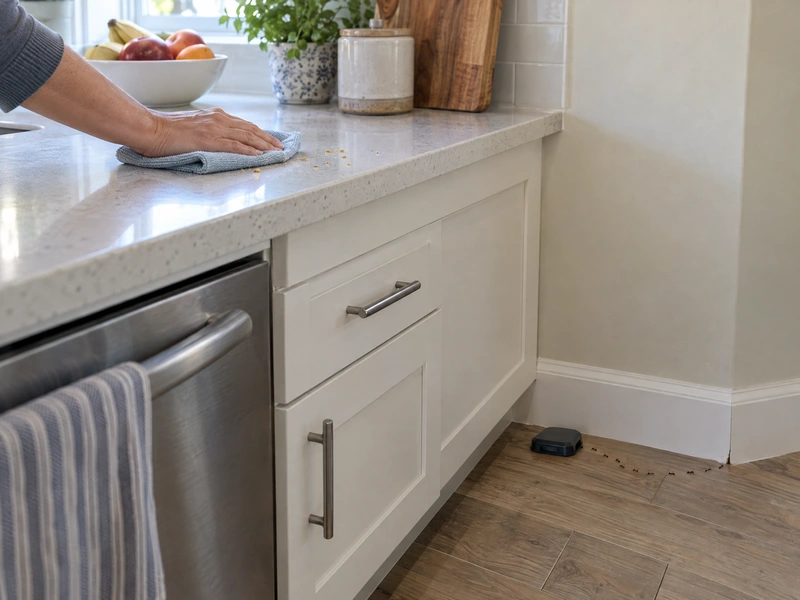
For repeated infestations, why ants keep coming back after cleaning explains why sanitation alone cannot remove a colony or close an entry path.
Seal the Entry After the Baiting Stage
Mark the point where ants disappear, but do not automatically seal an active route while they are carrying bait. Early closure can divert traffic to another gap.
When feeding has stopped and the colony appears controlled, clean the trail and repair the confirmed opening. Select the repair for the structure: compatible caulk for stationary joints, weather stripping for doors, screen repair for mesh, and proper service around utilities.
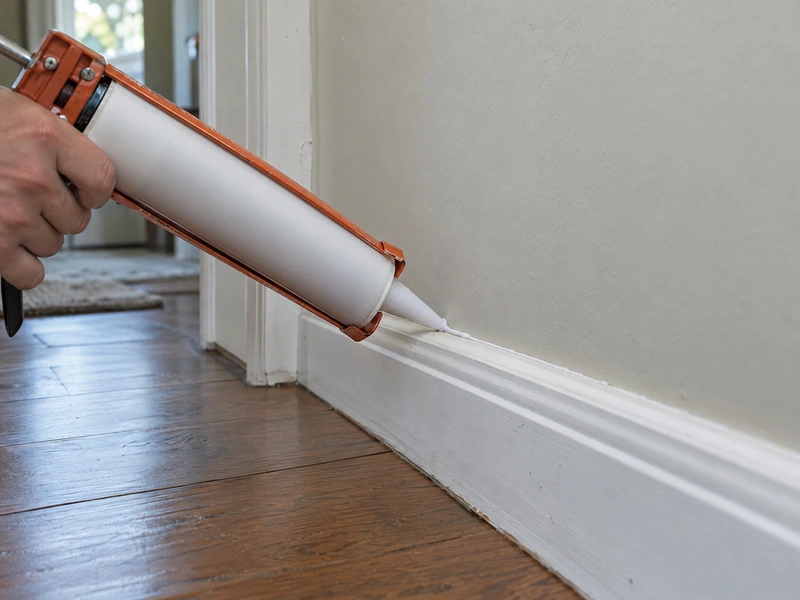
Never block intentional drainage, ventilation, or service access. The detailed inspection sequence in how to find where ants enter your house helps confirm the opening first.
When Bait Should Not Be a Waiting Game
Seek help promptly if the ants sting, a household member has a serious allergy, or activity is inside electrical equipment. Winged ants emerging indoors, large ants associated with damp wood, and coarse debris from framing also need correct identification.
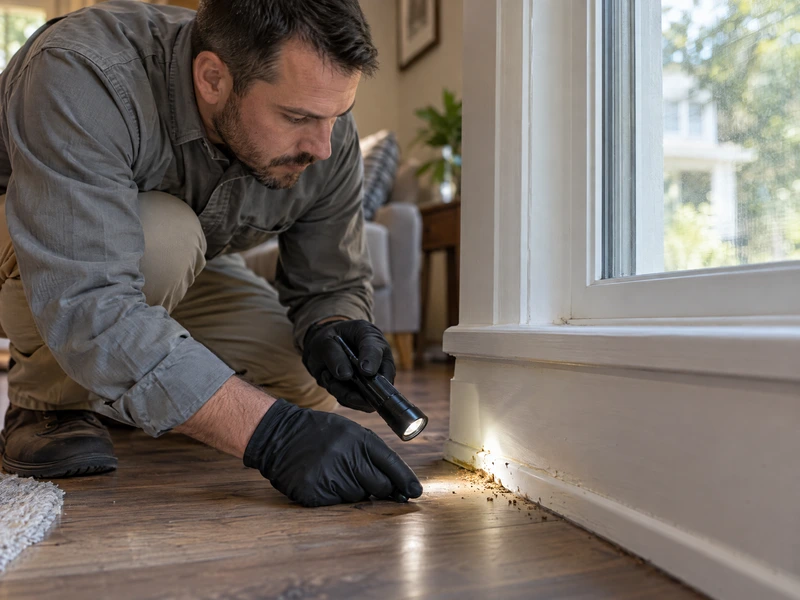
Call a pest professional when several correctly maintained bait placements have not reduced activity, the nest is inaccessible, or multiple apartments share the problem. Ask for identification, observed evidence, the treatment goal, and a clear follow-up interval.
In a rental or multi-unit building, report leaks and shared-wall activity to management. One resident cannot seal or treat a building-wide utility route alone.
Judge the Trend, Not a Single Day
Ant bait works slowly by design. A busier first stage can be followed by a gradual decline, and a large colony may need weeks rather than days.
Keep the accepted bait supplied, remove other resources, avoid spray interference, and record activity consistently. If the trend never turns downward, reassess the ant, bait, route, and number of colonies instead of simply waiting longer.