How to Find Where Ants Are Entering Your House
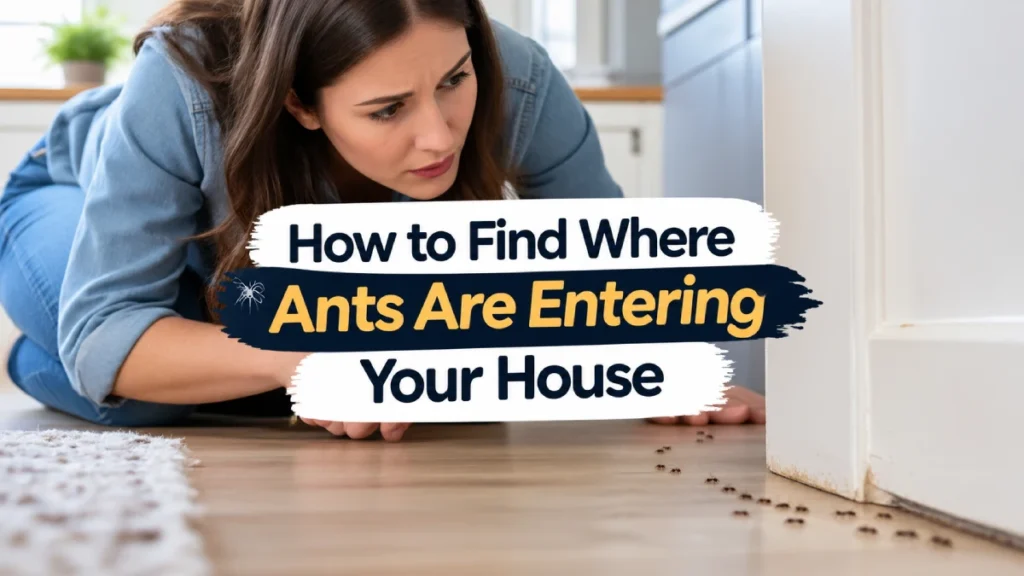
Killing the ants on your counter may clear the room for an hour, yet the next line often appears from another edge. The missing step is finding the route that connects the food or moisture indoors to a nest or trail outside.
You do not need to tear open a wall. A flashlight, painter’s tape, a little patience, and a planned indoor-to-outdoor inspection can usually narrow the route. The goal is to confirm an entry point before you seal it, not caulk every crack you can see.
Trace the route in 5 steps
Watch the Trail Before You Clean It
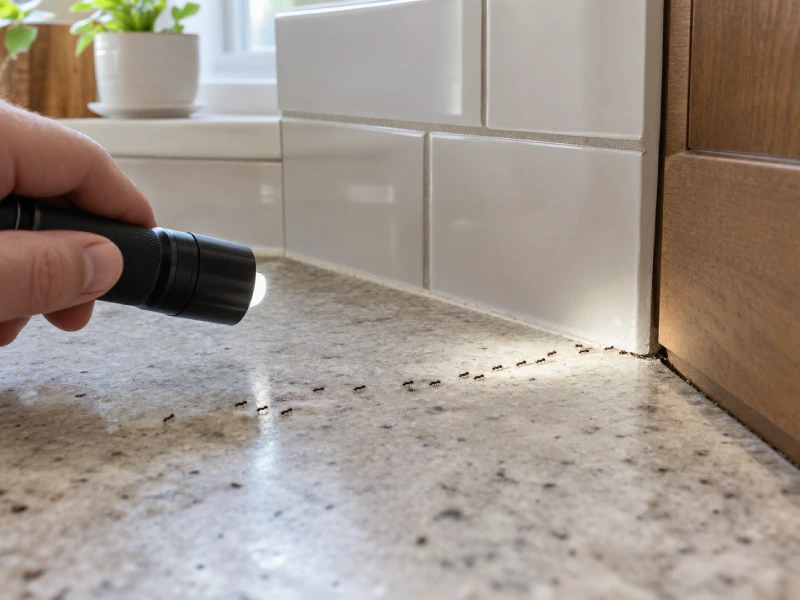
Choose a time when ants are active and the room is quiet. Use a flashlight held low and nearly parallel to the surface. Side lighting makes tiny moving bodies easier to see along pale counters, grout lines, and baseboards.
Watch individual ants in both directions. Those approaching a spill may spread out, while ants leaving it often merge into a clearer trail. Follow that line slowly until it disappears beneath trim, into a cabinet joint, around a pipe, or behind an appliance.
Place a small piece of painter’s tape near the point and write the time on it. Do not cover the opening. If activity changes during the day, repeat the observation in the evening or early morning.
Map the Route From Food Back to the Wall
Begin at the busiest indoor spot rather than at the exterior foundation. A room-by-room route map prevents random treatment and helps separate one established trail from scattered scouts.
| Starting area | Follow ants toward | Hidden route to inspect |
|---|---|---|
| Kitchen counter | Backsplash or cabinet edge | Gaps behind trim, outlets, and counter seams |
| Sink cabinet | Supply and drain pipes | Openings where plumbing enters the wall or floor |
| Dishwasher | Toe-kick or adjacent cabinet | Warm, damp voids and utility penetrations |
| Bathroom vanity | Pipe openings and baseboard | Unsealed escutcheon plates, damp trim, wall voids |
| Window | Sill corners and casing | Screen gaps, weep-area defects, cracked exterior sealant |
| Door | Threshold and frame | Worn sweep, weather stripping, jamb gaps |
| Upper wall or ceiling | Cable, vent, or crown molding | Exterior wires, branches, fascia, or roof-edge access |
Do not remove outlet covers or reach into electrical boxes during a casual inspection. Observe the outside edge only. If ants appear to enter an energized fixture or appliance, stop and use a qualified professional.
Check Pipes, Wires, and Trim First
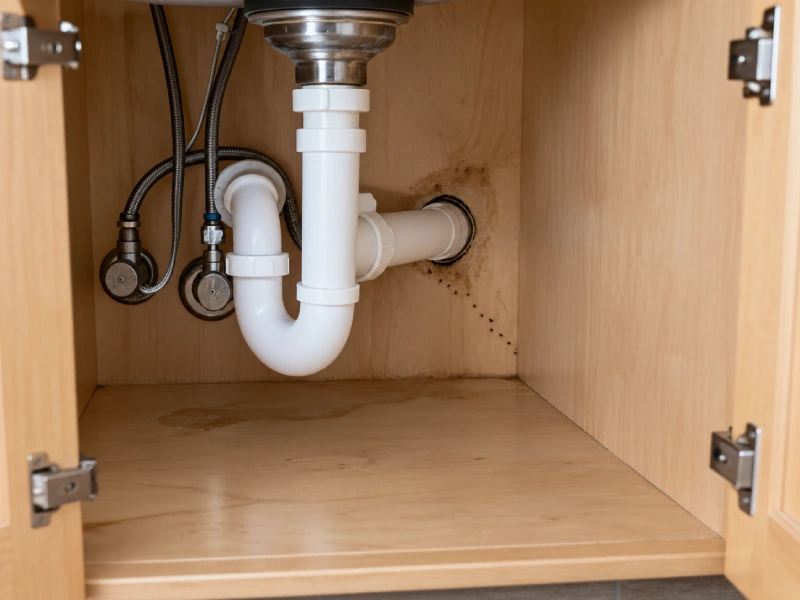
Ants often follow straight structural edges. Baseboards, cabinet seams, plumbing lines, and cables give them protected paths through a building. The opening you see indoors may be several feet from the exterior entrance.
Look beneath sinks with the cabinet emptied. Check the gaps around water lines, drainpipes, and the back panel. Dampness, staining, swollen particleboard, or a musty odor suggests a leak that needs repair in addition to pest control.
Inspect window and door trim for separated caulk, warped weather stripping, and corners where materials meet. Ants need only a very small gap, so a route may be visible even when the opening is not obvious.
Match the Indoor Mark to the Exterior
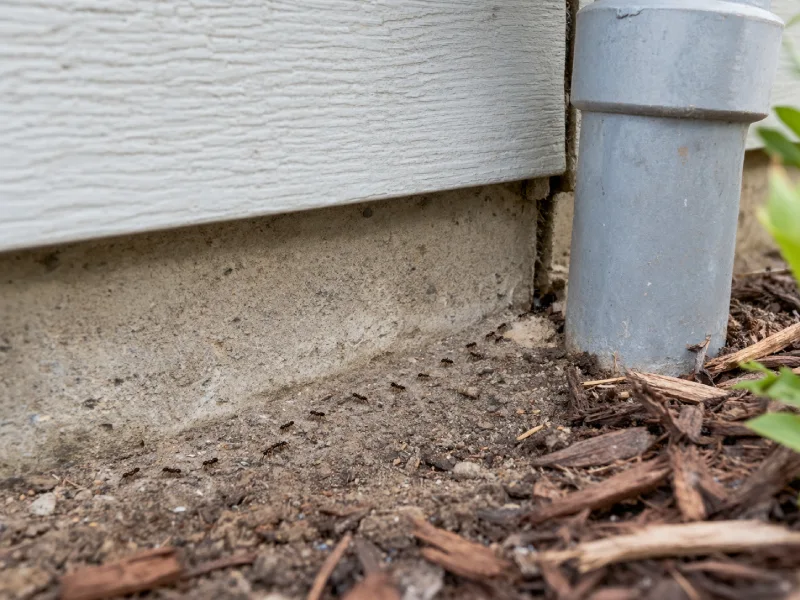
Once you have marked the indoor disappearance point, estimate its height and position outside. Start at the same section of wall and widen the search gradually.
Check foundation cracks, siding joints, utility penetrations, hose bibs, window frames, door thresholds, and the points where cables enter. Look beneath the lower edge of siding without pulling it apart. On upper floors, inspect from the ground or a safely positioned window; do not climb an unsafe ladder to chase a trail.
Plants can bridge the gap between a colony and the building. Note branches touching the roof or siding, vines at windows, mulch piled against the wall, and irrigation that keeps the foundation edge damp. Ants may also climb a utility line and enter far above the indoor sighting.
Five-minute exterior scan
- Follow visible trails along the foundation in both directions.
- Check beneath window corners and door thresholds.
- Inspect pipe, cable, and air-conditioning penetrations.
- Look for vegetation touching the structure.
- Note wet mulch, leaking faucets, condensate, and clogged drainage.
Scattered Ants May Be Scouts, Not a Trail
A few ants wandering in different directions can be scouts searching for food, water, or a nesting site. They may not lead directly home while you watch.
Clean food residue and standing water, then observe where new ants first appear. Put small monitoring cards or pieces of painter’s tape near suspected edges and record sightings. Do not leave food as an attractant in a bedroom or other inappropriate place.
If ants repeatedly emerge from several separated cracks, they may be traveling inside a wall void or using more than one route. Photograph a close specimen for identification. Species matters because nesting behavior and the best control method vary.
Use Bait to Reveal a Hidden Route Carefully
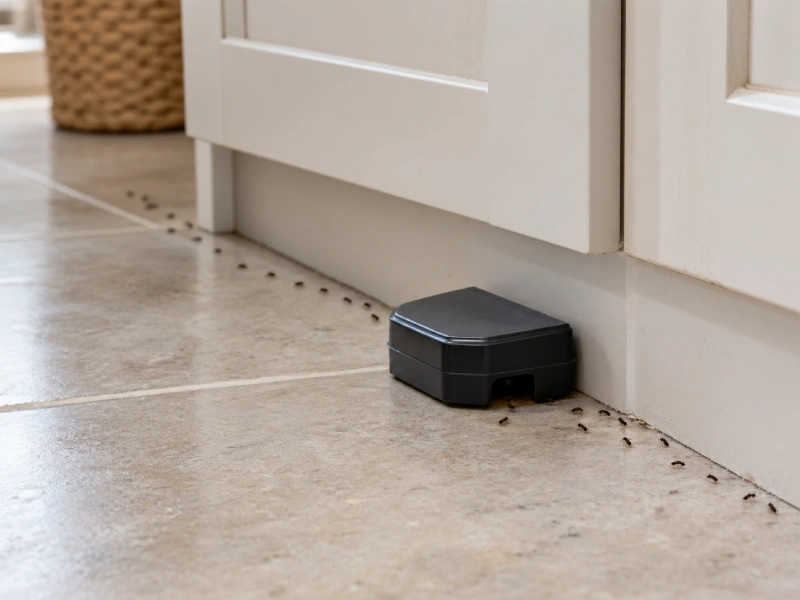
When a trail breaks at a cabinet or wall edge, a properly labeled enclosed bait station can make the return path easier to observe. Place it beside existing activity, not across the room.
Workers may recruit more ants after finding bait. That temporary increase can clarify the route. Our guide to ant bait attracting more ants explains the normal pattern and warning signs.
Do not spray ants or apply strong cleaner beside the bait. Repellent residue can disrupt the trail, and killing foragers prevents them from carrying a slow-acting bait back. Keep every pesticide and station away from children, pets, food, and food-contact surfaces, following its label exactly.
Confirm the Gap Before Sealing It
Seeing one ant near a crack is weak evidence. A confirmed entry point has repeated two-way traffic, activity at more than one observation time, or a matching exterior trail.
Mark confirmed gaps separately from possible ones. This keeps the repair focused and avoids trapping moisture behind inappropriate sealant. It also shows whether one repair worked when you monitor afterward.
If ants are actively taking bait through the opening, allow the colony-control step to work before sealing that route. Closing it too early may redirect workers to a harder-to-find gap. When activity has stopped, clean the old trail with soapy water and make the repair.
Choose the Repair for the Opening
Caulk is useful for many narrow, stationary joints around trim and utility penetrations. It is not the correct fix for every gap.
Use a door sweep or weather stripping at moving door parts. Repair damaged screens instead of smearing sealant over the mesh. Replace failed exterior joint sealant with a product compatible with both materials and local exposure. Large openings, damaged siding, decayed wood, and active water leaks need proper building repair.
Do not block window drainage paths, masonry weep openings, appliance vents, plumbing relief points, or intentional roof ventilation. If you cannot identify why an opening exists, get building-specific advice before closing it.
Track Whether the Repair Worked
Remove your temporary tape only after recording the location. Clean the former trail and check the area daily for at least several days, especially at the time activity was previously highest.
New ants at the same point suggest an incomplete seal, a nearby gap, or continued nesting inside the structure. Ants appearing elsewhere may indicate a redirected route rather than a new colony. Add the new point to your map instead of coating the room with spray.
Continued returns can also mean an attractant remains. The article on why ants keep coming back after cleaning covers hidden moisture, competing food, and colony-level causes.
Know When the Route Needs Professional Inspection
Call for help when ants emerge from electrical equipment, inaccessible roof areas, multiple wall voids, or a location with suspected structural moisture damage. Winged ants emerging indoors also deserve identification because they can indicate an indoor nest.
Large ants, coarse debris pushed from wood, or repeated nighttime activity near damp framing may point to carpenter ants. They excavate wood rather than eat it, but an indoor nest can be associated with moisture-damaged material that needs repair.
A useful inspection should identify the ant when possible, trace interior and exterior activity, explain likely nest sites, and separate pest treatment from repairs. Ask the technician to show you the evidence behind the proposed work.
Find First, Seal Second
The best entry-point search follows a simple order: observe the active trail, mark where it disappears, inspect the matching exterior area, control the colony when needed, and seal the confirmed route after activity stops.
That order prevents wasted caulk and reduces the chance of pushing ants to a new path. More importantly, it helps you fix the moisture, vegetation, weather stripping, or building gap that made the route useful in the first place.