Tiny Ants Around the Kitchen Sink? Causes and Fixes
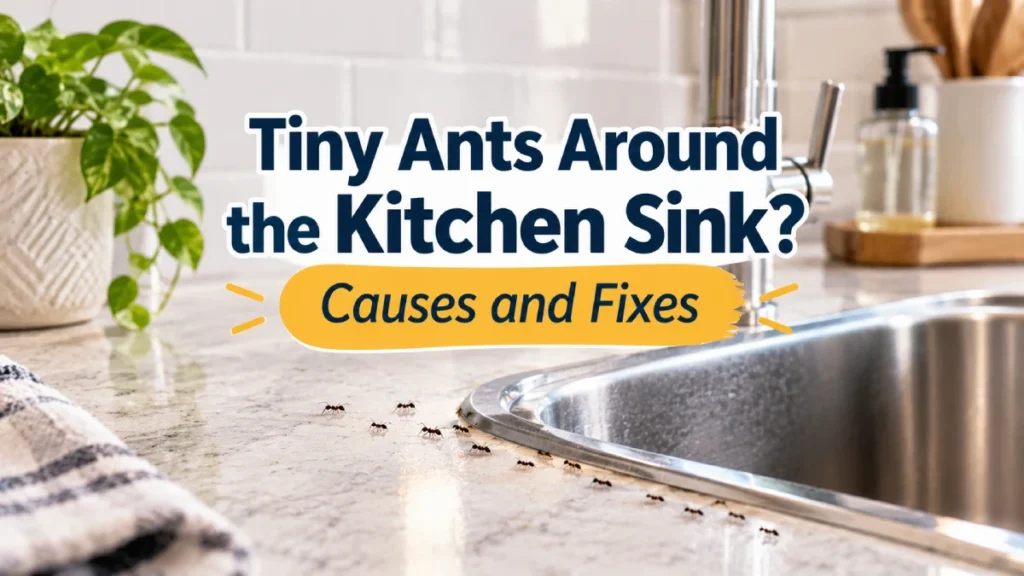
Tiny ants around a kitchen sink do not prove that your kitchen is dirty. A nearly invisible splash beneath the faucet, moisture inside the cabinet, or residue along a backsplash seam can keep workers returning even when the counter looks spotless.
The fastest solution starts with separating three issues: what the ants want, where they enter, and whether the insects are actually ants. This guide helps you check each one without spraying blindly around dishes and food-preparation surfaces.
Table of Contents
- Confirm That the Tiny Insects Are Ants
- Use Their Location to Narrow the Cause
- Make the Sink Dry Enough to Test the Water Theory
- Remove Food Residue You Cannot Easily See
- Trace the Return Route, Not Just the Busy Spot
- Choose Bait Placement That Keeps Food Areas Safe
- Do Not Pour Pesticide Down the Drain
- Repair Gaps After Activity Has Stopped
- Know When the Sink Is Only the Symptom
- Fix the Resource and the Route
Confirm That the Tiny Insects Are Ants
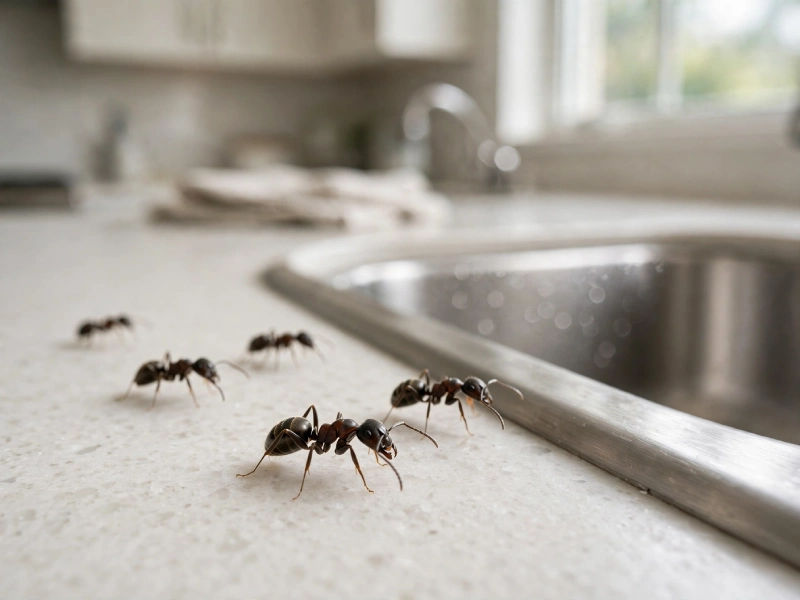
Size and color alone are unreliable. Several tiny household insects appear around damp sinks, and an incorrect identification can send the treatment in the wrong direction.
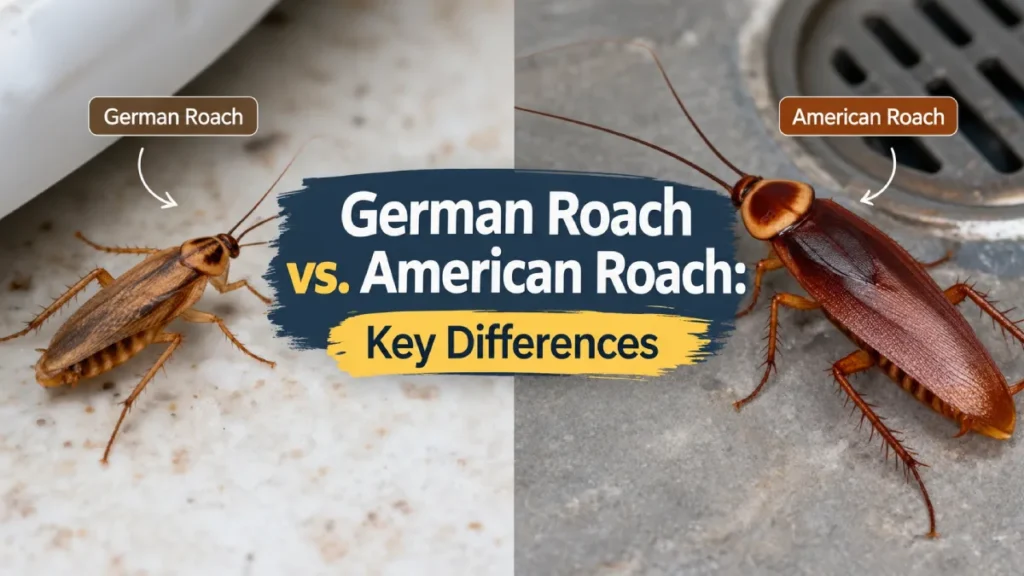
Ants have a narrow waist, bent antennae, and six legs. Viewed closely, workers often travel in an organized route or stop to touch one another. Springtails may jump when disturbed, while small flies have wings and may be linked to wet organic buildup.
Capture one on clear tape or in a small sealed container without crushing it. A sharp close-up beside a ruler is more useful than calling every tiny dark species a “sugar ant.” If the insect cannot be identified from a photo, a pest professional or local diagnostic service can help.
Use Their Location to Narrow the Cause
The place with the most ants is not always the nest. It is usually the resource or the point where a hidden route becomes visible.
| Where ants gather | Check first | Likely attraction or route |
|---|---|---|
| Faucet base | Failed seal, standing droplets, mineral buildup | Reliable water source |
| Sink rim or backsplash | Open seam, damp caulk, food film | Water plus a protected edge |
| Under-sink cabinet | Pipe gaps, leak stains, trash, stored cleaners | Plumbing route, moisture, or residue |
| Dishwasher side | Toe-kick, hose area, warm cabinet void | Moisture, grease, hidden access |
| Window above sink | Casing corners, screen, plants outside | Exterior trail into the room |
| One wall outlet | Outer plate edge only | Travel inside the wall; do not open energized equipment |
This map is a starting point, not a species diagnosis. Watch where ants go after leaving the sink and mark the point where the trail disappears.
Make the Sink Dry Enough to Test the Water Theory
Wipe the basin, faucet, counter seam, soap dispenser, and backsplash dry. Move wet sponges and dishcloths to a place where they can drain and dry. Do not leave a full drying rack dripping onto the counter overnight.
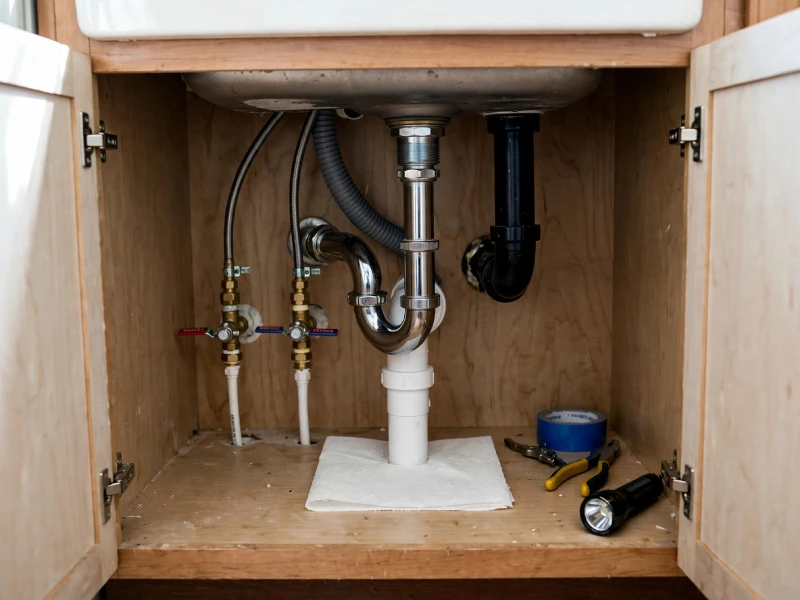
Run a dry paper towel around the faucet base and sink rim. Moisture that returns without use can reveal a failing seal or slow leak. Beneath the sink, check supply valves, trap joints, disposal connections, dishwasher hoses, and the cabinet floor for dampness or swelling.
Do not tighten plumbing fittings at random. Some connections can crack or leak more if overtightened. Place a dry paper towel beneath a suspected joint and recheck it after normal use; arrange the correct repair if it becomes wet.
Remove Food Residue You Cannot Easily See
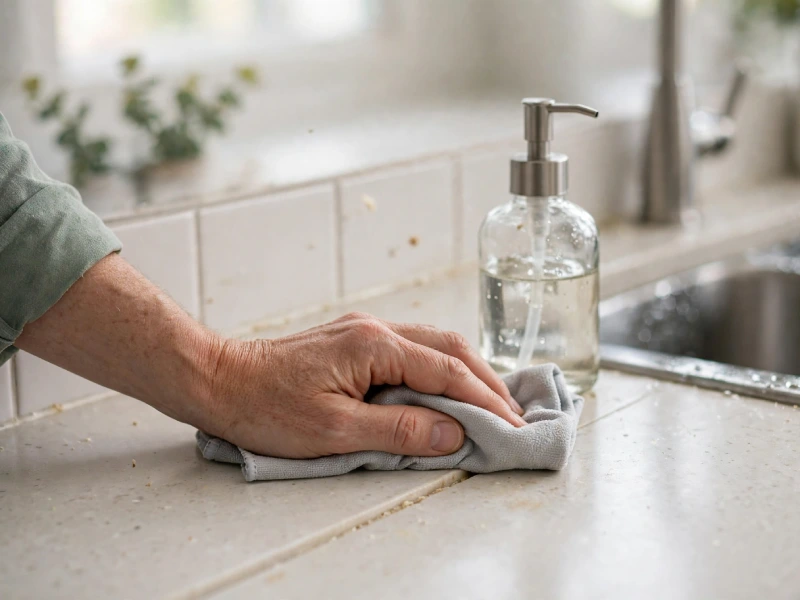
Ants may find a thin film that people overlook. Grease can collect along the backsplash, beneath countertop appliances, around a soap tray, or inside the lip of a recycling container. Sweet residue may remain beneath a bottle even when the surface was wiped.
Clean the surrounding counter with a product safe for its material. Pull movable items forward and wash their bases. Rinse beverage containers before recycling, empty food waste, and store fruit and pet food securely during the inspection period.
Avoid assuming that vinegar is safe for every surface. Acid can damage or dull some natural stone and finishes. Use the care method recommended for your countertop, sink, grout, and cabinetry.
Nighttime sink reset
- Wash dishes and clear food scraps from the strainer.
- Dry the sink, faucet, rim, and backsplash seam.
- Wipe appliance bases and container bottoms.
- Remove damp cloths and sponges from the counter.
- Check beneath the cabinet for a fresh drip.
Trace the Return Route, Not Just the Busy Spot
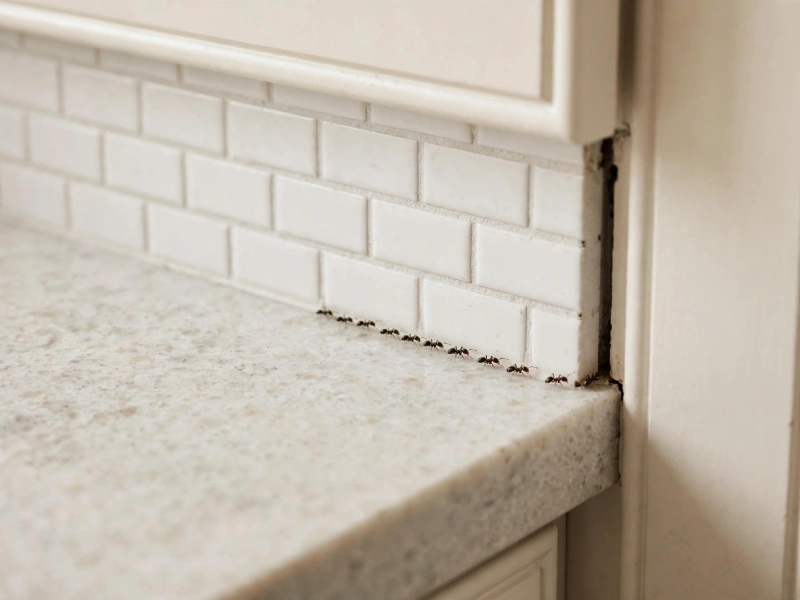
Observe the ants before wiping the trail. Workers leaving a resource may form a clearer line toward the nest than incoming scouts. Hold a flashlight low to the counter and follow the edge toward trim, a pipe, or a cabinet joint.
Mark the last visible point with painter’s tape. Then inspect the corresponding area below the counter and on the other side of the wall. Our step-by-step guide explains how to find where ants are entering your house without sealing random gaps.
If no trail forms, record where fresh ants first appear at two or three different times. Repeated sightings at one cabinet corner are stronger evidence than a single wandering ant.
Choose Bait Placement That Keeps Food Areas Safe
If control requires bait, use only a product labeled for the ant and indoor location. Follow its instructions for placement, quantity, storage, and disposal. Never put exposed bait on a food-contact surface.
An enclosed station may fit beneath the sink or beside an established edge if the label permits and children or pets cannot reach it. Keep it away from dishes, utensils, food, and any leak that could wet or spread the product.
Do not spray the trail while bait is being used. Killing or repelling foraging workers can stop them from carrying a slow-acting bait toward the colony. A sudden cluster at the station can be expected; see what to do when ant bait is attracting more ants.
Do Not Pour Pesticide Down the Drain
Ants seen inside a dry basin are not necessarily living in the drain. They may have fallen in or entered through a gap around plumbing. Pouring an unlabeled pesticide, bleach mixture, or homemade chemical combination into the drain can create exposure and plumbing risks without reaching the nest.
Use ordinary drain maintenance only for its intended purpose and never combine cleaners. If small flies rather than ants are emerging from a drain, the correct response focuses on identification and the organic buildup that supports breeding—not ant bait.
Repair Gaps After Activity Has Stopped
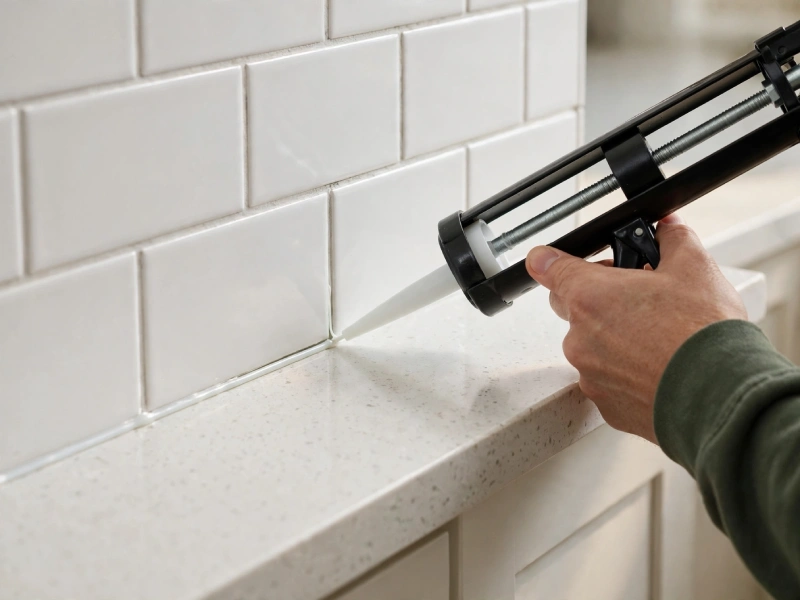
When bait is actively being carried through a crack, immediate sealing can redirect the ants before colony control is complete. Note the gap, monitor the trail, and seal it after activity ends.
Replace failed sink or backsplash sealant using a product compatible with the surfaces. Use appropriate escutcheon plates or sealant around pipe penetrations, but do not seal active leaks, drainage paths, or areas that need plumbing access.
In a rental, photograph water damage and report leaks or failed building seals to the property manager. Do not make an unauthorized repair that hides ongoing moisture.
Know When the Sink Is Only the Symptom
Several kitchens or bathrooms showing the same small ants can point to movement through shared walls or utility routes. In an apartment building, notify management early because treating one unit may not address connected activity.
Seek professional help if the ants emerge from electrical equipment, cannot be identified, continue after correctly placed fresh bait, or appear with winged adults indoors. Large ants, damp wood, and coarse debris near a window or cabinet also call for a closer structural and species inspection.
Ask the technician to identify the insect, show the observed route, and explain how the proposed treatment reaches the nest. A useful plan should also address leaks, food competition, and exclusion rather than relying on repeated indoor spraying.
Fix the Resource and the Route
Tiny ants around a kitchen sink usually persist because one part of the system remains: dependable water, hidden food film, an open travel route, or an untreated colony.
Dry the area, inspect the plumbing, remove competing residue, trace returning workers, and use a labeled control method only where appropriate. Once activity has stopped, repair the confirmed gap. That sequence solves more than the ants you can see today—it makes the sink less useful to the next trail.