German Roach vs. American Roach: Key Differences
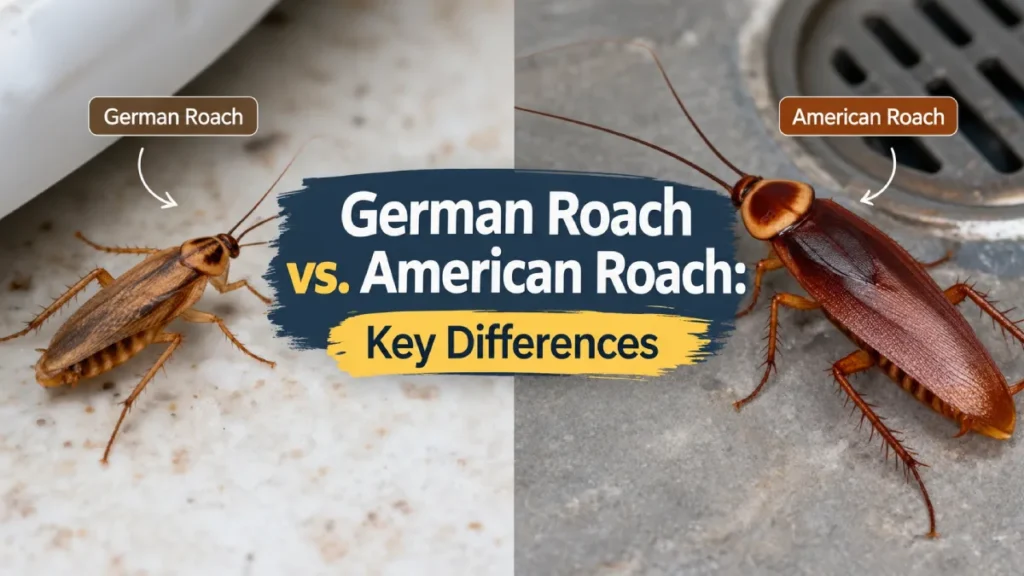
A small tan cockroach beside a dishwasher and a large reddish-brown cockroach near a basement drain should not trigger the same plan. German cockroaches usually live and reproduce indoors, while American cockroaches often develop in warm, damp utility or sewer environments and may enter a building from elsewhere.
Identification changes where you inspect, what you repair, and how urgently nearby units may need monitoring. Use size and markings together—never one clue alone.
Fastest distinction
Adult German cockroaches are usually about 1/2 inch long and have two dark lengthwise stripes behind the head. Adult American cockroaches are roughly 1 1/2 to 2 inches long, reddish brown, with a pale border around the shield behind the head.
Compare Size Before Color
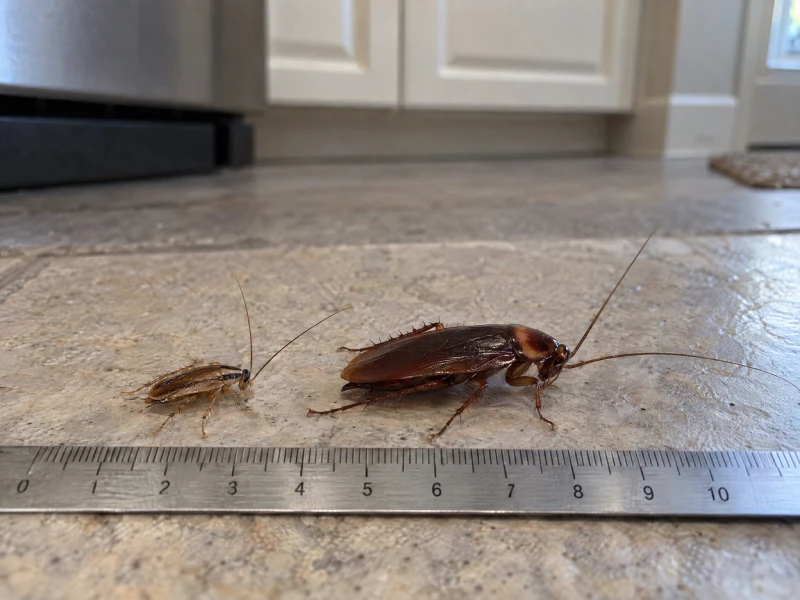
Size is the quickest first filter when the insect is an adult. A German cockroach is compact and can hide in extremely narrow appliance and cabinet crevices. An American cockroach is several times larger and has a more imposing, elongated body.
Do not use adult measurements for a nymph. Young American cockroaches are smaller and wingless, so they may be mistaken for another species. Capture a specimen and compare its life stage as well as its body length.
Photograph it from above beside a ruler. A coin can help with scale, but a marked measurement is better for remote identification.
Read the Markings Behind the Head
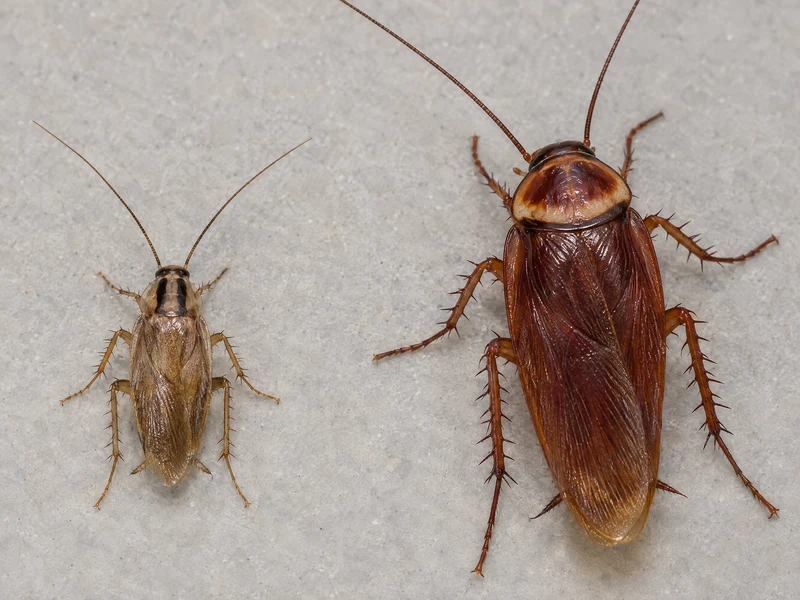
The shield-like plate behind a cockroach’s head is called the pronotum. Adult German cockroaches have two dark, parallel stripes running lengthwise across this area.
An adult American cockroach is reddish brown with a light yellowish or cream margin around the pronotum. It does not have the German species’ pair of distinct dark stripes.
Lighting can make tan insects appear darker, and damaged specimens may lose useful features. If the markings are unclear, do not guess from color alone.
| Feature | German cockroach | American cockroach |
|---|---|---|
| Scientific name | Blattella germanica | Periplaneta americana |
| Adult length | About 1/2 inch | About 1 1/2–2 inches |
| Adult color | Light brown to tan | Reddish brown |
| Pronotum marking | Two dark parallel stripes | Pale border around the edge |
| Typical indoor area | Warm kitchen/bathroom cracks near food and water | Basements, utility areas, sewers, drains and warm damp ground floors |
| Indoor breeding concern | Very high; commonly lives and breeds inside | Possible, but may also invade from utility or outdoor sources |
| First control priority | Find indoor harborages and monitor connected rooms/units | Trace moisture, drains, utility routes and exterior entry |
Regional species vary, so this comparison does not rule out Oriental, smoky brown, brown-banded, field, or Turkestan cockroaches.
German Roaches Cluster Near Food, Water and Heat
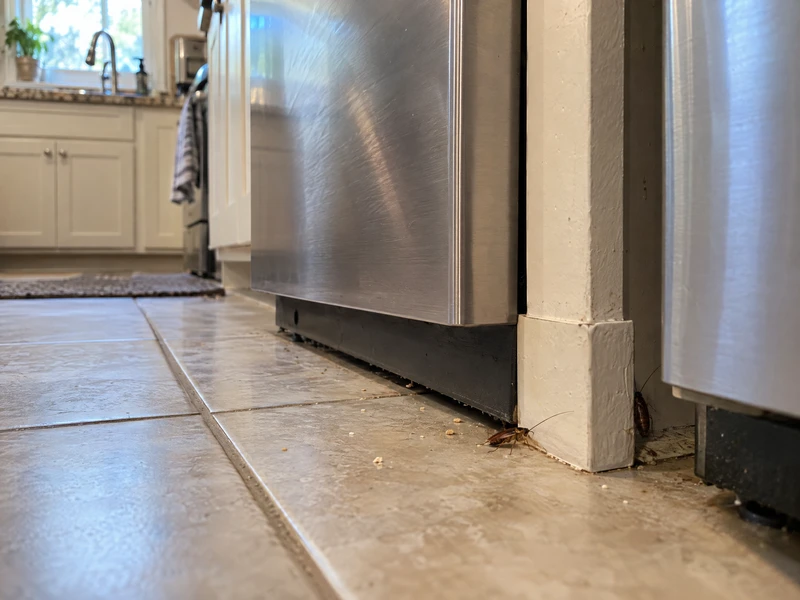
German cockroaches thrive near people and are strongly associated with indoor food preparation and storage. Look beneath sinks, behind refrigerators and dishwashers, beside ranges, around trash, inside cabinet cracks, and near warm electronics.
Finding nymphs of different sizes, an egg-carrying female, or repeated monitor catches in these areas strongly supports indoor reproduction. One visible German cockroach deserves prompt monitoring because only a portion of the population is normally exposed.
They can be carried into buildings in bags, boxes, luggage, used appliances, and other items. In apartments, they may also move through shared walls and plumbing routes.
American Roaches Often Point to Damp Utility Routes
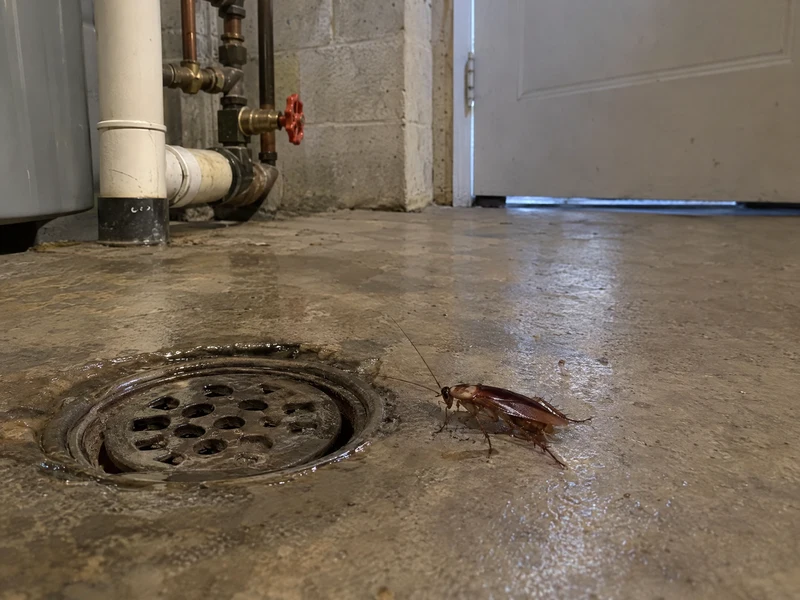
American cockroaches favor very warm, humid conditions. They are common in sewers, steam tunnels, storm drains, water-meter boxes, animal facilities, basements, and ground-floor utility spaces.
A large adult near a basement drain or exterior door may be an occasional invader. Repeated adults, nymphs, egg cases, or concentrated monitor catches show that the issue is more than a one-time visitor.
Inspect damaged screens, door gaps, utility penetrations, floor drains, plumbing leaks, and dry or faulty drain traps. Do not pour pesticide into a drain unless its label expressly permits that exact use.
Nymphs Make Visual Identification Harder
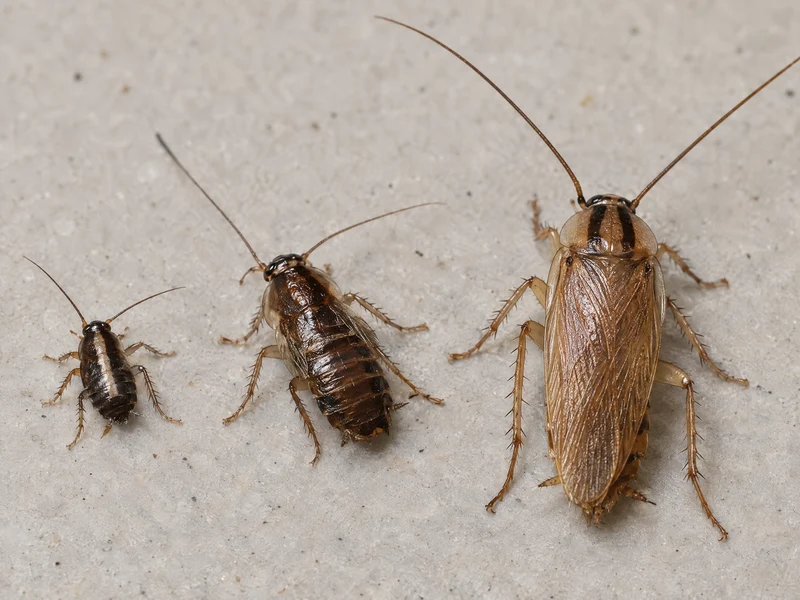
Cockroach nymphs resemble smaller wingless adults, but their patterns change as they mature. German cockroach nymphs are dark with a lighter stripe down the middle of the back, rather than the adult’s two pronotum stripes.
American cockroach nymphs are reddish to darker brown and develop through several stages before reaching the large winged adult form. Size overlap with other species makes a young specimen difficult to identify from a distant photo.
An expert may need the specimen, geographic location, exact measurements, and dorsal markings. Avoid selecting treatment based on the word “baby roach” alone.
Identification checklist
- Measure the body without antennae
- Photograph the top and side in good light
- Note whether wings cover the abdomen
- Record the exact room and hiding place
- Capture more than one life stage if available
- Check local species before naming it
Egg Cases Reveal Different Reproductive Patterns
A cockroach egg case is called an ootheca. Female German cockroaches carry the case until close to hatching, so an attached case is an important identification and infestation clue.
American cockroach females carry an egg case for a shorter period, then attach or deposit it in a protected location. Finding loose cases near damp cracks, utility areas, or basement harborages can help map the population.
Do not handle egg cases bare-handed. Vacuum or collect them for identification, seal the waste, and clean the location. Removing visible cases alone will not eliminate adults and hidden nymphs.
Use Monitors to Confirm Location and Scale
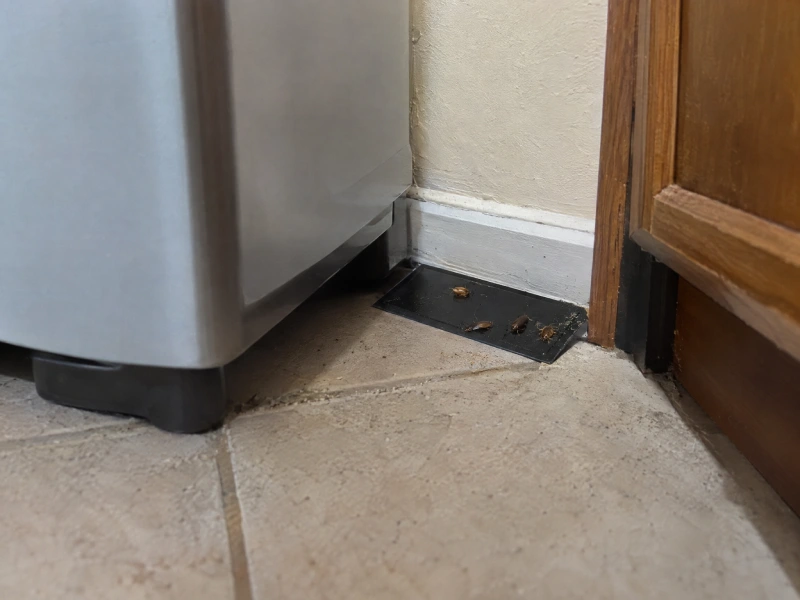
Sticky monitors provide better evidence than a single sighting. Place numbered traps tightly against wall-floor junctions and near suspected harborages, not in open room centers.
For German cockroaches, prioritize the refrigerator, dishwasher, range, sink cabinet, trash area, and connected bathroom or laundry spaces. For American cockroaches, include basement walls, utility rooms, drains, exterior doors, and pipe routes.
Check daily at first and record species, life stage, and count by trap. The guide to one cockroach in the kitchen explains how to use those catches to separate an isolated visitor from indoor breeding.
German Roach Control Starts at Indoor Harborages
Remove crumbs, grease, pet food, open trash, cardboard, and standing water. Vacuum cracks, shed skins, egg cases, and dead insects using a well-filtered vacuum where possible.
Use labeled gel bait or enclosed stations close to confirmed harborages when appropriate. Small, correctly placed bait points are generally more useful than product spread across open surfaces. Protect children, pets, dishes, and food-contact areas.
Do not contaminate bait with repellent spray or cleaner. German cockroach populations may resist some active ingredients, so a persistent infestation often benefits from professional assessment and a measured follow-up plan.
American Roach Control Starts With Entry and Moisture
Repair plumbing and irrigation leaks, maintain appropriate drain traps, improve sanitation around trash, and remove damp debris or dense cover near the structure. Add door sweeps and repair screens or utility gaps.
Inspect sewer and drain issues through the correct building or plumbing professional. A damaged pipe or failed trap is not solved by spraying the visible cockroach.
When populations are high around a building, targeted treatment of identified exterior or utility harborages may be needed. The product must be labeled for the species and site.
Why Whole-Room Spray Is a Poor Default
Sprays may provide quick knockdown but often fail to reach narrow indoor harborages. Repellent applications can scatter cockroaches into other parts of a building, and pesticide resistance can reduce performance.
Do not fog the home based on appearance alone. Use monitoring, sanitation, exclusion, moisture repair, and targeted labeled control. Never spray electrical equipment, flames, food, dishes, drains, or an unlabeled site.
Follow every label instruction for preparation, ventilation, reentry, storage, and disposal. If exposure occurs, use the label’s first-aid directions and contact the appropriate poison-control or veterinary service.
Apartments Require Coordinated Inspection
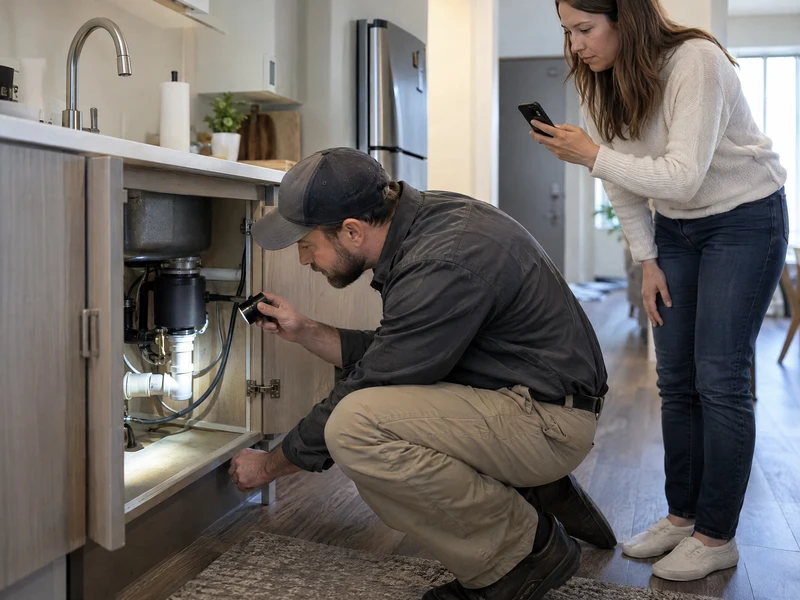
German cockroaches can spread between units in bags and through connected building routes. American cockroaches may move through shared drains, basements, utility chases, and common areas.
Document specimens and trap catches, then notify management in writing. Ask whether adjacent units and common utility spaces will be inspected and whether leaks and gaps will be repaired.
Treating one apartment without addressing connected sources can lead to reinvasion. A building plan should coordinate residents, maintenance, and pest professionals.
Call a Professional When the Evidence Escalates
Prompt help is sensible when you identify German cockroaches, find nymphs or egg cases, see daytime activity, or catch multiple life stages. Repeated American cockroaches, especially nymphs in utility areas, also require a deeper inspection.
Ask the technician to show the species features, highest-count monitor locations, likely harborages, and treatment rationale. Request a clear follow-up interval and instructions for cleaning without disrupting bait.
Mention asthma, allergies, children, pets, pregnancy, or other exposure concerns before treatment. Cockroach debris and broad pesticide use can both matter in sensitive households.
Let the Species Set the Plan
German and American cockroaches differ in more than size. The German species usually points toward an indoor breeding problem near kitchens and bathrooms. The American species often sends the inspection toward drains, basements, utilities, and exterior moisture routes.
Measure and identify the insect, use monitors to locate activity, then correct the conditions that fit that species. That approach is faster and safer than treating every brown cockroach as the same problem.