Best Ways to Protect Vinyl Flooring From Heavy Furniture
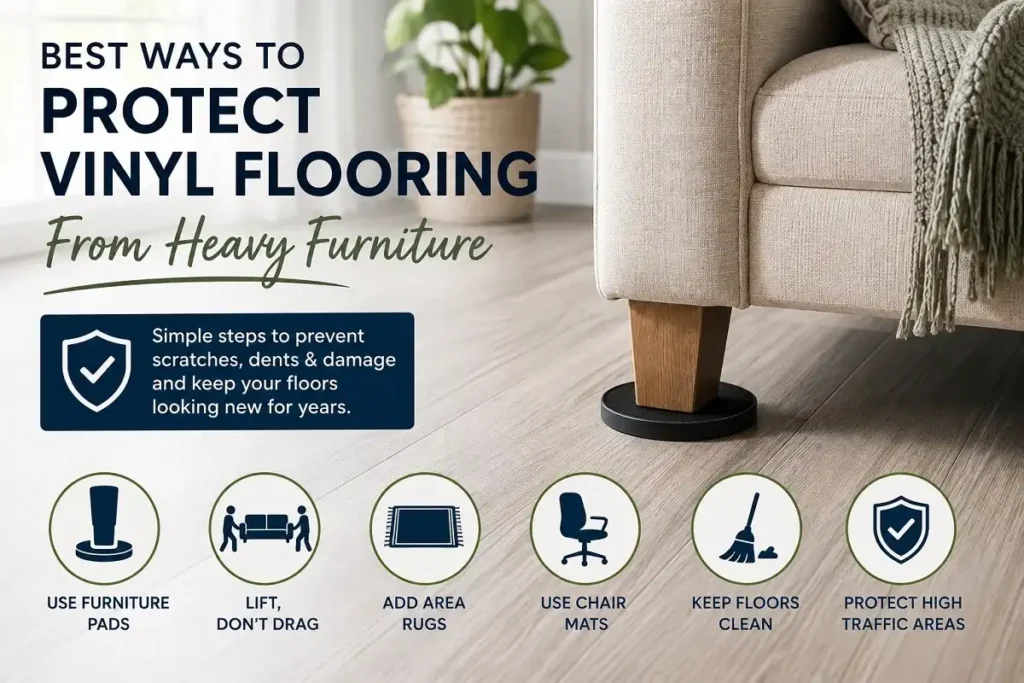
Heavy furniture can sit safely on vinyl flooring, but the wrong setup can leave dents, scratches or discolored spots behind. Small furniture feet, repeated movement and unsuitable floor protectors are usually more important concerns than simply how heavy a sofa or table is.
For most homes, the solution is straightforward: give heavy pieces a wider, stable base, use materials that are safe for your floor, and protect the surface whenever furniture or appliances need to be moved.
If you are wondering what to put under a sofa, whether felt or rubber pads are safe, or how to move a refrigerator without damaging vinyl, this guide covers each situation separately.
Table of Contents
- Can Heavy Furniture Damage Vinyl Flooring?
- What Should You Put Under Heavy Furniture on Vinyl?
- Choose the Right Protector for Each Type of Furniture
- Are Felt and Rubber Pads Safe for Vinyl Flooring?
- How to Move Heavy Furniture Without Scratching Vinyl
- How to Protect Vinyl Flooring Under Heavy Appliances
- What About Office Chairs and Rolling Furniture?
- Can You Use an Area Rug Under Heavy Furniture?
- Does the Type of Vinyl Flooring Matter?
- What If Your Vinyl Floor Already Has a Dent?
- Simple Mistakes That Can Damage Vinyl Flooring
- FAQs
- Final Thoughts
Can Heavy Furniture Damage Vinyl Flooring?
Yes. Vinyl is durable enough for normal household use, but heavy furniture can still cause damage when its weight is concentrated in a small area.
Imagine a large sofa with four tiny feet. Each foot places part of the sofa’s weight onto a relatively small spot. Over time, those contact points may leave indentations. Wider feet or protectors spread that load across more of the floor.
Scratches have a different cause. They commonly occur when furniture moves across the surface, especially when grit or a rough edge becomes trapped underneath.
There is also a third issue homeowners sometimes overlook: discoloration. Certain backing and pad materials can react with some vinyl products, so a protector needs to be compatible as well as soft.
What Should You Put Under Heavy Furniture on Vinyl?
For stationary furniture, start with wide, flat, non-staining protectors that fit securely beneath the feet. They create a larger resting surface and keep the furniture itself from making direct contact with the floor.
What works best depends on what you are protecting:
| Furniture or Situation | Practical Starting Point | What to Watch For |
|---|---|---|
| Heavy sofa or sectional | Wide, non-staining furniture cups or protectors | Small feet and hidden supports |
| Bed | Protectors beneath every support point | Narrow center legs |
| Dining chairs | Compatible non-staining felt pads | Worn pads and trapped grit |
| Heavy dresser or cabinet | Wide, stable protectors where needed | Narrow feet carrying the load |
| Refrigerator or heavy appliance | Protective path while moving | Rolling directly over exposed vinyl |
| Rolling office chair | Floor-compatible chair mat or suitable casters | Repeated movement in one area |
| Area rug | Vinyl-compatible rug and pad | Backing that may discolor the floor |
This is a starting guide rather than a universal product list. Vinyl products differ, so the care instructions for the flooring installed in your home should take priority if they specify particular materials.
Choose the Right Protector for Each Type of Furniture
You do not need the same solution under every piece of furniture. A dining chair that moves several times a day creates a different problem from a bookcase that may stay in one position for years.
Sofas and Sectionals
Look underneath the entire frame before adding protectors. Large sectionals may have center or rear supports that are easy to miss.
If the existing feet are narrow, wider cups or flat protectors can create a broader base. Keep them close to the size of the furniture feet where possible so they remain discreet rather than distracting from the room.
Beds and Dressers
A bed may have more contact points than the four visible corners. Check center supports underneath the frame, as a narrow middle leg can still place significant pressure on one spot.
For a dresser, inspect the base first. A broad flat base does not behave like four small legs, so adding tiny pads everywhere may not provide any meaningful benefit.
Dining Tables and Chairs
A dining table usually stays in one position, while its chairs move constantly. That makes chair feet more likely to cause everyday surface wear.
Non-staining felt pads are suitable for many vinyl products. Check them periodically because a worn pad or one filled with grit can stop protecting the surface effectively.
Bookcases and Entertainment Units
These pieces can become surprisingly heavy once filled. Pay attention to small feet or support points rather than assuming the broad appearance of the cabinet means its weight is evenly spread.
Are Felt and Rubber Pads Safe for Vinyl Flooring?
Felt is commonly used beneath furniture, and non-staining felt is accepted by some vinyl flooring manufacturers. It is especially practical under chairs and other pieces that move occasionally.
Rubber is more complicated. Some manufacturers specifically warn that rubber-backed products can stain or discolor their vinyl floors. For that reason, do not assume a rubber pad is safe simply because its packaging calls it a floor protector.
The same principle applies to rug pads and other materials that remain in contact with the surface for long periods. If you cannot confirm compatibility, choose an option approved for your particular floor rather than experimenting in a visible area.
How to Move Heavy Furniture Without Scratching Vinyl
The safest approach is to lift furniture rather than drag it. For a sofa, table or bed frame, getting another person to help can make the move easier while keeping the feet away from the surface.
Furniture sliders can help when lifting the entire piece is impractical. Before using them, remove any grit from the floor and check the underside of each slider. A small hard particle caught underneath can create the very scratch you are trying to prevent.
Very heavy objects may need a stronger temporary path. Suitable hardboard or protective panels can create a surface over which moving equipment travels instead of putting concentrated pressure directly onto the finished floor.
How to Protect Vinyl Flooring Under Heavy Appliances
Refrigerators, washing machines and other large appliances deserve special attention because they combine substantial weight with occasional movement.
The biggest risk often comes during installation or repair. Do not assume that appliance wheels make it safe to roll directly across exposed vinyl. A protective path can spread the moving load and reduce the chance of leaving marks.
Once the appliance reaches its final position, follow the installation requirements for both the appliance and the floor. This is particularly important after new flooring has been installed.
What About Office Chairs and Rolling Furniture?
A rolling office chair creates repeated pressure and movement in a small area, making it different from a stationary desk or sofa. Over time, dirty or unsuitable casters may leave wear marks on the surface.
A chair mat designed for hard flooring can provide a barrier, but check that its backing is suitable for vinyl. Floor-friendly replacement casters may also be an option where the chair manufacturer allows them.
Whichever solution you choose, keep the area beneath the chair free from grit. Hundreds of small movements over trapped debris can gradually mark the finish.
Can You Use an Area Rug Under Heavy Furniture?
Yes. A rug beneath a sofa, dining table or bed can help define the room while adding another layer between furniture and the finished surface.
The important part is underneath. Some rug backings and pads contain materials that may not be suitable for certain vinyl products. A rug that looks harmless from above can remain against the floor for months or years, so compatibility matters.
A rug should also not be relied on to solve concentrated pressure from very narrow furniture feet. Use appropriate support where needed, then let the rug handle the decorative side of the room.
Does the Type of Vinyl Flooring Matter?
Yes. Luxury vinyl plank (LVP), luxury vinyl tile (LVT) and sheet vinyl are all commonly described as vinyl flooring, but their construction and installation can differ.
Some products are fixed to the surface below, while others are installed as floating floors. The rules for very heavy or fixed objects can therefore vary between products.
You do not need to become a flooring expert to protect your home. If you know the brand and product line, check its care and installation guide before placing an unusually heavy item or choosing a new type of pad or backing.
What If Your Vinyl Floor Already Has a Dent?
First, remove or redistribute whatever is causing the pressure. Continuing to leave the same narrow furniture foot on the affected spot can make the problem worse.
Whether an indentation improves depends on the flooring and the severity of the damage. Avoid trying unverified heat, chemical or DIY repair tricks that could turn a small dent into permanent surface damage.
If the mark is significant, check the flooring manufacturer’s repair guidance or speak with a flooring professional. Individual planks or tiles may sometimes have repair or replacement options that are more sensible than experimenting on the finish.
Simple Mistakes That Can Damage Vinyl Flooring
One common mistake is buying the smallest possible furniture pad. A pad may prevent direct contact while still doing little to spread the load if it is almost as narrow as the furniture leg itself.
Another is forgetting the supports you cannot see. Center bed legs, middle sofa feet and small cabinet supports can carry substantial weight even though they are hidden.
Moving day is another high-risk moment. A piece of furniture that caused no trouble for five years can scratch a floor in seconds when it is dragged across the room.
Finally, avoid assuming that “soft” means “safe.” A material can feel gentle while still being unsuitable for long-term contact with a particular vinyl finish.
FAQs
Can you put heavy furniture on vinyl plank flooring?
Yes, in many cases. The important factors are how the weight is supported and what the flooring manufacturer allows. Heavy pieces with narrow feet may benefit from wider, non-staining protectors.
What should you put under heavy furniture on vinyl flooring?
Wide, flat furniture cups or protectors are a practical starting point for stationary heavy pieces. Choose a non-staining material that is compatible with your particular floor.
Are felt furniture pads safe for vinyl floors?
Non-staining felt is suitable for many vinyl floors and can work particularly well beneath chairs. Check the care instructions for your flooring if you are unsure about a specific product.
Can rubber pads discolor vinyl flooring?
Yes, some can. Certain vinyl manufacturers warn against rubber-backed products because they may cause staining or discoloration over time.
Final Thoughts
You do not need to avoid heavy furniture just because you have vinyl flooring. Focus on the points where furniture meets the floor, spread concentrated loads where necessary and take extra care whenever something heavy needs to move.
The right solution can also stay almost invisible. Well-sized protectors, a compatible rug and careful furniture placement can preserve the floor without compromising how the room looks or functions.