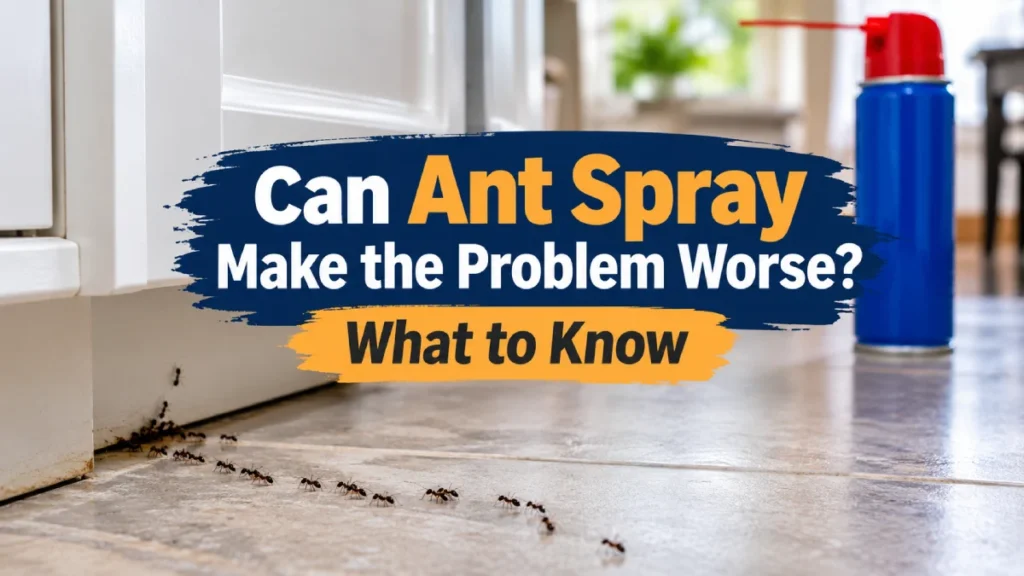
Can Ant Spray Make the Problem Worse? What to Know
Spraying a line of ants feels effective because the visible insects disappear in seconds. Then the trail returns from another baseboard, outlet, or cabinet seam. The product may have killed workers while leaving the colony, entry route, and attraction untouched.
Spray is not automatically wrong, and bait is not automatically right. The outcome depends on the ant, product, location, and goal. This guide explains why broad indoor spraying often disappoints, when it can disrupt control, and how to switch to a more targeted plan safely.
Quick answer: Contact spray usually affects the ants you can see, not the hidden colony. Repellent residue can redirect trails, spray near bait can stop workers from carrying it home, and certain multi-queen ants may split or move when stressed. Identify and trace the ants before choosing a treatment.
A Dead Trail Is Not a Dead Colony
The ants crossing a counter are foraging workers. Most colony members remain hidden with queens and developing young in soil, wall voids, damaged wood, or another protected nest.
A contact spray can create an immediate knockdown without reaching that nest. Surviving workers may resume the route after residue fades, or another group may discover the same food and water.
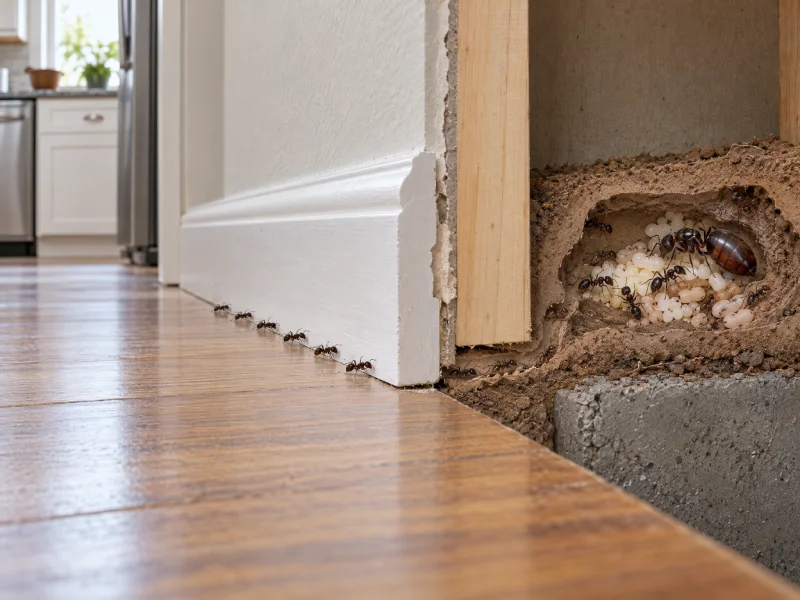
This explains why a room can look clear on treatment day and active again later. Count the return as diagnostic evidence, not proof that you need to spray a larger area.
Repellent Residue Can Move the Trail
Some sprays kill on contact and leave residue ants avoid. If the route becomes unusable but the resource remains, workers may emerge from a neighboring crack.
The apparent “new infestation” can be the same colony using a different path. Spraying every new line creates a cycle of temporary knockdown and redirected traffic.
Map where ants appeared before and after treatment. Our guide to finding where ants enter a house shows how to connect indoor activity to pipes, trim, wires, and exterior gaps.
| What happens after spraying | What it may mean | Better next step |
|---|---|---|
| Trail disappears and returns at the same crack | Colony and route remain active | Trace the route and address the nest or use suitable bait |
| Ants emerge from a nearby seam | Repellent residue may have redirected travel | Stop random spot spraying and map both openings |
| Bait is ignored after spraying | Spray or cleaner may have contaminated the feeding area | Follow labels; place fresh bait away from residue if appropriate |
| Ants scatter into several rooms | Multiple routes, nests, or colony stress may be involved | Get species identification and a coordinated plan |
| A few seasonal ants stop after a targeted exterior treatment | The treatment may have interrupted an outdoor entry | Repair the confirmed access and keep monitoring |
Spray and Bait Can Work Against Each Other
Slow-acting bait relies on living workers. They feed, return toward the nest, and share material within the colony. Killing or repelling them beside the station interrupts that process.
Do not spray a bait station, the active trail leading to it, or the entry crack workers are using. Strong cleaners and fragrances can also make the area unattractive or contaminate food bait.
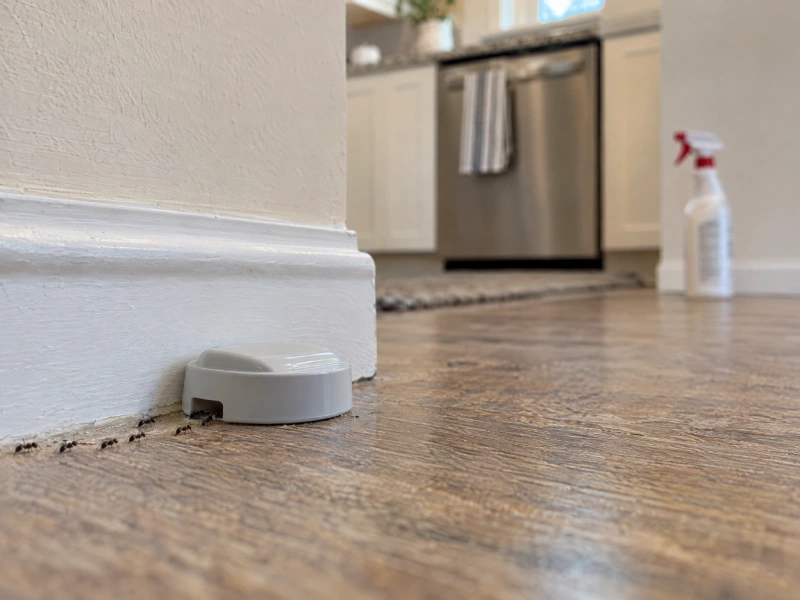
If you already sprayed, read both product labels. Do not mix chemicals or improvise a cleanup. When it is safe and label-consistent, choose an uncontaminated route for a fresh labeled bait and monitor whether ants accept it.
The realistic timeline in how long ant bait takes to work helps prevent a useful station from being abandoned too early.
Some Ant Colonies Can Split Under Stress
Certain species establish new nest groups through a process often called budding. Workers move with queens or brood to another protected location. Pharaoh ants are a well-known indoor example, and insecticide spray on trailing workers can contribute to that disruption.
This does not mean every sprayed colony instantly multiplies. Species and colony structure matter, so “spray always makes ants spread” is too broad. It does mean unidentified tiny ants moving through multiple rooms or apartments should not be treated with repeated repellent spray by guesswork.
Capture a specimen or clear close-up before applying more product. Building-wide infestations may need coordinated baiting and monitoring rather than unit-by-unit spraying.
Broad Indoor Treatment Adds Exposure Without Solving the Cause
Applying pesticide across floors, counters, walls, or whole rooms exposes more surface than targeted control. It may also put residue near children, pets, food, dishes, toys, and frequently touched areas.
Use only products approved for the indoor site and pest on the label. Follow directions for preparation, ventilation, reentry, food-area restrictions, protective equipment, cleanup, storage, and disposal.
Never spray into electrical equipment, appliance controls, open flame areas, air ducts, drains, or inaccessible voids unless the exact label permits that use and you can do it safely. More product does not produce better colony control.
Start Over With an Inspection, Not Another Spray
Pause long enough to observe fresh activity. Record the room, time, number of ants, direction of travel, and the crack where the line disappears.
Check for crumbs, grease, sweet residue, pet food, trash, standing water, plumbing leaks, and damp trim. Inspect the matching exterior wall for foundation openings, window gaps, utility penetrations, touching vegetation, and wet mulch.

Do not seal the active opening immediately if ants are carrying bait through it. Mark it for repair after activity stops. Early closure can redirect workers before colony control is complete.
Match the Control Method to the Goal
Use the smallest effective intervention for the identified problem. These goals are different:
- Remove visible workers: Vacuum or wipe them with soapy water for temporary cleanup.
- Reach a hidden colony: Use an accepted slow-acting bait labeled for the ant and location.
- Stop an outdoor seasonal entry: Confirm the route, use an appropriate targeted method, then repair the access.
- Correct a structural attractant: Fix leaks, damp wood, failed seals, food storage, or vegetation contact.
- Treat a wall or appliance void: Use a qualified professional when safe access and identification are uncertain.
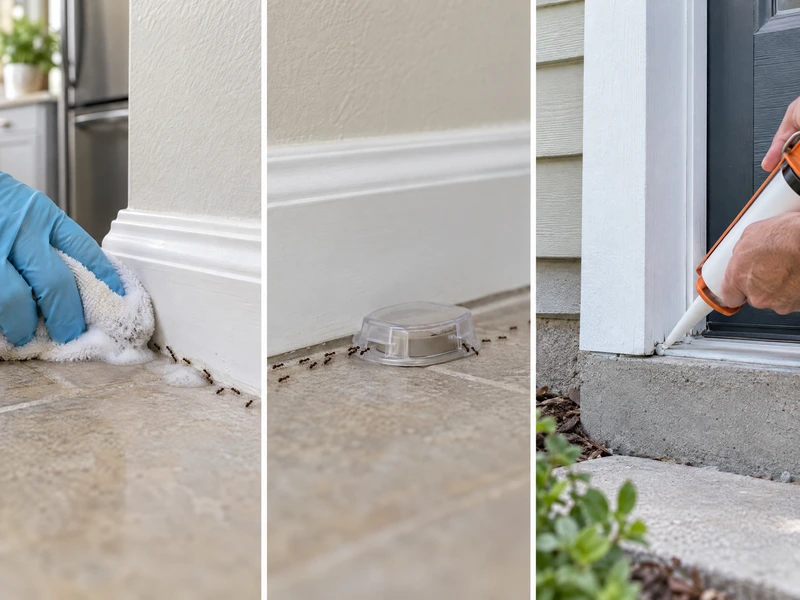
No method replaces sanitation and exclusion. Treatment works better when ants are not choosing crumbs, grease, or water over the control material.
When a Targeted Spray May Have a Role
A correctly labeled, targeted application may help with seasonal ants entering from a known outdoor nest or a specific exterior route. It can also be part of a professional species-specific program.
That is different from spraying every indoor baseboard. A useful plan defines the pest, treatment site, goal, and follow-up. Exterior barriers may be temporary and still require sealing gaps and reducing favorable conditions near the foundation.
Do not copy a product or method from an online comment without checking whether it is legal and labeled for your location. Formulations and registrations vary.
Clean a Trail Without Creating a Chemical Mix
For exposed workers not involved in baiting, vacuuming or wiping with soapy water can remove ants and scent trails temporarily. Empty the vacuum into a sealed bag outside.
Do not combine bleach, ammonia, drain products, pesticides, or homemade mixtures. Use a surface-safe cleaner according to its directions, and keep it away from active bait.
Once colony activity ends, clean the former trail and seal the confirmed entry point with the appropriate repair. Do not block intentional drainage or ventilation openings.
Call a Professional When the Pattern Is Spreading
Get professional identification when ants appear in multiple rooms, apartments, wall voids, electrical areas, or an inaccessible roof space. The same applies when spray has been used repeatedly and activity now emerges from several routes.
Winged ants indoors, large ants near damp wood, or coarse debris pushed from framing need a closer inspection. Stinging ants or a household member with a serious allergy change the risk level.
Ask the technician what ant was identified, where activity was observed, whether the product is repellent or nonrepellent, how it interacts with bait, and when results should be reviewed. A clear answer is more useful than a promise to “spray everything.”
Replace the Spray Cycle With a Cause-and-Control Plan
Ant spray can make an indoor problem harder when it removes only workers, redirects trails, contaminates bait, or stresses a species prone to budding. The problem is usually the mismatch between the method and the colony—not the existence of every spray product.
Identify the insect, trace the route, remove competing resources, and choose a targeted control that can reach the source. After activity stops, repair the confirmed entry. That sequence offers a better chance of ending the return than another quick knockdown.