Ants Coming From Behind the Stove? What to Do
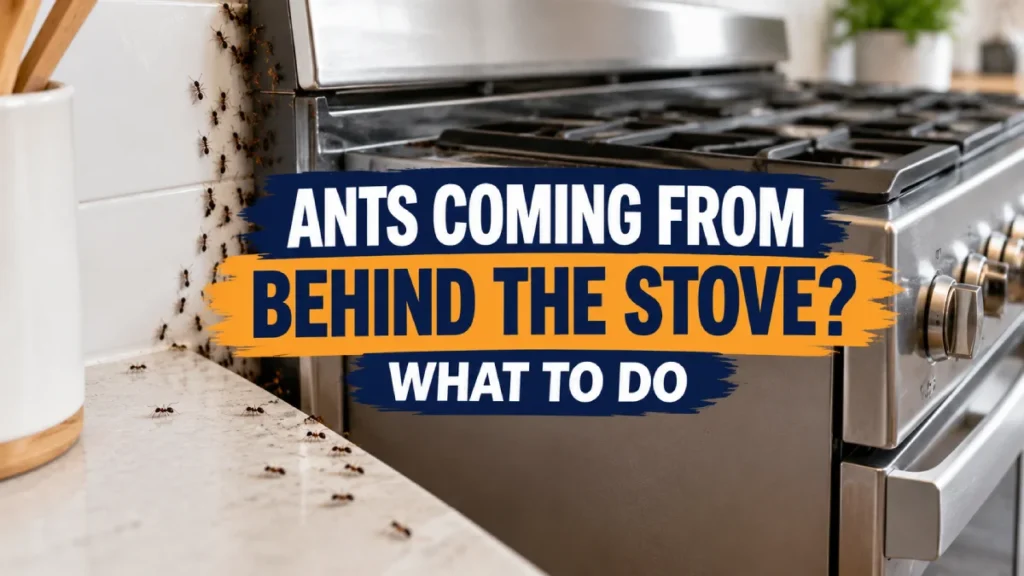
Ants disappearing behind the stove create an awkward problem: you can see the traffic, but the most useful inspection area is hidden beside a heavy appliance. Spraying the visible line may silence it briefly without touching the food residue, entry gap, or nest route behind the range.
Start with safety, then diagnosis. This guide explains when you can inspect without moving the appliance, how to clean the hidden food source, where bait may fit, and when a gas, electrical, or built-in range should be left to a qualified person.
Do this first: Turn off the cooking surface, let it cool, remove accessible crumbs from nearby counters, and watch which direction the ants travel. Do not spray into the appliance, electrical connection, gas area, or wall opening.
Decide Whether the Stove Can Be Moved Safely
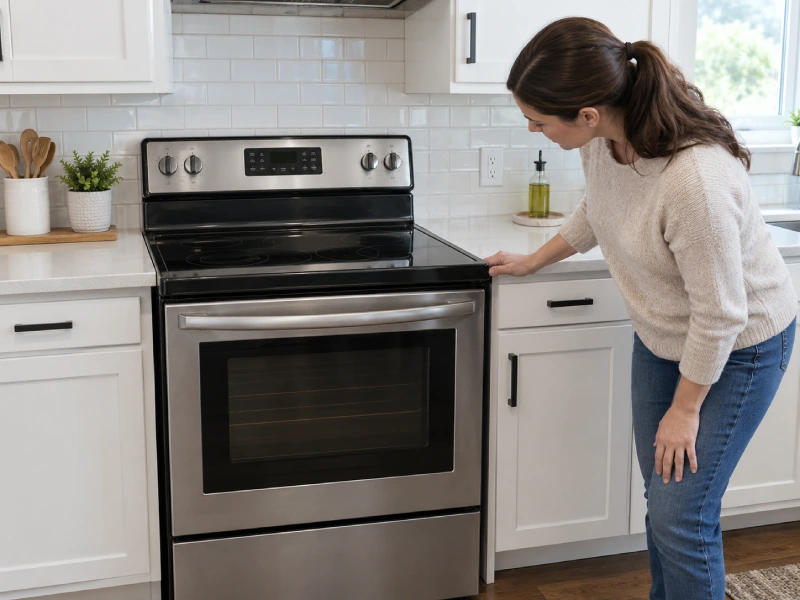
A freestanding electric range may slide forward, but it can still be heavy, unstable, and connected by a short cord. A gas range has a flexible supply connection that must not be stretched, crushed, twisted, or disturbed.
Do not pull the appliance if you are unsure about its connection, anti-tip bracket, flooring, or clearance. Never use the oven door as a handle. Built-in cooktops, wall ovens, and slide-in units may require appliance-specific removal.
If you smell gas, hear hissing, see a damaged cord, notice scorching, or find ants inside electrical controls, leave the area and follow the appropriate emergency or utility guidance. Pest inspection comes after the immediate hazard is addressed.
| Appliance situation | Safe next step |
|---|---|
| Freestanding unit with visible clearance and known connection | Follow the manufacturer’s movement instructions; use help if needed |
| Gas range or uncertain supply-line slack | Do not pull it out; use a qualified appliance or gas professional |
| Built-in or slide-in appliance | Inspect accessible edges only unless the manual permits removal |
| Ants inside controls, receptacle, or wiring area | Stop use if safety is uncertain and arrange professional inspection |
| Signs of overheating, gas odor, or damaged connection | Treat as a utility or electrical issue, not a DIY pest task |
Watch Which Side of the Stove the Ants Use
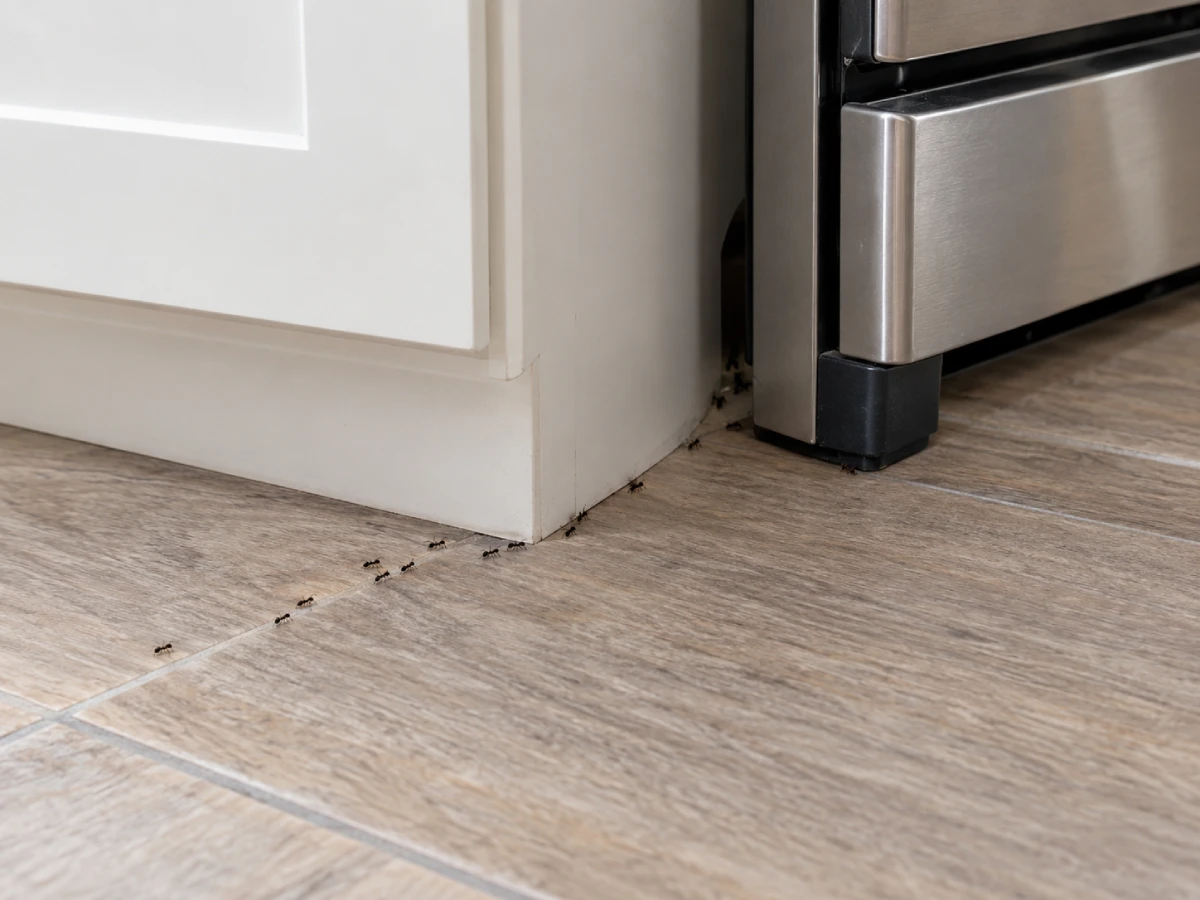
Before cleaning the trail, observe it for several minutes. Ants approaching crumbs may spread out; workers returning to the colony often merge along a cabinet edge, backsplash seam, baseboard, or utility opening.
Mark the last visible point on each side with painter’s tape. Note whether traffic begins at floor level, counter height, or the wall behind the appliance. This height helps distinguish a baseboard or floor gap from a backsplash, outlet, pipe, or cable route.
Check again after dark if daytime activity is scattered. A consistent two-way line provides stronger evidence than isolated ants wandering across the cooktop.
Hidden Grease and Crumbs Can Sustain the Trail
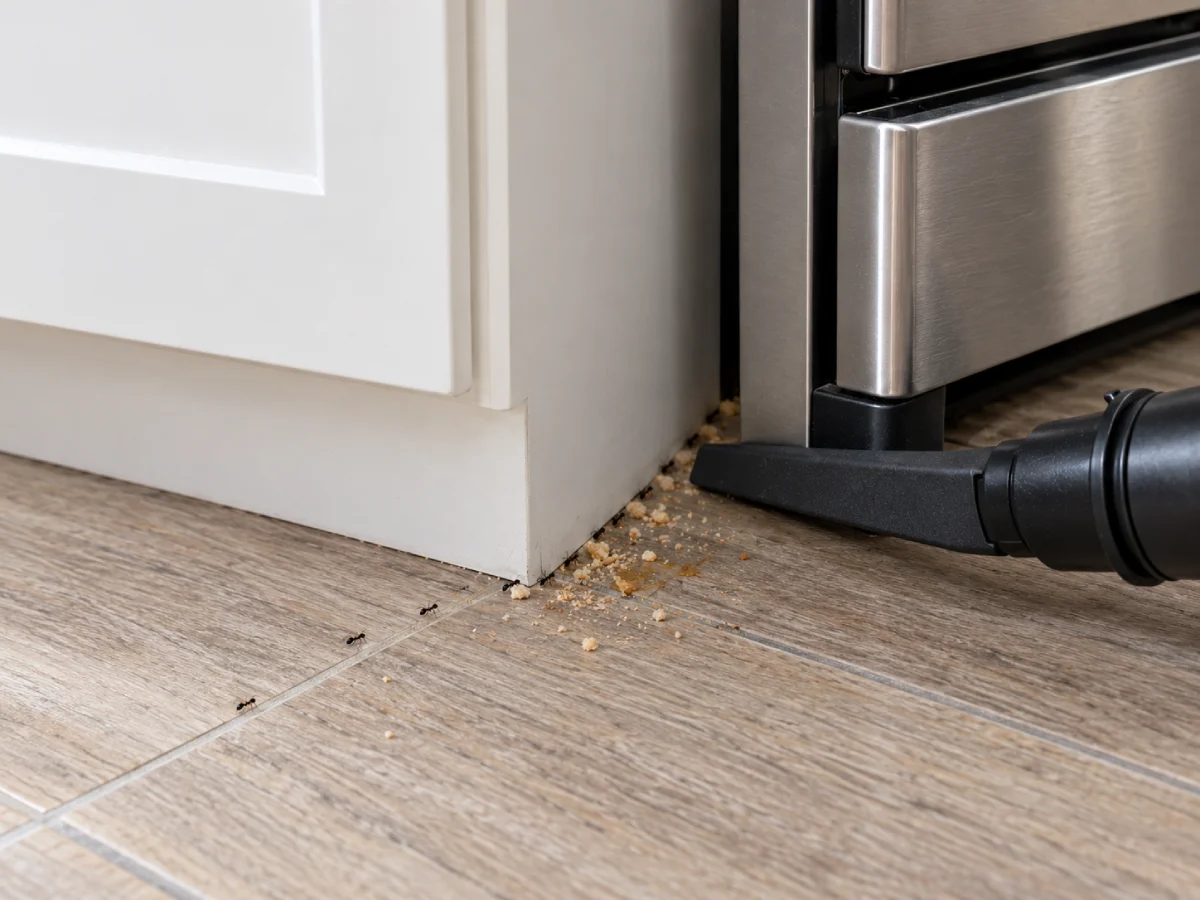
Food does not need to be visible on the counter. Oil droplets, crumbs, sauce, and pet food can collect in the narrow stove gap, beneath the lower drawer, around leveling feet, and along cabinet trim.
Remove knobs, grates, burner parts, or a lower drawer only as the appliance manual allows. Clean cool, accessible surfaces with a method approved for the finish. Do not flood seams or let cleaner run into burners, controls, vents, wiring, or insulation.
Use a crevice tool to vacuum dry debris along the accessible floor and cabinet edges. Empty the vacuum outside into a sealed bag if it contains live ants. A slim, nonmetal cleaning tool may reach the side gap, but never push a tool near a live electrical or gas connection.
Common food pockets to check
- The gap between the range and countertop
- The floor beneath the front edge and drawer
- Cabinet trim beside the appliance
- Backsplash seams and nearby condiment storage
- Pet bowls or trash stored along the same wall
Heat Alone Does Not Explain the Infestation
Warmth can make an appliance area attractive, but ants still need a route and usually a nearby resource. The space may offer food residue, condensation, a plumbing path from an adjacent sink, or shelter inside a wall void.
Do not assume the colony is inside the stove simply because ants vanish behind it. They may be passing along the wall, cabinet frame, cord opening, or floor joint. Confirm the direction before deciding where control belongs.
If the range shares a cabinet run with a sink or dishwasher, inspect that entire route for leaks and damp material. Our guide to tiny ants around the kitchen sink explains how to separate water, food, and plumbing-entry clues.
Trace the Route Beyond the Appliance
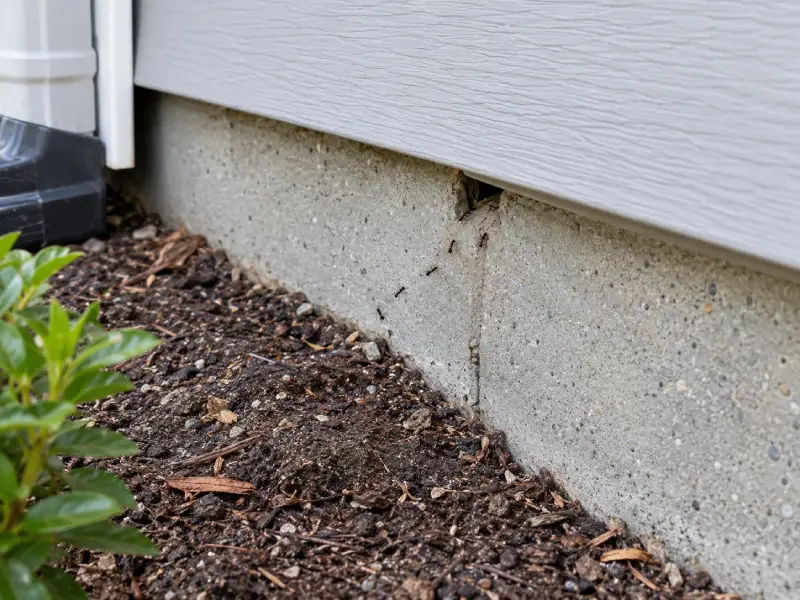
Inspect the matching exterior wall when the range sits against the perimeter of the house. Look for foundation cracks, siding joints, window gaps, utility penetrations, vegetation touching the structure, and damp mulch near that section.
An interior wall can still carry ants from another room, crawlspace, apartment, or exterior entry several feet away. Follow baseboards in both directions and check the back of adjacent cabinets. Do not drill into the wall or remove electrical covers to look for them.
Use a simple route sketch showing the stove, adjacent cabinets, sink, doors, and the last visible point. The fuller method for finding where ants enter a house can help connect the indoor line to an exterior opening.
Place Bait Near the Route, Not in the Appliance
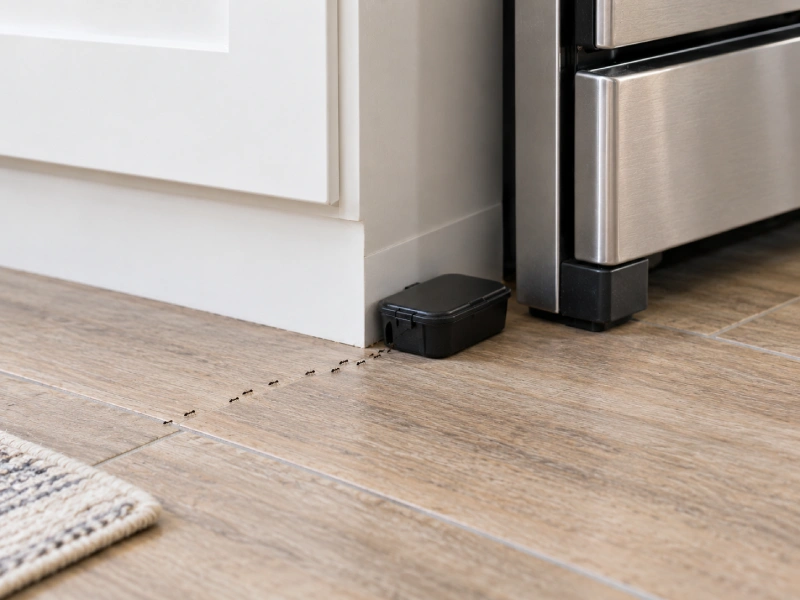
When bait is appropriate, choose a product labeled for the ant and indoor location. Place an enclosed station along an established edge outside the stove body, where heat, cleaning water, children, pets, dishes, and food cannot contact it.
Never put bait inside an oven, warming drawer, burner compartment, vent, electrical box, or appliance insulation. Do not apply loose gel to a hot surface or any place the label excludes.
Avoid insecticide spray near an active bait trail. Workers must remain able to feed and return toward the colony. If the station suddenly becomes busy, the article on ant bait attracting more ants explains what is normal and when to reassess.
Why Spraying Behind the Stove Often Disappoints
A contact spray may kill exposed workers but leave the colony and hidden route unchanged. Repellent residue can divert survivors along another cabinet seam, making the infestation look as though it moved.
Spraying blindly also raises unnecessary exposure risks around food preparation, flame, hot components, wiring, and inaccessible residue. A product’s label—not the fact that a gap is difficult to reach—determines where it can be used.
Clean the resource, use targeted control appropriate to the identified ant, and repair the confirmed entry point afterward. These steps take longer than knocking down a trail, but they address why the ants return.
Wait to Seal an Active Bait Route
Do not caulk the disappearance point immediately if workers are carrying bait through it. Early sealing may send them to another opening before control reaches the colony.
Once visible activity has stopped, clean the old trail with soapy water and make the suitable repair. Seal narrow stationary joints with a compatible caulk, repair failed backsplash seams, and close unnecessary utility gaps without covering ventilation or service access.
Do not seal around a gas line, electrical connection, appliance vent, or required clearance unless the repair method is approved for that assembly. An appliance installer or relevant trade can handle uncertain openings.
Apartment Ants May Need Building-Wide Action
In an apartment, the wall behind a range can connect multiple units through utility penetrations and cabinet voids. Cleaning one kitchen may reduce the local resource without eliminating ants moving through the building.
Photograph the trail, record dates, and notify property management. Ask whether adjacent units or common utility areas have reported activity. Uncoordinated spraying in one apartment can complicate an established trail without addressing the source.
Management should correct leaks, damaged seals, and building gaps as well as arrange pest control. Keep a written record of what was inspected and treated.
Call for Help When the Appliance Is Part of the Risk
Professional help is appropriate when ants appear inside the appliance, controls, electrical outlet, gas connection area, or an inaccessible wall void. It is also sensible when the range cannot be moved safely, bait is repeatedly ignored, several rooms are active, or the species cannot be identified.
Large ants with damp or damaged wood, coarse debris, or repeated nighttime activity deserve closer identification. Winged ants emerging indoors may indicate a nest in the structure.
Ask a pest professional to show the observed route and explain why the treatment fits the species and location. Appliance, gas, electrical, and moisture defects may require separate qualified repairs.
Solve the Hidden Cause Before Closing the Gap
Ants behind a stove are usually responding to a combination of access, shelter, and a resource—not the appliance name itself. Observe the trail, clean safely, trace the wall route, and use targeted control without contaminating the cooking area.
After activity ends, repair the confirmed gap and monitor the cabinet edges for several days. That measured sequence is safer and more durable than pulling a heavy range or spraying into a space you cannot see.