Why Ants Keep Coming Back After Cleaning
You wipe away the trail, clean every crumb, and enjoy an ant-free counter—until another line appears the next morning. That does not mean your cleaning failed. It means cleaning removed the visible activity without changing what is sending new workers into the room.
The colony may still be active outdoors, inside a wall, or beneath a floor. Ants can also return for water, grease hidden under an appliance, pet food residue, or access through a gap you have not found.
Instead of repeating the same cleanup, use the next trail as evidence. This guide shows what to inspect, why common fixes provide only temporary relief, and how to tell whether your control plan is actually working.
The short answer:
Cleaning does: Remove crumbs, spills, workers, and parts of the scent trail.
Cleaning does not: Eliminate a distant colony or permanently close its route indoors.
Best next move: Track the new ants before wiping them away.
Warning sign: Winged ants, wood debris, or repeated activity from a structural void.
Cleaning Removes Evidence, Not the Colony
Most ants seen on a counter or floor are workers. Their job is to leave the nest, search for resources, and return. Removing those workers can make a room look clear, but other members of the colony may continue using the same route.
When a worker finds something useful, it can reinforce a chemical trail that guides others. Washing the surface with ordinary soapy water helps remove that trail. However, a fresh scout can rediscover the room if the entry point and attraction remain.
This is why spraying or crushing a visible line often creates a short quiet period rather than a lasting solution. The action occurs at the end of the route, while the nest and access point remain untouched.
Watch the Next Trail Before Wiping It Away
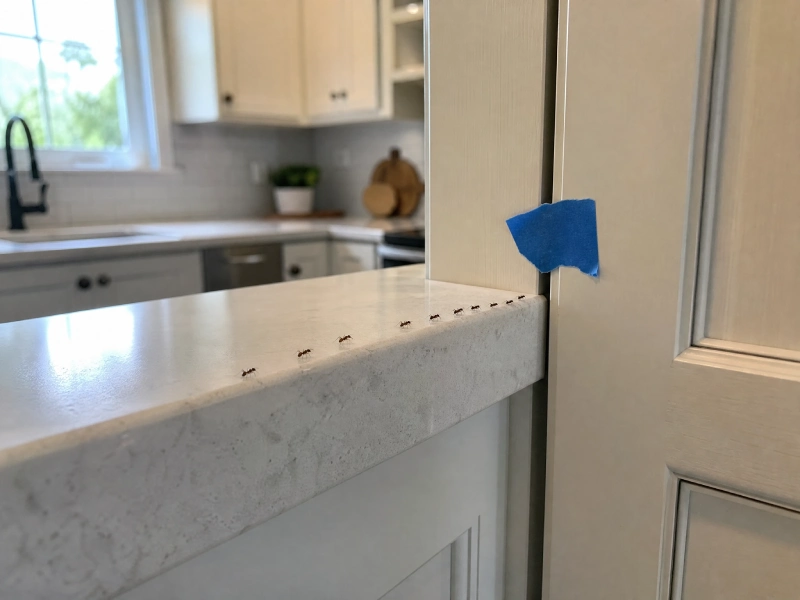
The next group of ants can show you more than a clean counter can. Observe them for five to ten minutes without disturbing the route.
Look at both directions of travel. Ants carrying food may move toward the nest, while unladen workers may be heading toward the resource. Follow the line to its narrowest visible point: a cabinet seam, pipe opening, window track, baseboard edge, cable hole, or door threshold.
Mark the location with removable painter’s tape. Then inspect the opposite side of that wall and the exterior at the same height. A trail that seems to vanish behind a sink may continue along a pipe, while one beside a window may lead to vegetation touching the building.
| Trail pattern | Likely meaning | What to inspect next |
|---|---|---|
| A steady line to one spill | Active food collection | Spill edges, nearby cracks, route back to the nest |
| Scattered ants around a sink | Searching for water or a route | Faucet, supply lines, drain trap, cabinet seams |
| Ants disappearing behind trim | Use of a structural gap | Baseboard, wall void, adjoining room, exterior crack |
| Activity after rain or heat | Weather-driven movement | Foundation, window seals, roofline, damp wood |
| Winged ants indoors | Possible indoor nesting activity | Save a specimen and arrange identification |
Find the Attractant Cleaning Missed
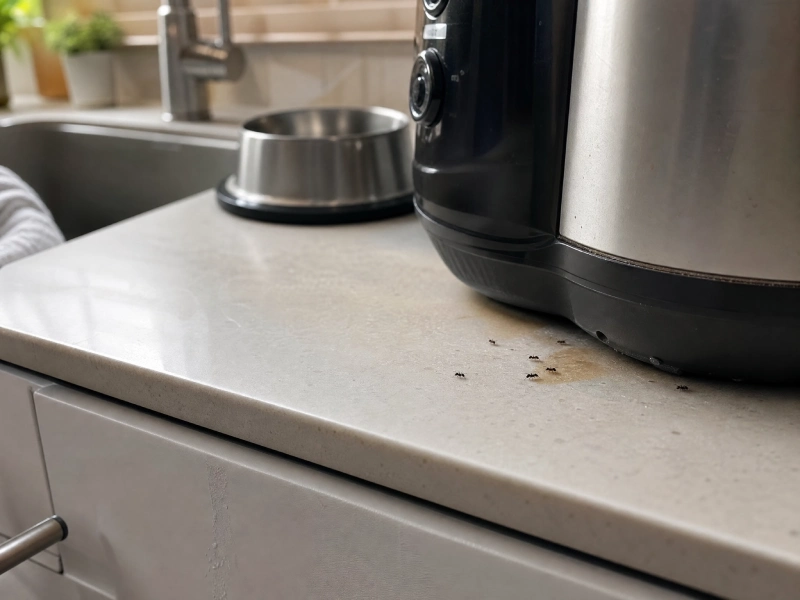
A room can look clean while still offering ants a dependable reward. Thin residues collect where routine wiping does not reach.
In a kitchen, inspect beneath the toaster and coffee maker, under the stove lip, around recycling containers, inside the trash-can rim, and below pet bowls. Grease can build up beside an oven or range hood. Syrup, juice, and drink residue may remain beneath bottles or inside cabinet corners.
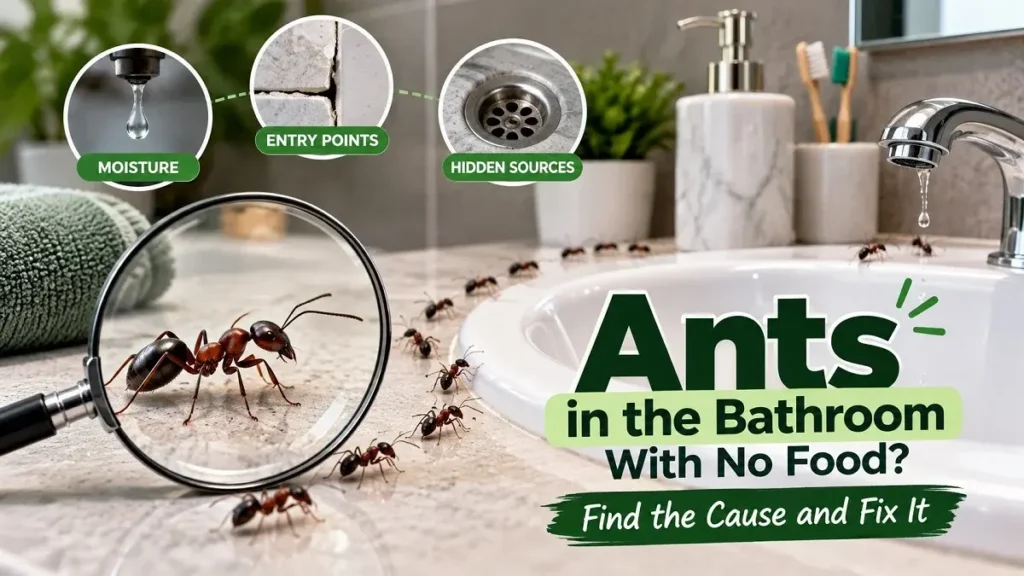
Water can be enough to sustain repeated visits. Look below sinks, around dishwasher connections, behind the refrigerator, and near condensation lines. In bathrooms, inspect damp grout, failed caulk, wet mats, and pipe penetrations. The guide to ants in the bathroom explains how to separate a moisture problem from an assumed food problem.
Outside, check overripe fruit, leaking irrigation, open garbage, aphid activity on plants, pet dishes, and vegetation touching the house. Ants living outdoors may use branches, wires, pipes, and foundation gaps as travel routes.
Why Spraying the Trail Often Fails
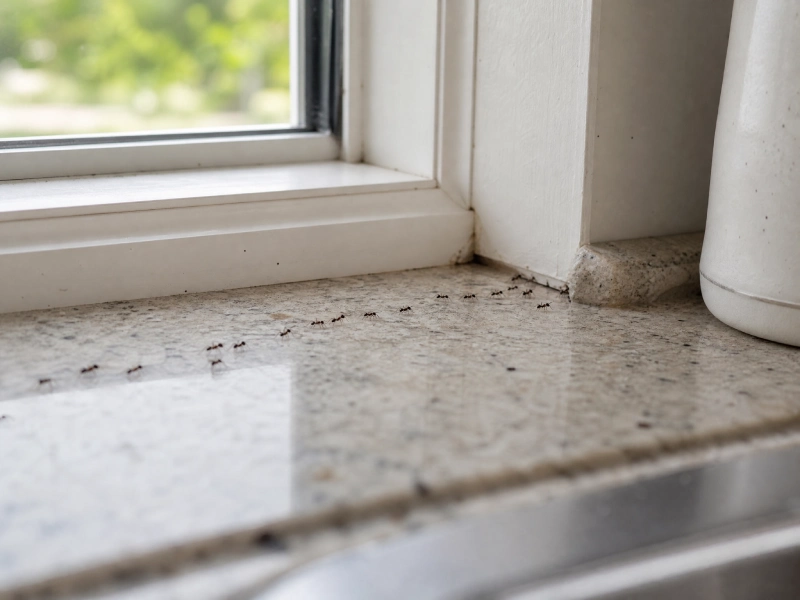
A contact spray may kill the workers it reaches. That visible result can feel effective, but it does not prove that the colony has been controlled.
Repellent treatments may also divert surviving workers to another opening. The ants then seem to have vanished from one counter before appearing beside a window, inside a cupboard, or in the next room.
Spray can interfere with bait when both are placed on the same active route. Workers need time to feed and return toward the colony. Killing or repelling them beside the bait works against that process.
Do not combine products because one method appears slow. Read the complete label before use and follow its instructions for placement, treated surfaces, occupants, pets, storage, and disposal.
Check Whether the Bait Matches the Problem
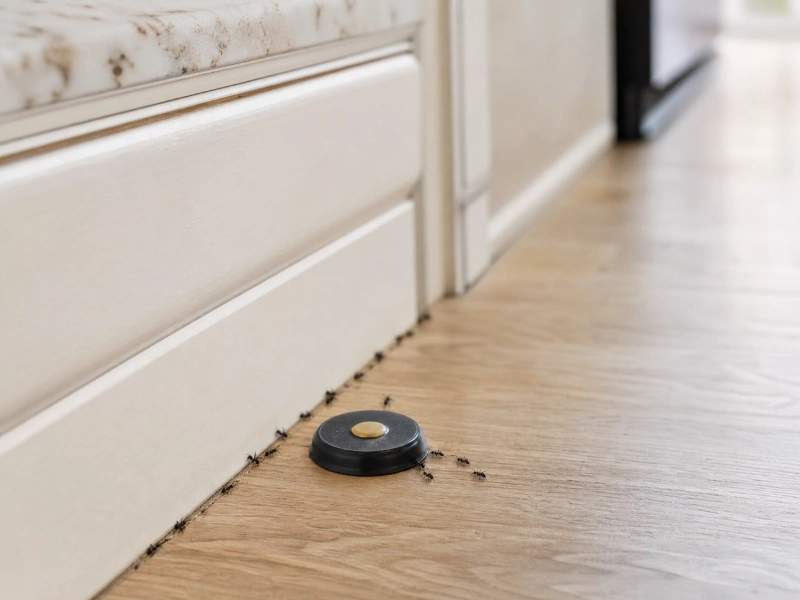
Ants do not accept every bait at every time. Species, colony needs, competing food, bait condition, and placement can affect feeding.
Place only a label-approved product where active workers can find it and where children and pets cannot reach it. A station in a random corner may remain untouched even when ants are active several feet away along a cabinet seam.
If workers ignore the bait, first check whether it has dried out, become contaminated by cleaner, or been placed away from the trail. Do not keep adding larger amounts without reviewing the label. Identification may be necessary when repeated placement changes make no difference.
Bait is probably helping when
- Workers feed without being disrupted.
- Activity follows a downward trend over the label’s expected period.
- The same trail becomes less active instead of shifting repeatedly.
- Fresh scouts do not establish another strong route.
Reassess the plan when
- The bait is consistently ignored.
- Activity spreads to additional rooms.
- Ants return as soon as one station empties.
- Several entry points remain active.
Seal Entry Points in the Right Order
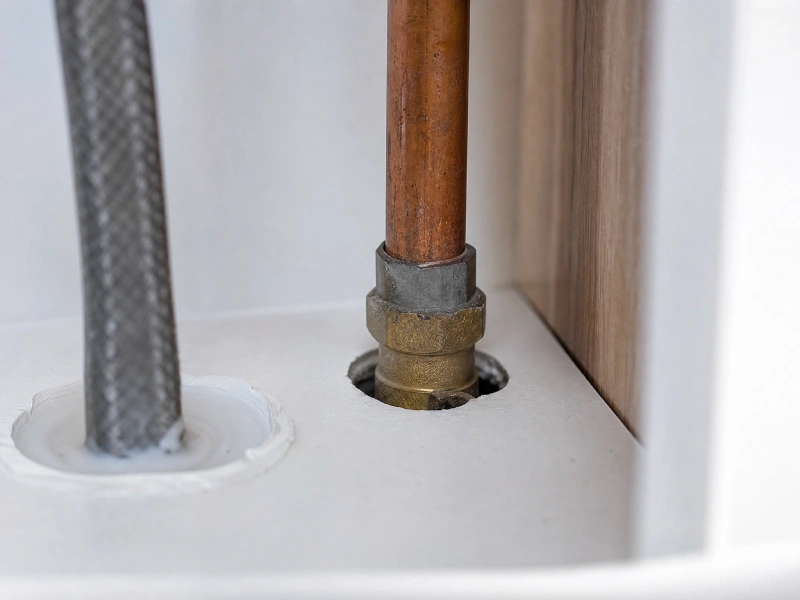
Caulk and exclusion help prevent future entry, but sealing the first visible crack during heavy activity can hide the route before you understand it. Ants may find another opening, especially when they are already traveling inside connected voids.
First document the route, correct moisture and food sources, and follow the treatment label. Once activity has fallen, close suitable gaps around window frames, door trim, utility penetrations, and plumbing openings.
Use the right sealant for the material and exposure. A dry interior cabinet seam has different needs from an exterior siding joint. Do not seal over an unexplained leak, softened wood, damaged wiring, or an active stinging-insect entrance.
Trim branches that touch the roof or siding where it is safe to do so. Move mulch and dense vegetation away from direct contact with the foundation when practical, and repair damaged screens or door sweeps.
Look Beyond the Room With the Ants
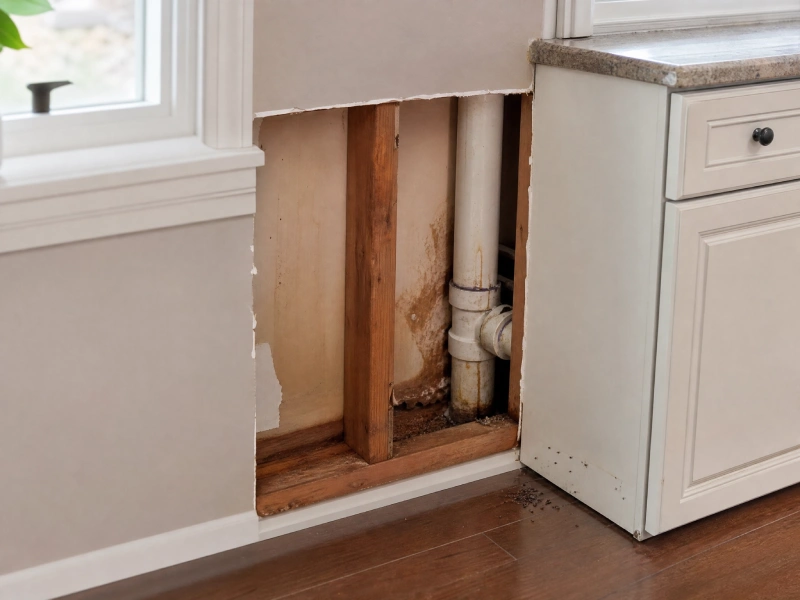
The place where you see ants may be only their destination. The source can sit on another floor, outside the building, or inside a shared wall.
Inspect the room above, below, and behind the activity. A bathroom leak upstairs can support ants that appear on a kitchen wall downstairs. A dishwasher connection can create moisture behind cabinets even when the visible floor stays dry.
Apartment residents should ask whether neighboring units have the same problem. Shared pipe chases, wall voids, trash areas, and exterior landscaping can allow recurring movement. Keep photographs and a dated record of sightings so management or a technician can see the pattern.
Measure Progress Instead of Expecting Instant Silence
A successful plan should produce a trend, not necessarily an immediate zero. Record the approximate number of ants, time of day, room, route, and whether they feed on bait.
| Check | Day 1 | Follow-up |
|---|---|---|
| Number seen | Establish a rough baseline | Look for a consistent decline |
| Active route | Mark the entry area | Confirm the trail is weakening |
| Moisture | Note leaks and damp surfaces | Confirm repairs stay dry |
| Bait | Record feeding or avoidance | Replace or adjust only as the label allows |
| New rooms | Note current boundaries | Escalate if activity spreads |
Avoid declaring success after one quiet day. Weather and colony activity can change temporarily. Continue inspecting the known route and correcting the conditions that attracted the ants.
Know When Repeated Ants Need an Inspection
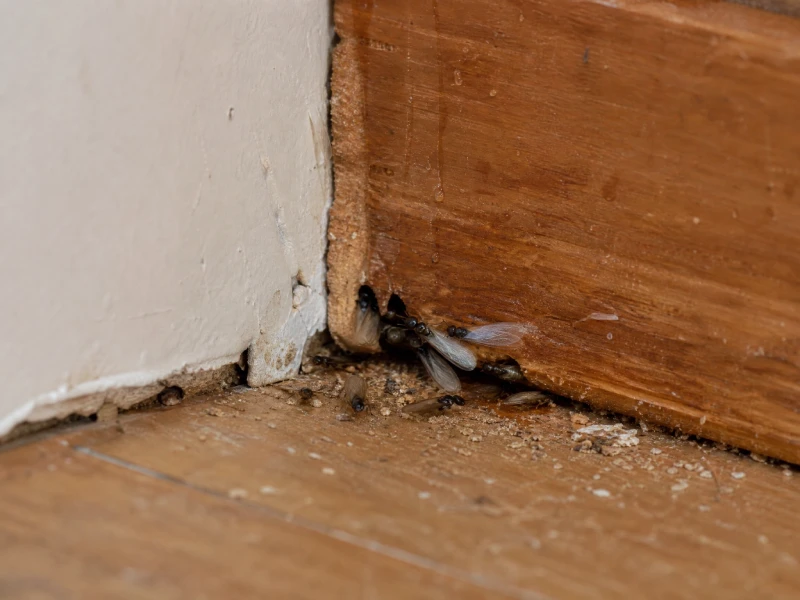
Professional identification becomes important when the ants are large, winged, associated with wood debris, or repeatedly emerge from damp structural material. These signs may indicate nesting inside the building rather than occasional outdoor foraging.
Get help when activity continues across several rooms, returns after correctly used label-approved treatment, or involves spaces you cannot safely access. Electrical outlets, high rooflines, enclosed wall cavities, and damaged wood are poor places for trial-and-error treatment.
Ask the technician to identify the pest, explain the evidence, locate contributing moisture or entry conditions, and describe the treatment plan. A repeated general spray without identification or follow-up may not address the reason the ants keep returning.
Break the Return Cycle
If ants keep coming back after cleaning, stop treating cleanliness as the only issue. Cleaning is valuable because it removes resources and scent trails, but it cannot close a wall gap, dry hidden wood, or eliminate a colony by itself.
Use the returning trail to locate the route. Remove food and water, choose one compatible control strategy, monitor the trend, and seal appropriate gaps after activity declines. That sequence solves more of the problem than repeatedly clearing the ants you can see.