Ants in the Bathroom With No Food? Find the Cause and Fix It
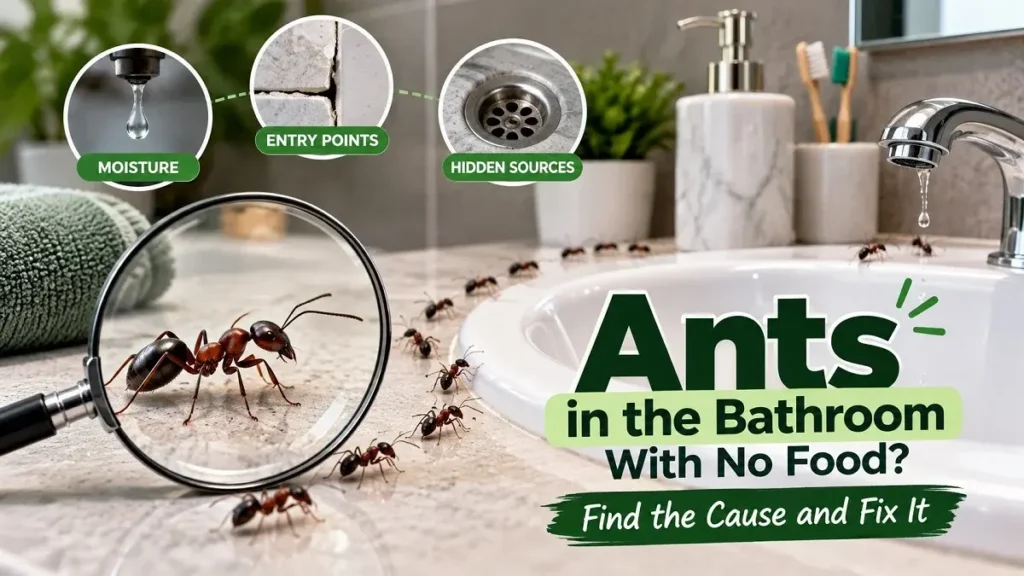
A spotless bathroom can still give ants exactly what they need. The attraction may be a few drops of water, damp grout, a warm wall void, or a plumbing gap—not food left in the room.
That is why repeatedly wiping or spraying the visible ants often brings only temporary relief. The workers disappear, but the moisture source, entry route, or hidden colony remains.
Before choosing a treatment, dry the room and follow the ants. The checks below will help you locate the likely source, use bait without disrupting it, and recognize when activity inside a wall needs professional attention.
Most likely attraction: Water from condensation, damp grout, a dripping fixture, or a hidden leak.
First check: Pipe openings, vanity gaps, tub edges, window trim, and toilet connections.
Avoid: Spraying directly around an active bait station.
Call a professional: When ants emerge from walls, damaged wood, electrical fittings, or several rooms.
Table of Contents
- Why a Clean Bathroom Still Attracts Ants
- Follow the Ants Before Removing the Trail
- Check for Moisture Before Setting Bait
- Identify the Ant Before Choosing a Treatment
- Use Bait Without Disrupting Its Job
- Seal Gaps After Activity Declines
- Why the Ants May Keep Returning
- When Bathroom Ants Need Professional Attention
- Fix the Water and Access, Not Just the Visible Ants
Why a Clean Bathroom Still Attracts Ants
Ants need food, water, and shelter, but they do not always find all three in the same room. Worker ants may collect food elsewhere and visit the bathroom only for moisture.
Common water sources include droplets left in the sink, condensation on pipes, wet bath mats, a slow toilet leak, and damp grout around a shower. A leak can be small enough to escape notice while still supporting insect activity.
Bathrooms also contain protected travel routes. Openings around supply lines and drainpipes connect the room to wall voids, floors, and adjoining cabinets. Cracked caulk, loose trim, and gaps behind a vanity can serve as entry points.
Warmth matters too. Wall voids near hot-water pipes and humid areas around showers can provide a more stable environment than exposed outdoor ground.
Follow the Ants Before Removing the Trail
Watch the ants for several minutes before wiping them away. Check whether they follow a defined line or wander individually. A trail usually leads toward an entry point, while scattered ants may still be searching for water or a usable food source.
Use a flashlight and inspect the following locations:
- The openings where pipes enter the wall or cabinet
- The underside and rear corners of the vanity
- Cracked caulk around the tub, shower, and backsplash
- The base of the toilet and the shutoff valve
- Window trim, baseboards, and door casing
- Electrical outlets or switches near visible activity
- The room directly behind or below the bathroom
Do not push a tool into an outlet or remove electrical covers unless the power is safely isolated and you know how to perform the inspection. Ant activity from electrical fittings is a reason to involve a qualified professional.
Do Ants Come Up Through Bathroom Drains?
An ant beside a drain does not prove it traveled through the plumbing. The sink or shower is often the nearest water source, so ants gather around it after entering through a nearby pipe gap, cabinet seam, or wall opening.
Dry the basin, close the stopper when the fixture is not in use, and observe the surrounding edges. If ants continue to appear outside the drain opening, inspect the plumbing penetrations before pouring cleaners or pesticides into the pipe.
Never place unused ant bait or pesticide down a drain. Use every pest-control product only in the locations permitted by its label.
Check for Moisture Before Setting Bait
A moisture problem can keep ants returning even after many workers have been killed. Dry all surfaces, hang damp towels, and remove wet bath mats. Look below the sink after running both hot and cold water.
Place dry paper beneath supply valves and the drain trap. New damp spots can reveal a slow drip that is difficult to see. Also check for swollen cabinet material, peeling paint, soft baseboards, musty odor, loose flooring, or recurring discoloration.
If the room has poor ventilation, run the exhaust fan during bathing and for a short period afterward. A working fan will not eliminate a colony, but reducing persistent humidity makes the room less attractive and protects finishes from moisture damage.
| What you notice | What it may indicate | Next check |
|---|---|---|
| Ants around the sink rim | Accessible droplets or condensation | Faucet base, supply valves, vanity seams |
| Ants beside the shower | Damp grout or failed caulk | Corners, curb, wall penetrations |
| Ants at the toilet | Moisture or a nearby floor gap | Shutoff valve, supply line, toilet base |
| Ants from a baseboard | Entry through a wall or floor void | Adjacent room and exterior wall |
| Winged ants indoors | A possible indoor nest | Save a specimen and request identification |
Identify the Ant Before Choosing a Treatment
Color alone is not enough to identify an ant. Several species may look like “tiny black ants” to an untrained eye, yet they can nest in different places and respond differently to disturbance.
Take clear photographs from above and the side. Add a coin or ruler for scale without crushing the specimen. Note whether the ants smell when crushed, appear only at night, move in a strong trail, have wings, or include noticeably different sizes.
Large ants emerging near damp or softened wood require closer attention. Carpenter ants do not eat wood like termites, but they can excavate moisture-damaged material for nesting space. Sawdust-like debris, repeated winged ants indoors, or activity from wooden trim deserves professional identification.
Do not describe every small bathroom ant as a moisture ant or odorous house ant. A useful treatment plan begins with evidence rather than a guess.
Use Bait Without Disrupting Its Job
Ant bait works differently from a contact spray. Foraging workers feed on an attractive bait and may carry it back toward the colony. That process takes time, so the first response can look alarming: more ants may gather after discovering the bait.
Place a label-approved bait near the active trail or entry point, not on a wet surface or where it can be reached by children and pets. Keep it away from toothbrushes, towels, cosmetics, and personal-care items.
Do not spray insecticide or strong repellent cleaner around the bait. Killing or diverting workers before they carry it away can interfere with the reason for using bait. Follow the product label for placement, quantity, replacement, and disposal.
Bait check: what to expect Early stage: Activity may briefly increase as workers recruit to the food source.
Monitoring stage: The number should begin trending downward rather than rising indefinitely.
Failure sign: Ants ignore the bait, move to another room, or remain active without improvement.
Next step: Recheck identification, moisture, placement, and the product label before changing methods.
Avoid promising that a bait will clear every colony in a fixed number of days. Species, colony size, available food, temperature, placement, and the bait formulation all affect the response.
Seal Gaps After Activity Declines
Sealing an obvious crack can prevent future entry, but timing matters. If ants are actively using a wall void, immediately closing one opening may send them through another route without addressing the colony.
Once activity has declined and any leak is repaired, seal appropriate gaps around plumbing escutcheons, trim, cabinet seams, and damaged caulk. Use a material intended for that surface and moisture level. Do not seal a toilet base to hide unexplained water; locate and repair the leak first.
Inspect the exterior side of the same wall where accessible. Look for vegetation touching the building, cracked sealant, utility penetrations, and damaged screens. The goal is to remove the access condition, not coat every surface with pesticide.
Why the Ants May Keep Returning
Recurring ants do not automatically mean the bathroom is unclean. The usual reasons are more practical:
- A slow leak or damp material remains undiscovered.
- The visible workers were killed but the colony was unaffected.
- Bait was placed away from the active route.
- Spray or strong cleaner disrupted the bait trail.
- The pest was misidentified.
- Ants are entering from a neighboring apartment or shared wall.
- A branch, pipe, cable, or exterior crack provides continuing access.
Apartment residents should document the dates, locations, photographs, and treatments used. Ask management whether adjoining units have reported activity. Treating one unit may not solve movement through a shared structure.
When Bathroom Ants Need Professional Attention
A few seasonal foragers near a window are different from ants repeatedly emerging from structural voids. Arrange professional identification when you see winged ants indoors, suspected nesting in damp wood, activity around wiring, widespread ants in several rooms, or no meaningful improvement after the label’s treatment period.
Professional help is also the safer option when the suspected entry point is inside a wall, below flooring, high on the exterior, or close to an electrical component. If anyone in the home has reacted severely to insect bites or stings, do not handle an unidentified pest casually.
Ask the technician what species is suspected, what evidence supports the identification, which moisture or entry conditions need repair, what products will be used, and what precautions apply to occupants and pets. Treatment without correcting the supporting condition may provide only temporary relief.
Fix the Water and Access, Not Just the Visible Ants
Ants in the bathroom are usually following an opportunity rather than judging the cleanliness of the room. Dry the surfaces, trace their route, inspect the plumbing, and identify the pest before choosing a treatment.
Bait can be useful when it matches the ant and is placed safely, but it should not replace leak repair or entry-point correction. When activity comes from walls, damaged wood, wiring, or several connected units, a professional inspection is the more reliable next step.