Polished Concrete Basement Floor: Costs, Benefits, and What to Expect
A polished concrete basement floor is created by grinding down the existing slab with progressively finer diamond tooling, then applying a densifier and sealer for a hard, low-maintenance surface. Costs typically range from $3 to $12 per square foot, depending on the condition of the slab and finish level. It works well in basements but requires moisture testing before installation.
Most basement floors get covered with carpet or vinyl and forgotten. But if you have a concrete slab already down there, you may be sitting on a floor that just needs grinding and polishing to look sharp. A polished concrete basement floor is durable, easy to maintain, and can handle heavy use. This guide walks you through costs, the polishing process, moisture concerns, and how it compares to other popular options so you can decide if it fits your space.
What a Polished Concrete Basement Floor Is
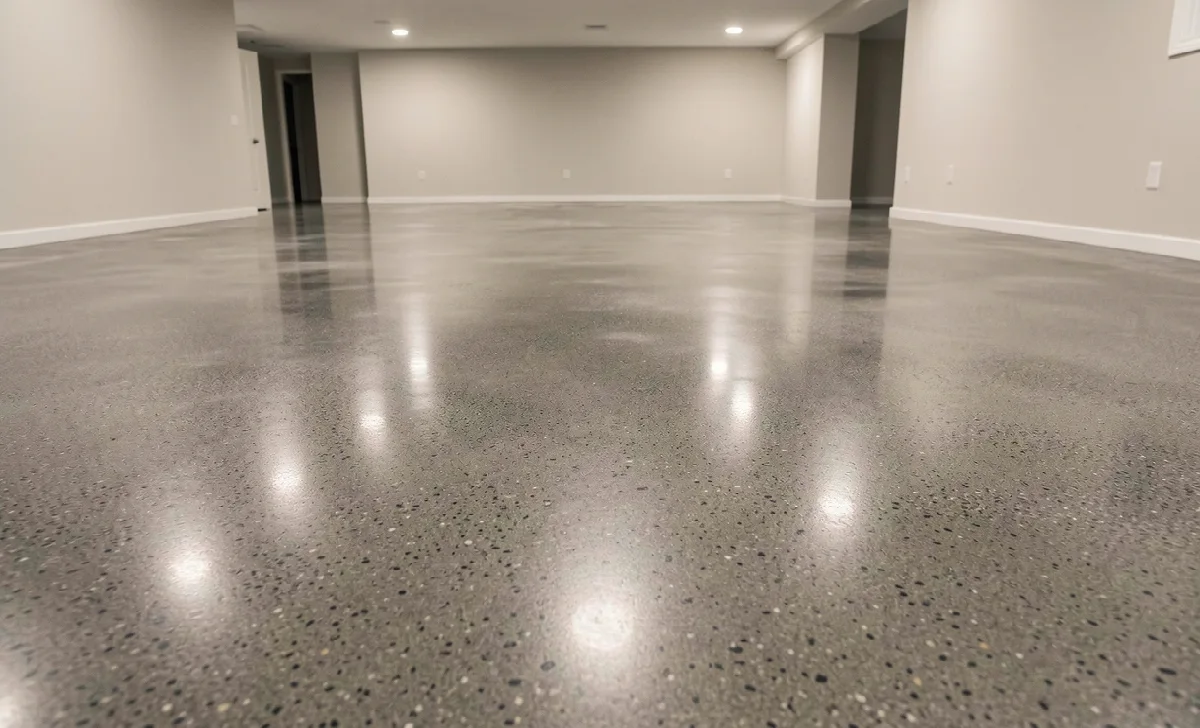
Polished concrete is not a coating or overlay. It is your existing slab, mechanically ground and refined using diamond-tipped tooling at increasingly fine grits. The process densifies the surface at a molecular level, making it harder and more resistant to staining.
The final look ranges from a matte, industrial finish to a high-gloss surface that reflects light clearly. That range depends on how many grinding passes the contractor makes and what sheen level you choose. Most contractors offer four levels: cream, salt-and-pepper, medium aggregate, and full aggregate exposure.
Basements are a good candidate for polished concrete because the slab is already in place. You are not adding a new material. You are refining what is already there.
What Polished Concrete Floors Cost
Prices vary based on the condition of your slab, the finish level, and your location. Here is a general breakdown:
- Basic matte finish (Level 1–2): $3 to $5 per square foot
- Mid-gloss finish (Level 3): $5 to $8 per square foot
- High-gloss finish (Level 4): $8 to $12 per square foot
- Crack repair, patching, or stain removal: $1 to $3 per square foot added
For a 500-square-foot basement, expect to pay between $1,500 and $6,000 for most projects. High-end finishes on large or heavily damaged slabs can push that higher.
Labor makes up a significant portion of the cost. A contractor needs industrial grinders, wet vacuums, densifiers, and sealers. This is not a DIY-friendly process if you want a quality result.
According to data from HomeAdvisor (2024), the national average for polished concrete flooring sits around $5 to $8 per square foot installed, with basement projects often on the lower end due to no sub-floor removal being required.
Benefits Worth Knowing Before You Commit
A polished concrete basement floor offers real advantages over carpet, tile, and coatings. Here are the most practical ones:
- Durability: Polished concrete does not chip, peel, or crack under normal use. It handles foot traffic, furniture, and storage weight without issue.
- Low maintenance: A dust mop and occasional damp mop is all it needs. No waxing or stripping required.
- No off-gassing: Unlike epoxy coatings, polished concrete does not release VOCs after installation.
- Longevity: A properly polished floor can last decades with minimal upkeep.
- Light reflection: Higher gloss levels can brighten a dark basement by bouncing natural and artificial light around the room.
- Radiant heat compatibility: Concrete has a high thermal mass, meaning it absorbs heat and releases it slowly and evenly across the surface. If you are considering in-floor radiant heating for your basement, polished concrete is one of the best finished surfaces to pair with it. The U.S. Department of Energy identifies concrete as an ideal subfloor material for radiant systems, and polished slabs work especially well because the finish does not insulate against heat transfer the way carpet or vinyl would.
One downside is the hardness underfoot. If you plan to use the space as a gym or playroom, consider adding area rugs or rubber mats in high-use zones. Polished concrete also reflects sound more than carpet or vinyl, so in a basement used as a living area or office, adding rugs or acoustic panels helps manage echo.
Moisture: The Biggest Basement Challenge
Moisture is the main reason polished concrete fails in basements. Unlike above-grade slabs, basement floors sit at or below ground level. Hydrostatic pressure from groundwater below can push moisture upward through the slab continuously, even if the surface looks dry. Concrete is porous by nature, and when water vapor migrates through it, a polished surface can delaminate, cloud, or allow mold to grow underneath any topical sealer.
Moisture problems in basement slabs can stem from several sources. Older homes are especially prone since building codes did not always require a polyethylene vapor barrier beneath the slab during construction. A high water-to-cement ratio in the original mix, inadequate curing time, or a high local water table can also be contributing factors. If you notice a white, powdery residue on your basement slab, that is efflorescence — salt deposits left behind as moisture evaporates from the concrete surface. Efflorescence is not just cosmetic. It is a visible sign that moisture is actively moving through the slab, and it must be addressed before any grinding or polishing begins.
For a quick initial screening, tape an 18-inch square of plastic sheeting to the slab and leave it for 24 hours. If condensation forms underneath or the concrete darkens, you have a moisture issue that needs professional testing (ASTM D4263). This is not a substitute for lab-grade testing, but it tells you quickly whether moisture is present.
Before any grinding starts, a contractor should perform a calcium chloride test (ASTM F1869) or a relative humidity probe test (ASTM F2170) to measure vapor emission from the slab. The acceptable threshold for most sealers is below 3 lbs per 1,000 square feet per 24 hours, or below 75% relative humidity inside the slab. Make sure the basement HVAC system has been running for at least 48 hours before testing. Moisture readings taken in a closed, unconditioned space can be misleadingly low compared to actual living conditions.
High moisture often brings elevated alkalinity with it. Dissolved salts traveling through the slab raise pH levels on the surface, which can break down sealers and coatings chemically from below. Your contractor should test pH levels alongside moisture to get a complete picture of what the slab is doing.
If moisture levels are high, you have two options. First, address the source, which could mean exterior drainage work or interior waterproofing. Second, apply a moisture-mitigation coating before polishing. Standard sealers handle moisture rates below 3 lbs per 1,000 square feet, but specialty moisture-tolerant primers are available that can manage vapor transmission rates up to 20 lbs. These add cost but protect the finish long-term.
Do not skip this step. A contractor who starts grinding without testing is cutting corners that will cost you later.
Polished vs. Sealed Concrete: Key Differences
These two options look similar on the surface but work very differently. Sealed concrete uses a topical coating applied over the slab. Polished concrete refines the slab itself with no coating layer.
The chemistry matters here. Topical sealers — acrylic, urethane, or epoxy — form a film on the concrete surface. They protect the slab but are only as strong as their bond to it. Over time, especially in basements with any moisture movement, that bond weakens and the coating can peel, yellow, or wear unevenly. Polished concrete, by contrast, uses penetrating silicate sealers that chemically react with calcium hydroxide inside the slab to form crystalline structures within the capillaries. There is no surface film to fail. The protection is part of the concrete itself.
Here is a quick comparison:
- Durability: Polished concrete is harder and resists scratches better. Sealers can peel or wear unevenly over time.
- Maintenance: Both are easy to clean, but sealed floors need recoating every 1 to 3 years, depending on traffic. Polished floors do not.
- Appearance: Sealers often have a slightly plastic look. Polished concrete has a more natural, stone-like appearance.
- Cost: Sealed concrete typically costs $2 to $5 per square foot. Polishing costs more upfront but less over time.
- Repairability: Scratches in a sealed floor may require recoating the entire surface. Polished concrete can often be re-polished in the damaged area only.
For a basement you plan to finish and keep long-term, polished concrete usually makes more sense than a sealer-based system.
How the Polishing Process Works
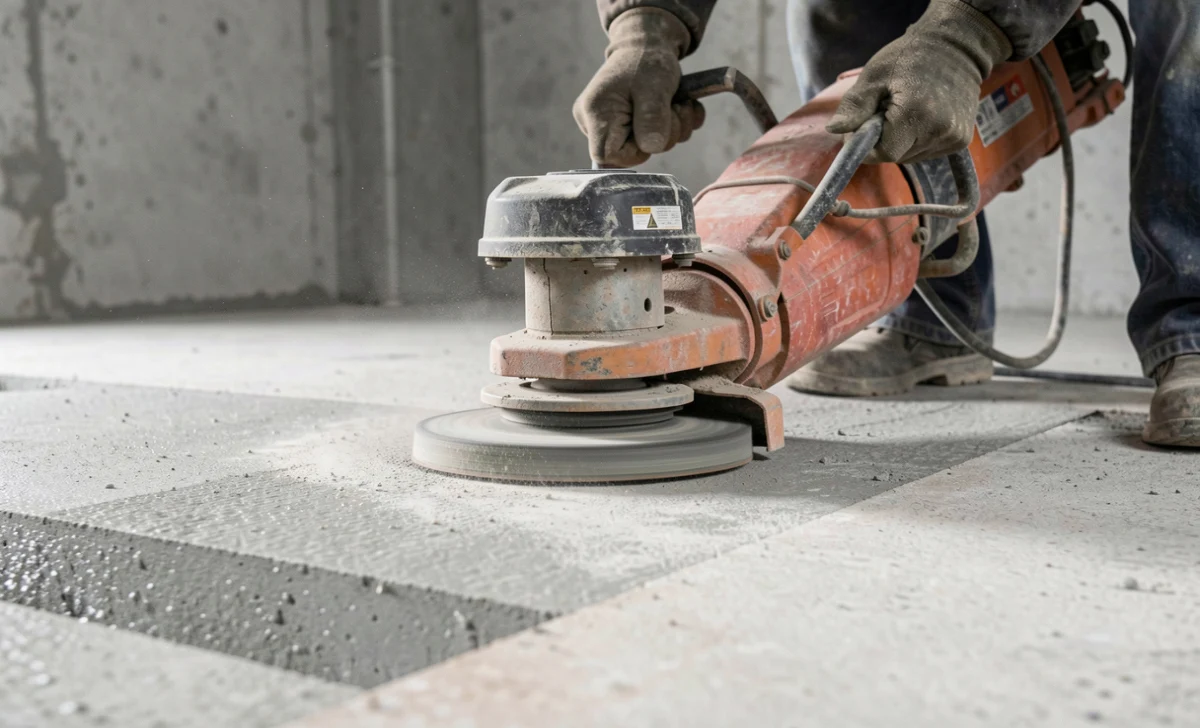
Understanding the process helps you ask better questions when hiring a contractor. Here is how a standard polish job goes:
- Surface prep: The contractor grinds the slab with coarse diamond tooling (16 to 30 grit) to remove any existing coatings, level high spots, and open the pores.
- Crack and joint repair: Damaged areas are filled with a semi-rigid polyurea or epoxy filler that bonds to the concrete.
- Progressive grinding: The contractor works through finer grits (50, 100, 200, 400) to smooth the surface and begin building sheen.
- Densifier application: A lithium or sodium silicate densifier is applied. It reacts with calcium hydroxide in the concrete to form crystalline structures within the capillaries, effectively hardening and sealing the surface from within. Lithium silicate densifiers are generally preferred for polished floors because their smaller molecular size allows deeper penetration into the slab. Sodium silicate is more economical and works in industrial or non-architectural applications, but for a basement floor you want to keep long-term, lithium silicate is the better choice.
- Fine polishing: Final passes at 800 and 1,500 or 3,000 grit achieve the desired gloss level.
- Guard or sealer application: A penetrating silicate-based guard is applied to protect against staining. Unlike topical coatings, this guard reacts within the slab rather than sitting on top of it, so there is no surface film to wear or peel over time.
The full process for a 500-square-foot basement typically takes one to two days.
Is Polished Concrete Right for Your Basement?
Polished concrete works well in basements used as home offices, workshops, living areas, or utility rooms. It is not the best fit for every situation.
Consider it a strong option if:
- Your slab is in decent condition with no major structural cracks
- Moisture levels test within acceptable limits
- You want a long-term floor that does not need replacing
- You prefer a cleaner look over carpet or vinyl
- You are planning to install radiant floor heating — polished concrete’s thermal mass makes it one of the most efficient pairings for in-floor heating systems
Consider other options if:
- You need a warmer, softer surface for a bedroom or kids’ play space
- Your slab has serious moisture problems that cannot be fixed economically
- Your budget is under $3 per square foot
According to the Portland Cement Association, properly maintained polished concrete floors can last the lifetime of the building. That kind of longevity changes the cost math considerably when you factor in what you would spend replacing carpet or vinyl every 10 to 15 years.
Frequently Asked Questions
Can you polish any concrete basement floor?
Most slabs can be polished, but the condition matters. Slabs with widespread spalling, heavy contamination, or active moisture intrusion may need remediation first. A contractor should assess the slab before giving you a quote.
How long does a polished concrete floor last in a basement?
With basic maintenance, a polished floor can last 20 to 30 years or longer. The key is controlling moisture and cleaning up spills before they sit.
Is polished concrete slippery when wet?
A high-gloss finish can be slippery. Most contractors apply a slip-resistant guard to reduce that risk. Matte and satin finishes have naturally better traction.
Do I need to move everything out of my basement before polishing?
Yes. The contractor needs full access to the slab. All furniture, storage, and any existing flooring must be removed before work starts.
Can I polish my basement floor myself?
You can rent a concrete grinder from equipment rental shops for roughly $150 to $300 per day. The challenge is not the grinding itself — it is knowing when to switch grits, how much material to remove, and how to apply densifier evenly. One missed grit level or an uneven densifier coat creates visible inconsistencies that are difficult to fix without starting over. For a basement you plan to use long-term, hiring a professional is worth the cost.
What is efflorescence, and does it affect polished concrete?
Efflorescence is a white, powdery residue that forms on concrete when moisture migrates through the slab and evaporates on the surface, leaving salt deposits behind. It is common in basements. Efflorescence must be resolved before polishing because it signals active moisture movement. Applying a densifier helps block the capillary pathways that allow these salts to reach the surface, but the underlying moisture source should still be identified and addressed.
Can I use radiant floor heating with polished concrete?
Yes. Polished concrete is one of the best finished surfaces for radiant floor heating. Concrete has a high thermal mass, so it absorbs heat from the system and releases it slowly and evenly into the room. Hydronic tubing or electric mats can be installed over the slab before a concrete overlay is poured and polished, or embedded directly into the existing slab during new construction. The polished finish does not insulate against heat transfer the way carpet or vinyl would.
How do I clean and maintain a polished concrete basement floor?
Use a dust mop or microfiber mop for regular cleaning. For damp mopping, use a pH-neutral concrete cleaner diluted according to the label. Avoid vinegar, citrus cleaners, or anything acidic — these can etch the surface and dull the finish over time. Wipe up spills promptly, especially acidic substances like wine or coffee. No waxing, stripping, or recoating is needed. A properly polished and densified floor maintains its appearance with minimal upkeep for decades.