Benefits of Investing in High-Quality Bedroom Furniture

Cheap bedroom furniture looks fine in the showroom photo. Then a drawer front pops off, the bed frame starts creaking, and two years later you’re buying the same piece again.
Well-made furniture costs more upfront, but it pays you back in ways that aren’t obvious at the checkout.
Here’s what you actually get for the extra money, and how to tell real quality from a nice finish on a weak core.
It Costs Less Over Time
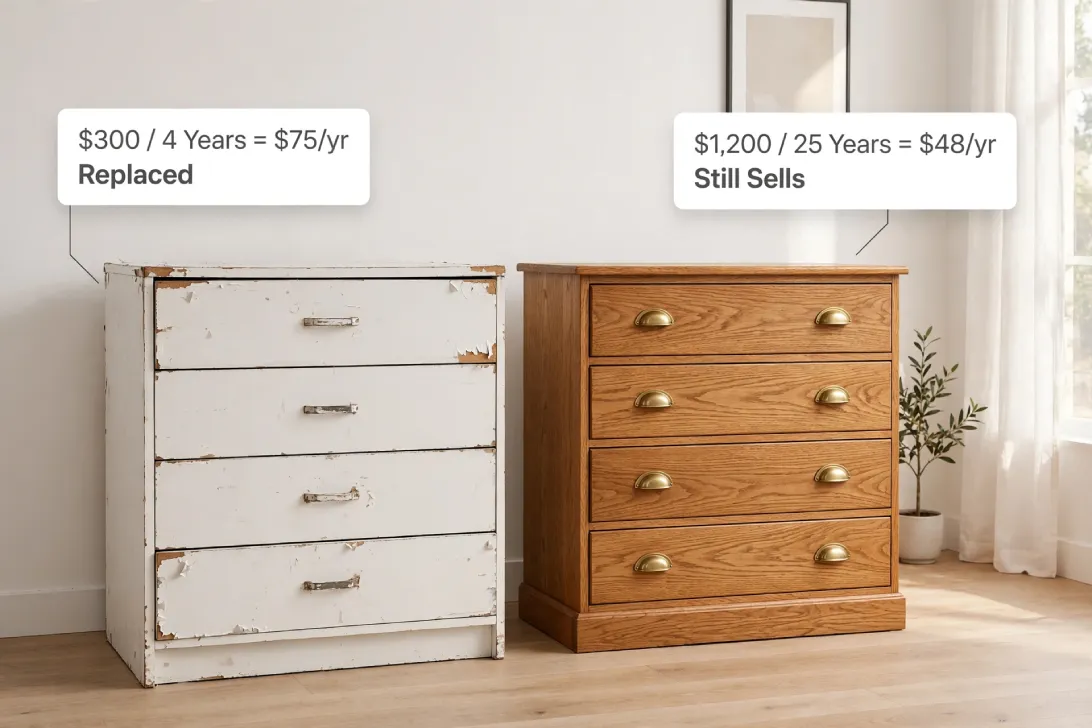
The real price of furniture is what it costs per year of use, not the sticker price.
A quick example: a $300 particleboard dresser that wobbles and gets replaced after 4 years costs about $75 a year. A $1,200 solid-wood dresser used for 25 years costs about $48 a year, and it can still be sold at the end.
That gap grows with pieces that take daily stress, like beds, dressers and nightstands with drawers you open several times a day. Those are the places where spending more makes the most sense.
It Lasts Because of How It’s Built
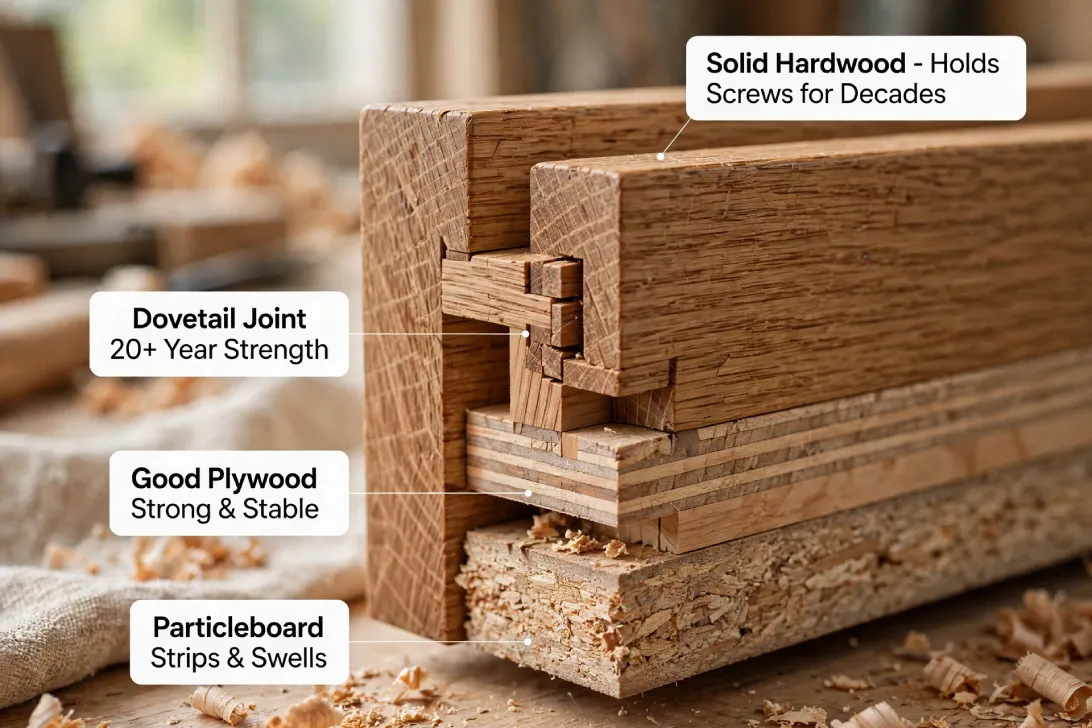
Durability comes from materials and joinery, not from the brand name. Solid hardwoods such as oak, maple, walnut and cherry resist dents and hold screws for decades. Good plywood is strong and stable too.
Particleboard and low-density MDF are where cheap furniture fails. Screws strip out of them, edges swell if they get damp, and they can’t really be repaired. Watch for “wood veneer” as well. A thin veneer over plywood can be excellent, while the same veneer over particleboard is not.
| Material | How it holds up | Watch out for |
|---|---|---|
| Solid hardwood (oak, maple, walnut) | Decades of use; can be sanded and refinished | Higher price; heavy to move |
| Solid softwood (pine) | Long-lasting but dents easily | Scratches and dings on tops and edges |
| Plywood (hardwood veneer) | Strong, stable and resists warping | Check edges are banded, not raw layers |
| MDF | Smooth and good for painted finishes | Heavy, swells if wet, weak around screws |
| Particleboard | Cheapest, shortest lifespan | Sagging shelves, stripped screws, peeling laminate |
It Supports Better Sleep
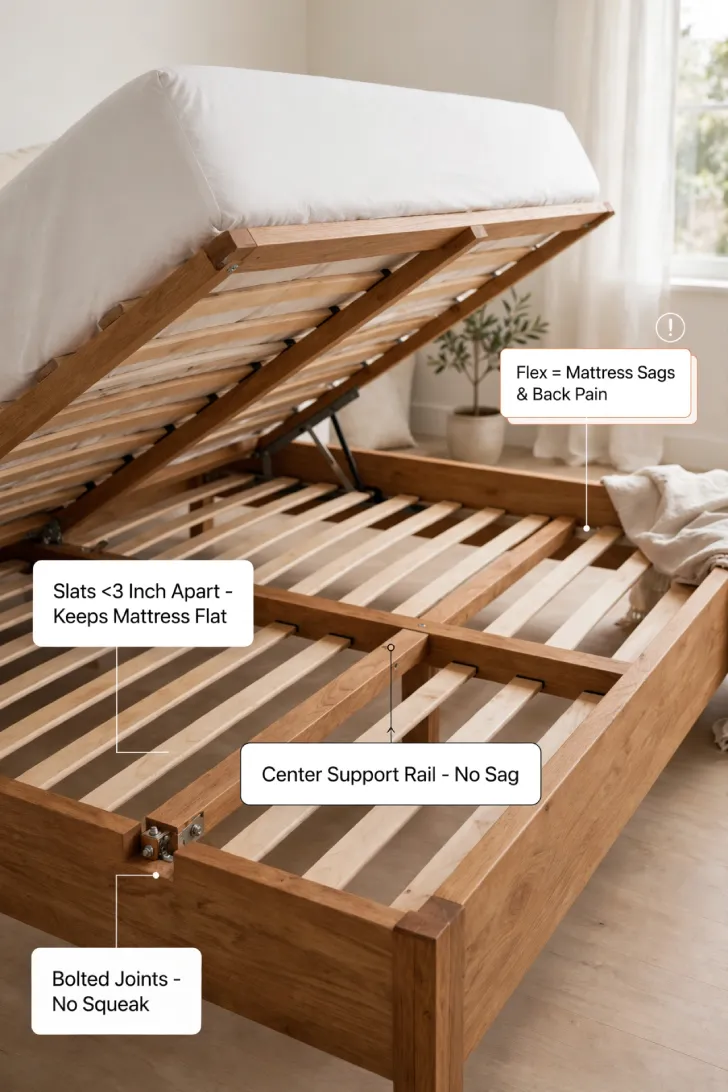
The bed frame is the one piece of bedroom furniture that affects your body every night. A solid frame with closely spaced slats and a center support rail keeps the mattress flat, which helps it last and keeps your spine supported.
Cheap frames flex in the middle, and the mattress sags with them. That’s often mistaken for a worn-out mattress. Quiet matters too. Bolted, tight-fitting joints don’t squeak every time you turn over. Our guide to metal vs wood bed frames compares the two most common options.
It Keeps Looking Good
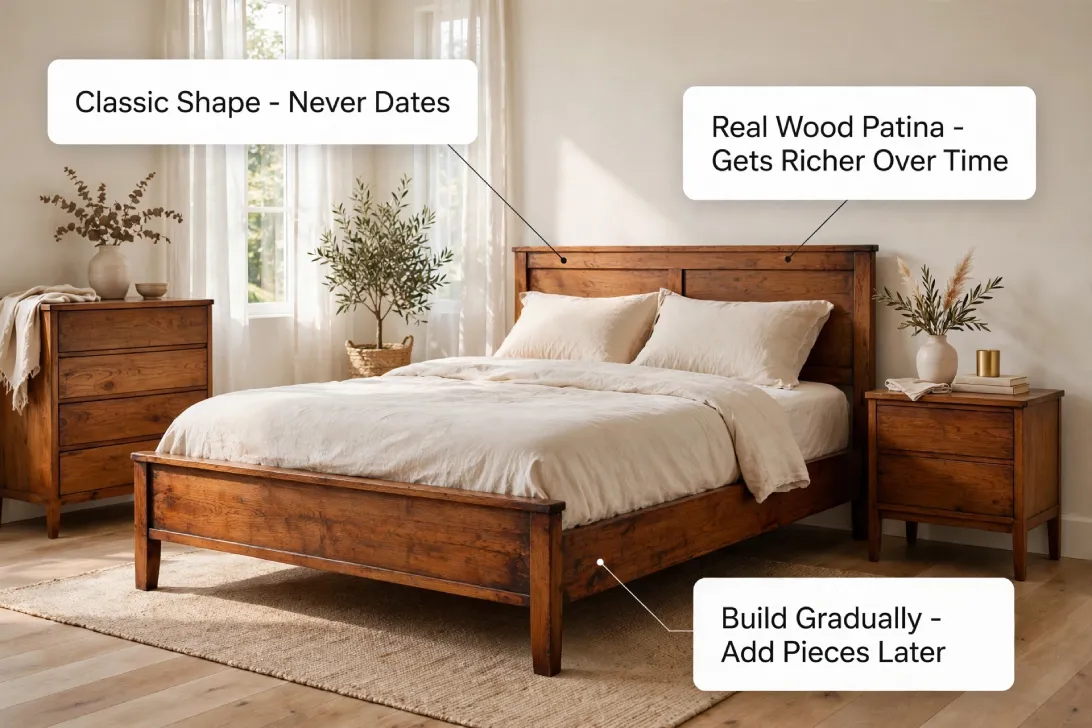
Quality furniture tends to use simpler, classic shapes and better finishes, so it doesn’t date as quickly as trend-driven pieces. Real wood also ages well, developing a richer colour and patina instead of chipping to reveal particleboard underneath.
Because the pieces last, you can build a bedroom gradually. Start with a good bed and dresser, and add nightstands or a bench later without everything having to match.
It Holds Its Value
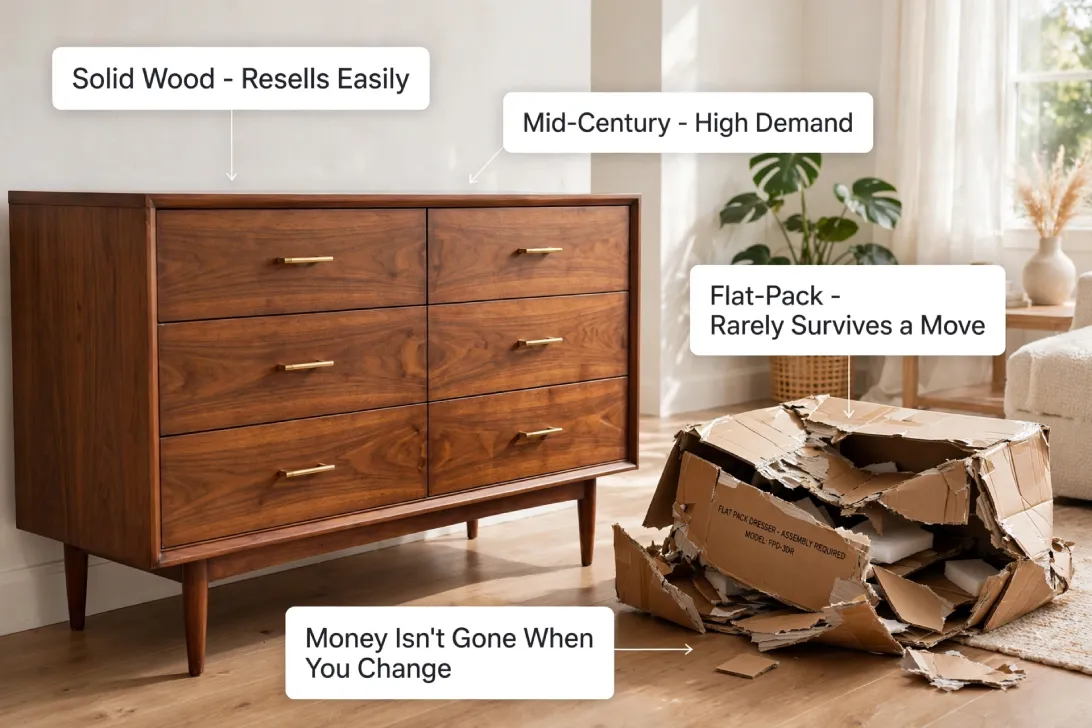
Well-made furniture is one of the few household items that resells. Solid-wood dressers, mid-century pieces and established brands sell easily on Facebook Marketplace or at consignment shops. Cheap flat-pack furniture rarely survives a move, let alone a resale.
That doesn’t mean furniture adds value to your home itself, since buyers rarely pay more for a house because of the bedroom set. It means the money isn’t simply gone when you’re ready for a change.
It’s the More Sustainable Choice
According to the US Environmental Protection Agency, Americans threw out about 12 million tons of furniture and furnishings in 2018, and most of it went to landfill. Buying fewer, longer-lasting pieces is the simplest way not to add to that.
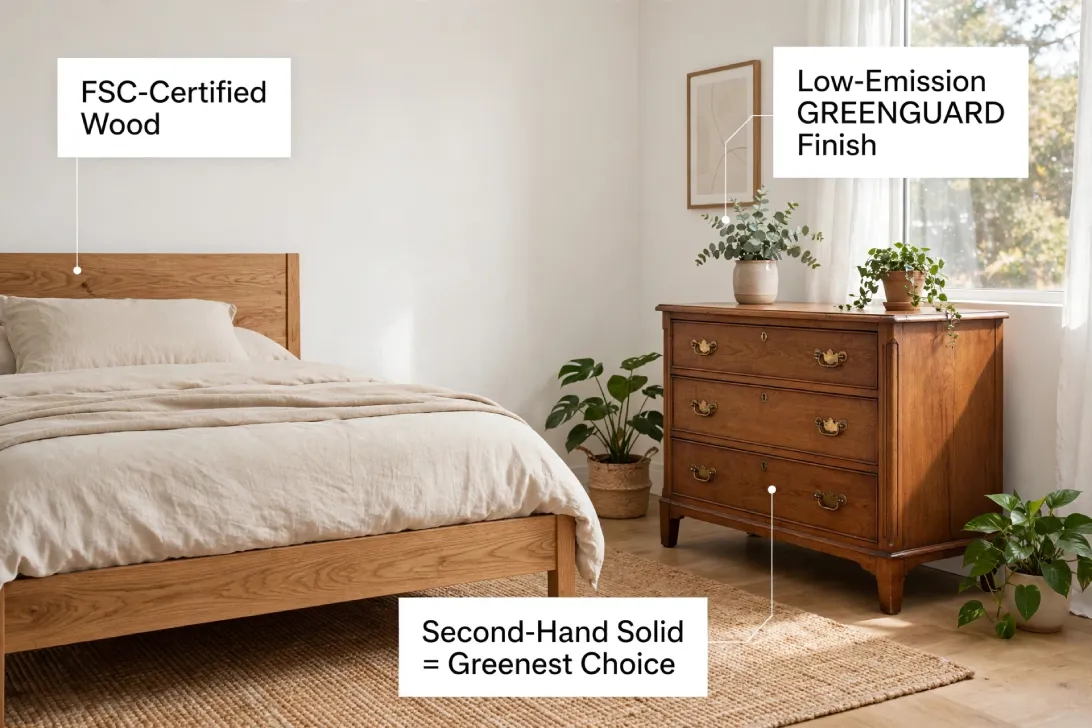
Look for FSC-certified wood (sourced from responsibly managed forests) and low-emission finishes, such as products tested to GREENGUARD standards. Second-hand solid furniture is the greenest option of all.
How to Spot Quality in the Store
These checks take a couple of minutes and reveal more than any product description:
- Pull a drawer all the way out. Look for dovetail joints at the corners, rather than staples or glue alone, and a drawer bottom set into a groove.
- Check the glides. Smooth metal ball-bearing or full-extension glides with a stop mean a better-built piece.
- Look at the back panel. Solid wood or plywood screwed in place is good. Thin hardboard stapled on is a cost-cutting sign.
- Push on a corner. The piece shouldn’t rack or wobble. Corner blocks inside a case or bed frame add strength.
- Lift one end. Solid wood and plywood feel heavy for their size. Very light pieces are usually particleboard or hollow-core.
- Read the warranty. Makers who trust their furniture typically offer longer coverage on frames and joints.
Shopper’s secret tip (tap to reveal)
Check the parts nobody looks at. Pull out the bottom drawer and look at the inside of the case, or tip a nightstand to see underneath. Makers cut corners where customers don’t look, so if those hidden surfaces are raw particleboard and staples, the rest of the piece is built the same way. Clean, finished wood there is a very good sign.
Conclusion
Investing in high-quality bedroom furniture means paying once for pieces that support your sleep, keep their looks and can be resold. You don’t have to buy everything at once. Put the money into the bed frame and the pieces you use most, check the joinery before you buy, and add the rest over time.