Metal vs Wood Bed Frame: Which One Is Better for You?
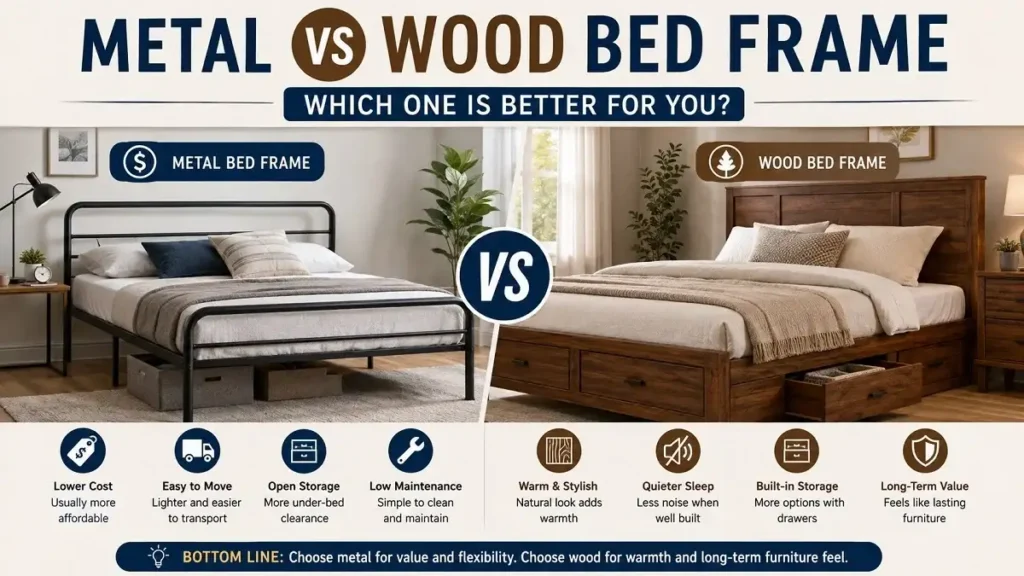
A metal bed frame is usually the better choice if you want something affordable, easy to move and simple to clean. A wood bed frame makes more sense if you care about a warmer look, quieter sleep, built-in storage and furniture you plan to keep for years.
Neither material is automatically better. Center support, slats, joints, finish and your mattress’s requirements matter just as much as the material.
Quick answer: pick metal for lower cost, easier moving and simple upkeep. Pick wood for a warmer look, a quieter feel and long-term furniture. If strength is your priority, compare how the frame is built, not just what it’s made of.
Metal vs Wood Bed Frame: Quick Comparison

| Metal bed frame | Wood bed frame | |
|---|---|---|
| Price | Usually more affordable | Often costs more, especially solid hardwood |
| Weight | Lighter and easier to move | Heavier and more substantial |
| Noise | May squeak if bolts loosen | Often quieter when well built |
| Storage | Open space underneath for bins | More likely to have built-in drawers |
| Look | Slim, industrial, modern or vintage iron | Warm, natural, furniture-like |
| Best for | Budgets, renters, frequent movers | Long-term rooms and a natural style |
If you haven’t chosen your mattress size yet, start there. This guide to bed sizes and room dimensions shows how much space the frame will actually take up.
What Makes Them Different?
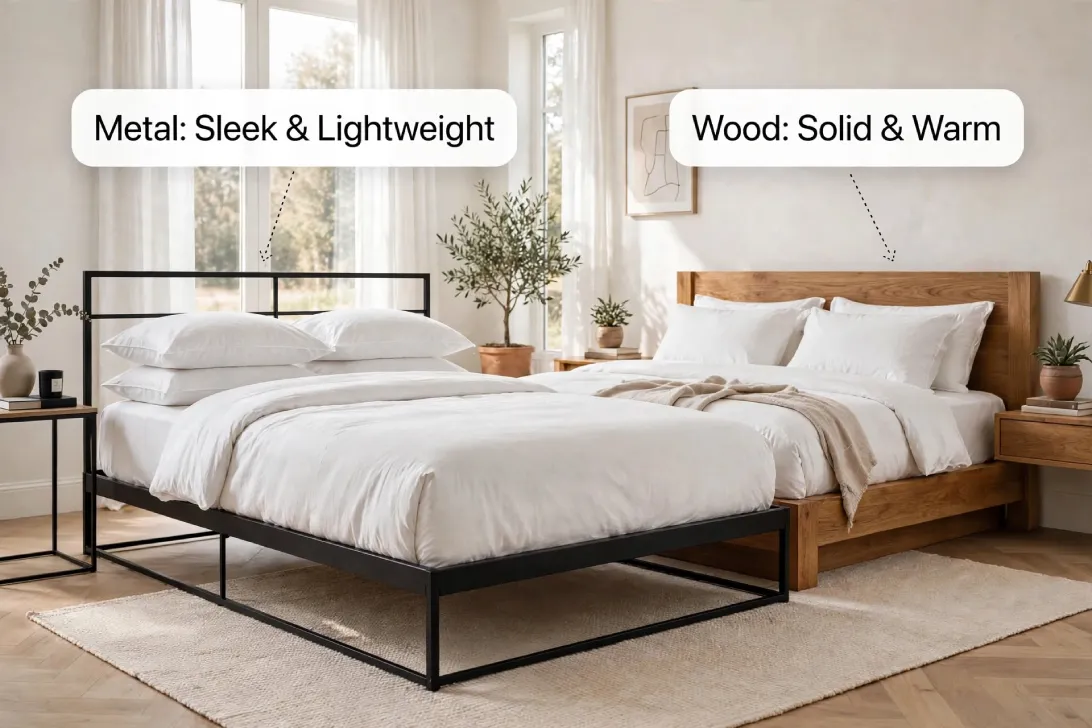
Most metal frames are made from steel tubing. Thicker, lower-gauge steel is stronger, while wrought iron or cast iron is used for heavier, decorative designs. A powder-coated finish protects the metal from rust and scratches.
Wood frames range from solid hardwood (oak, maple, walnut, rubberwood) to softwood such as pine, which is cheaper but dents more easily. Engineered materials like plywood, MDF and particleboard are also common. The material tells you about weight, look and maintenance, but not everything about quality.
A sturdy steel frame with good joints and a center support can outlast a poorly made wood bed. Likewise, a solid hardwood bed with secure joints will outlive a cheap particleboard frame by many years.
Durability
Both can last many years if they’re well made. They just wear differently.
Metal doesn’t crack or split, and a good powder coat handles normal bedroom humidity. Scratches that expose bare metal can rust in damp rooms, though, and bolted joints can loosen over time.
Solid wood stays strong for decades. Kiln-dried hardwood is the most stable, while poorly dried wood can shrink or swell slightly with the seasons. Look for mortise-and-tenon joints or metal bed-rail brackets rather than just screws into particleboard.
Strength and Mattress Support
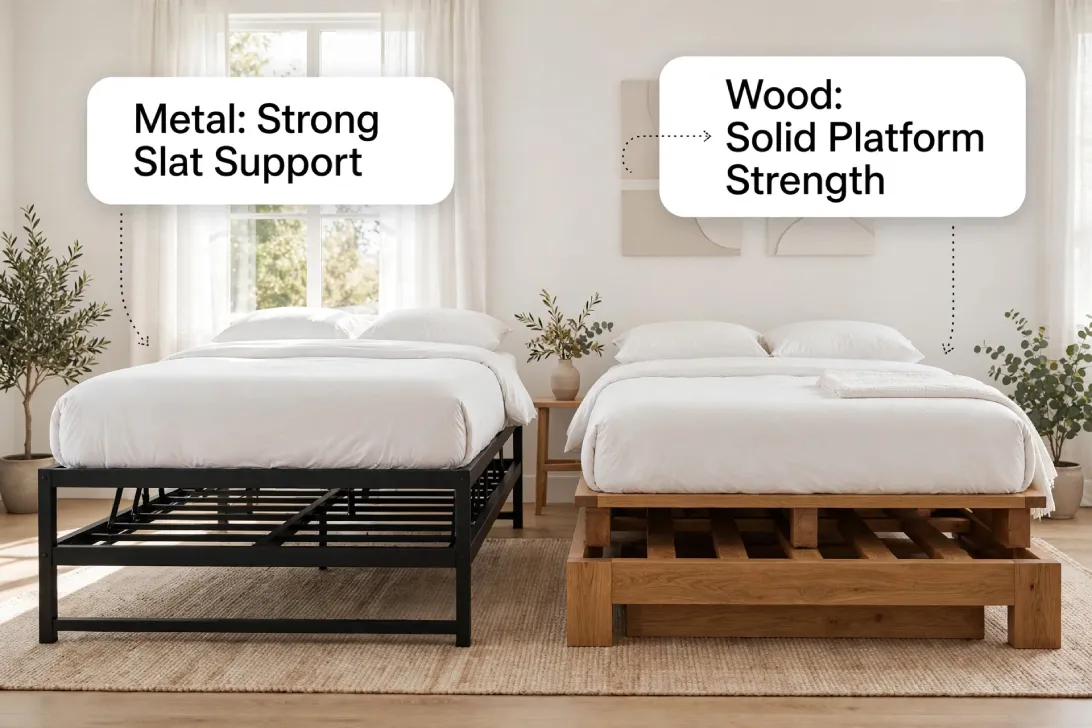
Metal isn’t automatically stronger just because it feels harder. How much weight a frame can hold depends on its design: center support legs, rail thickness, joints and the manufacturer’s stated weight limit.
Slat spacing matters even more for foam, latex and hybrid mattresses. Many manufacturers ask for slats roughly 3 inches apart or less, and a frame that doesn’t meet that can void the mattress warranty. Queen and larger beds should have a center rail with at least one support leg. Check both against your mattress requirements before buying.
Which Is Quieter?
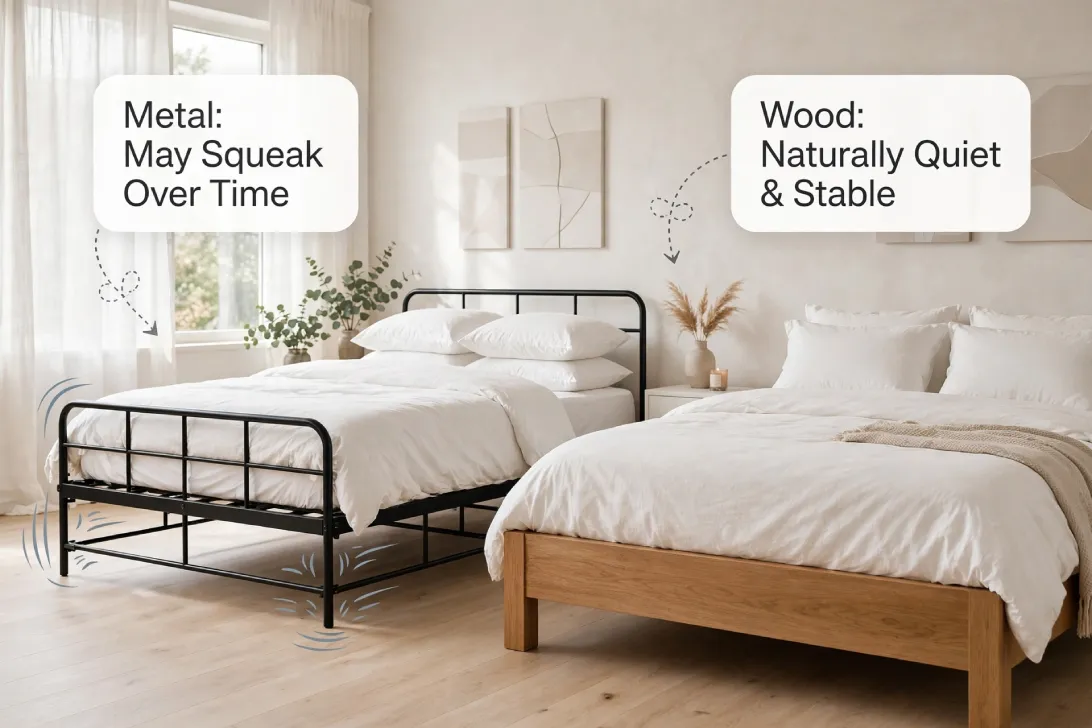
A well-built wood frame usually has the edge. Wood doesn’t make the metallic rubbing sound that loose steel parts can.
That doesn’t mean every metal bed squeaks. Welded frames have fewer moving joints, and rubber or felt pads between contact points help a lot. Wood beds can creak too if joints loosen. If you’re a light sleeper, look at joint design and noise comments in reviews rather than choosing by material alone.
Installer’s secret tip (tap to reveal)
Most squeaks come from metal rubbing on metal or wood rubbing on wood at the joints. On a metal frame, add nylon or rubber washers to each bolt before tightening. On a wood frame, rub a little paraffin wax or a bar of soap on the slat ends and rail joints. Both take ten minutes and often silence a frame completely.
Which Costs Less?
Metal is usually cheaper at entry and mid-range levels, which makes it practical for guest rooms, rentals and first apartments. Wood covers a much wider range, from affordable engineered wood to expensive solid oak or walnut.
The lowest price isn’t always the best value. A frame that starts wobbling after two years costs more in the end than a sturdier one that lasts ten. Compare the support system, hardware, finish and warranty along with the price.
Maintenance and Cleaning
Metal frames are the easiest to keep clean. Open rails and legs wipe down quickly, and there are few flat surfaces for dust. The main job is to touch up any chips in the coating so rust can’t start.
Wood needs regular dusting, and spills should be wiped up quickly so they don’t mark the finish. With either material, tighten bolts every few months. It stops small wobbles from becoming squeaks or loose joints.
Assembly and Moving
Metal usually wins if you move often. Many frames break down into rails and legs, or fold flat, and they’re light enough for one person to carry.
Wood frames are heavier, especially solid ones with big headboards, footboards or drawers. Before ordering, check the packed weight and box sizes, measure tight stairs and doorways, and confirm the headboard and rails come apart for moving.
Storage: Which Works Better?
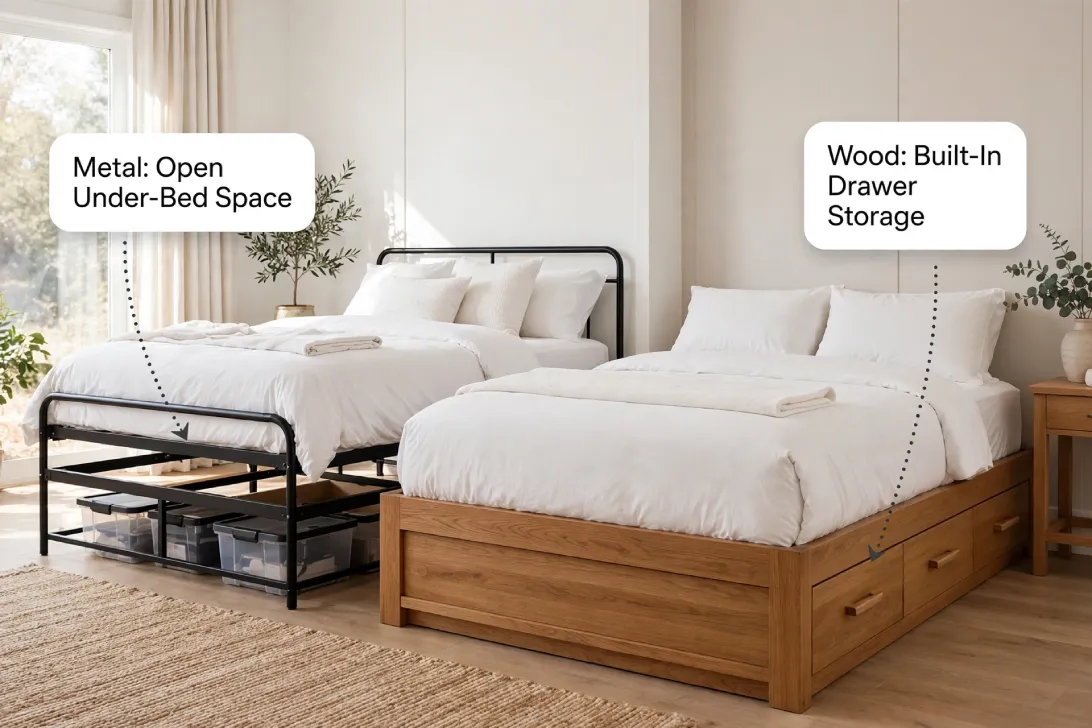
Metal platform frames commonly leave 10 to 14 inches of open space underneath, which is ideal for rolling bins or vacuum-sealed bags that you can pull out and swap easily.
Wood frames more often come with built-in drawers or a lift-up (ottoman) base. These hide clutter and can replace a dresser in a small room, though they add weight and moving parts. Check the actual clearance or drawer dimensions rather than judging from photos.
Style and Bedroom Design
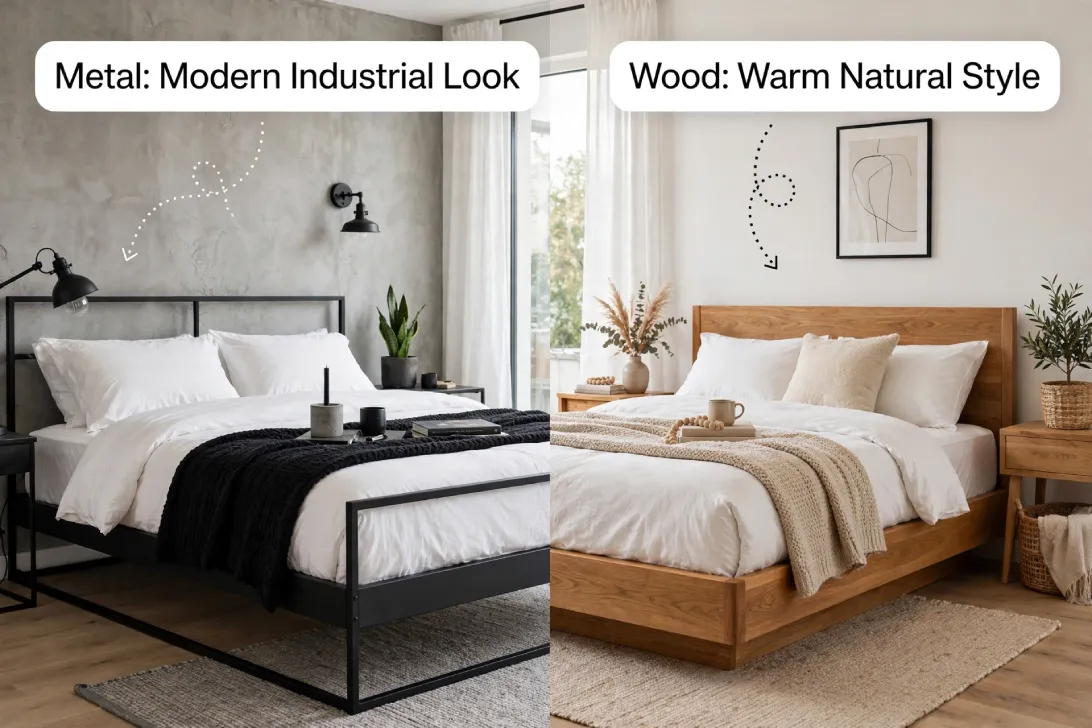
Wood brings warmth and suits traditional, rustic, Scandinavian, Japandi and mid-century rooms. Oak and walnut finishes are easy to match with other furniture.
Metal looks lighter because its rails and legs are thinner. Black steel suits modern and industrial bedrooms, while brass or ornate white iron gives a vintage or cottage look. Neither material limits you to one style. A slim wooden platform can look very modern, and a curly iron frame can look traditional.
Which Is Better in a Humid Room?
Humidity affects both in different ways. Unprotected metal can rust, so in coastal homes and basements choose powder-coated or rust-resistant finishes and check scratches regularly.
Wood absorbs and releases moisture, which can loosen joints over time, particularly in lower-quality or poorly dried timber. With either type, keep the room ventilated, run a dehumidifier if needed and avoid pushing the bed against a wall that often feels damp.
Which Should You Buy?
Choose based on what matters most to you:
| Your priority | Better choice |
|---|---|
| Lowest cost | Metal |
| Moving often | Metal |
| Quiet sleep | Wood (well built) |
| Hidden storage | Wood with drawers |
| Long-term furniture | Solid wood |
| Strength | Either, depending on construction quality |
What to Check Before Buying Either Type

- A center support rail and legs on Queen beds and larger.
- Slat spacing that meets your mattress manufacturer’s requirements.
- Secure side rails, stable legs and joints that don’t wobble when pushed.
- A stated weight limit that covers the mattress and all sleepers.
- Whether you need a box spring, a bunkie board or nothing at all for your mattress.
For metal, check the coating and the welds. For wood, ask exactly what it’s made of: solid timber, plywood, MDF, particleboard or a mix.
For a child’s room, either material works. Look for rounded or padded corners, secure hardware and a frame that doesn’t wobble, and follow the manufacturer’s age and weight limits for bunk or loft beds.
Final Recommendation
Choose a metal bed frame if you want a lower-cost, lighter frame that’s easy to move. It’s especially practical for renters, guest rooms and small spaces.
Choose a wood bed frame if you want a quieter, warmer-looking bed that feels like permanent furniture, especially when built-in storage and long-term use matter more than portability. In the metal vs wood bed frame decision, construction quality should break any tie. For more on what separates good furniture from cheap, see our guide to high-quality bedroom furniture.