Types of Bed Sizes: Dimensions and How to Choose the Right One
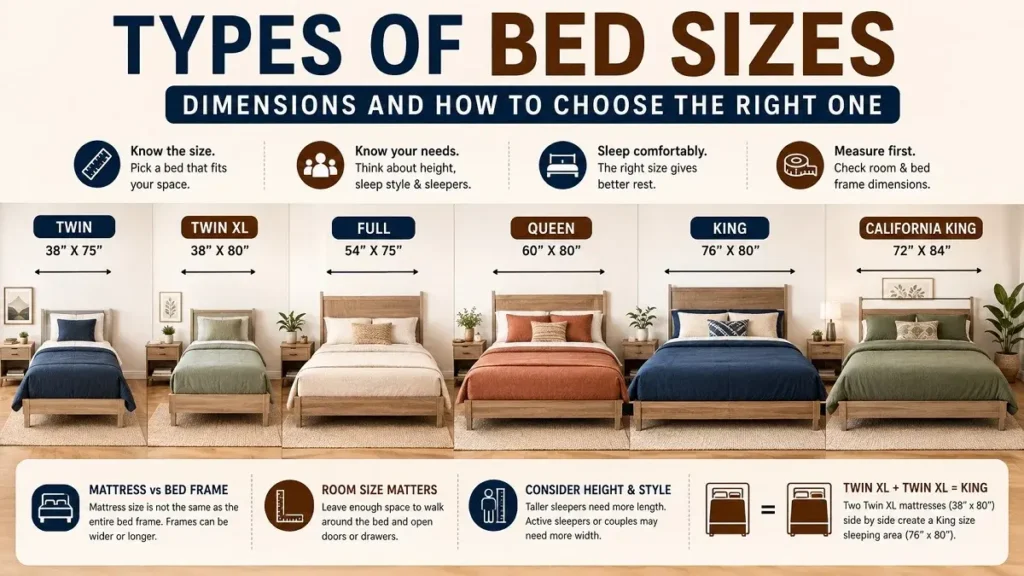
There are six main types of bed sizes in the US: Twin, Twin XL, Full, Queen, King and California King. The right size depends on how many people sleep in the bed, how tall they are, and how much floor space the room has.
The measurements below are for the mattress itself, not the complete bed frame. A headboard, footboard or wide side rails make the finished bed larger, so leave extra space when planning your room.
Quick answer: Twin and Twin XL suit one sleeper, Full gives one person more width, Queen suits most couples, King gives the most standard width, and California King adds extra length for tall sleepers.
Bed Sizes and Dimensions at a Glance
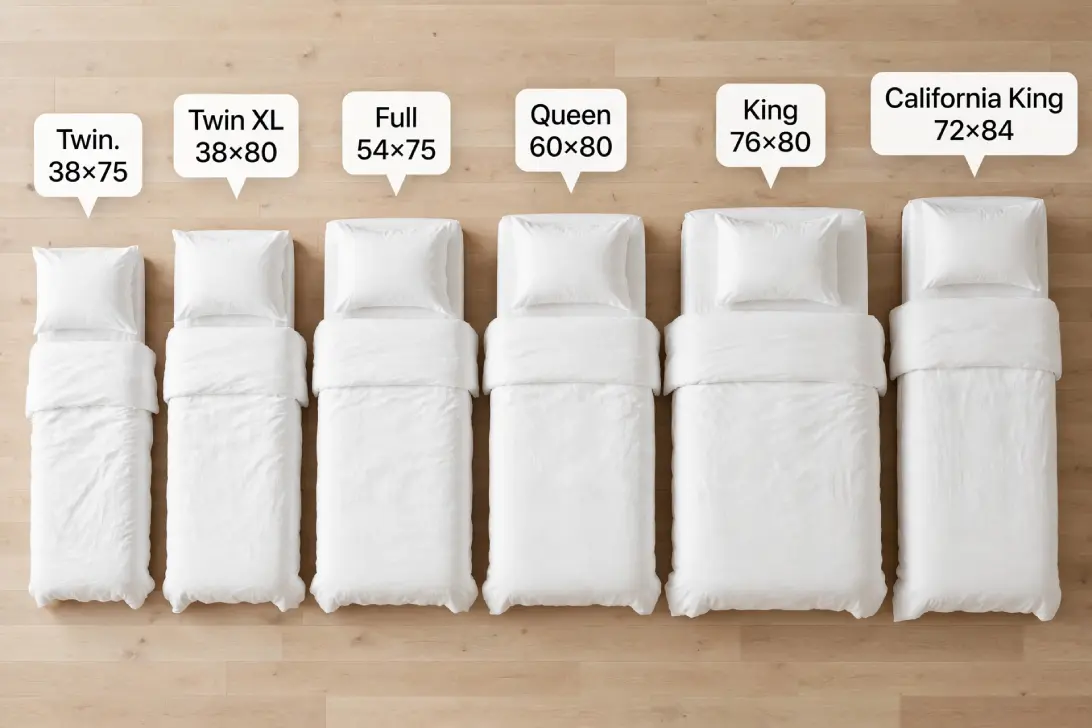
These are the standard dimensions used for US mattresses. They can vary by an inch or so between manufacturers, so confirm the exact size before buying sheets or a frame.
| Bed size | Inches | Approx. cm | Suggested room | Best for |
|---|---|---|---|---|
| Twin | 38 x 75 | 97 x 191 | About 7 x 10 ft | Kids and single sleepers |
| Twin XL | 38 x 80 | 97 x 203 | About 8 x 10 ft | Taller single sleepers, dorm rooms |
| Full / Double | 54 x 75 | 137 x 191 | About 10 x 10 ft | Single adults and guest rooms |
| Queen | 60 x 80 | 152 x 203 | About 10 x 12 ft | Couples, or roomy solo sleeping |
| King | 76 x 80 | 193 x 203 | About 12 x 12 ft | Couples who want maximum width |
| California King | 72 x 84 | 183 x 213 | About 12 x 12 ft | Tall sleepers who need extra length |
Suggested room sizes are starting points, not fixed rules. Doors, closets, other furniture and the outer size of the frame all affect how comfortably a bed fits. Our guide to the perfect bedroom size covers clearances in detail.
Twin vs Twin XL: Same Width, Different Length
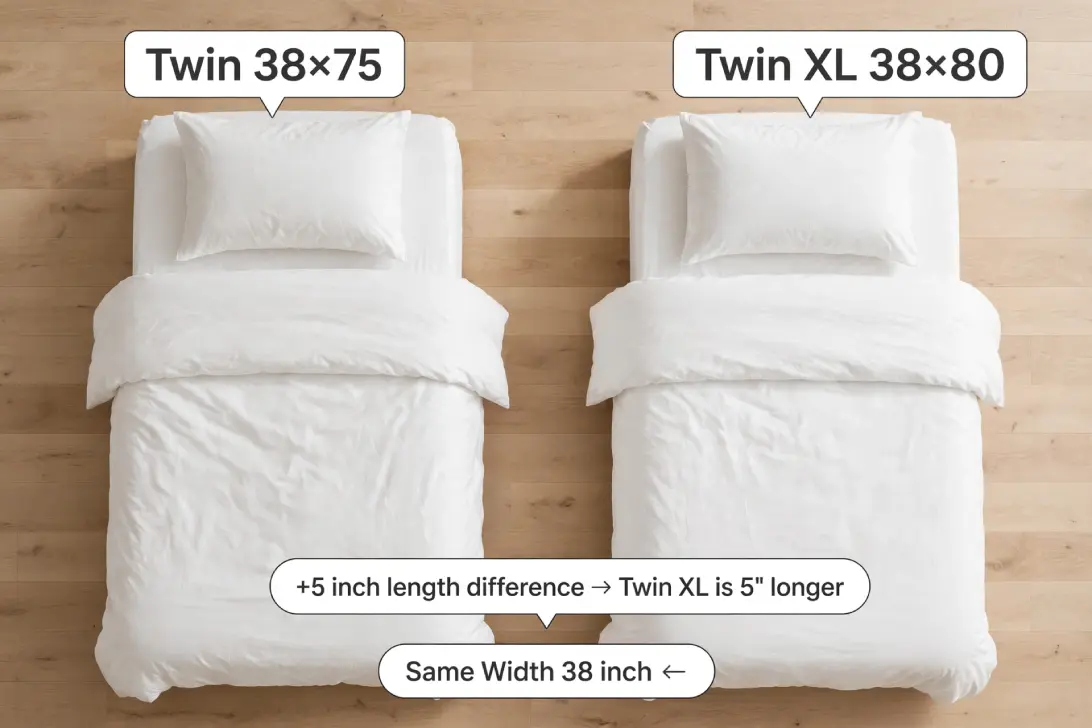
A Twin is about 38 inches wide and 75 inches long. Its small footprint suits children’s rooms, bunk beds, daybeds and compact guest rooms.
A Twin XL keeps the same width but stretches to 80 inches, giving five extra inches of legroom. That’s why it’s the standard in college dorms and a better choice for teenagers and adults. Twin XL sheets are labelled separately, as regular Twin sheets won’t fit.
If you’re furnishing a small room, pairing a smaller bed with space-saving modular furniture helps you use the floor more efficiently.
Full Size Bed: More Space for One Sleeper
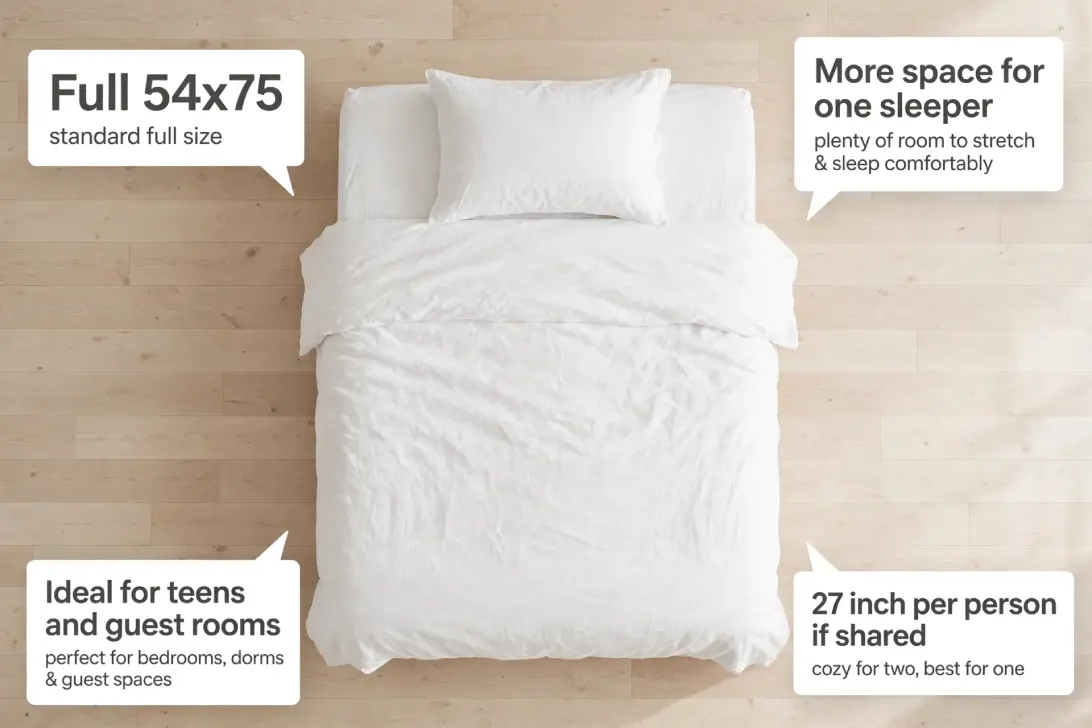
A Full, also called a Double, measures about 54 by 75 inches. It gives one person noticeably more room than a Twin without needing the floor space of a Queen, which makes it popular for teenagers, single adults, studio apartments and guest rooms.
Two adults can share a Full, but each gets only about 27 inches of width, which is roughly the width of a crib mattress. Couples are usually much happier on a Queen. A Full is also only 75 inches long, so tall sleepers should look at an 80-inch size.
Queen Size Bed: The Most Popular Choice
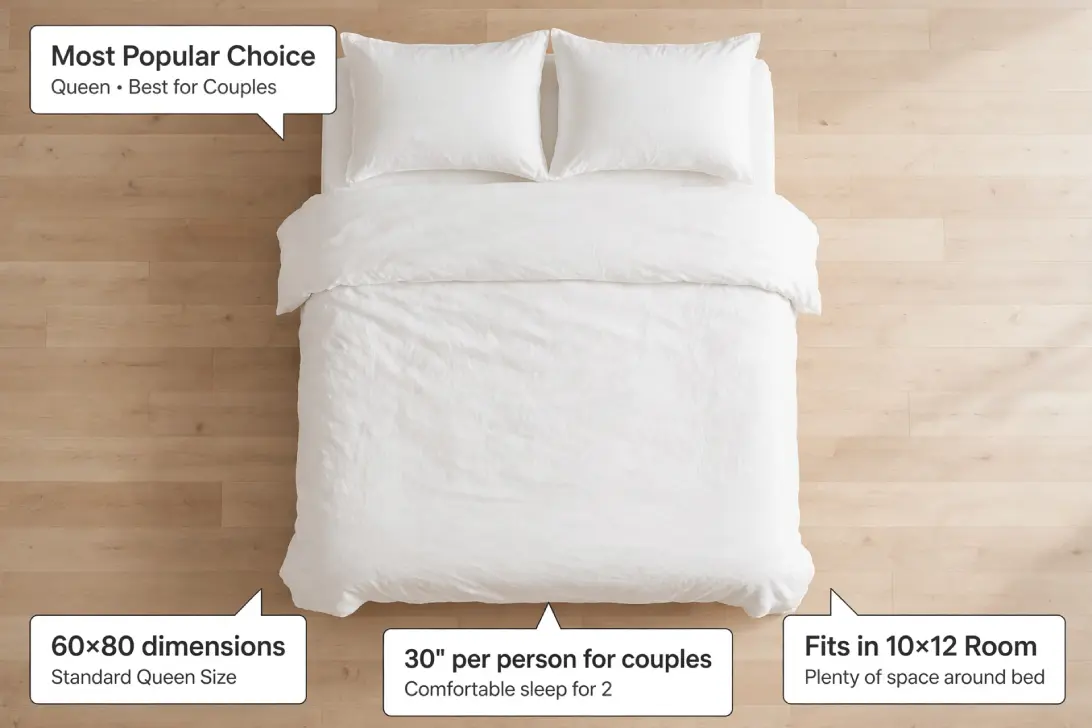
A Queen measures about 60 by 80 inches and is widely considered the most popular mattress size in the US. It gives a couple about 30 inches each without needing the room a King does. Queen frames, sheets and bedding are also the easiest to find and usually the best value.
A Queen generally works in a room of about 10 by 12 feet, where you can still walk around both sides and the foot of the bed. Measure the complete frame, not just the mattress, before ordering.
King vs California King: Width or Extra Length?
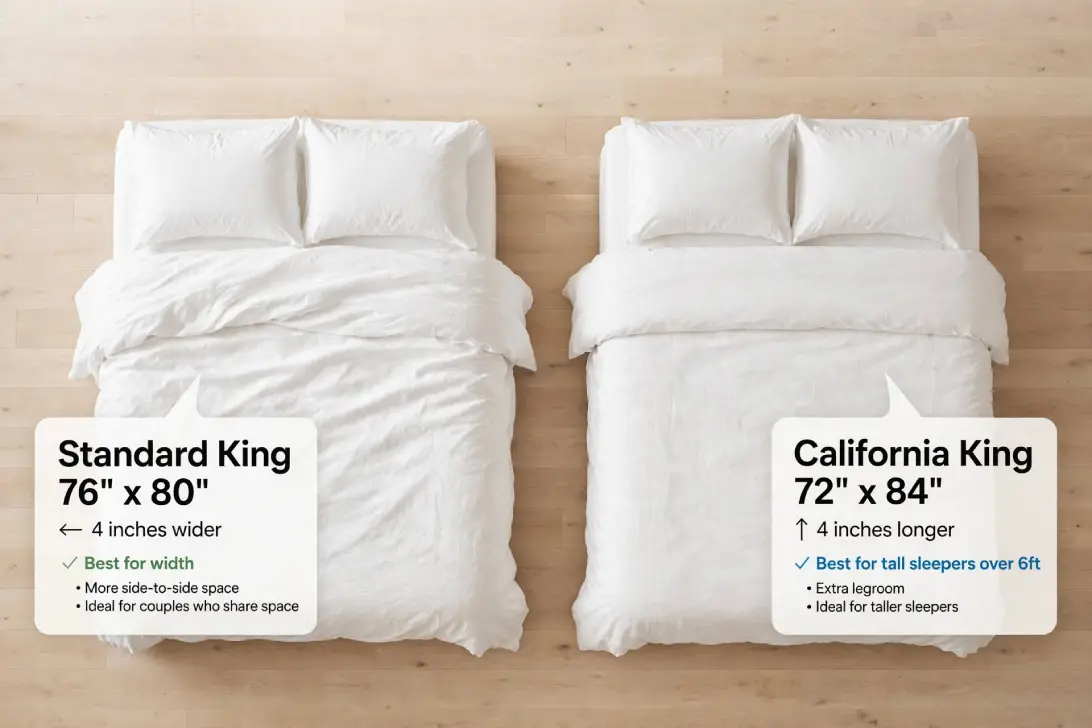
Both are designed for people who want more sleeping space, but they solve different problems.
| Standard King | California King | |
|---|---|---|
| Size | 76 x 80 in | 72 x 84 in |
| Difference | 4 inches wider | 4 inches longer |
| Best when | Shared width matters most, or kids and pets join you | Extra legroom matters most (sleepers over about 6 ft) |
A standard King gives a couple about 38 inches each, the same as two Twin XLs. Before choosing one, measure doorways, stairs and hallways, as large mattresses and box springs can be hard to get into upstairs rooms.
King and California King bedding are not interchangeable. Their shapes differ, so sheets and mattress protectors must match the exact size.
What Is a Split King?
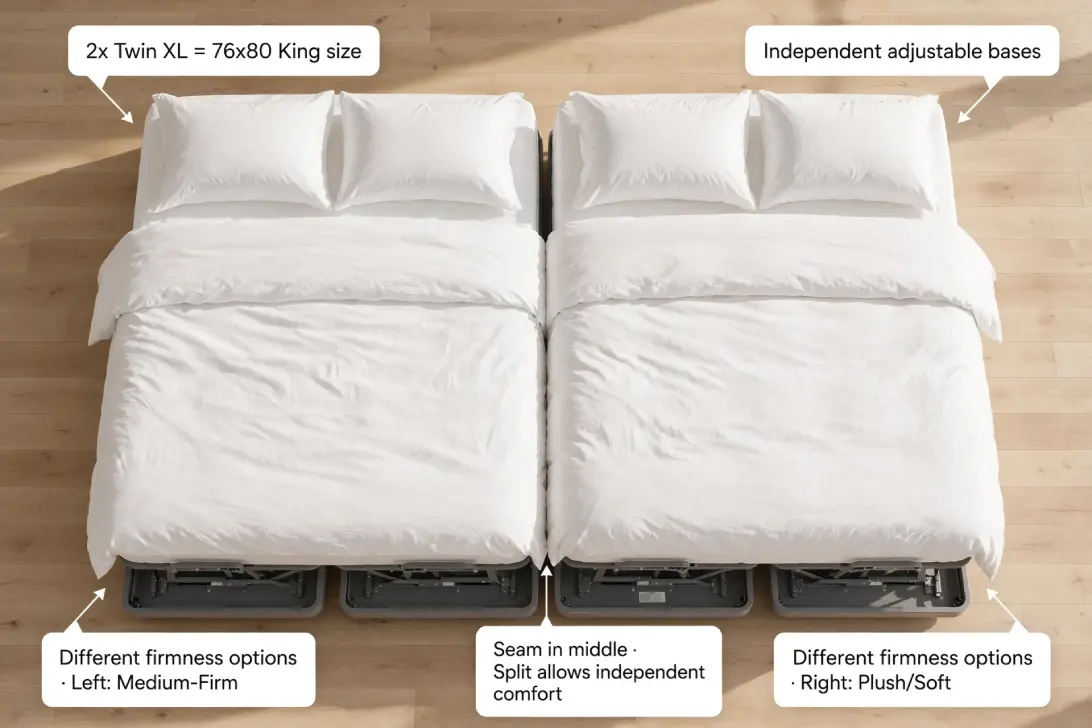
A split King is two Twin XL mattresses placed side by side. Together they measure about 76 by 80 inches, the same as a standard King.
It’s mostly used with adjustable bases, so each person can raise their head or feet independently. Couples can also choose different firmness levels. The trade-off is the seam down the middle, which you can soften with a mattress topper or a “bed bridge” filler strip.
Mattress Size vs Bed Frame Size
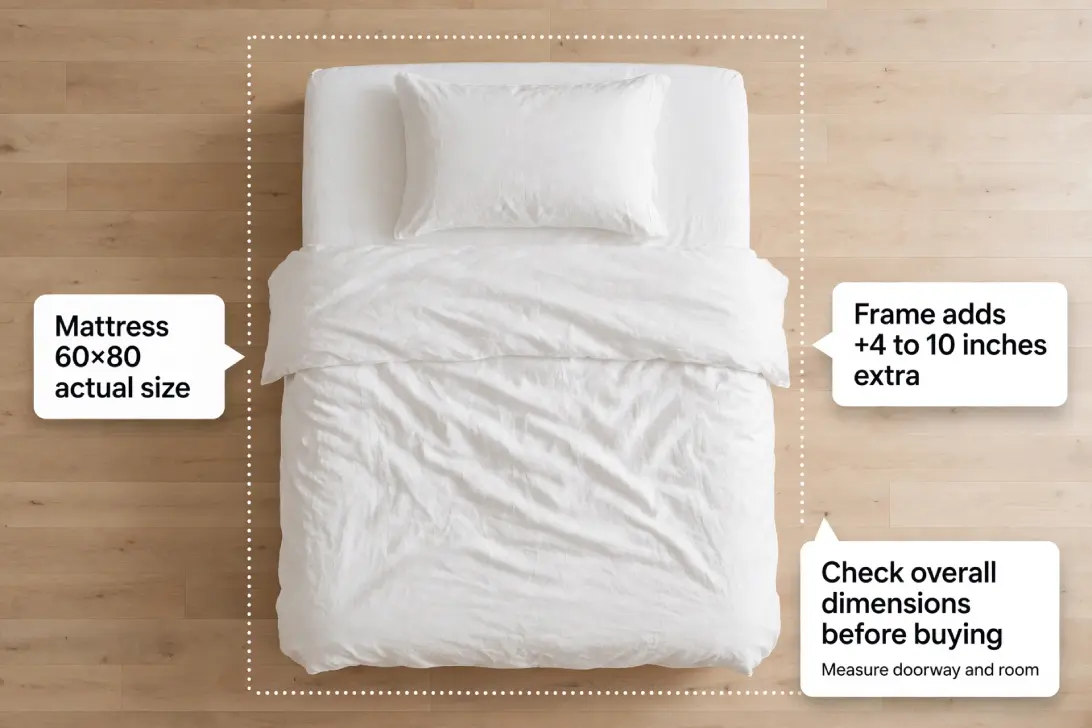
The mattress size and the frame size are not the same. A Queen mattress may be 60 by 80 inches, but the complete frame usually extends beyond that.
Simple platform frames add only a little. Frames with thick side rails, storage drawers, tall headboards, footboards or wingback sides can add 4 to 10 inches or more. Always check the manufacturer’s overall dimensions, especially in a smaller room.
Mattress height is separate again. Two Queens can be the same width and length but differ by 6 inches or more in thickness, which changes how tall the bed is and how deep your fitted sheets need to be.
Sleeper’s secret tip (tap to reveal)
Buy fitted sheets by mattress depth, not just size. Measure the mattress height including any topper, then choose sheets with a pocket at least 2 inches deeper. That’s why a “Queen” sheet sometimes pops off the corners: thick pillow-top and hybrid mattresses usually need deep-pocket sheets of 15 inches or more.
How to Choose the Right Bed Size
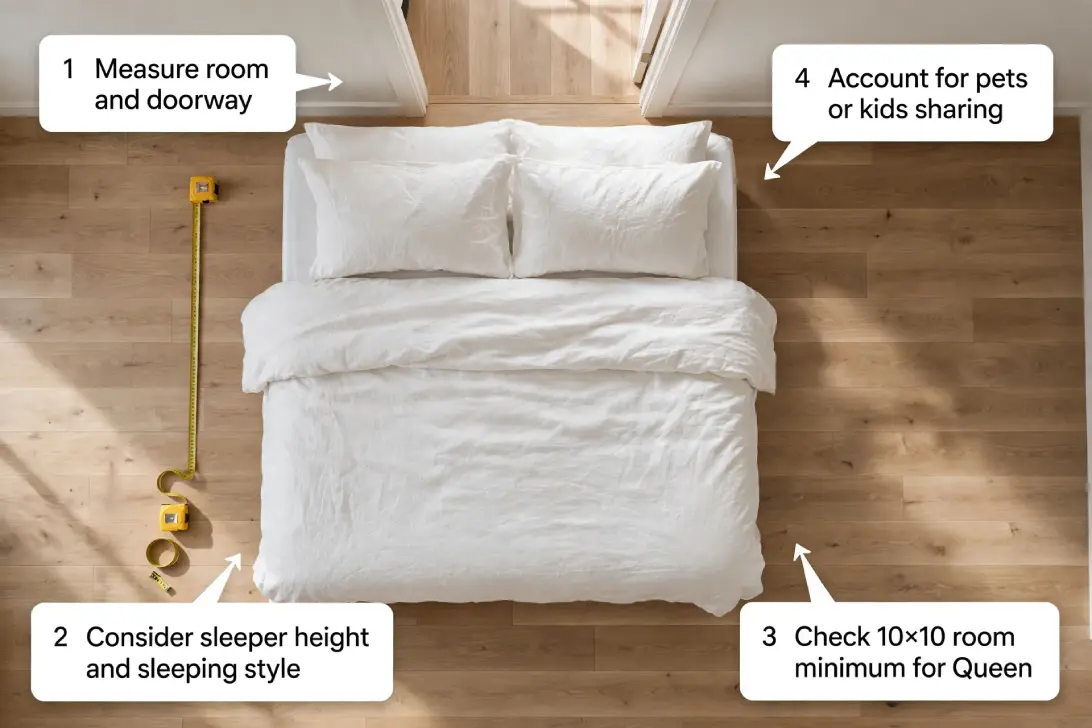
Work through these in order rather than choosing by name alone:
- Count the sleepers. Twin and Twin XL suit one person. Queen and larger give couples real shared space.
- Think about height and sleep style. Tall sleepers need an 80-inch or longer mattress, and people who sprawl value width.
- Measure the room and the frame. Leave enough space for walking, doors, closets and drawers. Mark the outline on the floor with painter’s tape.
- Check the route in. Doorways, hallways and stairs all need to fit the mattress and frame parts.
- Budget for the whole setup. Bigger mattresses mean bigger frames, sheets, duvets and protectors.
Other Bed Sizes You May See
- Full XL (54 x 80 in) is a Full with Queen length. It’s handy for a tall single sleeper in a room too narrow for a Queen.
- Olympic Queen (66 x 80 in) is a Queen with six extra inches of width. It’s fairly rare, so sheets are harder to find.
- RV mattresses often use their own dimensions to fit campers and motorhomes. An “RV Queen” is typically shorter or narrower than a residential Queen.
- UK and European sizes use different names and metric dimensions. A UK Double (135 x 190 cm) is close to a US Full, a UK King (150 x 200 cm) is close to a US Queen, and a UK Super King is 180 x 200 cm. Check exact measurements if you’re buying an imported frame.
- Crib mattresses are a separate category. In the US they must meet federal size rules so they fit the crib without gaps, so always use a mattress designed for that specific crib.
Which Bed Size Should You Choose?
For one sleeper in a compact room, a Twin is the most space-efficient choice. Choose Twin XL for the same width with extra length. A Full gives one adult more room without the footprint of a Queen.
For two adults, a Queen is the practical starting point if the room can take it. Choose a King when shared width matters most, and a California King when length matters more than width.
In every case, the best choice is the smallest bed that gives you enough sleeping space without crowding the room. Check both the mattress dimensions and the full frame dimensions before you buy. If you’re still choosing a frame, our comparison of metal vs wood bed frames can help.