
Cobwebs on Grass: Why They Appear and When You Should Remove Them
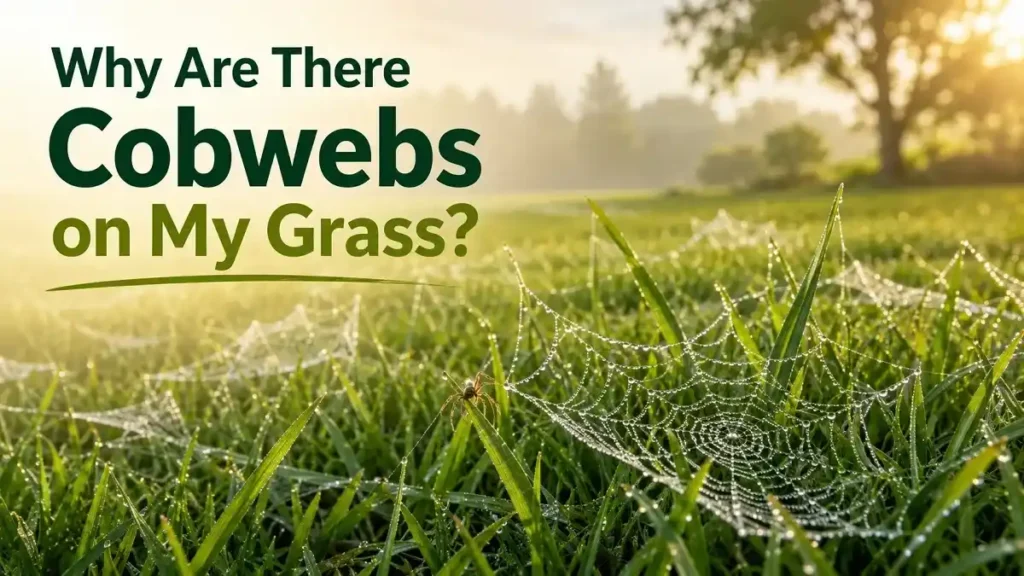
Walking outside in the morning and finding cobwebs on grass can make it look as though spiders covered your lawn overnight.
In most cases, the webs were already there. Cool overnight temperatures and morning dew simply coat the fine silk with water droplets, making previously hidden webs suddenly easy to see.
Many of these small webs on lawns are made by grass spiders, especially funnel-weaver spiders from the genus Agelenopsis. They build flat, sheet-like webs close to the turf with a small funnel at one end where the spider waits for insects.
The good news is that grass spiders usually do not damage your lawn. They feed on insects and can actually help reduce some pests living around the grass.
That does not mean you have to live with a lawn covered in webs. If they become excessive, you can usually reduce them through simple lawn care without reaching immediately for pesticides.
Those “Cobwebs” May Not Actually Be Cobwebs
The word cobweb is commonly used for almost any spider web, but the structures you see spread across a lawn are usually not true cobwebs in the technical sense.
Grass spiders make sheet-like funnel webs. The silk stretches horizontally between grass blades and leads back to a narrow funnel or tunnel where the spider hides.
A typical grass spider web has a few clues:
- It sits low across the grass rather than hanging vertically.
- It looks like a thin sheet or small hammock.
- There is often a funnel-shaped opening at one side.
- Several webs may appear close together.
- They are easiest to see early in the morning when covered in dew.
If you look again after the lawn dries, many of the webs seem to disappear. The silk is normally still there; it is simply much harder to see without water droplets reflecting the light.
Why Your Lawn Can Suddenly Look Covered in Webs
A lawn that looked completely normal yesterday can appear covered with small spider webs the next morning.
That sudden change does not necessarily mean hundreds of spiders arrived overnight.
Morning dew is usually the reason the webs become noticeable.
Grass spider silk is extremely fine. On dry days, it can blend almost completely into the turf. When moisture settles on it overnight, every strand becomes outlined by tiny droplets.
This is why webs can be particularly noticeable after:
- cool nights
- humid weather
- foggy mornings
- recent rain
- heavy overnight dew
- irrigation followed by cool conditions
If the webs disappear visually once the sun comes out, you are probably seeing normal spider activity rather than a lawn problem.
Late Summer and Fall Are Prime Time for Grass Spiders
If you notice more grass spider webs on your lawn toward the end of summer, the timing is not unusual.
Grass spiders become particularly noticeable from late summer into fall as they mature. Adult spiders are larger, their webs are easier to spot, and males may move around more while looking for females.
As temperatures fall later in the season, grass spiders may also begin wandering towards buildings and occasionally enter homes.
Adults generally do not survive through winter in colder climates. Eggs remain protected and hatch when conditions become favourable again.
So a burst of lawn webs in August, September or October does not necessarily mean you have a permanent infestation.
Why Does My Yard Have So Many Grass Spiders?
Grass spiders choose places that give them two things: somewhere to support a web and enough insects to eat.
A healthy lawn can provide both.
Tall grass, dense ground cover, shrubs, weeds and other low vegetation give spiders plenty of anchor points for their webs.
An insect-rich yard also provides a steady food supply.
If spider activity suddenly increases, look at the wider lawn rather than blaming the spiders alone.
Conditions that can encourage more activity include:
- grass that has become unusually tall
- dense weeds or ground cover
- brush and garden debris
- areas that stay damp for long periods
- heavy insect activity
- low shrubs touching or hanging over the lawn
A large number of spiders may simply mean the yard provides excellent hunting conditions.
Are the Webs Hurting Your Grass?
Usually, no.
Grass spiders are predators. They do not eat grass blades, roots or crowns, so they are not feeding on the lawn itself.
They catch insects that move across their webs and can consume flies, moths and other small arthropods.
That means a few spiders on grass are more likely to be part of the lawn’s natural ecosystem than a threat to it.
If the turf beneath the webs looks green and healthy, there is usually no reason to treat the spiders simply to protect the grass.
If you are seeing brown, yellow or thinning patches at the same time, investigate further. Another pest, disease or lawn-care issue may be responsible.
Spider Web, Lawn Fungus or Sod Webworms?
This distinction matters because not every white or silky-looking patch on grass comes from a spider.
| What You See | What It May Be | Useful Clue |
|---|---|---|
| Flat sheet with a funnel at one end | Grass spider | Often clearer in morning dew; grass underneath remains healthy |
| Fine silk near the soil with damaged turf | Sod webworms | Often accompanied by irregular brown or chewed patches |
| White or cottony growth on grass blades | Possible fungal growth | May occur with yellowing, spots or turf decline |
One of the easiest clues is the health of the grass underneath.
Grass spider webs can sit over perfectly healthy turf.
If the lawn is actually dying, do not assume the spiders caused it.
Do You Really Need to Get Rid of Grass Spiders?
For an occasional web, probably not.
Grass spiders are generally shy and beneficial predators, and their presence alone does not mean your lawn needs pest treatment.
Leaving a few spiders in place can help maintain a more balanced garden ecosystem.
Removal becomes more reasonable when:
- webs are covering large visible areas of the lawn
- they are concentrated around patios, doors or play areas
- spiders regularly wander indoors
- the appearance bothers you
- the lawn conditions encouraging them also need correcting
Even then, the first step should usually be changing the habitat rather than trying to kill every spider.
The Fastest Way to Clear Small Webs From a Lawn
If your main concern is appearance, removing the webs themselves is easy.
You can gently break them up with:
- a garden hose
- a soft lawn rake
- a broom around patios and edges
- normal lawn mowing
This gives you a quick visual reset without applying chemicals to the turf.
Do not be surprised if some webs return. Removing silk does not necessarily remove the spider, and a grass spider can rebuild its hunting web.
For longer-term control, you need to make the area less attractive.
How to Get Rid of Grass Spiders Naturally
If the number of webs is becoming annoying, start with basic lawn maintenance.
Keep the Lawn Mowed
Tall and dense grass gives spiders more places to anchor their webs and hide.
Keep the lawn at the recommended mowing height for your grass species rather than allowing it to become overgrown.
Avoid scalping the lawn simply to deter spiders. Cutting turf too short can weaken it and create other problems.
Trim Dense Growth Around the Lawn
Grass spiders also use weeds, low shrubs, ground covers and brush for shelter.
Trim vegetation where it has become excessively dense, especially around walkways, doors and the foundation of the house.
Clear Clutter and Debris
Brush piles, unused pots, boards, thick leaf litter and other undisturbed materials provide sheltered places for spiders and the insects they eat.
Cleaning up these areas can reduce both.
Check Your Watering Habits
Do not keep the lawn constantly wet just because you see webs.
Excess moisture can encourage a dense insect population and create sheltered conditions around the base of the turf.
Water according to the needs of your grass and local climate rather than keeping the surface wet every day.
Look at the Insects, Not Just the Spiders
Spiders stay where food is available.
If your yard suddenly has far more spiders than usual, check for increased insect activity.
Outdoor lights, open rubbish, fallen food and other attractants can also increase insects around homes, which in turn attract spiders.
Should You Spray the Lawn for Grass Spiders?
Usually not as a first response.
Broad insecticide treatments can kill more than the spiders you are trying to control. They may also affect beneficial insects and other organisms living in the lawn.
For a few webs, mowing, cleaning up vegetation and physically removing the silk are normally more proportionate solutions.
If spider numbers are unusually high around the house or spiders are repeatedly entering indoor spaces, targeted pest management around problem areas may be more appropriate than treating the entire lawn.
When using any pesticide, choose a product labelled for the intended pest and location and follow the label directions exactly.
Grass Spiders Are Venomous — But That Sounds Scarier Than It Is
Grass spiders are venomous, because they use venom to subdue their insect prey.
That does not mean they are considered dangerous to people.
They are fast, shy spiders that usually retreat rather than confront humans.
Bites are uncommon and are more likely if a spider becomes trapped against the skin, such as inside clothing, footwear or gardening gloves.
Reported symptoms can include:
- local pain
- redness
- itching
- mild swelling
Serious effects are not typical of a grass spider bite.
If a bite causes severe symptoms, spreading pain, breathing difficulty or another unusual reaction, seek appropriate medical advice rather than assuming the spider species from appearance alone.
Are Grass Spiders Poisonous to Dogs?
Grass spiders are not considered poisonous to dogs simply from being touched or accidentally eaten.
They do have venom, but that venom is designed for small prey and grass spiders are not generally considered a serious threat to dogs or cats.
A bite is still possible if an animal disturbs or traps a spider, although this is uncommon.
If your pet develops marked swelling, pain, weakness or other concerning symptoms after a suspected spider bite, contact a veterinarian because accurately identifying a spider after the event can be difficult.
Why You See More Webs in Fall
Fall combines several conditions that make webs in grass especially noticeable.
Grass spiders are mature and active, mornings become cooler, and heavier dew highlights the silk.
As nights become colder, adults may also begin moving towards protected areas around buildings.
If you want fewer spiders near the house in fall:
- trim vegetation touching the building
- remove clutter near the foundation
- repair damaged screens
- seal obvious gaps around doors and windows
- clear webs from entrances as they appear
This is generally more useful than treating an entire healthy lawn.
What About Grass Spiders in Texas?
Warm climates such as Texas can support spider activity for a longer part of the year than colder northern regions.
The same basic approach still applies: identify the web first, keep vegetation managed, avoid unnecessary moisture, reduce insect attractants and remove webs physically when they become a nuisance.
Local climate matters, though. Lawn watering and mowing practices that work in Pennsylvania or New York may not be appropriate for a Texas lawn.
For persistent problems, local extension guidance is more useful than applying one nationwide watering schedule.
A Lawn Full of Webs Is Not Necessarily an Infested Lawn
Seeing dozens of small spider webs on a lawn can look dramatic, especially when morning dew makes every strand visible at once.
But appearance can exaggerate the problem.
If the webs are flat and funnel-shaped, the turf underneath is healthy and they become much less visible once the morning dries, grass spiders are the likely explanation.
They are not eating your lawn. In many cases, they are eating insects that would otherwise be living in it.
If you dislike the webs, break them up, keep the lawn properly maintained and reduce the sheltered conditions that encourage large numbers of spiders.
If the grass itself is turning brown or dying, look beyond the spiders. That is when checking for fungal disease, sod webworms or another lawn problem becomes far more important than removing the cobwebs you can see.