
Underdecking in Canton, GA: Costs, Benefits & Installation
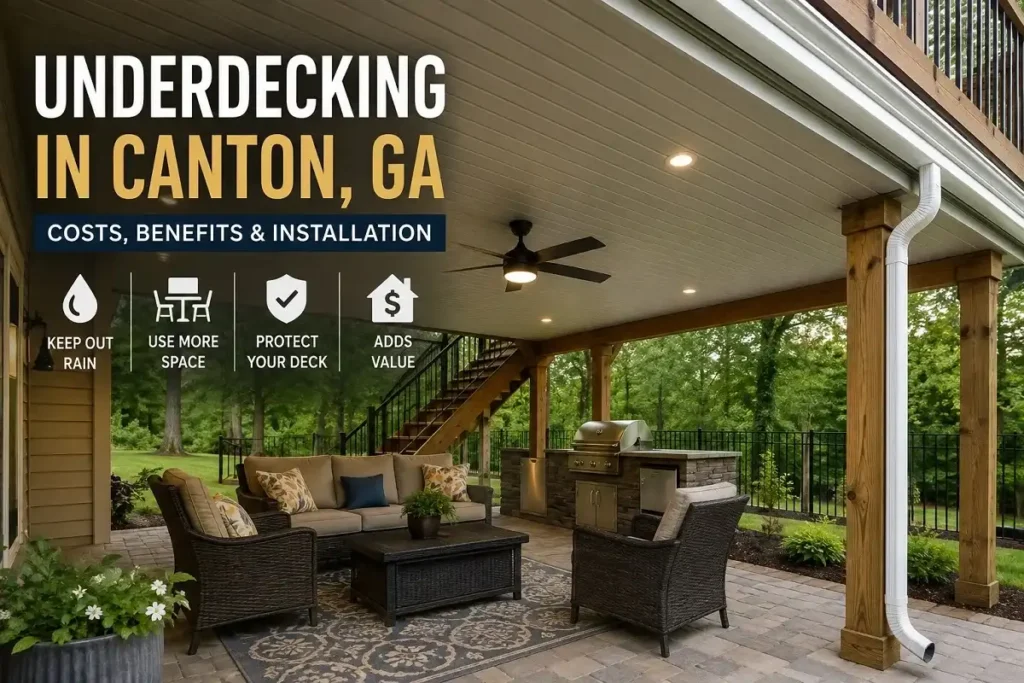
If rain regularly makes the space beneath your raised deck difficult to use, underdecking can help create a drier and more practical outdoor area. Instead of letting water drip through the deck boards onto furniture, storage, or a patio below, an under-deck drainage system collects the water and directs it away.
For homeowners considering underdecking in Canton, GA, the right system depends on the existing deck, how the space below will be used, and where rainwater can safely drain. Cost, materials, installation method, and the condition of the deck should all be considered before work begins.
This guide explains how underdecking works, the main system options, what affects cost, and what to check before choosing an installer.
What Is an Under-Deck System?
An under-deck system manages rainwater around or beneath an elevated deck so the area below stays drier. Depending on the design, it may use channels, ceiling panels, gutters, and downspouts to collect water passing through the deck boards and carry it away.
Many systems also create a finished ceiling beneath the deck. This can make the space more suitable for outdoor seating, storage, lighting, or other uses that would be difficult with water dripping from above.
The drainage is more important than the decorative finish. Simply covering the underside of a deck without giving rainwater a reliable way to escape can create new moisture problems.
How Does Under-Deck Drainage Work?
Rainwater normally passes through the small gaps between deck boards. An under-deck drainage system catches that water and directs it along a slight slope toward a gutter or drainage channel.
A downspout then carries the collected water away from the covered area. Where that water ends up matters because it should not collect beside the house, wash away soil, or create another drainage problem elsewhere on the property.
The system also needs to prevent leaks around posts, beams, edges, and the point where the deck meets the house. These details can make a significant difference to how well the finished system performs.
Above-Joist vs. Below-Joist Drainage Systems
Under-deck drainage systems generally fall into two broad categories: those installed above the deck joists and those installed below them. Understanding the difference can make it easier to compare quotes and choose a system that suits your deck.
Above-Joist Systems
An above-joist system sits over the joists and beneath the deck boards. It catches rain before much of the water reaches the framing below.
This approach is particularly practical when a new deck is being built because the drainage can be installed before the deck boards go down. Adding it to an existing deck may require some deck boards to be removed and reinstalled or replaced, increasing the amount of work involved.
Below-Joist Systems
A below-joist system is installed beneath the existing deck framing. Water passes through the deck boards before being collected and directed toward the drainage outlet.
This approach can work well for an existing elevated deck because the deck surface may not need to be removed. Many below-joist systems also create the finished ceiling appearance homeowners want for a covered patio.
Neither option is automatically better. The right choice depends on whether the deck is new or existing, its condition, the desired finish, and the way water can be managed on the property.
Is Underdecking Worth It for a Canton Home?
Underdecking can make sense when an elevated deck has enough usable space beneath it but rain prevents that area from being used comfortably.
If there is already a patio or seating area below the deck, keeping it drier can make the space more practical during wet weather. The area may also become more useful for storing outdoor furniture, garden equipment, or other items that should not sit beneath constant dripping.
However, not every deck needs an under-deck system. Limited headroom, deteriorated framing, difficult drainage conditions, or a space you rarely use can make the project less worthwhile.
The practical question is simple: would solving the water problem make you use the area below your deck more often? If the answer is yes, underdecking may be worth considering.
What Are the Benefits of Underdecking?
The main benefit is a drier space beneath an elevated deck. This can make an existing patio more comfortable and provide better protection for furniture or other items stored below.
A finished under-deck ceiling can also hide exposed framing and give the area a cleaner appearance. Depending on the available space and system design, outdoor-rated lighting or a ceiling fan may also be incorporated.
Another advantage is using an area that already exists rather than automatically building a separate covered structure elsewhere in the yard.
These benefits depend on effective drainage. Appearance should come after making sure the system can collect and move rainwater reliably.
How Much Does Underdecking Cost in Canton, GA?
The cost of underdecking varies because every deck and installation is different. Deck size, system type, materials, access, existing deck condition, labour, and finishing options can all affect the final price.
National cost estimates can provide a rough starting point, but they should not be treated as a guaranteed price for a Canton property. A local quote based on the actual deck will provide a more useful estimate.
When comparing quotes, check what each price includes. One contractor may quote only for the drainage system, while another may include ceiling panels, gutters, downspouts, trim, electrical preparation, or repairs.
What Affects Underdecking Cost?
Deck Size
Larger decks require more drainage components, ceiling material, trim, and labour. Size is therefore one of the clearest factors affecting the overall cost.
New or Existing Deck
Installing drainage during construction can be different from adding it to an existing deck. Some systems installed above the joists may require deck boards to be removed during an upgrade, adding labour to the project.
Materials and System Type
Under-deck systems are available with different combinations of drainage channels, aluminum or vinyl panels, gutters, and finishing materials. The chosen system and finish can have a significant effect on price.
Access and Deck Layout
Deck height, stairs, posts, landscaping, slopes, and restricted working areas can make installation more difficult. A simple rectangular deck with easy access will generally be easier to work on than a complicated multi-level structure.
Existing Repairs
Rot, damaged framing, or other deck problems should be addressed before they are hidden behind a finished ceiling. Necessary repairs can add to the project cost but should not be skipped simply to keep the initial quote lower.
Lighting and Other Features
Ceiling fans, outdoor lighting, trim, and other finishing choices can increase the budget. If electrical features are planned, it is better to include them before the ceiling is completed.
What to Check Before Installing Underdecking
Start with the condition of the deck itself. Look for visible rot, damaged timber, loose boards, or other signs that repairs may be necessary. Structural problems should be addressed before an under-deck ceiling hides the framing.
Next, ask how rainwater will leave the system. You should understand where the gutter and downspout will be positioned and where the collected water will eventually drain.
Consider how you plan to use the finished area as well. Seating, storage, lighting, fans, or other features may affect the design and should be discussed before installation begins.
Finally, check whether your property is subject to HOA rules or local approval requirements. Exterior, structural, or electrical work can have different requirements depending on the scope of the project.
Underdecking Considerations for Canton, GA
Regular rainfall in North Georgia makes reliable drainage particularly important for raised decks. The system should be designed around the actual deck and property rather than selected on appearance alone.
Sloping lots can require additional thought about where downspouts release water. The goal is to keep the area beneath the deck drier without directing runoff toward the house or creating erosion elsewhere.
Trees are another consideration. Leaves, pine needles, and other debris can collect in gutters and drainage outlets, so homeowners should be able to inspect and clean those areas when necessary.
HOA approval and building requirements should also be treated separately. An HOA may have rules about exterior changes, while local authorities may have requirements based on structural or electrical work. Check what applies to your property before installation starts.
Under-Deck System vs. a Separate Patio Cover
If you already have an elevated deck with useful space underneath, underdecking can take advantage of that existing footprint. You may not need to build another covered area elsewhere in the yard.
A separate patio cover can make more sense when the area beneath the deck has limited headroom, is poorly positioned, or is not where you want your main outdoor seating area.
There is no universal winner. Consider the location, available space, existing deck condition, drainage needs, desired appearance, and overall project cost before choosing between the two.
Can You Install an Under-Deck System Yourself?
Some under-deck systems are designed with DIY installation in mind, and experienced homeowners may be comfortable working with panels, gutters, and drainage components.
The challenge is making sure water flows in the right direction. Incorrect slope, poorly fitted joints, or badly positioned gutters can lead to leaks or standing water.
Adding an above-joist system to an existing deck can involve considerably more work if deck boards need to be removed. Complex layouts or decks that already need repairs may also be better suited to professional installation.
Homeowners comparing different approaches can review examples of under-deck drainage system solutions to understand how drainage and finished ceiling components can work together.
How to Choose an Underdeck Contractor in Canton
A contractor should be able to explain how the proposed system will manage water, not just show samples of ceiling panels.
Ask what type of system is being recommended and why it suits your deck. Find out where the water will drain, what happens if existing damage is found, and whether gutters, downspouts, trim, electrical preparation, and cleanup are included in the quote.
Also ask about product and workmanship warranties. Knowing what each warranty covers can be useful if a leak or installation problem appears later.
Before making a decision, look at completed projects with decks similar to yours. Pay attention to how edges, posts, gutters, and downspouts are finished rather than judging the ceiling panels alone.
FAQs About Underdecking in Canton, GA
How much does underdecking cost in Canton, GA?
Costs vary based on deck size, materials, system type, access, labour, existing repairs, and finishing options. Local quotes based on your actual deck are more useful than relying on a single general price.
Can underdecking be added to an existing deck?
Yes. Many under-deck systems can be added to an existing elevated deck. The amount of work depends partly on whether the drainage is installed above or below the joists.
Does underdecking require a permit in Canton, GA?
Requirements depend on the scope of the project, particularly if structural or electrical work is involved. Check the current requirements with the appropriate local authority before installation begins.
How do you maintain an under-deck drainage system?
Check the system periodically for debris, blocked gutters or downspouts, loose components, and signs of leaking or standing water. Homes with significant tree cover may need more frequent checks after storms or heavy leaf fall.
Final Thoughts
Underdecking can make the space beneath an elevated deck drier and more useful, but the drainage system matters more than the finished ceiling. The right setup should suit the existing deck and move rainwater away without creating another problem elsewhere on the property.
Before choosing a system, check the condition of the deck, understand how the water will drain, compare what is included in each quote, and choose an installation approach that fits how you actually plan to use the space.