8 Fresh Twin Bedroom Ideas for Kids, Guests and Couples (2026)
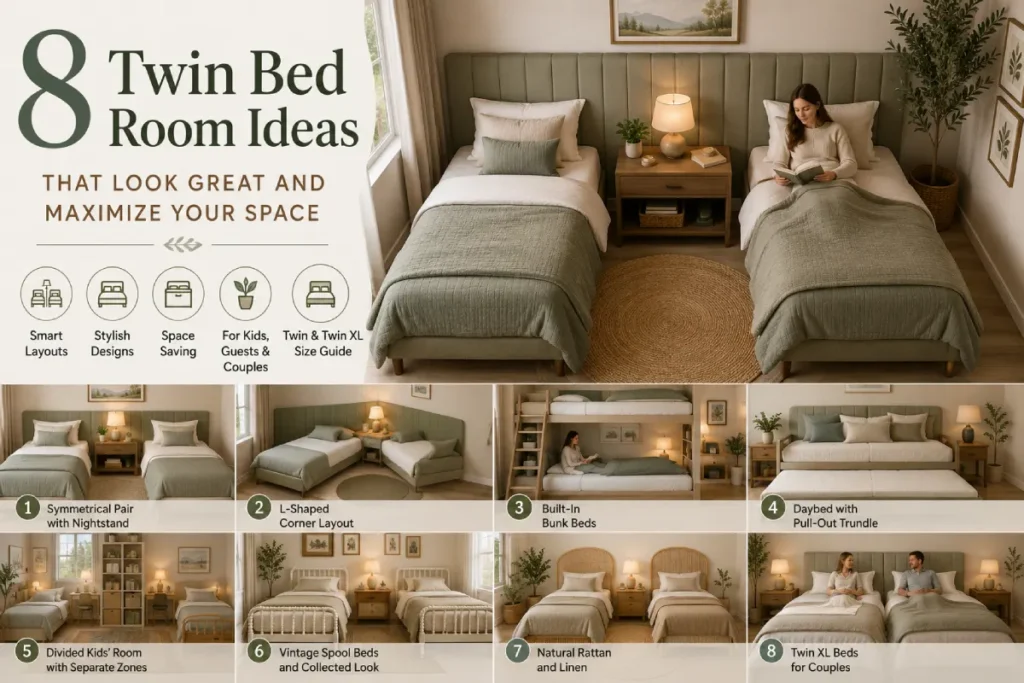
Two single beds in one room can look like a dorm or a boutique hotel. The difference is layout, a few repeated details and bedding that ties the beds together.
The 8 setups below cover the situations where twin beds make the most sense: siblings sharing, guest rooms, small spaces, and even couples who sleep better apart.
Quick picker: which setup fits your room?
| Your situation | Start with |
|---|---|
| Wide wall, classic look | #1 Symmetrical pair |
| Small or awkward room | #2 L-shaped corner or #3 Built-in bunks |
| Guest room that’s also an office | #4 Daybed with trundle |
| Siblings sharing | #5 Divided kids’ room |
| Couple who sleep differently | #8 Twin XL beds for couples |
1. Classic Symmetrical Pair with a Shared Nightstand
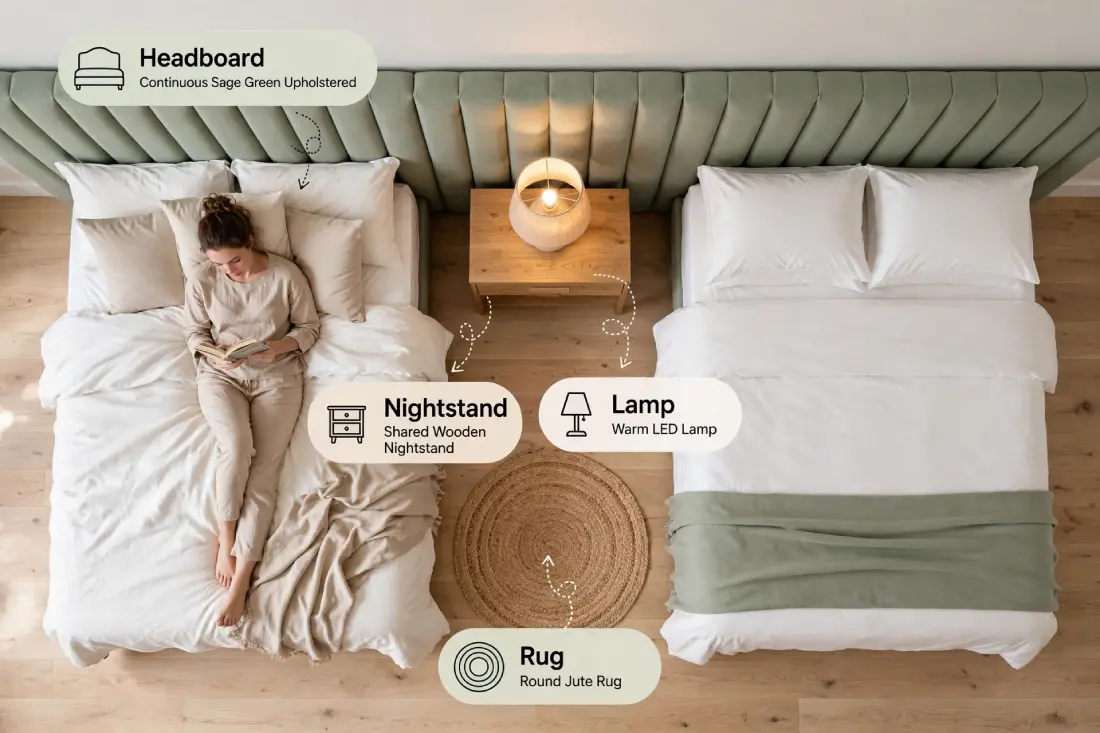
Two matching beds against one wall with a single nightstand between them is the hotel twin room formula, and it never looks wrong. Two twin beds plus a 20 to 24-inch nightstand need roughly 9 to 10 feet of wall.
Matching headboards, identical bedding and one lamp or a pair of wall sconces over the nightstand keep it calm. Centre a window or a piece of art over the nightstand to complete the symmetry.
Designer’s secret tip (tap to reveal)
Run one long upholstered headboard, or a single picture ledge, across both beds and the nightstand. Two small beds then read as one designed piece instead of two separate pieces of furniture, which is the trick behind most stylish hotel twin rooms.
2. L-Shaped Corner Layout
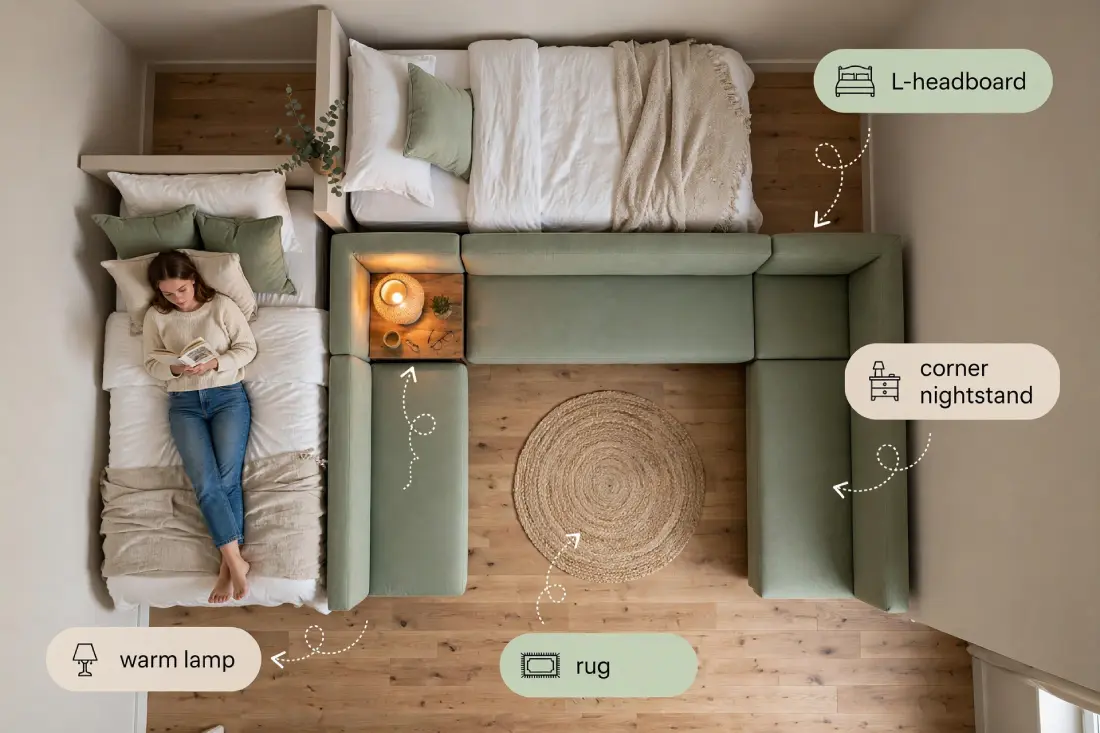
Pushing one bed along each wall in a corner frees up the middle of the room for play, a desk or a reading chair. It works well in square rooms and in rooms where a door or window breaks up the main wall.
Tuck a corner table or a small square nightstand where the two bed heads meet, so both sleepers can reach a lamp.
3. Built-In Bunk Beds
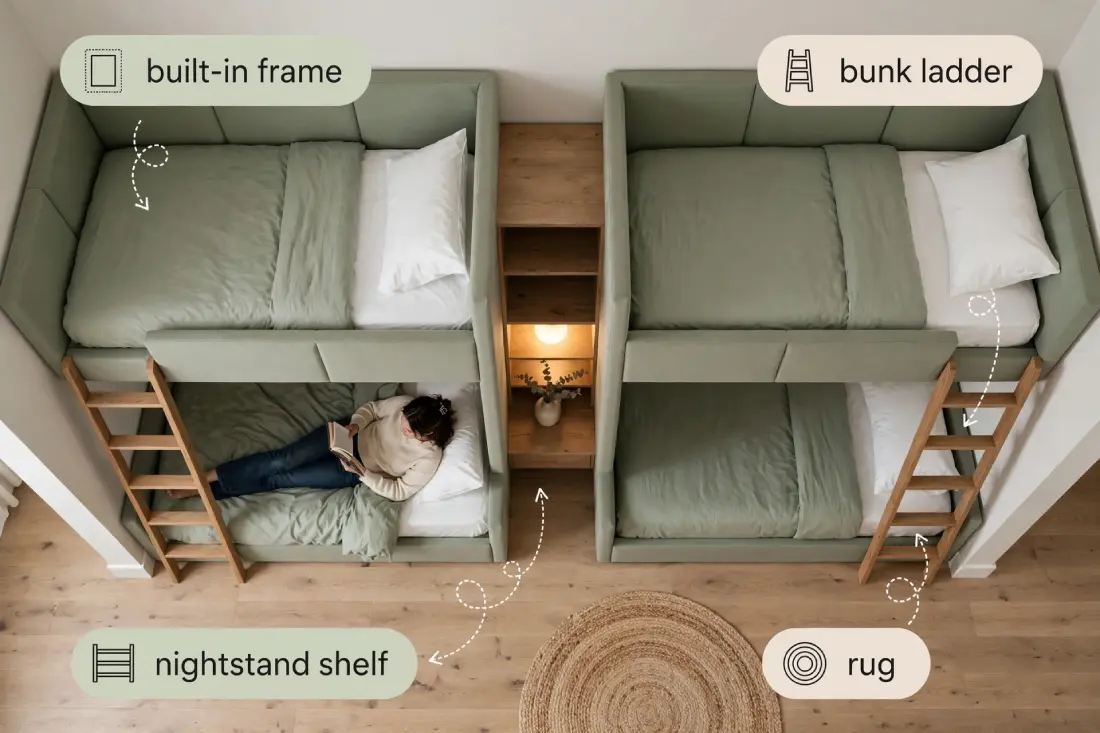
Stacking the beds is the biggest space saver of all, and built-in bunks look far more polished than freestanding ones. Give each bunk its own reading light, a small shelf and a curtain, and kids treat it like their own cabin.
Choose a fixed ladder and full guardrails. Safety guidance from the US Consumer Product Safety Commission is that children under 6 shouldn’t sleep on the top bunk.
4. Daybed with a Pull-Out Trundle
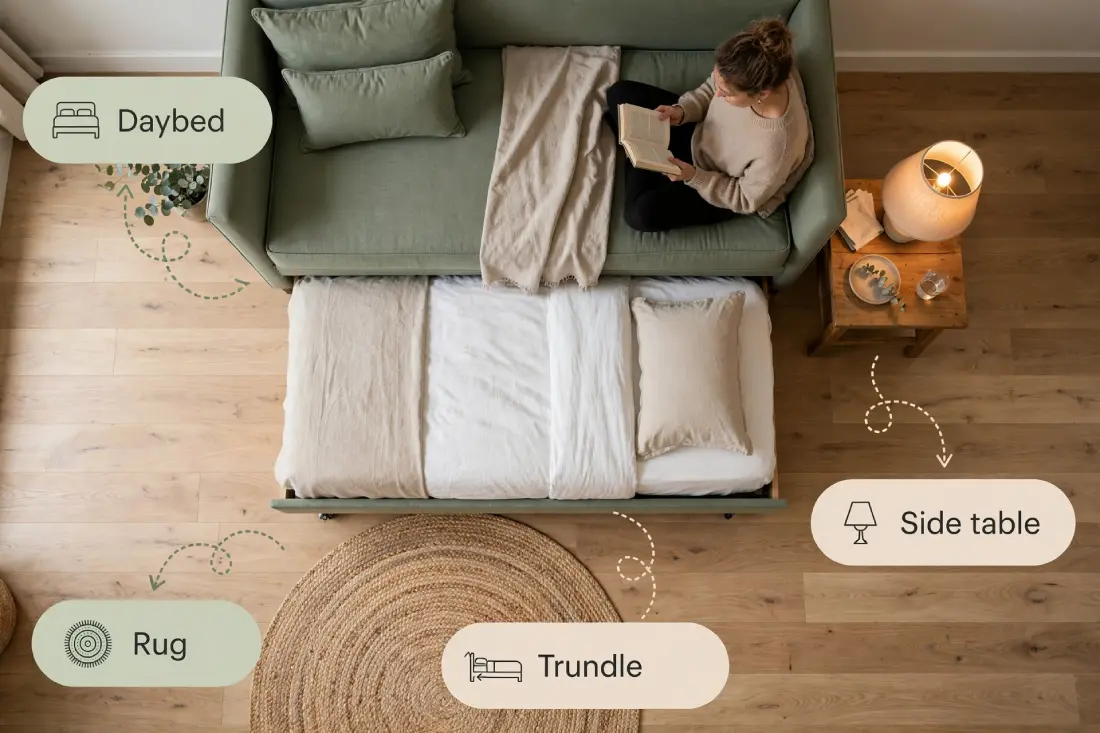
A daybed looks like a sofa during the day, and a trundle underneath gives you a second twin bed when guests arrive. It’s the best option for a home office or den that sometimes needs to sleep two.
Style it with large back cushions and a fitted cover, so it doesn’t look like a bed during the day. Pop-up trundles rise to the same height as the daybed, so the two beds can sit side by side as one larger sleeping area.
5. Divided Kids’ Room with Separate Zones
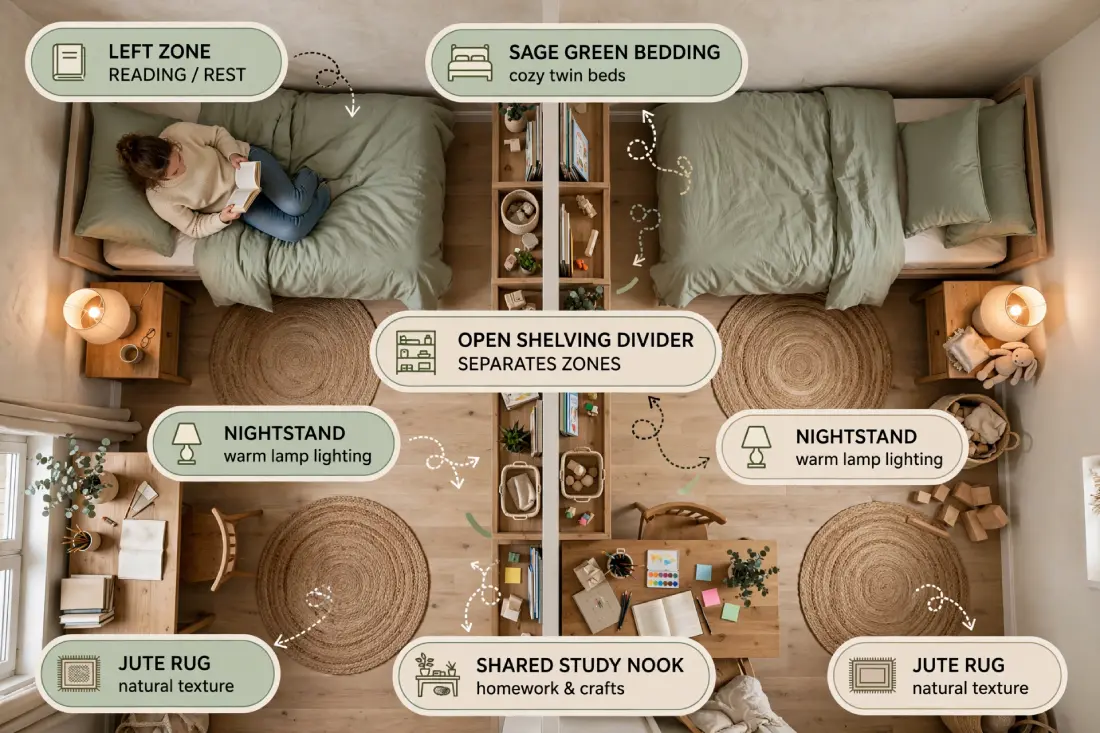
Siblings get along better when each one has a territory. An open bookcase placed between the beds gives both privacy and storage without blocking light.
Let each child choose their own bedding colour or wall art above their bed, and keep the furniture matching. The room feels personal but still coordinated. Under-bed drawers give each child their own storage.
6. Vintage Spool Beds and a Collected Look
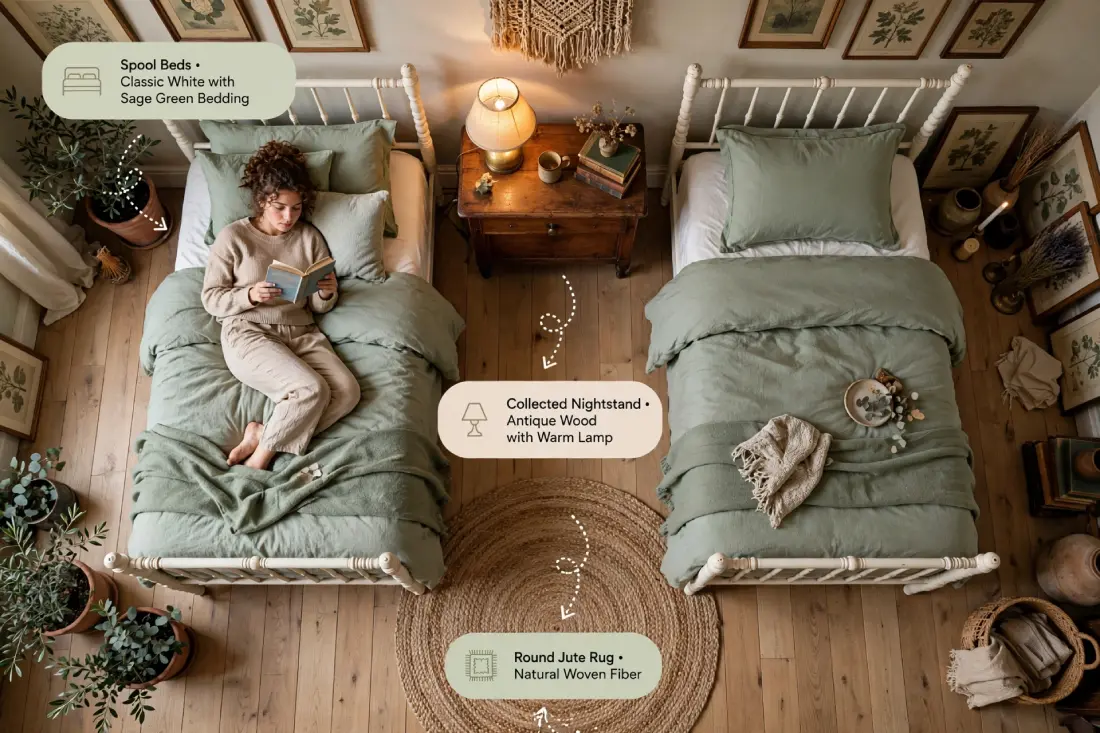
Twin beds have a long history, so vintage pieces suit them naturally. Turned-wood spool beds (often called Jenny Lind beds), patchwork quilts and an antique nightstand give a cottage-style room that feels collected rather than bought in one go.
Mix rather than match the smaller pieces. Two different vintage lamps or quilts in the same colour family feel more charming than an identical set.
7. Natural Rattan and Linen
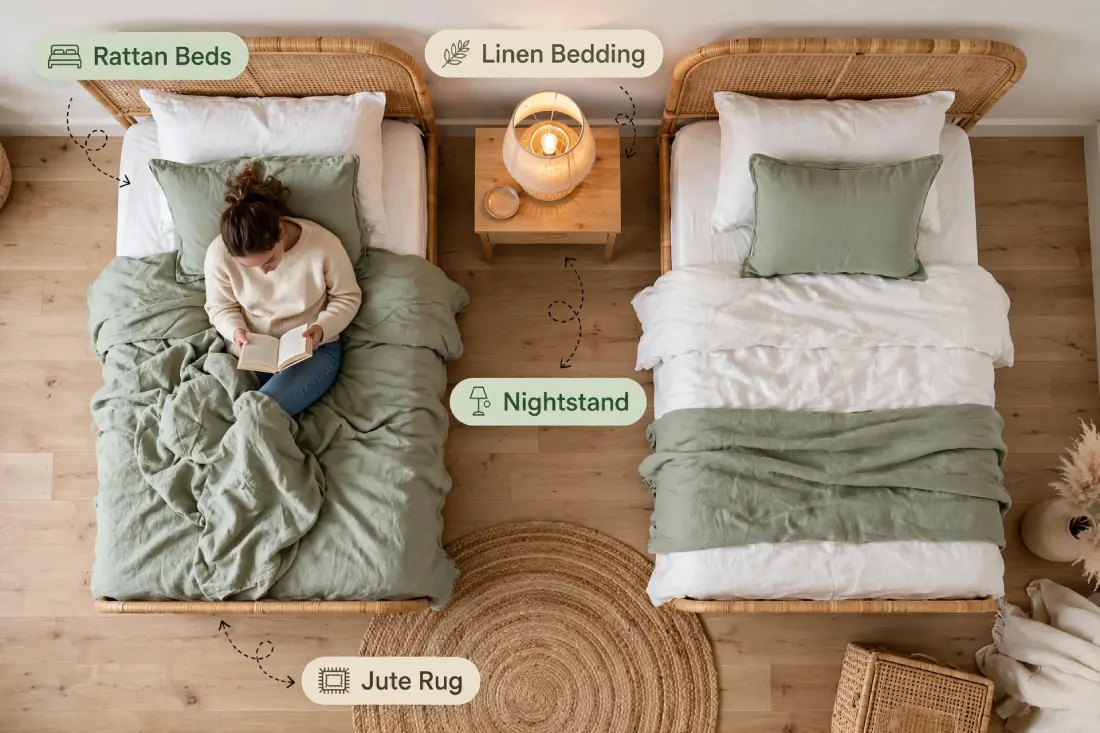
Rattan or cane headboards, linen bedding and a jute rug give twin beds a relaxed, coastal look. It’s ideal for a guest room or vacation home, since it looks good even slightly rumpled.
Stick to earthy colours like sand, terracotta and sage. Add one large plant in the corner to finish the room.
8. Twin XL Beds for Couples
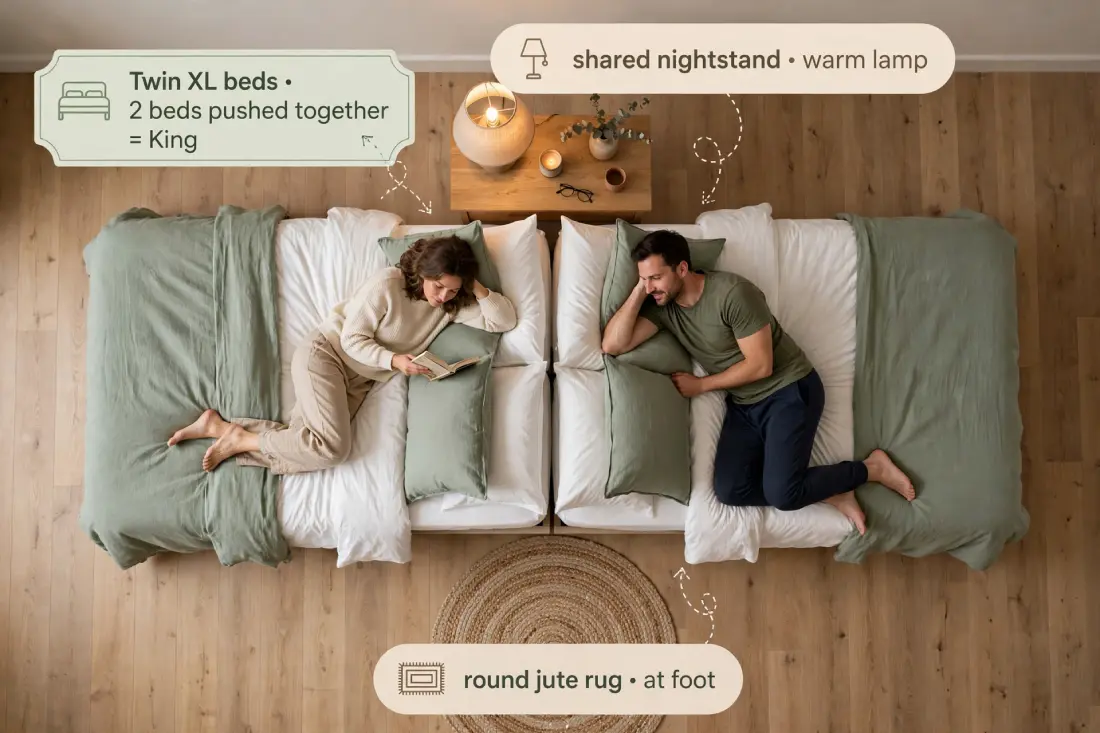
More couples are choosing separate beds for better sleep, especially when one partner snores, runs hot or keeps different hours. The setup is sometimes called a “sleep divorce”, but it doesn’t have to look like one.
Two twin XL mattresses pushed together equal the size of a standard king. Use one wide headboard and a king-size cover over both, and the room still looks like a couple’s bedroom. This is close to the “Scandinavian sleep method”, where each person also gets their own duvet.
Twin Bed Sizes at a Glance
The right mattress depends on who’s sleeping in it. Twin XL is the safer choice for teenagers and adults, while a standard twin suits kids and occasional guests.
| Mattress | Size (inches) | Best for |
|---|---|---|
| Twin | 38 x 75 | Kids, bunk beds, daybeds and occasional guests |
| Twin XL | 38 x 80 | Teens, tall guests and adults |
| Two Twin XL together | 76 x 80 | Couples who want separate mattresses (same size as a king) |
Buying twin XL? Check that sheets are labelled XL, because standard twin sheets are 5 inches too short. If the room serves an older relative, a taller bed (seat height around 20 to 23 inches) and clear walkways make getting in and out much easier. For more adult-focused setups, see our twin bedroom ideas for adults.
Conclusion
The best twin bedroom ideas start with layout: side by side for symmetry, an L-shape for open floor, or stacked bunks for tight spaces. Then add one unifying detail, such as a shared headboard, matching bedding or a single colour palette, so two beds look like one well-planned room.