Roofing Services in Miami: What to Check Before You Hire
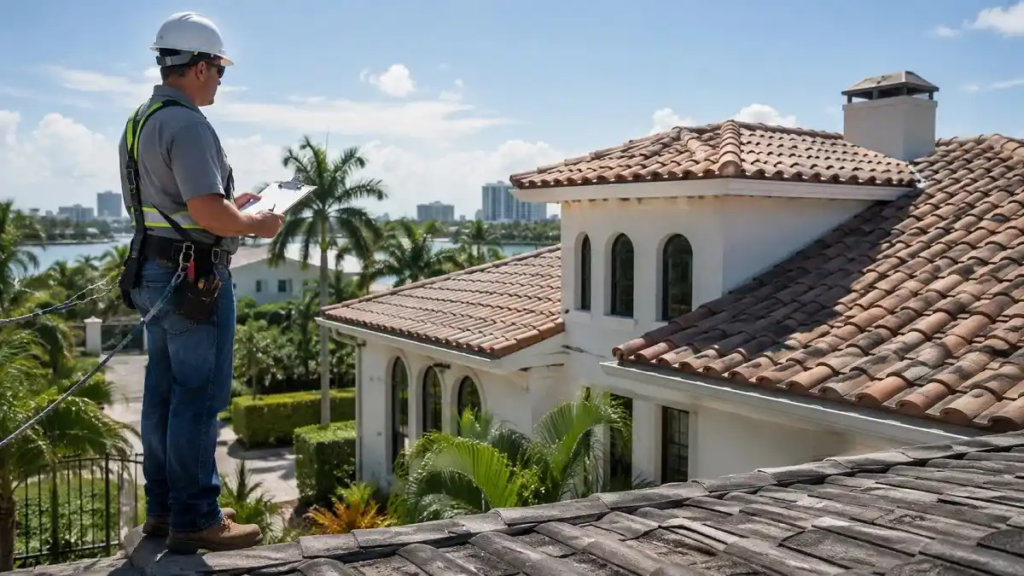
A roofing estimate can be hard to judge when one contractor recommends a small repair and another says the entire roof must come off. Miami homeowners face an added complication: intense sun, wind-driven rain, salt air, and hurricane rules can turn a simple roofing decision into an expensive one.
Roofing services in Miami include much more than replacing shingles or tiles. A useful service starts with finding the source of the problem, checking the condition of the full roof system, and explaining whether maintenance, a repair, or replacement offers the better result.
This guide shows what to look for before you approve the work. It also explains the details that should appear in an estimate, so you can compare contractors on the same scope instead of comparing two very different prices.
Start With the Problem, Not a Sales Quote
A ceiling stain does not tell you exactly where water entered. Rain can move along decking, rafters, pipes, or insulation before it appears indoors. The visible stain may be several feet from the failed flashing or cracked tile.
Ask the inspector to identify the likely entry point and show you photographs. The inspection should cover roof coverings, valleys, flashings, penetrations, ridge areas, drainage, fascia, soffits, and accessible attic spaces.
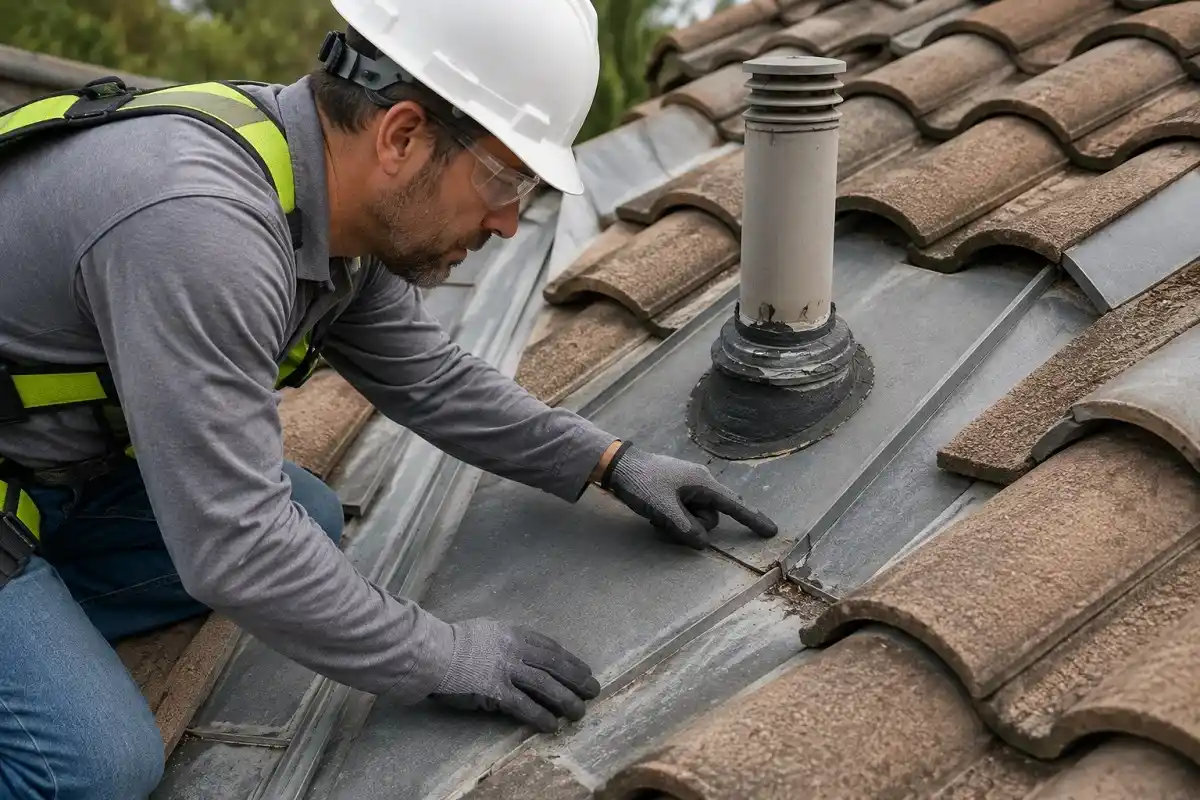
Do not accept “the roof is old” as the only explanation. Age matters, but the present condition matters more. A written assessment should separate isolated defects from widespread wear and note any evidence of moisture below the surface.
When a Roof Repair Still Makes Sense
A repair is often reasonable when the damage is limited to one area and the rest of the roof remains sound. Examples include a few slipped tiles, localized storm damage, a failed vent boot, loose flashing, or a small leak with no widespread deck deterioration.
The new material must be compatible with the existing roof. A patch that relies only on surface caulk is rarely a lasting answer for failed flashing, damaged underlayment, or an opening around a penetration.
Ask what will be removed, what will be replaced, and how the repaired area will connect to the surrounding system. A useful repair proposal also explains its warranty and the expected limits of the work.
Damage That Can Point Toward Replacement
Replacement becomes more practical when problems are spread across several roof slopes, leaks keep returning, or the roof covering and underlayment are reaching the end of their useful service life. Soft or rotted decking, sagging sections, extensive uplift, and broad material failure require a closer structural review.
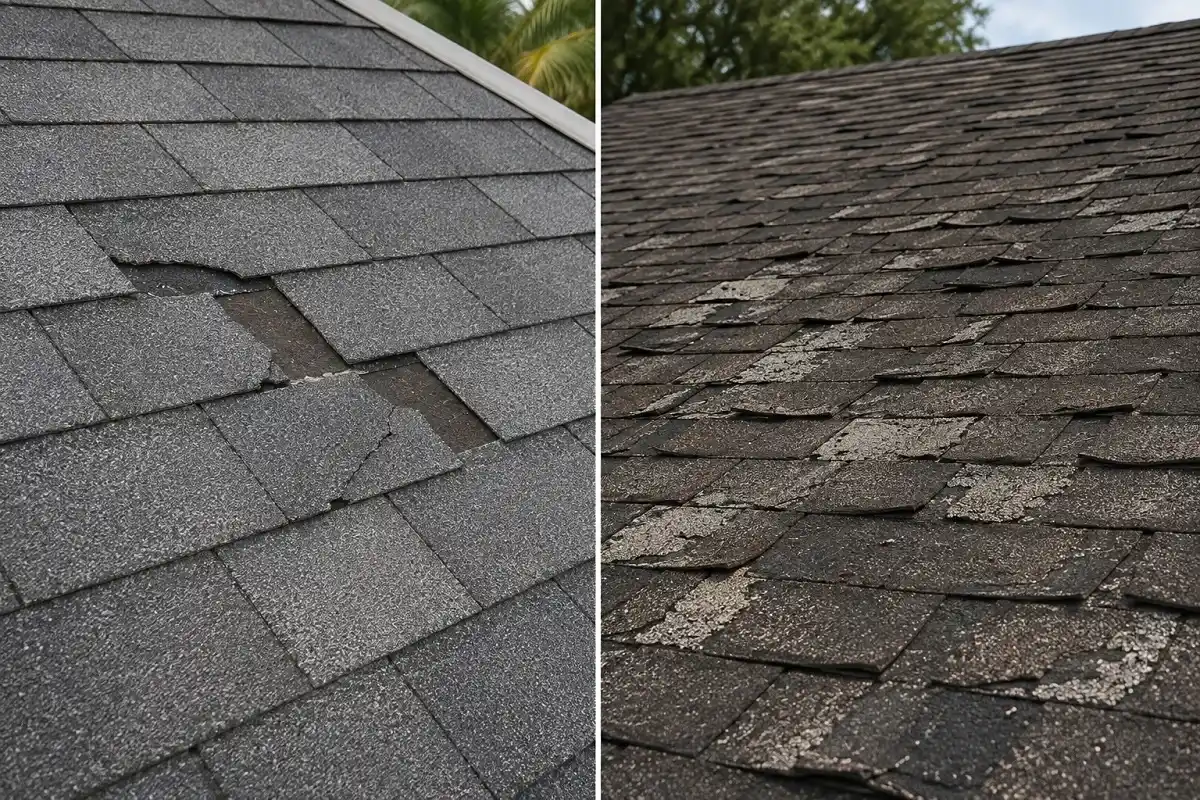
Repeated repair bills should be considered together. Paying for the same leak every year may cost less today but provide poor value if the surrounding roof is also failing.
Still, one leak does not automatically mean you need a new roof. When recommendations conflict, get another assessment and compare the evidence—not just the total price.
Match the Roofing Service to the Actual Need
A professional inspection documents current conditions. Maintenance clears drainage paths and corrects small defects before water enters. Repairs address contained damage. Replacement renews the roof covering and may also involve underlayment, flashing, decking, ventilation, and roof-to-wall details.
Emergency service is different. Its first goal is to reduce active water entry after a storm. Temporary drying-in or tarping should be followed by a permanent scope once conditions are safe and the damage is fully visible.
Roof coatings and waterproofing systems can be appropriate for certain low-slope assemblies. They are not a universal substitute for failed decking, wet insulation, or an unsuitable existing roof.
Choose Materials for Miami Conditions
Concrete or clay tile, metal, asphalt shingles, and low-slope membrane systems all appear on South Florida homes. The right choice depends on roof shape, structural capacity, approved assemblies, budget, maintenance expectations, and exposure.
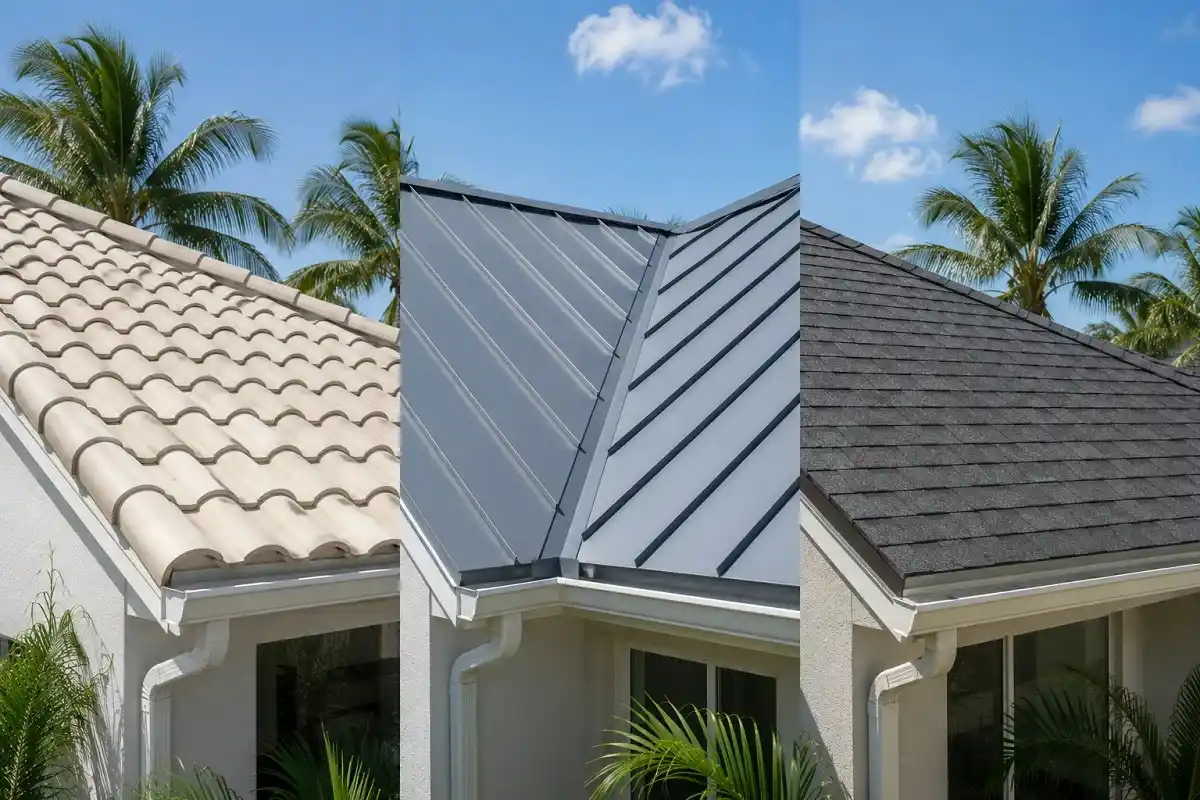
Tile offers a familiar regional appearance, but broken pieces and underlayment condition still need attention. Metal sheds water well and can provide strong wind performance when the full system is correctly specified and installed. Asphalt shingles can be more economical, but the product and installation method must suit local wind requirements.
Ask for the manufacturer, product line, color, fastening pattern, underlayment, flashing details, and approval information in writing. A broad phrase such as “premium roofing material” is not enough.
Miami Permits and HVHZ Details Matter
Miami-Dade lies within Florida’s High-Velocity Hurricane Zone. Roofing products and assemblies used here may need specific approvals, documentation, and installation methods. The City of Miami’s residential re-roofing checklist calls for permit documents, roof plans, applicable HVHZ information, product approvals, and required inspections.
Confirm who will obtain the permit and schedule inspections. The contractor should identify the approved system in the proposal and provide permit and final inspection records when the job is complete.
A permit does not replace careful workmanship, but skipping required approvals can create problems with inspections, insurance, warranties, and a future sale.
Read the Estimate Line by Line
Two roofing bids may look similar while covering different work. One may include tear-off, permits, disposal, flashings, and deck repairs. Another may show only the roof covering and leave expensive items open.

The written proposal should identify the roof area, tear-off method, disposal, decking allowance, price for additional wood, underlayment, flashings, vents, edge metal, fasteners, permits, inspections, cleanup, payment schedule, and warranties.
Ask how hidden damage will be documented and approved. A price per sheet or board for decking replacement helps prevent a surprise after the old roof has been removed.
Verify the Contractor Before Signing
Check the contractor’s Florida license through the state licensing database. Confirm that the business name on the license matches the proposal. Request current proof of liability insurance and workers’ compensation coverage where applicable.
Look for recent local projects involving the same roof type. Ask who will supervise the site, whether workers are employees or subcontractors, and who handles warranty calls after the final payment.
A local provider such as RTI Roofing may offer several service types, but homeowners should apply the same license, insurance, scope, and reference checks to every company under consideration.
Be cautious with door-to-door storm pitches, large upfront payments, pressure to sign immediately, or promises that insurance will certainly pay. A contractor can document damage, but the insurer determines coverage under the policy.
Document Storm Damage Before Work Begins
After severe weather, photograph each roof slope from the ground if it is safe. Record interior stains, fallen debris, damaged gutters, and temporary protection. Keep dated copies of inspection reports, estimates, invoices, permits, and communication.
Do not climb onto a wet, steep, or damaged roof. Loose materials and hidden weak spots make post-storm access dangerous. Use binoculars or a phone camera with zoom until a qualified professional can inspect it.
Emergency measures should stop further damage without destroying useful evidence. Ask for photographs before materials are removed whenever conditions permit.
Inspect the Work Before Final Payment
Walk the property with the contractor after completion. Review photographs of areas that cannot be seen safely from the ground. Check flashings, roof edges, vents, gutters, visible debris, landscaping, and any agreed repairs to fascia or soffits.
Collect the final invoice, permit record, inspection approval, product information, and separate manufacturer and workmanship warranties. Confirm how to report a leak and who will respond.
The best roofing service leaves more than a clean-looking roof. It leaves a clear record of what was installed, why it was needed, and who is responsible if a problem appears.
Keep the New or Repaired Roof Working
Check the roof from the ground after major storms and keep gutters, drains, and scuppers clear. Trim branches that scrape the roof or drop heavy debris. Watch ceilings and attic areas for new stains, damp insulation, or musty odors.
Schedule a professional assessment when you see missing material, displaced flashing, ponding water, damaged seal points, or repeat leaks. Early attention gives you more options and may keep an isolated repair from becoming a larger project.
In Miami, a strong roof depends on the whole system: approved materials, correct fastening, water control, careful details, and documented installation. Choose the service that matches the evidence, then make sure the contract describes that work clearly.