Residential Roofing Guide: Repair, Replace and Hire Right
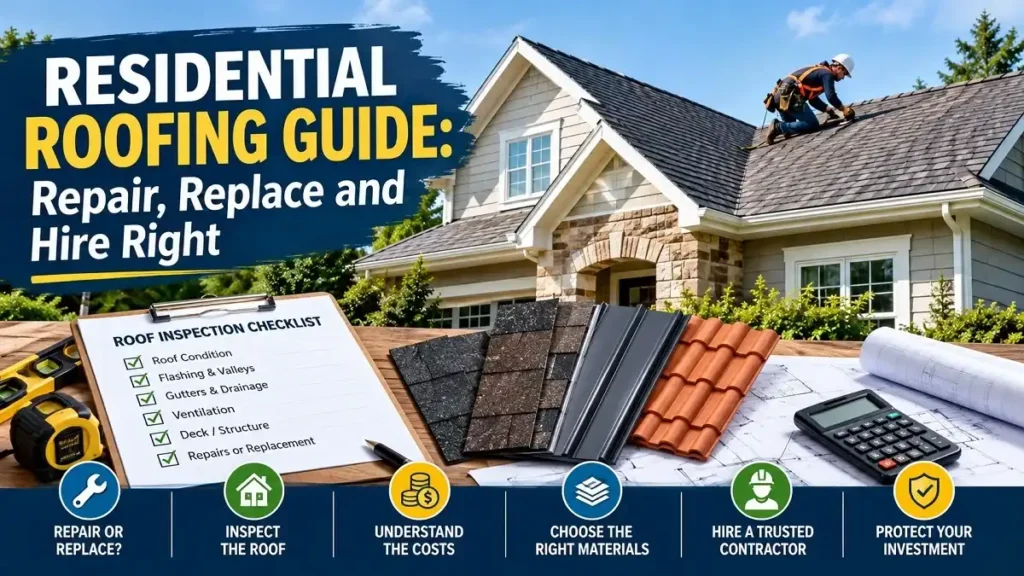
A roof leak does not always mean you need a new roof. Some problems can be fixed with a focused repair, while widespread damage, repeated leaks, or badly worn materials may make replacement the better option.
The right decision starts with finding the cause. A roofing contractor should be able to show what failed, explain whether the damage is local or widespread, and describe how the proposed work will fix it. “Your roof is old” is not a complete diagnosis.
Start with the condition of the roof, then compare the cost and expected value of repair versus replacement.
Table of Contents
- Repair or Replace? Start With the Failure Pattern
- What Should a Roof Inspection Include?
- How Much Does Roof Repair or Replacement Cost?
- What Should Be Included in a Roofing Quote?
- Choose Roofing Materials for the House, Not the Brand
- How to Check a Residential Roofing Contractor
- Roofing Contractor Red Flags to Watch For
- What Should You Do When the Roof Is Actively Leaking?
- What Happens During a Roof Replacement?
- What to Check Before Final Payment
- Common Residential Roofing Questions
- Before You Approve a Roof Repair or Replacement
Repair or Replace? Start With the Failure Pattern
Repair often makes sense when the damage is limited to one area and the surrounding roof is still in good condition. Examples include a damaged pipe boot, loose flashing, a few wind-damaged shingles, or a small installation defect.
Replacement becomes more reasonable when problems appear across several areas, roofing materials are brittle or badly worn, the wood deck beneath the roof has widespread damage, or previous repairs have not stopped recurring leaks.
Roof age can help with the decision, but it should not decide the issue by itself. A younger roof can fail because of poor installation or storm damage, while an older roof may still have useful service life if it remains in good condition.
Common roof repair warning signs can help you document missing materials, stains, damaged flashing, and other symptoms before the inspection.
Remember that an interior stain may not sit directly below the point where water entered. Water can move along the roof deck, framing, fasteners, or insulation before becoming visible inside. A useful inspection traces the source instead of simply patching the first wet area.
What Should a Roof Inspection Include?
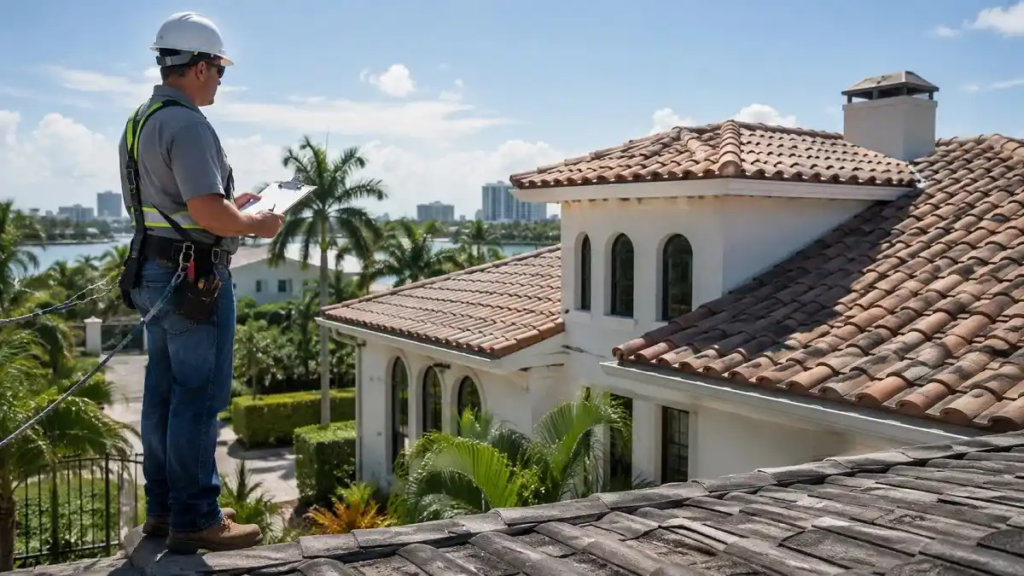
A useful inspection should look beyond the visible shingles or other roof covering. The contractor should check valleys, roof edges, walls, chimneys, skylights, vents, gutters, flashing, and pipes or other openings through the roof.
Where accessible, the inspection should also include the attic and the roof deck, which is the wood surface beneath the roofing system. Photos can help show why a repair or replacement is being recommended.
Ask what caused the problem. A leak might come from damaged roofing, failed flashing, storm damage, condensation, poor ventilation, or another part of the building.
This distinction matters. Replacing shingles will not fix moisture caused by a bathroom fan venting into the attic or by another indoor moisture problem.
How Much Does Roof Repair or Replacement Cost?
Roofing costs vary too much for one price to fit every home. A small repair around a vent or flashing detail is a very different job from replacing an entire roof, so the first step is to understand the scope of work.
Repair costs depend on the damaged area, roofing material, roof height and slope, access, labor, and whether matching materials are available. A repair can also become more expensive if water has damaged the roof deck or nearby flashing.
Replacement costs are usually affected by roof size, material, removal of the existing roof, disposal, deck repairs, underlayment, flashing, ventilation, permits, labor, and the shape of the roof. Valleys, dormers, chimneys, skylights, steep slopes, and multiple roof levels can add time and material.
| Cost factor | Why it changes the price |
|---|---|
| Roof size | Larger roofs require more material and labor |
| Roofing material | Shingles, metal, tile, slate, and other systems have different material and installation costs |
| Slope and access | Steep or difficult roofs can require more time and safety equipment |
| Old roof removal | Tear-off adds labor, disposal, and site protection |
| Deck damage | Damaged wood may not be fully visible until the old roofing is removed |
| Roof details | Valleys, skylights, chimneys, walls, and vents require additional flashing and labor |
| Location | Labor rates, permits, weather, and material prices vary by area |
For replacement work, compare written estimates with the same scope rather than relying on a national average or a price per square foot alone. A low estimate can become expensive if important work is excluded.
What Should Be Included in a Roofing Quote?
A useful quote should describe a complete roofing system rather than listing only the visible material. It should make clear what will be removed, installed, repaired, inspected, and cleaned up.
| Scope area | Details to look for |
|---|---|
| Removal | Old roofing layers, disposal, property protection, and cleanup |
| Roof deck | How it will be inspected and how damaged wood will be priced |
| Water protection | Underlayment, valleys, flashing, roof openings, and drip edge |
| Roof covering | Manufacturer, product line, profile, color, fasteners, and matching accessories |
| Ventilation | Air intake, exhaust vents, blocked airflow, and any proposed changes |
| Project terms | Permits, inspections, schedule, payments, and change orders |
| Project completion | Cleanup, final inspection, warranties, registration, and documents |
The quote should also explain how hidden damage will be handled. For example, the condition of the roof deck may not be clear until the existing material is removed.
If the quote contains an allowance—an estimated amount for work that cannot be fully priced yet—it should explain the rate or quantity and how additional work will be approved.
Do not rely on verbal promises for extra work. Changes to the agreed scope should be documented along with the added or reduced cost.
Choose Roofing Materials for the House, Not the Brand
Roofing materials need to suit both the house and the local climate. Consider roof slope and structural weight along with wind, hail, fire risk, salt air, maintenance, and access to local repairs.
The visible material is only one part of the roof. Underlayment provides an added protective layer beneath the main covering, while flashing helps keep water out around roof joints, walls, chimneys, vents, and other vulnerable areas.
Starter materials, ridge products, fasteners, ventilation, and installation details also affect performance. A premium shingle or metal panel cannot make up for poor flashing or incorrect installation.
Comparing roofing materials for your climate and budget can narrow the options before you request final contractor pricing.
How to Check a Residential Roofing Contractor
Do not choose a roofing contractor from price alone. Start by confirming the business identity and checking licensing where your location requires it. Ask for proof of current insurance and confirm who will obtain required permits.
Ask who will actually perform the work and who will supervise the project. If subcontractors are used, the contractor should still be able to explain who is responsible for quality control and communication.
Recent local references are more useful when the homes have a similar roof system. Reviews can also reveal patterns involving communication, cleanup, delays, and how the company responds when a problem appears after installation.
Before signing, review the payment schedule, workmanship warranty, exclusions, change-order process, and expected start and completion arrangements. The written contract should match the work that was discussed.
Roofing Contractor Red Flags to Watch For
Be cautious when someone pushes for an immediate decision without showing evidence of damage. Other warning signs include vague product descriptions, unusually large upfront payment demands, reluctance to provide insurance or licensing information, and pressure to avoid required permits.
Be careful with promises that insurance will automatically cover everything. Coverage depends on the policy, cause of damage, documentation, and insurer decisions.
Another warning sign is a proposal that automatically reuses existing flashing without checking its condition. Some flashing may be suitable for reuse, but that decision should depend on condition, compatibility, and the new roof system.
What Should You Do When the Roof Is Actively Leaking?
Protect people first. Move belongings away from the wet area and collect dripping water where it is safe to do so. Do not climb onto a wet or storm-damaged roof.
If water is near electrical fixtures, wiring, or equipment, keep away from the area and contact an appropriate professional.
Photograph visible roof damage, ceiling stains, damaged belongings, and other affected areas before cleanup when it is safe. These records can also help a contractor understand how the leak developed.
A temporary tarp or emergency repair may help prevent additional water entry, but it should not replace a proper diagnosis. Permanent repairs can follow once conditions allow the roof to be inspected safely.
What Happens During a Roof Replacement?
The exact process depends on the roof system and weather, but most replacements follow a similar order. The crew protects the property and removes the old roofing, then checks the exposed deck for damaged areas.
After necessary deck repairs, the contractor installs the required water-control layers, flashing, and other details before fitting the new roof covering. Ventilation and roof openings should be completed as part of the system rather than treated as last-minute additions.
The contractor should explain material delivery, driveway and landscape protection, noise, property access, debris control, weather planning, and daily cleanup before work starts.
Remove fragile items from walls or attic areas because tear-off and fastening can create vibration. Vehicles may also need to be moved away from the work area.
Weather can change the schedule. Open areas of the roof need a plan for rain or other unsafe conditions, and the house should be protected before the crew leaves.
If hidden damage is found after tear-off, ask for photos and a written price before extra work begins whenever practical. Clear documentation protects both the homeowner and contractor.
What to Check Before Final Payment
Before making the final payment, review the completed work and walk around the property where it is safe to do so. Check that debris has been removed from the driveway, landscaping, gutters, and other work areas.
Ask whether magnetic nail collection has been completed around the property. Also confirm that required inspections and permits have been closed where applicable.
Collect the final invoice, product information, workmanship warranty, manufacturer documents, permit sign-off, and any required warranty registration confirmation. Keep the contract, photos, and final paperwork with the home’s records.
Common Residential Roofing Questions
How long should a residential roof last?
There is no single lifespan for every roof. Roofing material, climate, installation quality, ventilation, maintenance, roof design, and storm exposure all affect how long a system remains useful. Condition should be considered along with age.
Can a new roof be installed over old shingles?
Some roofing systems and locations may allow another layer over existing shingles, but an overlay can hide the condition of the roof deck and add weight. It may also affect flashing details, installation requirements, and warranty terms. A tear-off allows the contractor to inspect the underlying roof more clearly.
Should I get three roofing estimates?
Getting two or three detailed estimates can make comparison easier, especially for replacement work. The number of quotes matters less than their quality. Compare inspection findings, materials, removal work, deck-repair pricing, flashing, ventilation, warranties, credentials, exclusions, and payment terms rather than choosing the lowest total automatically.
How do I know whether a roofing estimate is complete?
A useful estimate should identify the roofing system, removal work, deck inspection, water-control layers, flashing, ventilation, permits where needed, cleanup, payment terms, warranties, and the process for unexpected work. If major parts of the job are unclear, ask for them to be added before signing.
Before You Approve a Roof Repair or Replacement
A good roofing decision starts with a clear diagnosis. The written quote should then explain exactly how the contractor plans to fix the problem.
For a repair, confirm that the proposed work addresses the source of the failure rather than only the visible symptom. For replacement, make sure the quote covers the complete roof system and explains how hidden damage will be handled.
Check the contractor’s credentials, products, payment terms, warranties, permits, and cleanup responsibilities before work begins. Keep important decisions and changes in writing.
The goal is not to buy the cheapest repair or the most expensive roof. It is to choose work that fits the condition of the house, solves the actual problem, and leaves a clear record of what was installed.