11 Japanese Bedroom Ideas for a Calm, Zen Retreat (2026)
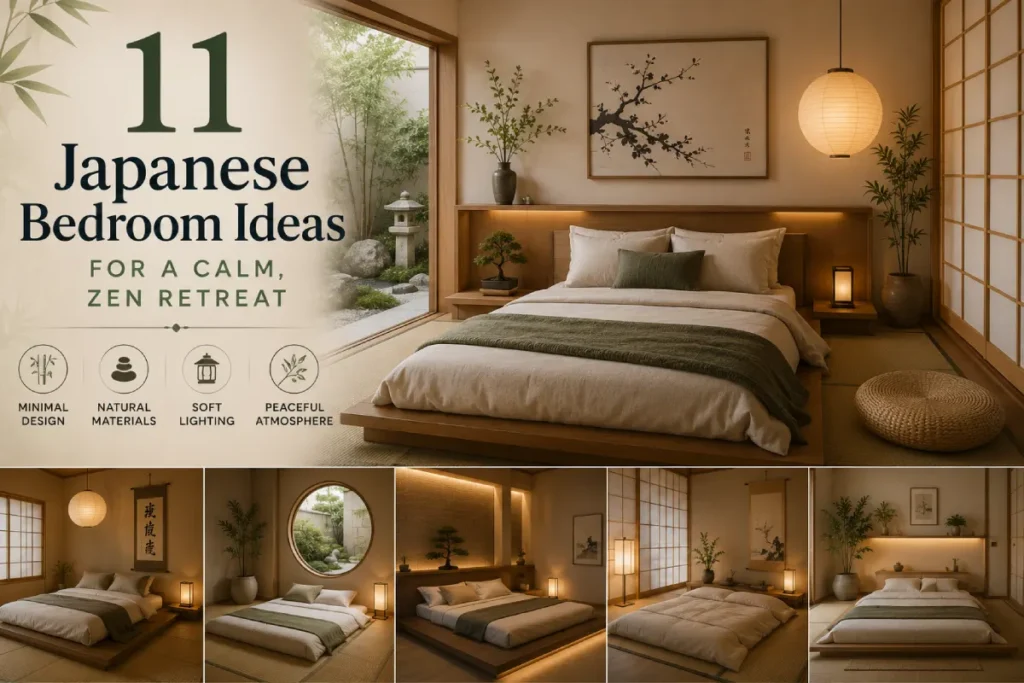
A Japanese-style bedroom feels calm because of what it leaves out. Low furniture, natural materials and plenty of empty space (what Japanese design calls ma) give the eye somewhere to rest.
The 11 looks below range from a traditional futon on tatami to a modern Japandi room, with simple swaps that work in an ordinary apartment.
Quick picker: where should you start?
| Your situation | Start with |
|---|---|
| Small apartment | #2 Futon on tatami or #11 Hidden storage |
| Renting, so no changes to walls | #4 Shoji screens and #5 Paper lanterns |
| Want it cozy, not bare | #3 Japandi or #6 Wabi-sabi textures |
| Prefer a darker, dramatic room | #8 Charred wood and charcoal |
| Setting up a guest room | #10 Ryokan-style room |
1. Low Wooden Platform Bed
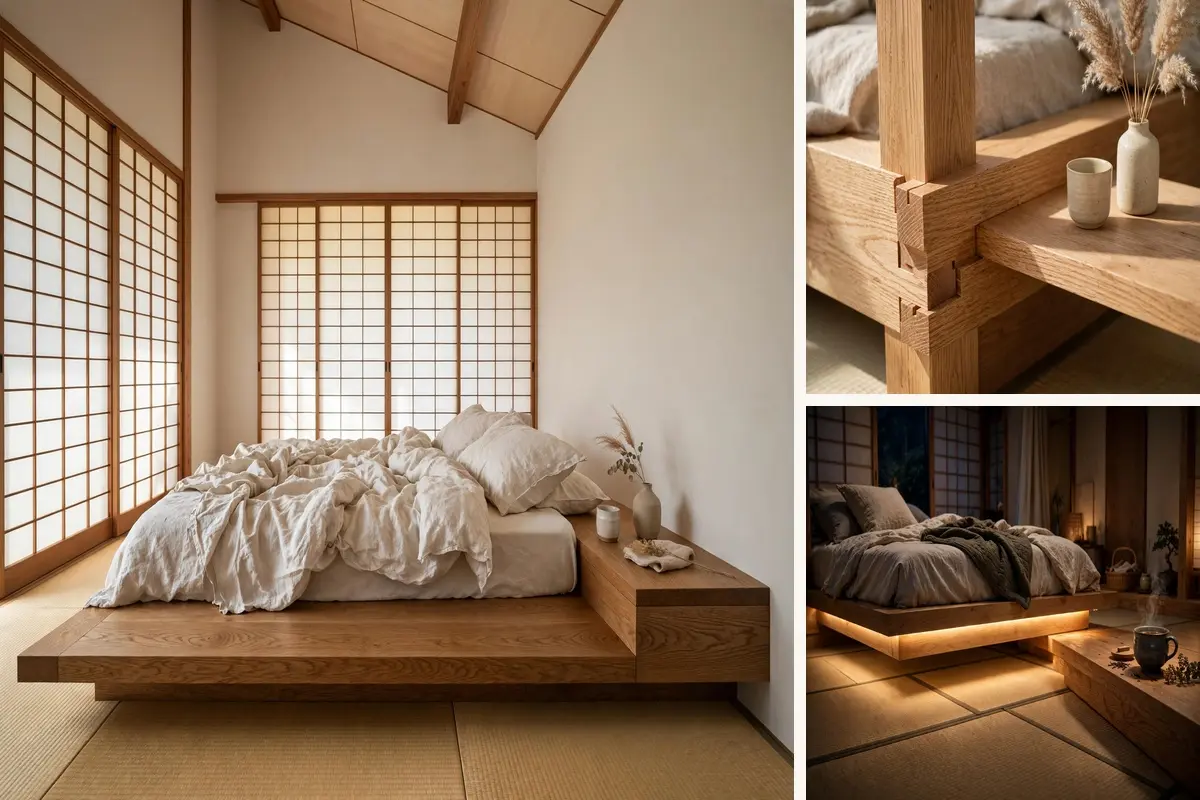
A bed that sits close to the floor is the single biggest change you can make. It lowers the visual horizon, so the ceiling feels higher and the room feels more open.
Look for solid oak, ash or hinoki wood with simple joinery and no ornament. A frame that extends a little beyond the mattress gives you a built-in ledge instead of nightstands.
2. Futon on Tatami
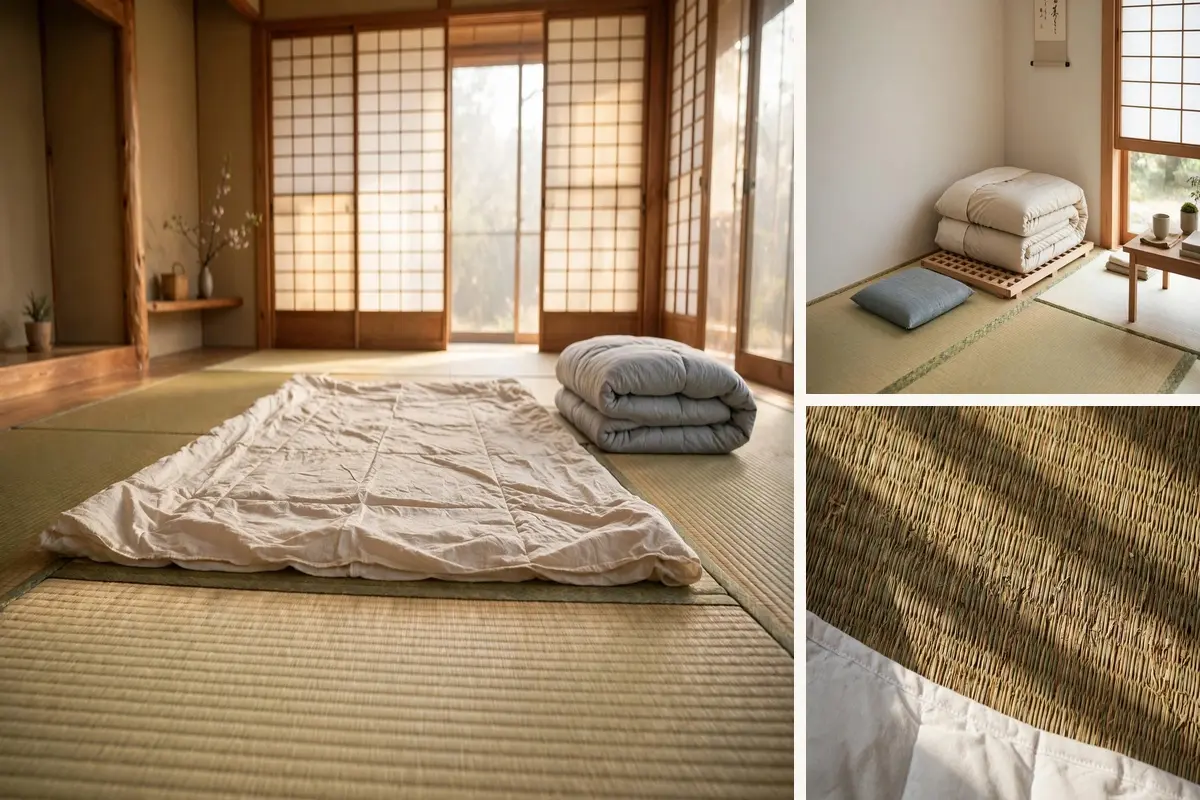
The traditional setup is a shikibuton (a thin, firm cotton mattress) on tatami mats woven from igusa rush grass, with a kakebuton (comforter) on top. In the morning it folds away, and the bedroom becomes a living space again.
You don’t need a full tatami floor. Two or three standalone tatami mats under the futon give the look and feel in any room.
Designer’s secret tip (tap to reveal)
Never leave a futon flat on a bare floor for weeks. Body moisture gets trapped underneath and can cause mould. In Japan, futons are folded every morning and aired in the sun regularly. If you won’t fold it daily, put it on tatami or a slatted wooden base so air can circulate.
3. Japandi Bedroom
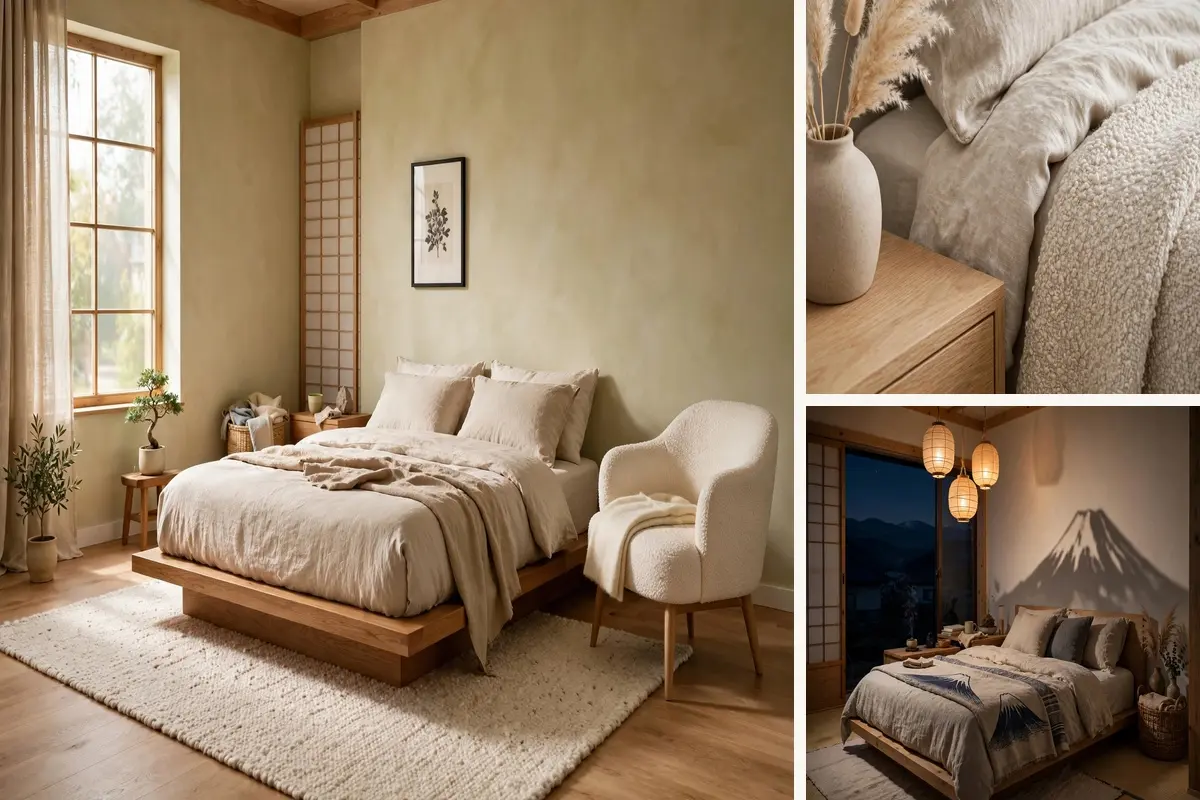
Japandi blends Japanese restraint with Scandinavian warmth. You keep the low furniture and calm palette, then add softer layers such as linen bedding, a boucle chair and a wool rug.
It’s the easiest version for most homes, because it feels minimal without feeling empty. Our peaceful relaxing bedroom ideas show more ways to use it.
4. Shoji Screens and Sliding Panels
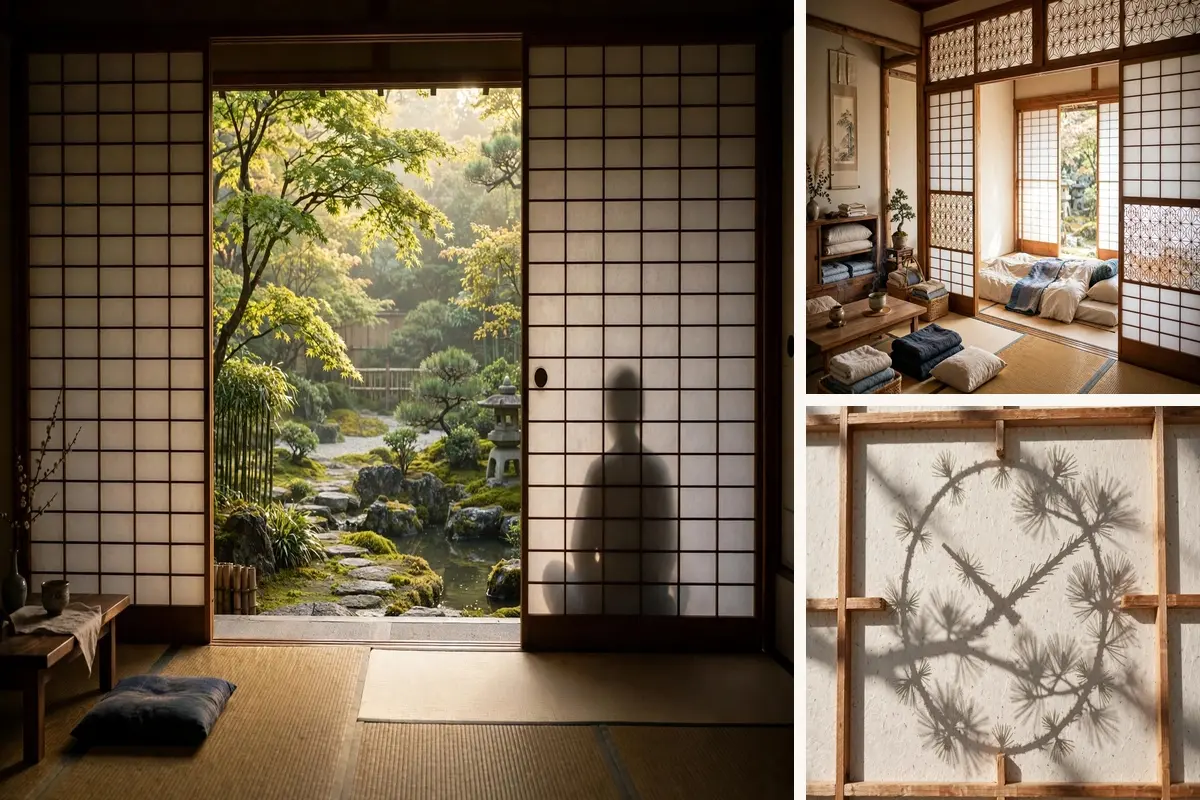
Shoji are wooden lattice panels covered with translucent paper. They turn harsh daylight into a soft, even glow, which is why traditional bedrooms feel so gentle in the morning.
A freestanding shoji screen can hide a desk or a window with a poor view. Shoji-style sliding panels in front of a closet replace swinging doors and save floor space. Opaque fusuma panels do the same job where you need privacy.
5. Paper Lantern Lighting
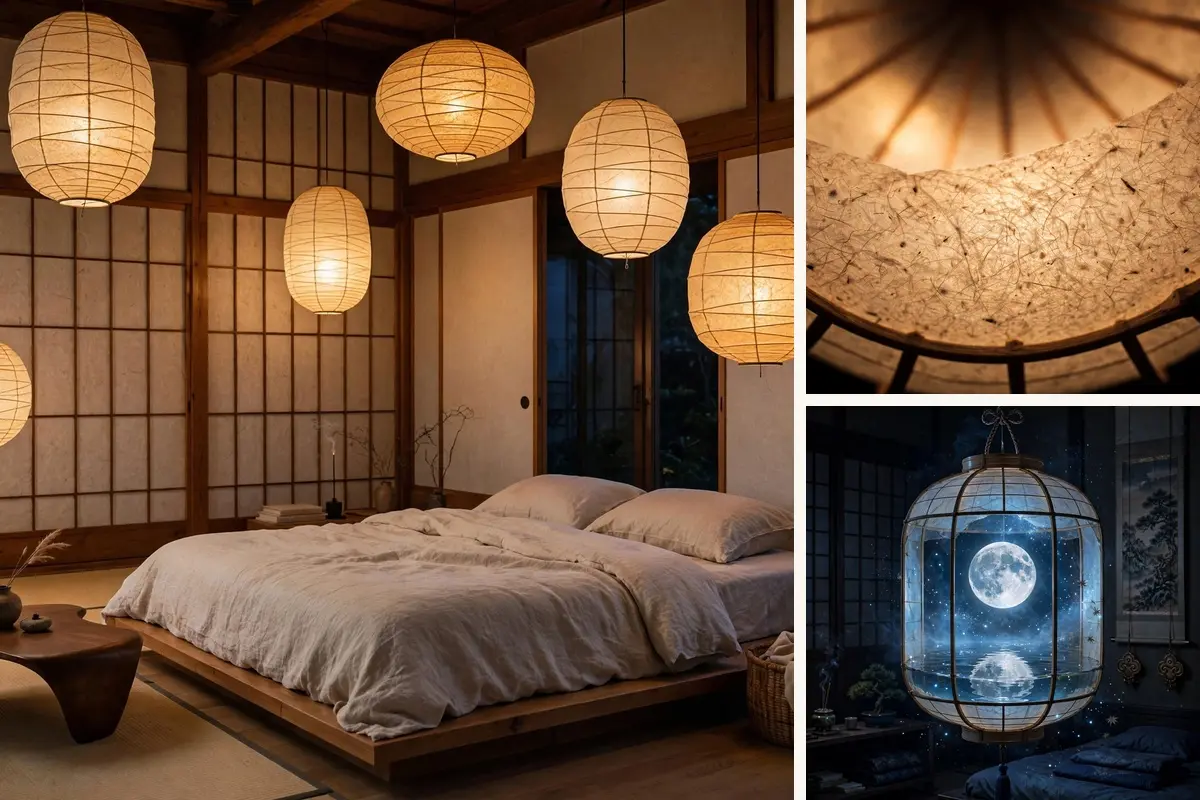
Washi paper lanterns give the warm, diffused light this style depends on. Isamu Noguchi’s Akari lamps are the design classic, and many affordable versions follow the same idea.
Hang one large lantern as the main light, and add a small floor lantern by the bed. Use warm 2700K bulbs and avoid bright downlights.
6. Wabi-Sabi Textures
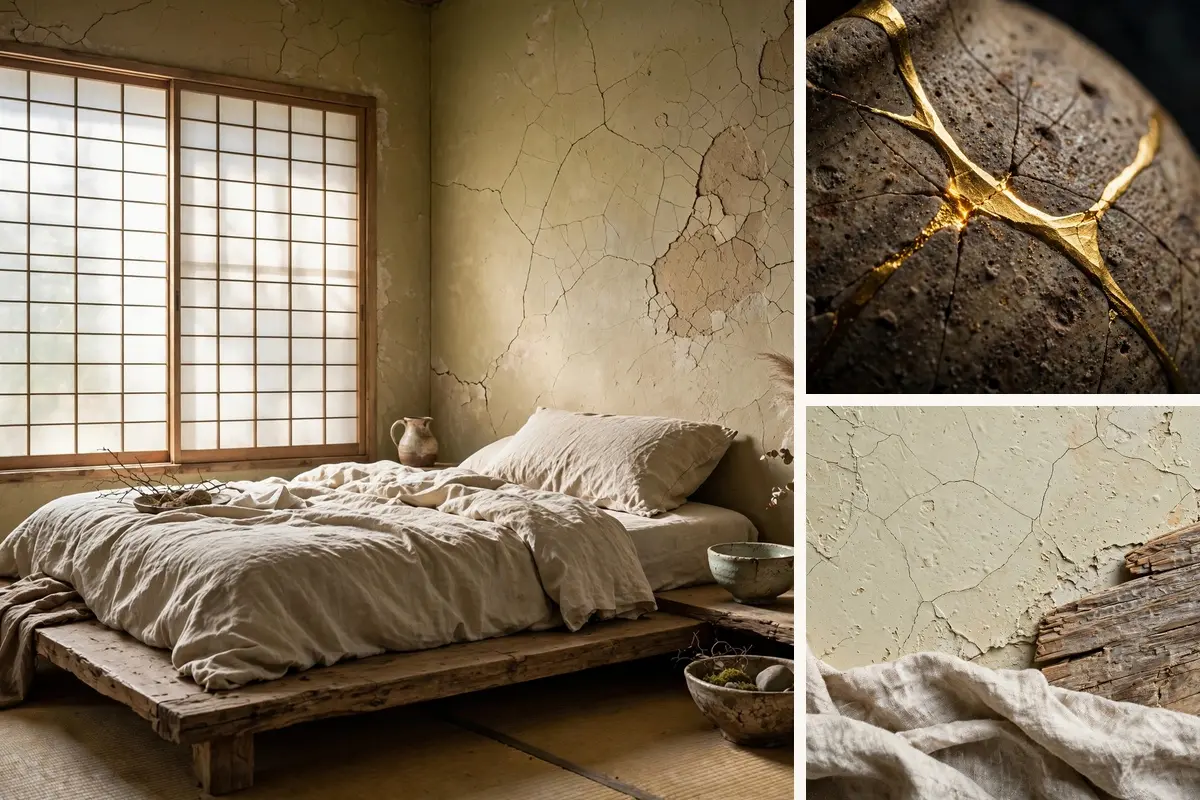
Wabi-sabi finds beauty in things that are imperfect, aged and handmade. In a bedroom that means limewashed or plaster walls, rumpled linen, a chunky handmade ceramic and wood that shows its grain.
A bowl repaired with gold kintsugi, or any piece with a visible history, fits the idea better than a perfect new accessory.
7. Tokonoma-Inspired Display Niche
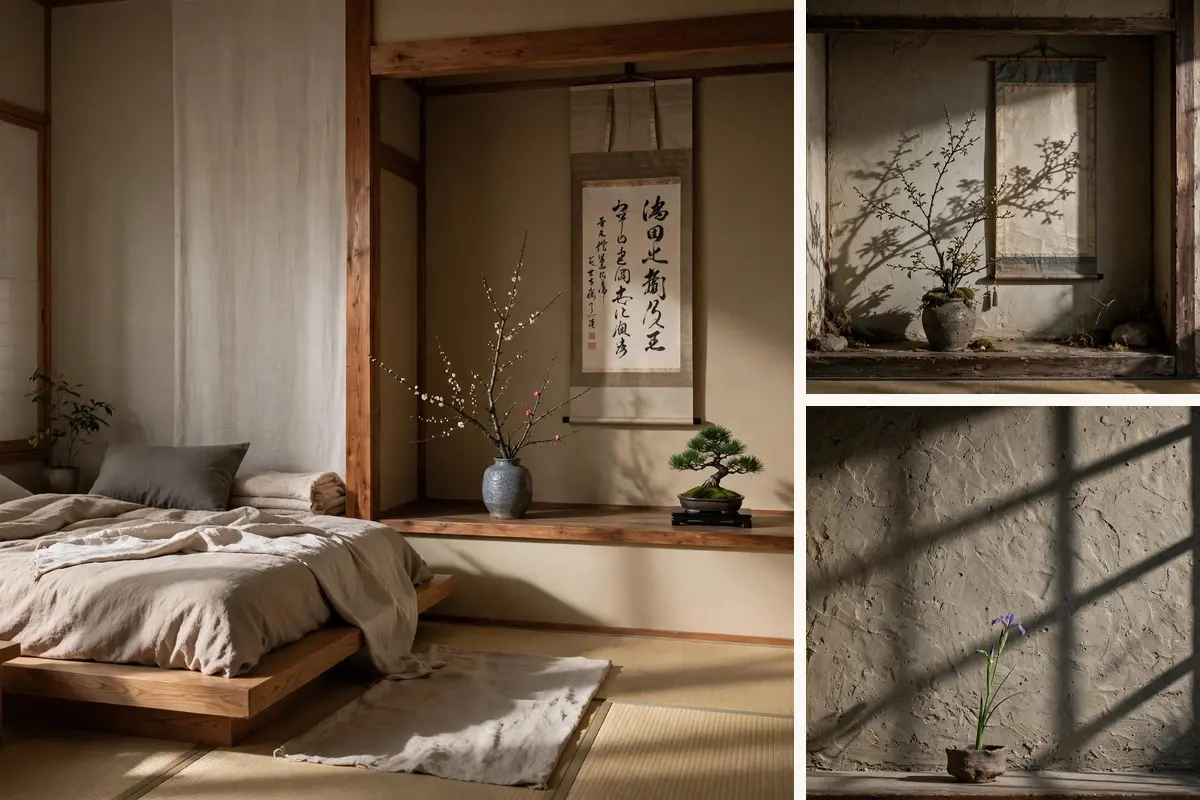
A tokonoma is a small raised alcove in traditional Japanese rooms, used to display one scroll or a seasonal flower arrangement. It concentrates all the decoration in one spot, so the rest of the room can stay bare.
Recreate it with a recessed niche or a single floating shelf. Display one thing at a time, such as an ikebana arrangement, a branch in a vase or one print, and change it with the seasons.
8. Charred Wood and Charcoal Accents
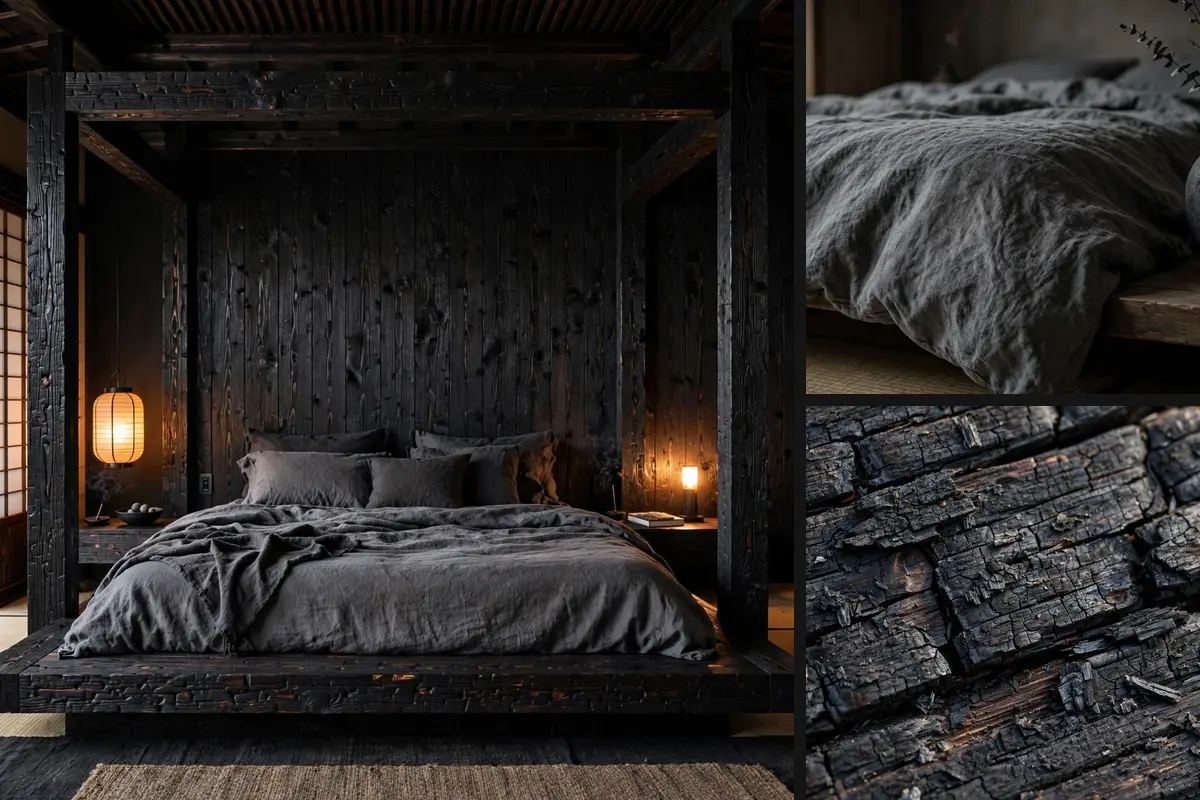
Not every Japanese bedroom is pale. Yakisugi (also known as shou sugi ban) is cedar charred to a deep, textured black, and a feature wall of it behind the bed looks dramatic but still natural.
Balance it with pale linen bedding and light tatami or oak, so the room feels grounded rather than dark. Charcoal paint gives a similar effect for less.
9. Indoor Plants and a Zen Corner
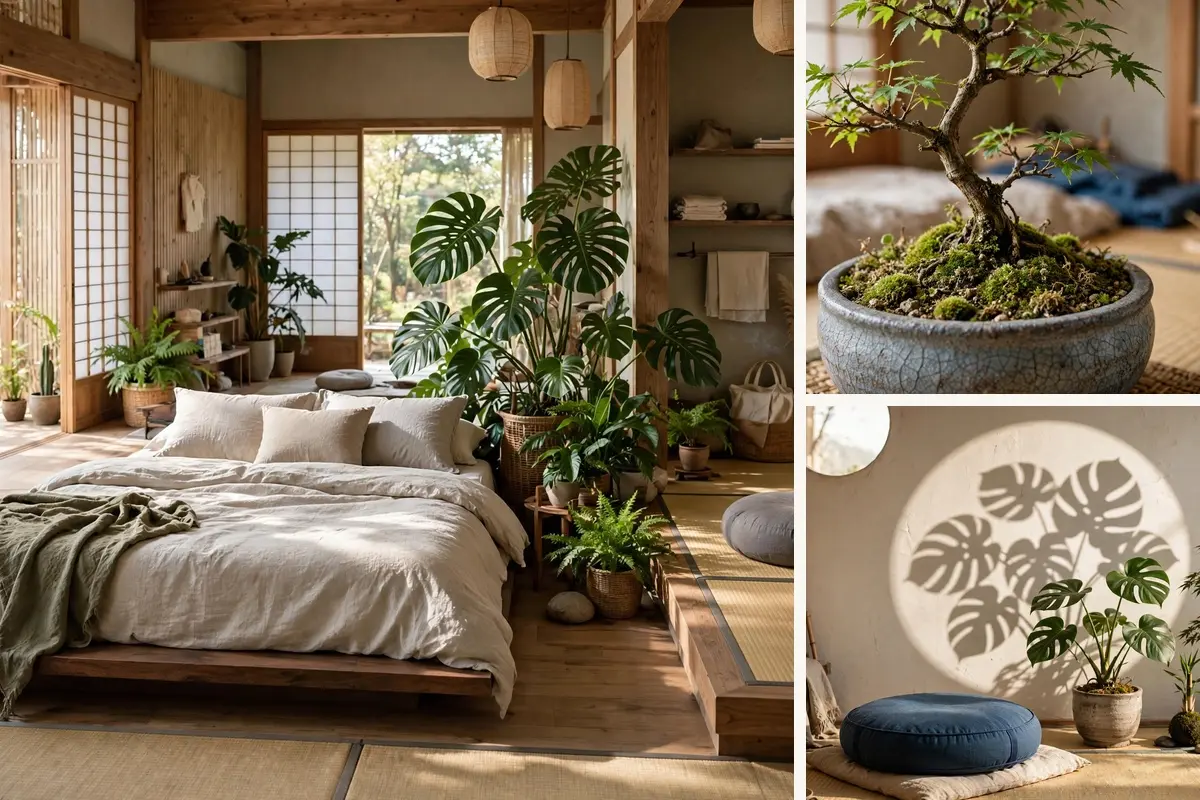
Bring nature in, but in a controlled, sculptural way. One bonsai, a sculptural pine or a few smooth river stones on a tray say more than a dozen scattered pots.
Add a zabuton (a flat floor cushion) beside them, and the corner doubles as a spot for stretching or meditation.
10. Ryokan-Style Guest Room
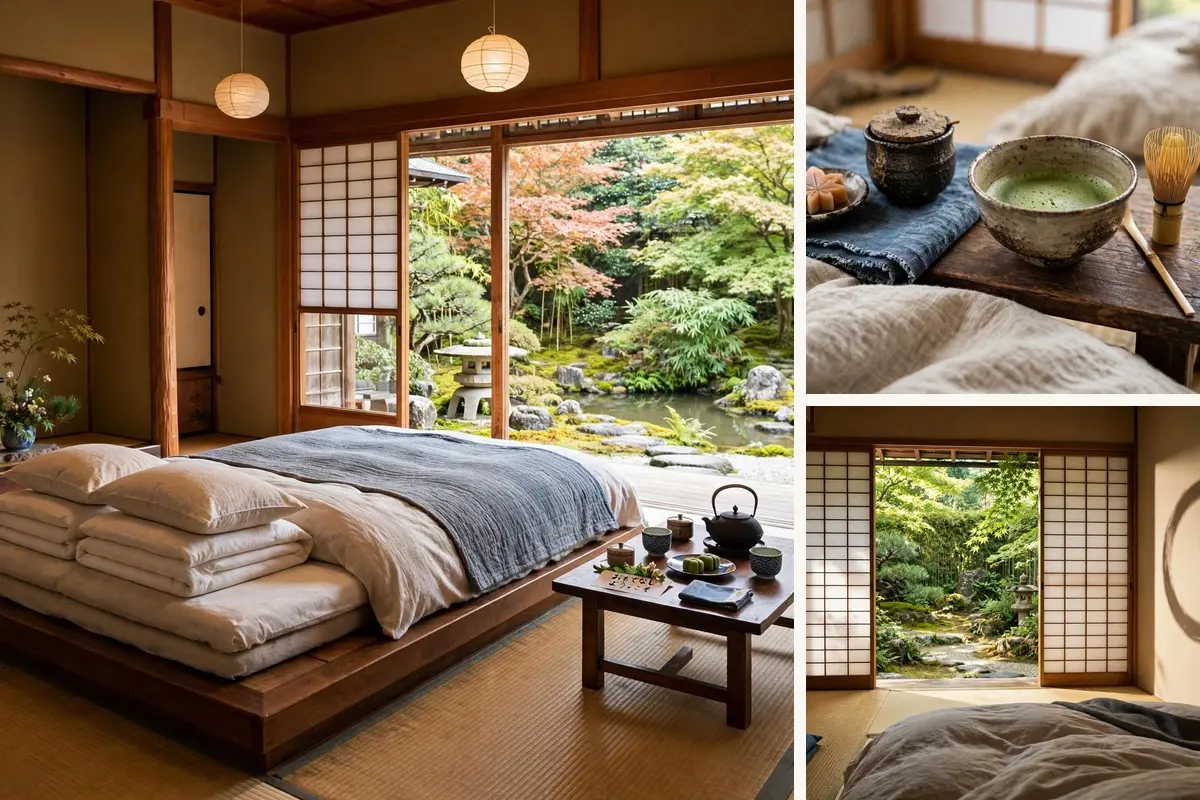
Traditional Japanese inns (ryokan) are famous for rooms that switch between living and sleeping. A low table with floor cushions by day and futons by night turns a spare room into something guests remember.
A cotton yukata robe and a fabric noren curtain at the doorway add authentic details. Both are inexpensive and easy to find.
11. Hidden Built-In Storage
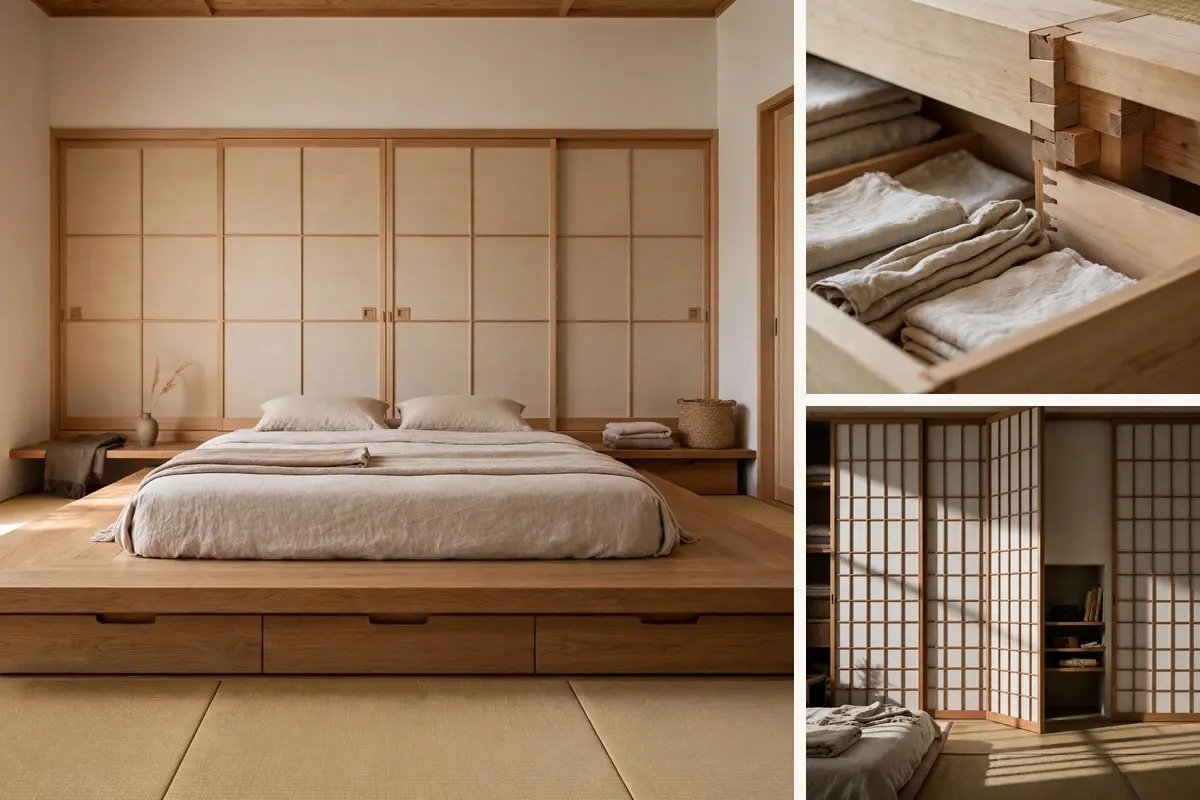
Traditional homes keep bedding and belongings in an oshiire, a deep built-in closet behind sliding doors. That’s why the rooms themselves look so empty.
Floor-to-ceiling flat-front wardrobes in pale wood or white do the same today. Fold clothes so they stand upright in drawers (the KonMari method made this popular) to fit more into less space.
Japanese Design Terms and Easy Modern Swaps
You don’t need imported materials to get the look. Here’s what each traditional element is and what to use instead in an ordinary home.
| Term | What it is | Easy modern swap |
|---|---|---|
| Tatami | Rush-grass floor mat | Standalone tatami mats or a jute rug |
| Shikibuton | Thin, foldable floor mattress | Low platform bed with a firm mattress |
| Shoji | Paper-covered lattice panel | Rice-paper window film or a folding screen |
| Tokonoma | Alcove for one display piece | Recessed niche or one floating shelf |
| Oshiire | Deep built-in closet | Flat-front wardrobe with sliding doors |
| Noren | Split fabric curtain at a doorway | Any linen doorway curtain |
Conclusion
The best Japanese bedroom ideas come down to three habits: keep furniture low, use natural materials and protect empty space. Start with a low bed and a paper lantern, clear everything that doesn’t need to be on display, and add one natural element at a time.