Florida Roof Replacement Estimate: Costs and Quote Checklist
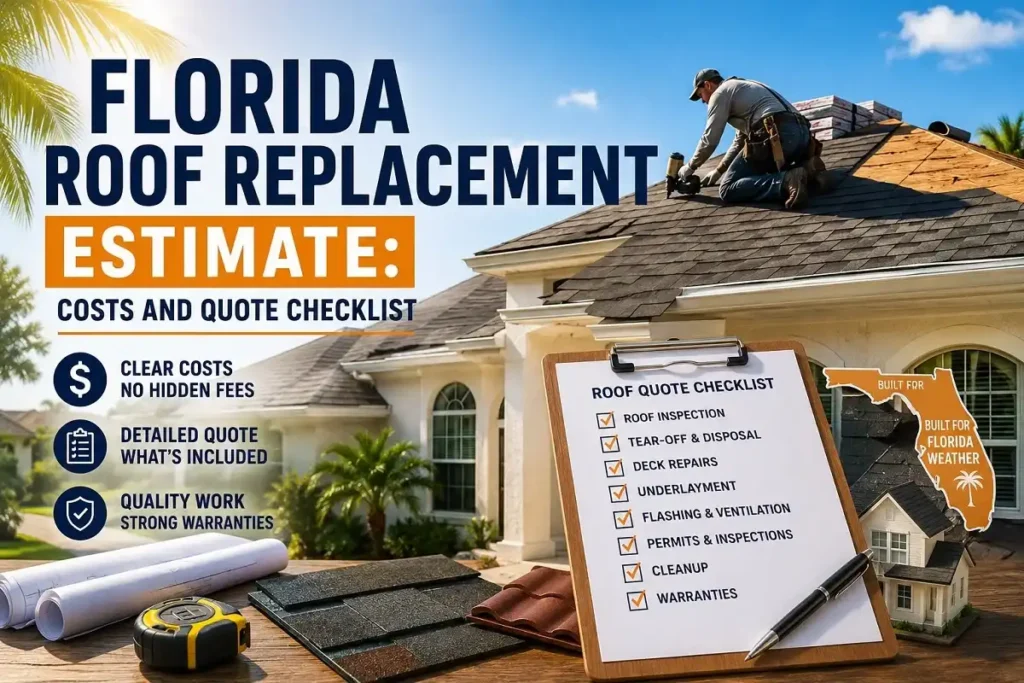
A Florida roof replacement estimate should tell you more than the price of shingles, metal panels, or tile. A useful estimate explains the roof size, removal work, deck repairs, underlayment, flashing, ventilation, permits, cleanup, warranties, and the exact roofing products included in the job.
Florida roofs also have to deal with strong wind, heavy rain, intense sun, humidity, and coastal exposure in some areas. These conditions can affect both the roofing system and the way it must be installed.
Do not sign based only on the total price. The estimate should also explain how hidden deck damage, permit changes, and other extra work will be priced and approved.
Table of Contents
- How Much Does a Roof Replacement Cost in Florida?
- What the First Roof Visit Should Cover
- Eight Costs a Complete Florida Estimate Should Separate
- Why Price Per Square Foot Can Mislead
- Deck Repairs Need a Written Pricing Rule
- Wind, Product Approval, and Permit Details Matter in Florida
- How Roofing Material Changes Your Florida Estimate
- Insurance Claims Do Not Replace a Detailed Estimate
- Questions to Ask Before Accepting a Free Roof Estimate
- How to Compare Three Florida Roofing Quotes
- Red Flags in a Florida Roof Replacement Estimate
- When the Estimate Is Ready to Become a Contract
How Much Does a Roof Replacement Cost in Florida?
There is no single price that fits every Florida roof. Current published estimates vary widely because different cost guides use different roof sizes, materials, labor assumptions, and project scopes. Some published estimates place many Florida replacements below $17,000, while other guides show standard projects for larger homes reaching roughly $18,000 to $32,000.
That wide range is useful for one reason: an online average should be treated as an early budget number, not a final quote. Your actual cost depends on the measured roof area, roofing material, pitch, access, number of existing layers, deck condition, flashing work, permits, and local installation requirements.
| Cost factor | How it affects the estimate |
|---|---|
| Roof size | More roof area means more materials, labor, and disposal |
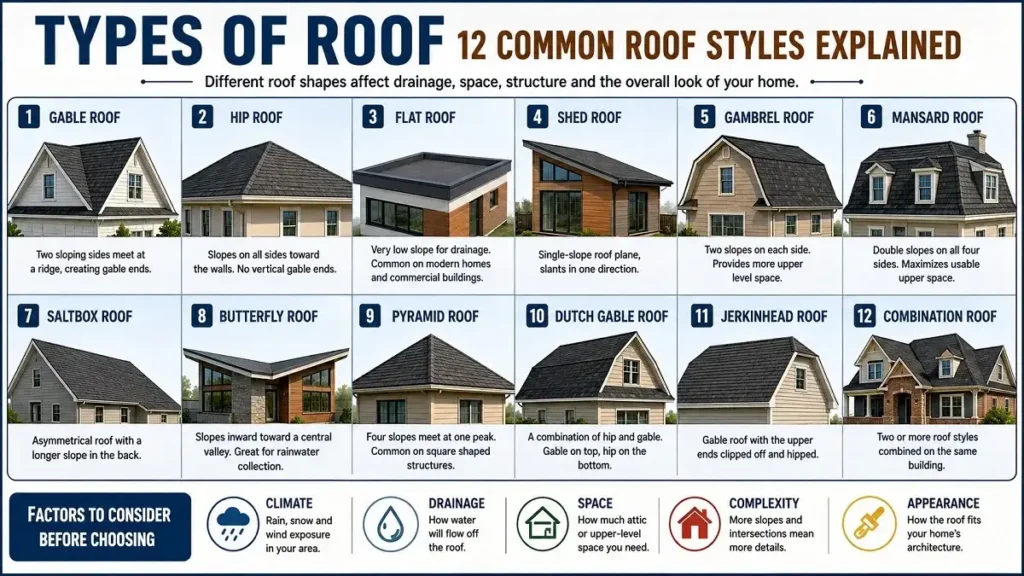
| Roof shape | Hips, valleys, dormers, and complex sections increase cutting and labor |
| Roofing material | Asphalt shingles usually cost less than many metal, tile, or premium systems |
| Tear-off | Multiple old layers can increase removal and disposal costs |
| Deck damage | Rotten or damaged wood may add costs after the old roof is removed |
| Location | Labor, permits, wind requirements, and coastal conditions can change pricing |
When comparing estimates, make sure each contractor is pricing the same work. A lower quote may simply leave out deck repairs, flashing, permits, disposal, or finish work.
What the First Roof Visit Should Cover
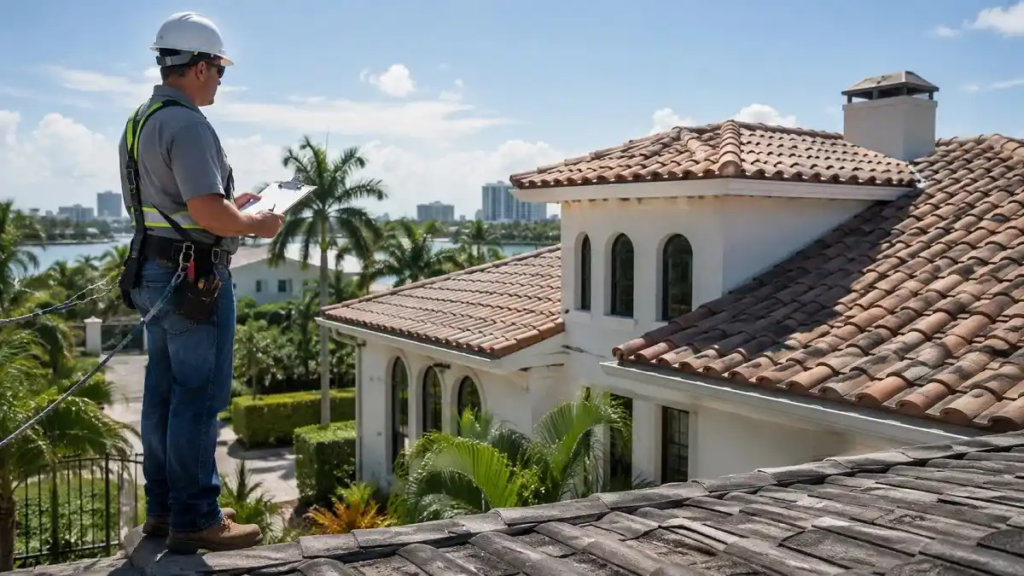
The estimator should inspect the roof covering, flashing, valleys, roof edges, vents, pipe openings, visible deck condition, and accessible attic areas. The inspection should also look for leaks, soft spots, storm damage, previous repairs, and signs of poor airflow.
Measurements may come from an on-site survey, an aerial measurement report, or both. Ask whether the stated number represents the actual roof area or the amount of material after waste has been added.
A roof with several hips, valleys, dormers, and cut-up sections usually needs more material than a simple roof with the same house footprint.
Eight Costs a Complete Florida Estimate Should Separate
- Tear-off and disposal: The estimate should state how many roofing layers will be removed and whether disposal, containers, driveway protection, and landscaping protection are included.
- Deck repairs: Look for the amount of replacement wood already included and the price for any extra damaged decking found after tear-off.
- Underlayment: This is the water-resistant layer installed between the roof deck and the finished roofing material. The quote should identify the type and how it will be installed.
- Roof covering: The estimate should name the exact product line, profile, color, fastening method, and required accessories.
- Flashing and roof openings: Drip edge, wall flashing, pipe boots, vents, skylights, and chimney areas should be included where they apply.
- Ventilation: The contractor should explain the existing intake and exhaust ventilation and whether changes are needed.
- Permits and inspections: The estimate should state who applies for the permit, who pays the fee, and who schedules required inspections.
- Cleanup and warranties: Look for debris removal, magnetic nail pickup, final inspection, product registration, and workmanship warranty details.
If an estimate only says “standard materials,” ask for the exact product information in writing. Similar-looking roofing products can have different installation instructions, approvals, and warranty terms.
Why Price Per Square Foot Can Mislead
A price per square foot can help with early budgeting, but it does not describe the entire job. Roof height, pitch, access, material weight, old roofing layers, flashing details, roof shape, and deck condition can all change the final cost.
Roofers may also use the term “roofing square.” One roofing square equals 100 square feet of roof surface. This is different from the square footage of the home’s floor area.
Removing one layer of asphalt shingles is not the same job as removing heavy tile. Metal roofing also varies depending on the panel style and whether the fasteners are hidden or exposed.
Deck Repairs Need a Written Pricing Rule
The full condition of a roof deck often cannot be seen until the old roofing material is removed. Hidden damage is possible, but that does not mean the extra cost should be open-ended.
The contract should state how much deck repair is already included, the unit price for additional replacement, how damage will be documented, and who must approve extra work.
Ask for photos of damaged wood before it is covered. This gives you a record of what was found and helps connect an added charge to actual repair work.
Wind, Product Approval, and Permit Details Matter in Florida
Florida roofing requirements can vary by property, roof system, location, and local building department. A roofing product may be approved for use in Florida, but it still needs to be installed in the approved way for the specific project.
Florida maintains a statewide product approval system that includes roofing products. The current Florida Building Code product database also allows products to be checked by approval number, manufacturer, category, and other criteria.
Ask the contractor for the product approval information that applies to the proposed roofing system. Also ask how the roof will be fastened. A fastening schedule simply explains where fasteners are placed and how closely they are spaced.
Homes in higher-wind or coastal areas may have different installation requirements. Confirm permit requirements with the local building department rather than assuming the same rules apply everywhere in Florida.
How Roofing Material Changes Your Florida Estimate
| Roof system | What the estimate should explain |
|---|---|
| Asphalt shingles | Product line, starter shingles, ridge caps, underlayment, and fastening method |
| Metal roofing | Panel type, hidden or exposed fasteners, finish, clips, trim, and underlayment |
| Concrete or clay tile | Roof support, attachment method, underlayment, flashing, removal, and broken-tile allowance |
| Low-slope roofing | Waterproof membrane, insulation, drainage, seams, edges, and roof openings |
If you are still comparing materials, our guide to choosing roofing materials explains how climate, roof slope, weight, and maintenance can affect the decision.
The visible roofing material is only one part of the system. The deck, underlayment, flashing, edges, fasteners, vents, and drainage also help keep water out.
Insurance Claims Do Not Replace a Detailed Estimate
A roofing contractor can inspect damage and provide a repair or replacement estimate. Florida law limits contractors from interpreting insurance coverage or adjusting a property claim unless they also hold the required license for that work.
Florida law also restricts contractors from offering to waive or rebate an insurance deductible in connection with covered repairs. Homeowners remain responsible for applicable deductibles under their policies.
For insurance-related roofing work, the agreement should still provide a good-faith, itemized estimate of the services and materials involved. Keep the contractor’s construction scope separate from the insurer’s decision about what the policy covers.
Avoid signing an agreement only because someone promises that the roof will cost you nothing. Coverage, deductibles, limits, and claim decisions depend on the policy and insurer.
Questions to Ask Before Accepting a Free Roof Estimate
- Is this a preliminary budget or an inspection-based quote?
- What exact roofing product and product line are included?
- How much deck repair is included in the price?
- What is the charge for additional damaged decking?
- Who obtains the permit and schedules inspections?
- Are removal and disposal included?
- How are extra charges documented and approved?
- Does the warranty cover workmanship as well as roofing materials?
- Who handles product registration and final paperwork?
A free estimate is not a problem by itself. The important question is how much detail it contains. A short online estimate may be useful for planning, while a contract-ready quote should be based on the actual roof and clearly describe the work.
How to Compare Three Florida Roofing Quotes
Give each contractor the same information and compare the estimates line by line. Check the roof area, material, tear-off, underlayment, deck allowance, flashing, ventilation, permits, disposal, warranties, and change-order rules.
Do not compare only the final totals. One contractor may include work that another contractor lists as an extra. Differences in product lines and installation methods can also explain why two prices for the same house are far apart.
| Compare | What to check |
|---|---|
| Roof measurement | Measured area, waste allowance, pitch, and complex sections |
| Materials | Exact product line, underlayment, flashing, vents, and accessories |
| Deck repairs | Included amount and price for additional damaged wood |
| Installation | Fastening method, edge details, water protection, and ventilation |
| Permits | Responsibility, fees, inspections, and final documents |
| Warranty | Manufacturer coverage and contractor workmanship coverage |
| Final price | Base cost, allowances, exclusions, and change-order process |
Red Flags in a Florida Roof Replacement Estimate
- The quote does not identify the exact roofing product.
- Deck repairs have no written price.
- The contractor will not explain who handles permits.
- Flashing, disposal, or ventilation is missing from the scope.
- The warranty is described only as “lifetime” without written terms.
- Extra work can be added without homeowner approval.
- The contractor promises to waive an insurance deductible.
- A large discount is available only if you sign immediately.
Also verify the contractor’s current Florida license and insurance before signing. The business name on the license should match the company named in the proposal or contract.
When the Estimate Is Ready to Become a Contract
A strong estimate should make it easy to see what you are buying. You should know the roof system, installation scope, permit responsibility, included deck repairs, warranties, exclusions, and the process for approving extra costs.
Some hidden damage may remain impossible to price before tear-off. The important point is that the contract explains how that damage will be measured, documented, priced, and approved.
Before signing, compare the scope rather than choosing only by the lowest number. A complete Florida roof replacement estimate should help you understand the expected cost, what can change it, and exactly what work the contractor has agreed to perform.