17 Outdoor Christmas Lights Ideas That Look Elegant Not Overdone
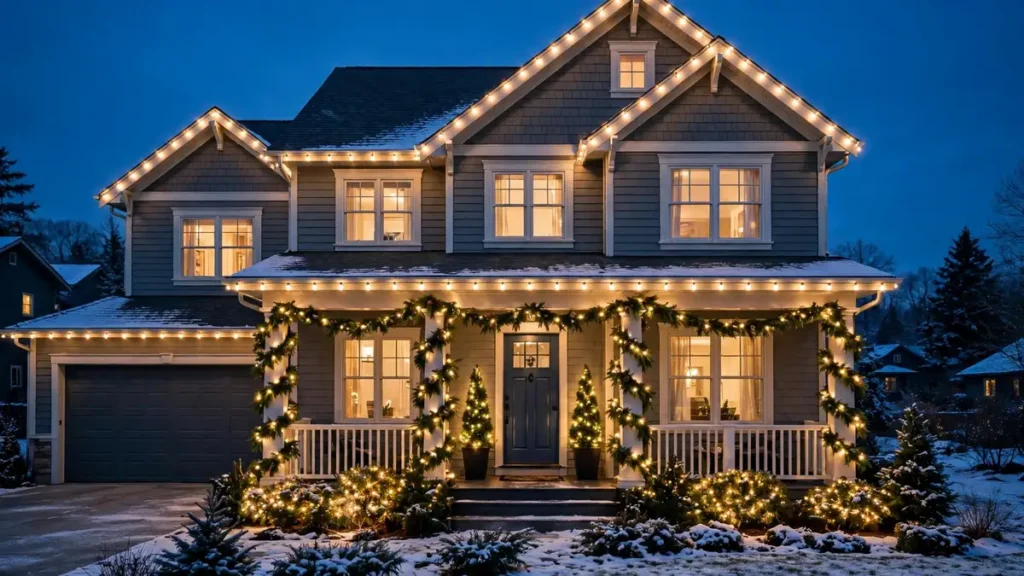
By the second week of December, most streets look the same. Icicle lights hang from the gutter, one string wraps around a bush, and a spotlight points at an inflatable Santa. Nothing is wrong with any of it, but it all starts to blur together, and these outdoor Christmas lights ideas are built on the opposite rule.
The houses that make you slow down are not the ones with the most lights. They are the ones that look planned. One warm colour across the whole house, one clear focal point, and light in the places people actually look instead of light everywhere. That is what elegant means here, and it costs less than a bigger display because restraint is free.
These 17 ideas follow that rule from the roofline down to the fence. Each one tells you the light type, where it goes, and the small detail that keeps it from tipping into overdone. Pick three or four that fit your house, and the whole front will read as one design.
1. Warm White Roofline, One Temperature Only
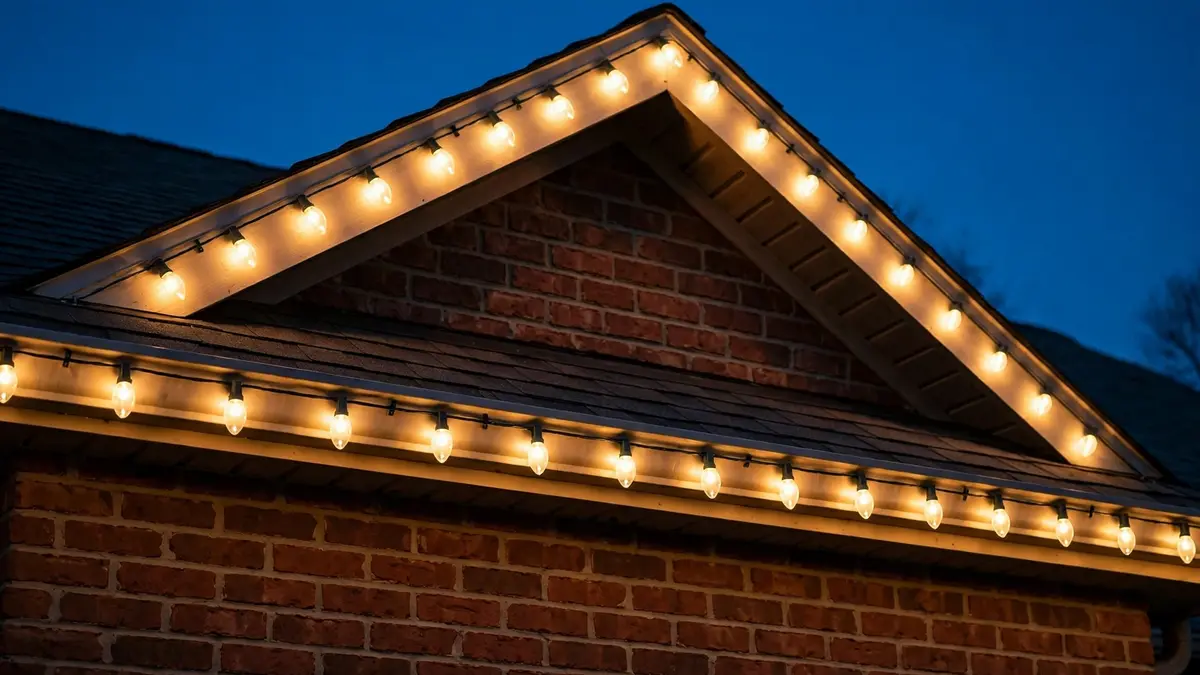
This is the single biggest decision in the whole display, and it costs nothing extra. Use warm white bulbs at 2700K across every section of the house, and never mix them with cool white bulbs at 5000K or higher. One temperature reads as intentional. Mixed temperatures read as a mistake, even when every single string looks fine on its own.
Check the Kelvin number on the box, not just the word white. Two boxes can both say white lights and glow in completely different colours. Clip C9 or C7 bulbs along the eaves, gutters, and peaks, keeping the spacing even and the wire tight so the line reads as one clean outline.
Measure the roofline before you buy, and add ten percent extra for the drops at the corners. Outdoor rated clips hold the bulbs straight and keep the wire off the shingles, which matters in wind and snow.
2. Roofline Set Just Inside the Edge, Not Hanging Over It
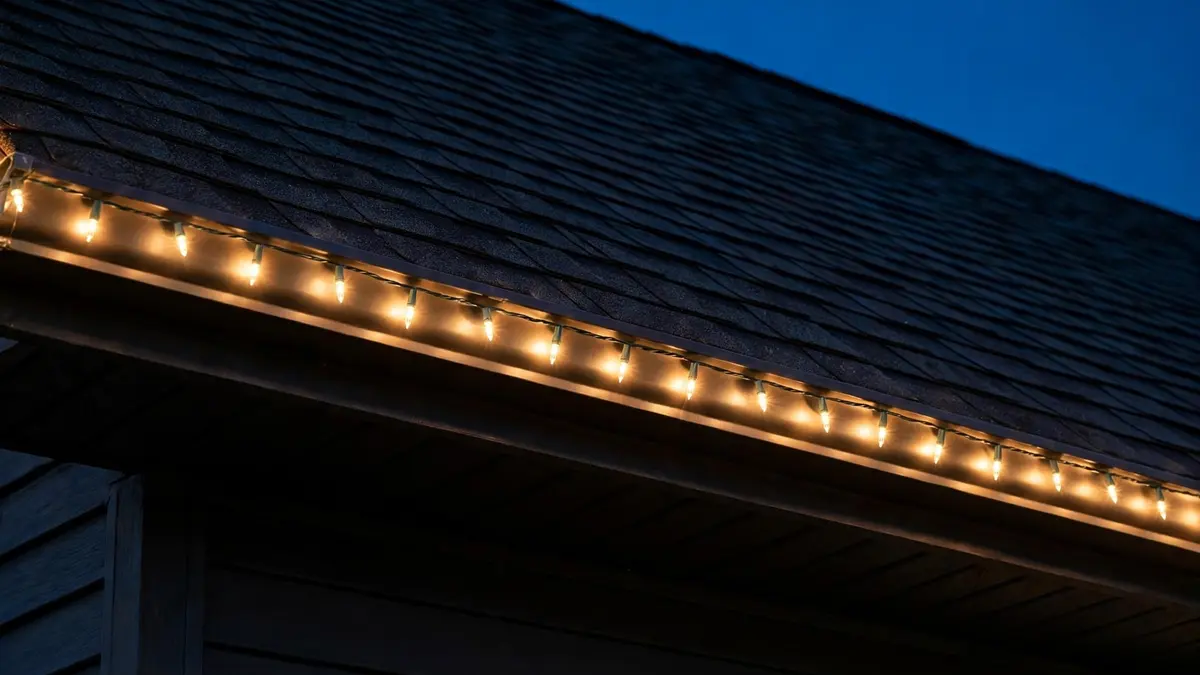
Most people clip lights right along the gutter edge, so the bulbs hang slightly over and droop. The fix is small and the difference is large. Set the run a few inches back, along the roofline itself rather than the gutter lip, and the line sits straighter and cleaner.
That straight line is what makes a display look professionally installed. It reads as deliberate, closer to how a lighting crew would hang it, and it photographs better from the street because there is no sag breaking the line.
Use shingle or gutter clips made for the job, and pull the wire snug between clips so it does not bow. Walk to the curb and look back after the first run. If the line waves, tighten the clips before you add the next section, because a wavy roofline is the first thing the eye catches.
3. Icicle Lights With Varied Drop Lengths
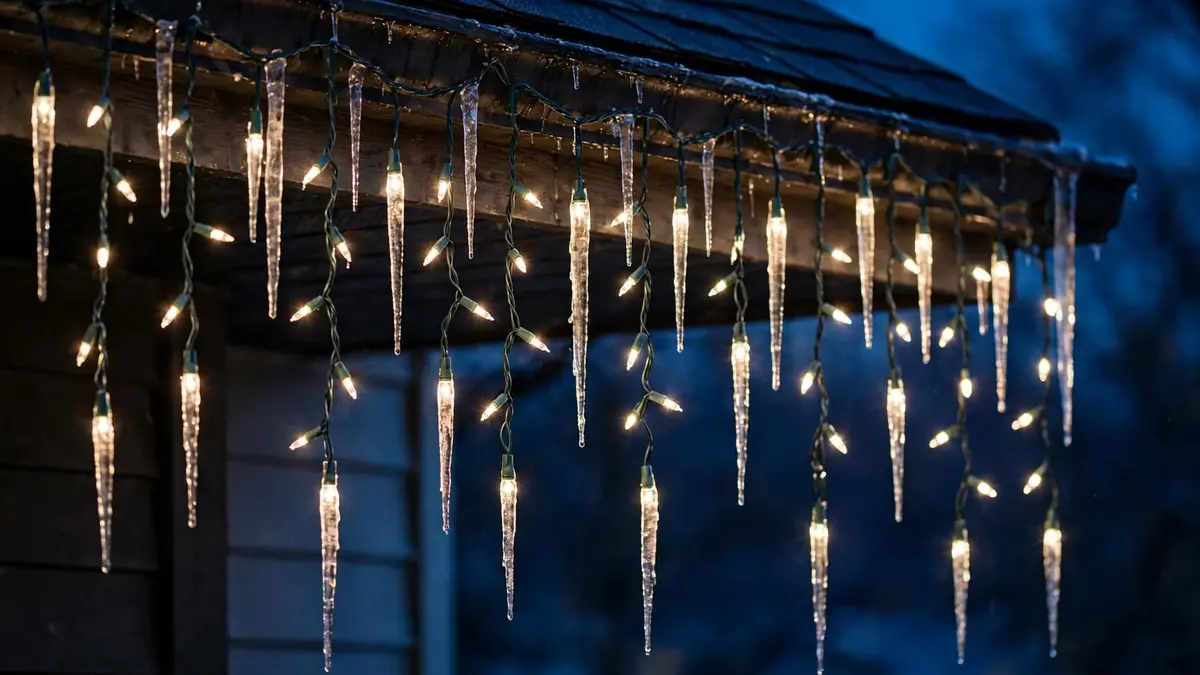
Standard icicle lights have uniform drop lengths, which looks fine but slightly flat. Strings with varied or randomised drop lengths mimic the way real icicles actually form, uneven, with some longer and some shorter. It is a small detail, but it reads as more natural than the perfectly uniform version.
Hang the strands on a straight run of gutter or fascia, where the varying lengths can hang freely and catch the light. Warm white icicles soften the effect on a cottage or a traditional home, while cool white reads crisp and wintry on a modern house. Keep every drop clear of windows and doors.
Hang the strands so the longest drops sit at the ends of each run and the shortest near the middle, or simply let the factory pattern do the work. Either way, do not double the strands up, because one neat row is the elegant version.
4. Net Lights Draped Over Shrubs
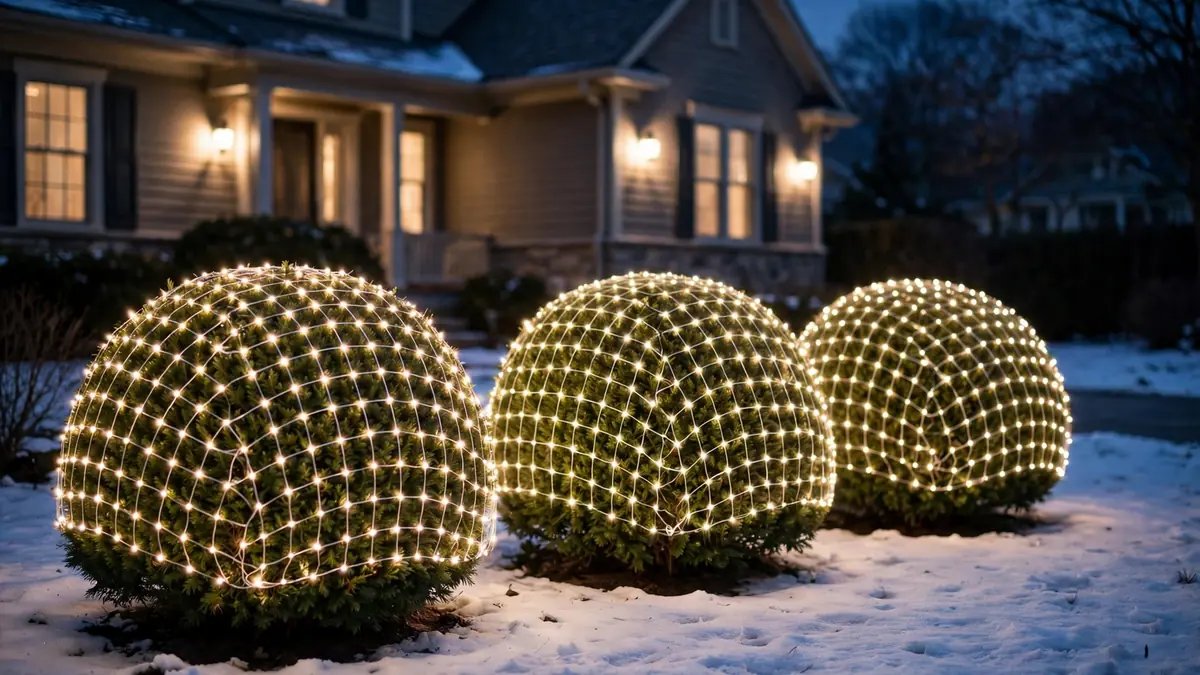
Net lights are the fastest way to add light to a yard. Drape the pre-made grid over the top of a shrub or a trimmed hedge, pull the corners down evenly, and the grid of bulbs fills the whole plant with light. One net per bush keeps the look tidy, and matching nets across a row of shrubs give the front garden a finished feel.
Choose a net size that matches the bush. A small net leaves dark patches, and a large one bunches at the bottom. Warm white suits evergreen shrubs, while multicolour nets look best on bare branches where the colours show through.
What takes an hour of wrapping by hand usually takes ten minutes with a net, which is why this is the best time saving swap on the whole list when you have more than two or three bushes.
5. Wrapped Tree Trunks and Branches
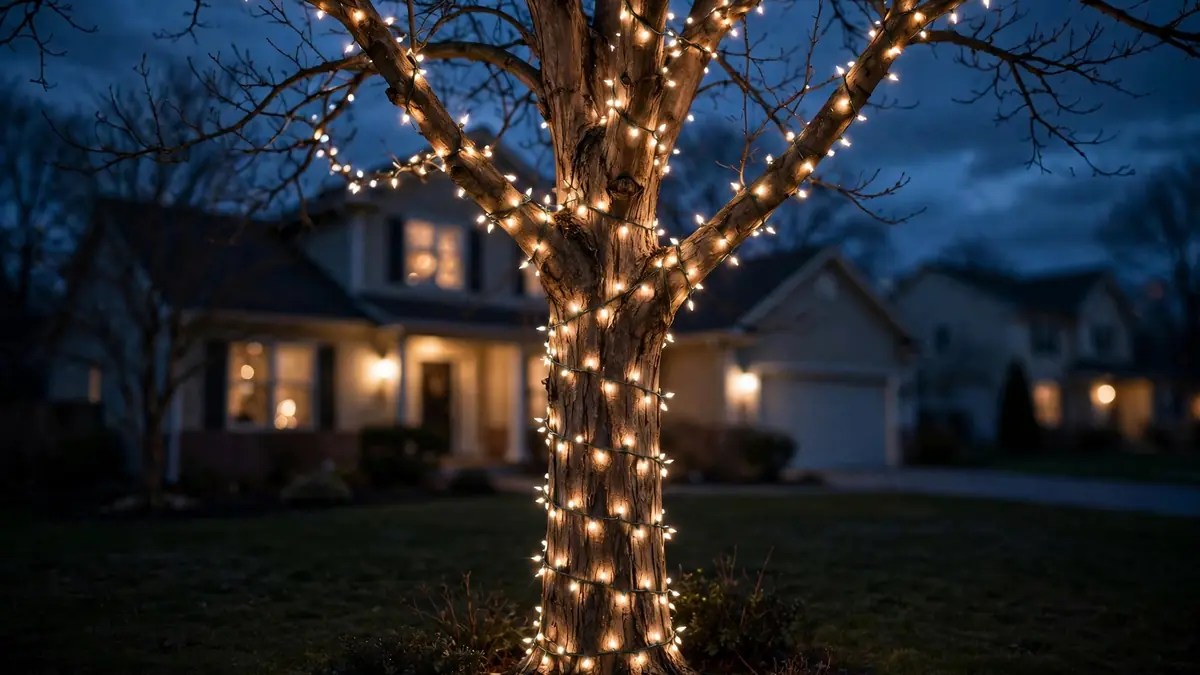
A bare winter tree turns into a centerpiece when you wrap the trunk in lights, and the effect is stronger than most people expect from a single strand. Wind the lights in a loose spiral from the base upward, spacing each turn about 4 inches (10 cm) apart, and carry the wrap into the first few branches if the tree is small.
Start at the bottom near the power source, so the plug stays hidden at the base. Warm white gives an elegant glow, while a single colour like soft blue can turn a large oak into a quiet focal point.
Use outdoor rated extension cords and keep connections off the ground where melting snow can pool. Loose wrapping makes removal in January much easier than a tight wrap that has to be cut away.
6. Up-Lighting a Large Tree From the Ground
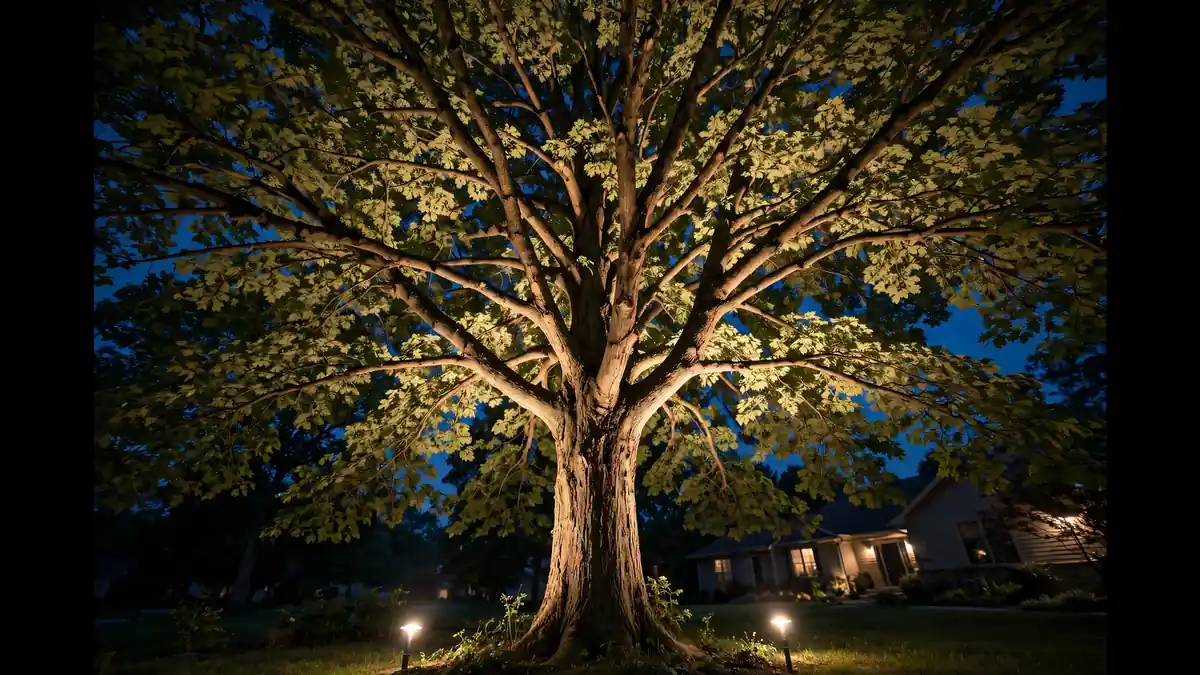
Wrapping a big front yard tree takes hours, and the result often looks sparse because the branches are too far apart to hold the light. Ground spotlights solve both problems at once. A few low-voltage spotlights pointed upward into the canopy light the whole tree from underneath, and the job takes about twenty minutes instead of three hours.
Place two or three spotlights around the base, aimed up at different angles, and hide the fixtures behind low shrubs or mulch. Warm white keeps the tree calm and elegant.
7. Lit Garland Wrapped Around Porch Columns
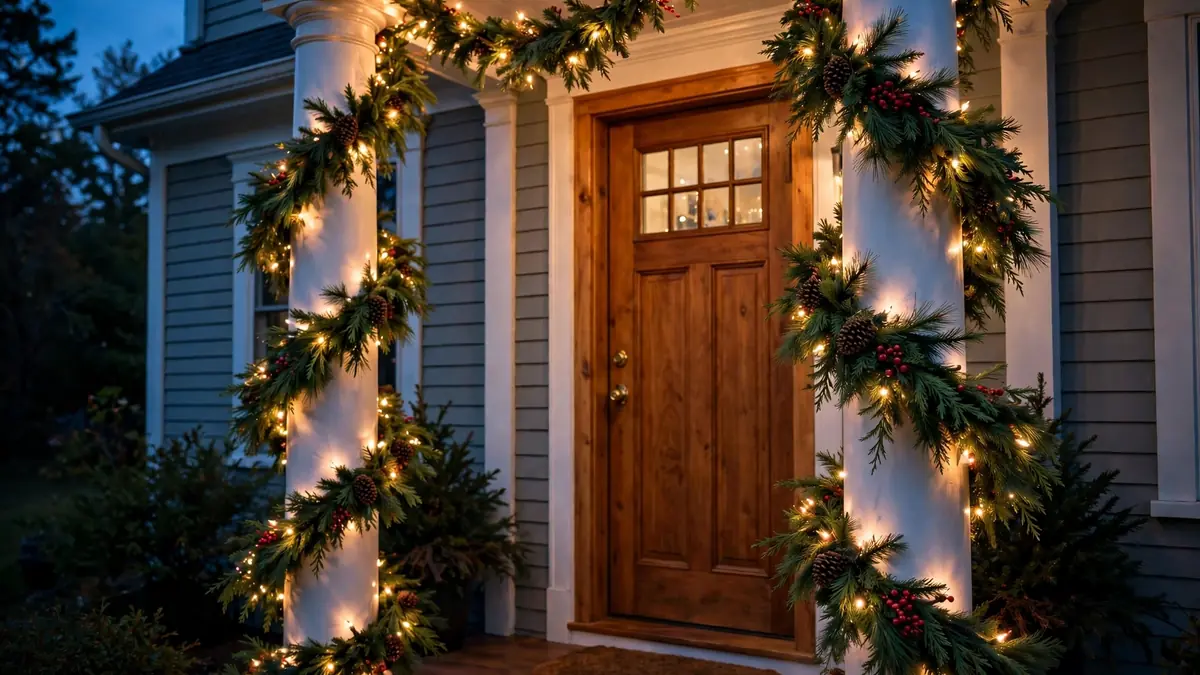
If your porch has columns or railings, pre-lit garland wrapped in a spiral gives you a classic, almost old-fashioned look that reads differently from the usual roofline-only approach. The spiral matters. Garland draped straight across a beam looks flat, while a spiral around a column has shape and shadow.
Choose a full evergreen garland, real or good quality artificial, then weave tiny warm white lights through it so the bulbs sit inside the branches. The light should peek out between the needles, not blaze from the surface. Add pinecones or red berries for colour, and keep the light count modest.
Secure the garland with zip ties or wire at both ends and in the middle so it does not sag in the center. Battery fairy lights with a timer are the simplest choice for a porch, since no cord has to cross the doorway.
8. Window Frame Outlines
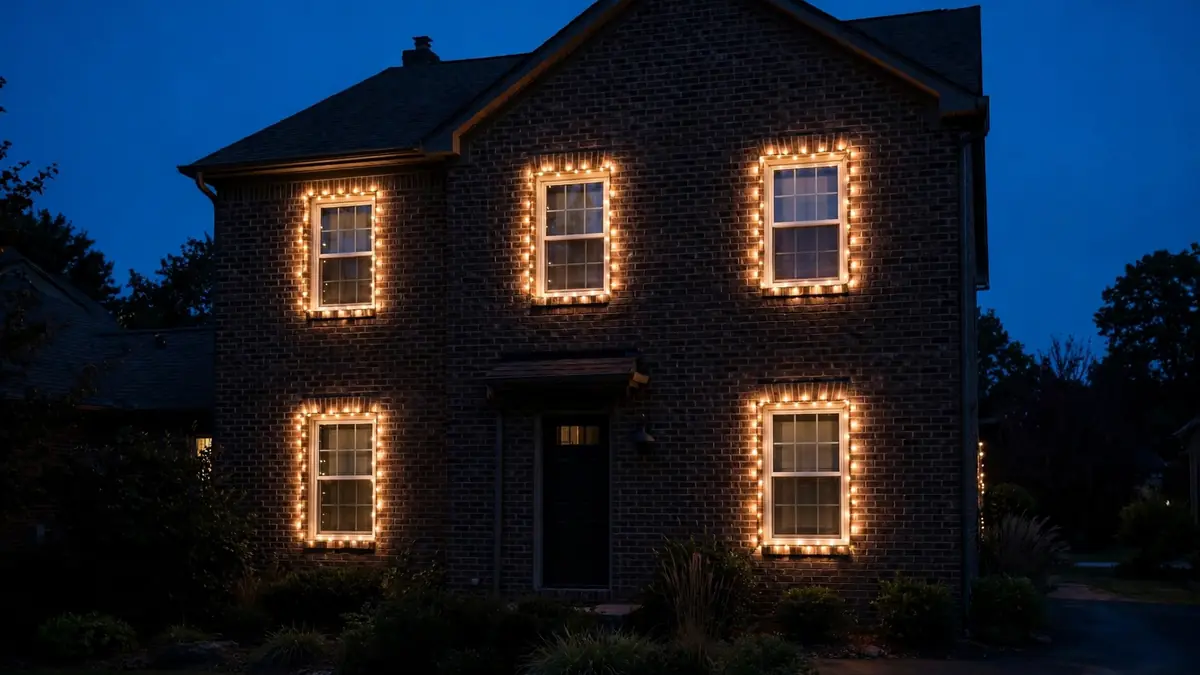
Outlining each front window with light strings adds depth that a roofline alone cannot give. The whole facade feels lit rather than just the top edge, and the effect costs far less than a full roofline display. Run a strand of small bulbs around the frame of each street-facing window, following the trim so the rectangle of light sits neatly against the glass.
Warm white suits most houses. Keep every window the same, because matching outlines tie the whole front of the house together even when the rest of the display is simple.
Suction cup clips or clear adhesive hooks hold the strands without drilling into the trim, and they come off cleanly in January. Keep the strands for each window the same length and bulb count so the outlines match, and run the wires down one side of the house to a single outlet.
9. A Lit Wreath on Every Window
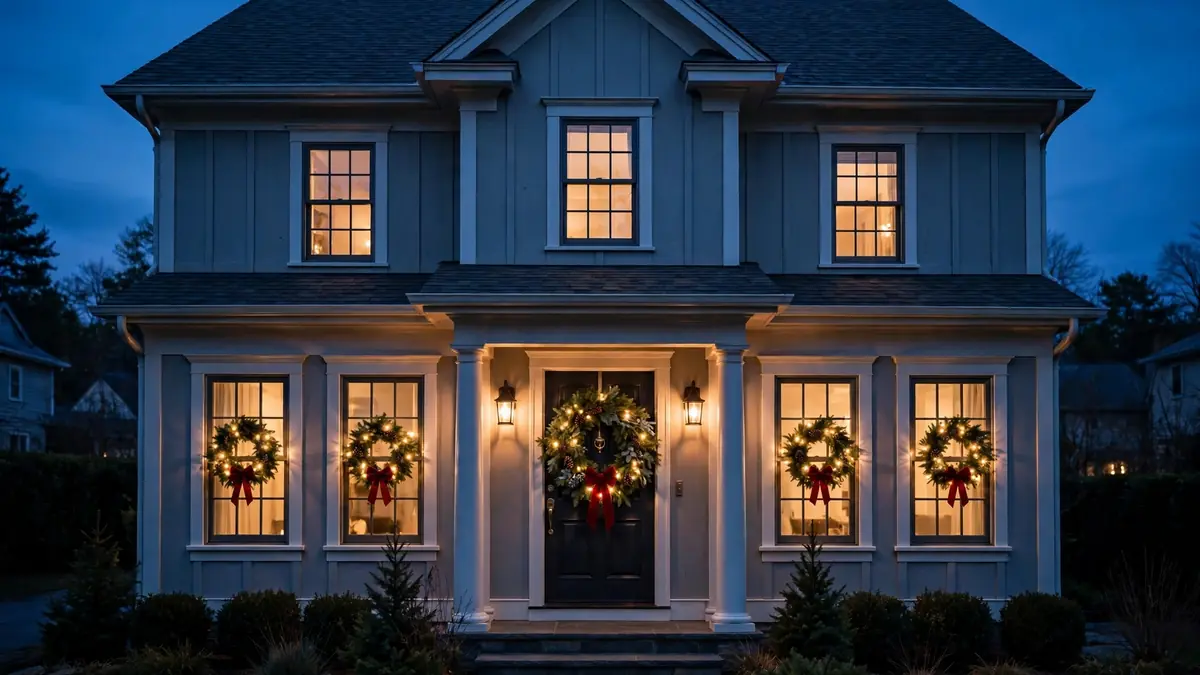
One wreath on the front door is standard. A small lit wreath on every front-facing window multiplies the effect for relatively little cost, since window wreaths are usually inexpensive compared to most other lighting elements on this list. The repetition is what makes it work. One wreath is a decoration. Five matching wreaths are a design.
Use battery-powered wreaths for the windows. Running extension cords to every window is a hassle and usually not worth it compared to just swapping batteries once a season.
Keep the style consistent across all the windows. Same greenery, same warm white lights, same size. A red bow on each one ties them together, and the door wreath can be the larger version of the same design so the entrance still leads.
10. Window Boxes Lit at Eye Level
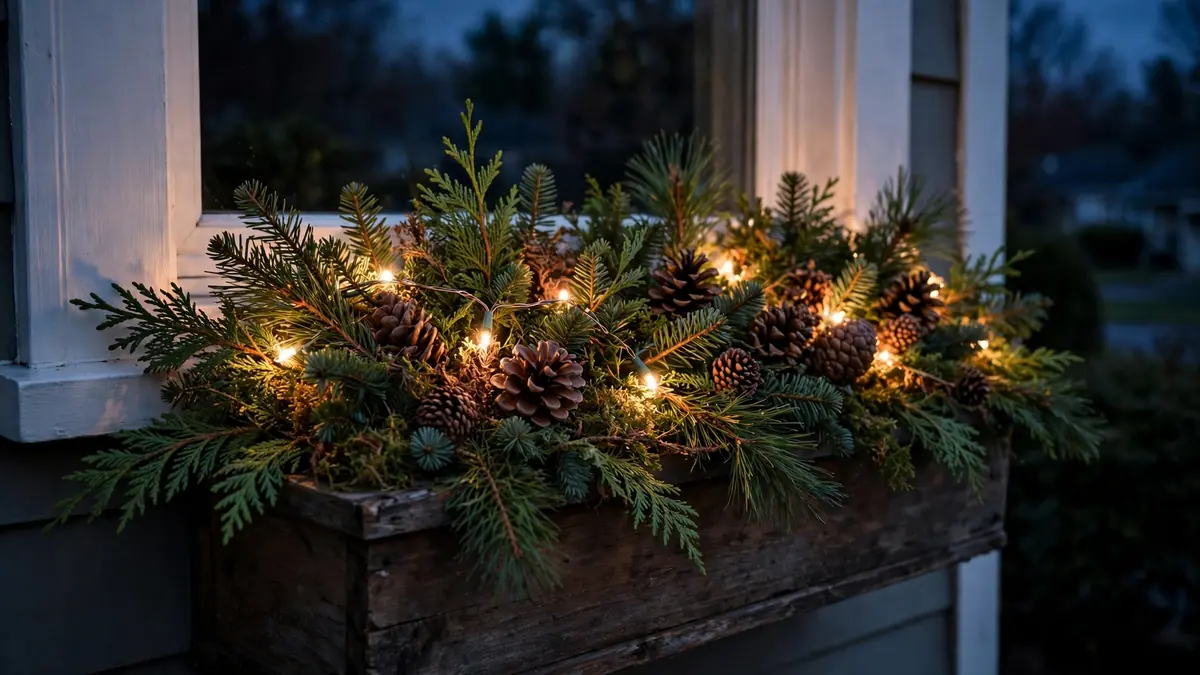
Most outdoor lighting sits high at the roofline, where it is hard to appreciate up close. Window boxes put light at eye level, which is where passersby actually look. Tuck a short battery light strand into the greenery inside the box, real or faux evergreen clippings with a few pinecones, and the box glows softly instead of sitting dark.
This works even with bare boxes in winter. A few evergreen sprigs and one short strand are enough, because the box is small and the light is close to the viewer. Keep the strand short so the light peeks out between the needles rather than blazing from the surface.
Use battery lights with a built-in timer so you never have to reach the box each night. One lit box under each front window is enough. Lighting every box on the house is the point where it stops looking intentional.
11. Light the Walkway, Not Just the House
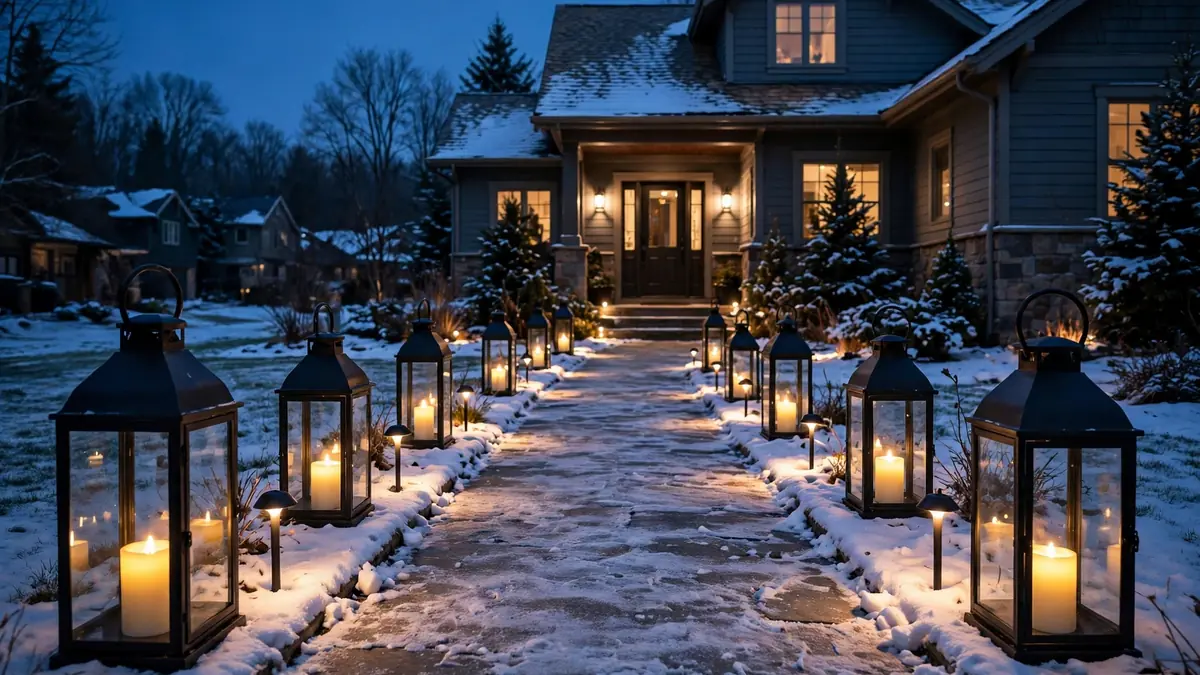
Most outdoor Christmas lighting focuses entirely on the house itself and forgets the actual path guests walk on. A dark walkway makes even a well-lit house feel unfinished, because the approach is the first thing a visitor experiences. Light the path and the whole display feels considered.
Two options work, and you only need one. Oversized lanterns with battery-operated LED candles give a soft, intimate glow beside the front door and along the porch steps. Place them in different heights while keeping the materials and the light colour consistent, and weigh them down so wind does not tip them.
The other option is a row of small solar or low-voltage path lights lining the walkway, even simple warm white stake lights. Whichever you choose, keep the light warm white to match the house, and run the line the full length of the walk, from the sidewalk to the steps.
12. One Single Colour Accent in an All-White Layout
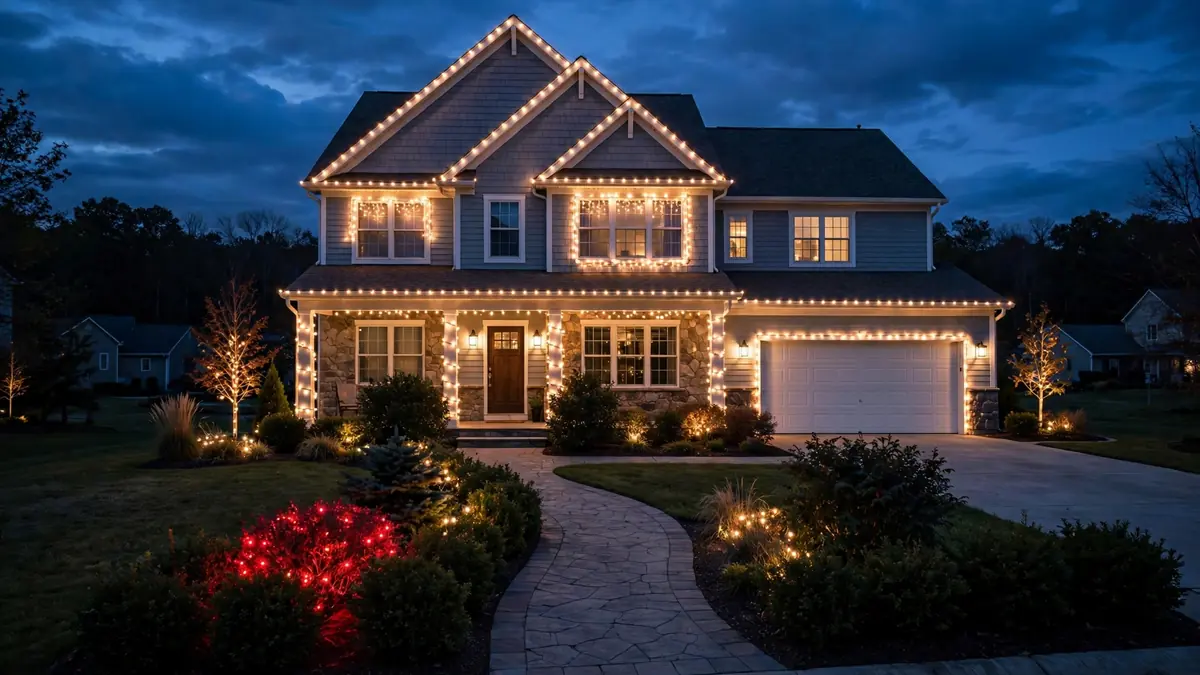
Rather than going fully multicolour or fully white, try 90 percent warm white with one single accent colour concentrated in just one area. All red on the bushes along the walkway, or all blue on one specific tree. It reads as a styling choice instead of looking like you ran out of white lights and filled in with what you had.
The discipline is the whole idea. The accent works because it is alone. Scatter the same colour across the roofline, the windows, and the yard, and the display turns busy again. One area, one colour, everything else warm white.
Pick the accent to suit the house: red feels traditional against brick, blue feels calm on a white or grey house. Whatever you choose, buy the accent strands first and count them, because running short halfway through one area is how the accent ends up spread thin.
13. Curtain Lights on the Porch
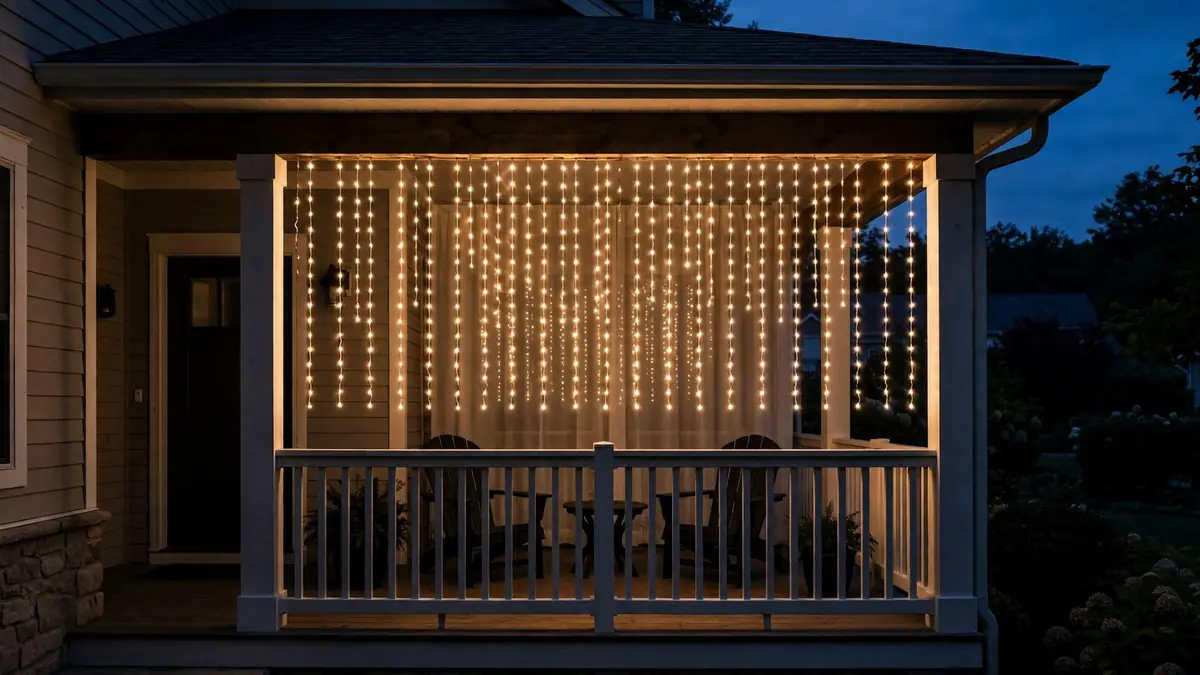
Curtain lights hang in straight vertical drops from a porch beam or a pergola, and they turn an open porch into a glowing wall of light. The strands fall side by side like a beaded curtain, and the effect is at its best when the drops are long enough to reach near the floor without touching it. Warm white is the most flattering choice, since it softens the porch furniture and the front door.
Hang the curtain from a wire or tension rod so the top edge stays level, and weight the bottom lightly if the porch catches wind. Keep the curtain behind the railing, so guests can still see the house and the door stays easy to reach.
14. Giant Lighted Star on the Gable
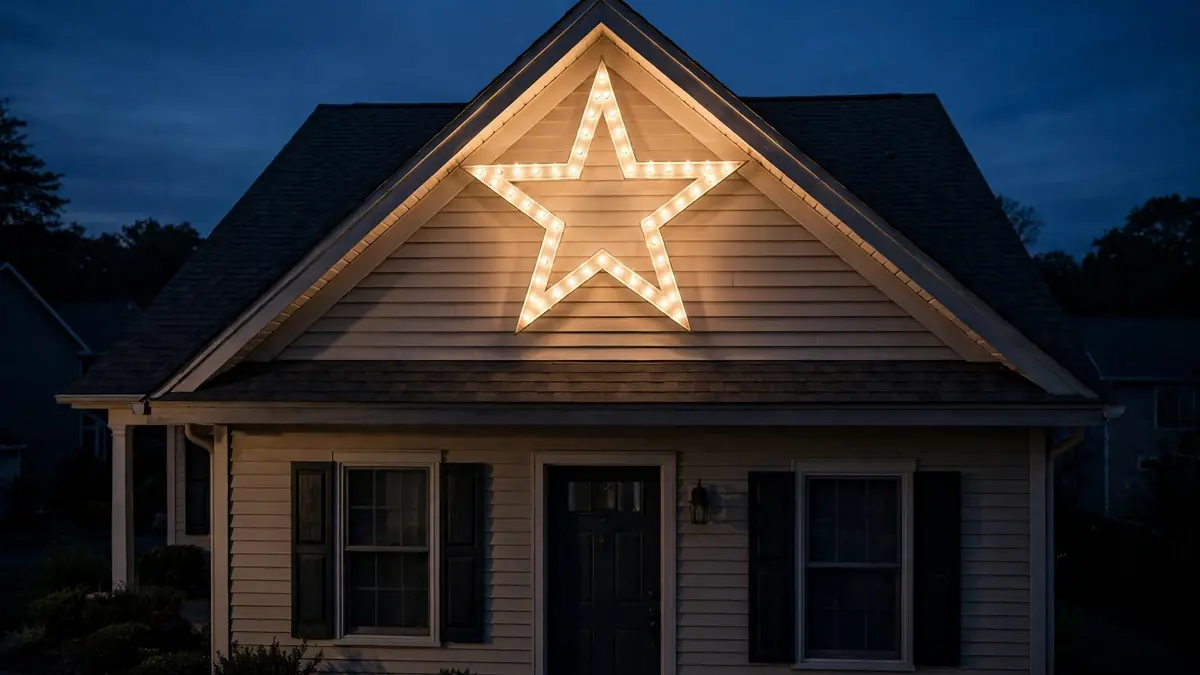
A large lighted star on the gable is a single bold statement that needs nothing else to compete with it. The star usually measures 3 to 5 feet (0.9 to 1.5 m) across, and it mounts high on the front peak of the house where it can be seen from the end of the street. A simple five-point star in warm white is the classic choice, while a starburst shape gives a more modern look.
Mount the star with screws into the trim or a sturdy bracket, never with adhesive hooks, since the weight and wind load are too much for anything temporary. Run the cord down the back of the gable, and use a timer so the star lights up with the rest of the display.
Pair it with a plain roofline rather than a busy one, so the star stays the clear focal point.
15. Lit Topiary Planters Flanking the Front Door
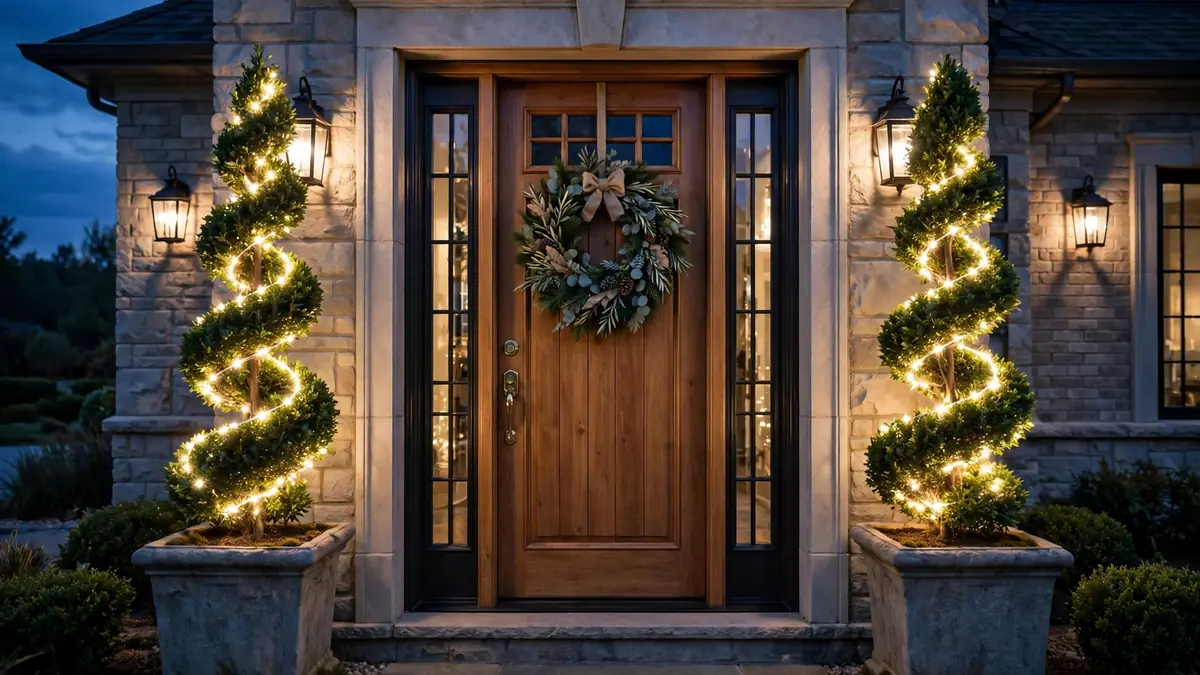
A pair of matching lit topiary trees in planters on either side of the front door is a classic, slightly formal touch that works especially well on houses with a symmetrical entrance. Spiral or cone-shaped pre-lit topiaries give you the shape without any wrapping by hand, and the pair frames the door the way columns frame a porch.
Keep the two planters identical. Same pot, same height, same warm white lights. Symmetry is the whole point here, and two different topiaries look like a mistake rather than a pair.
This is also a low-maintenance option, since the shape is built into the frame and the lights are already placed. Bring the planters in after the season, or leave the pots in place and store the lit frames dry. Either way, check the plugs before the first night, because a topiary with one dark side ruins the symmetry.
16. Globe String Lights for a Softer, Modern Glow
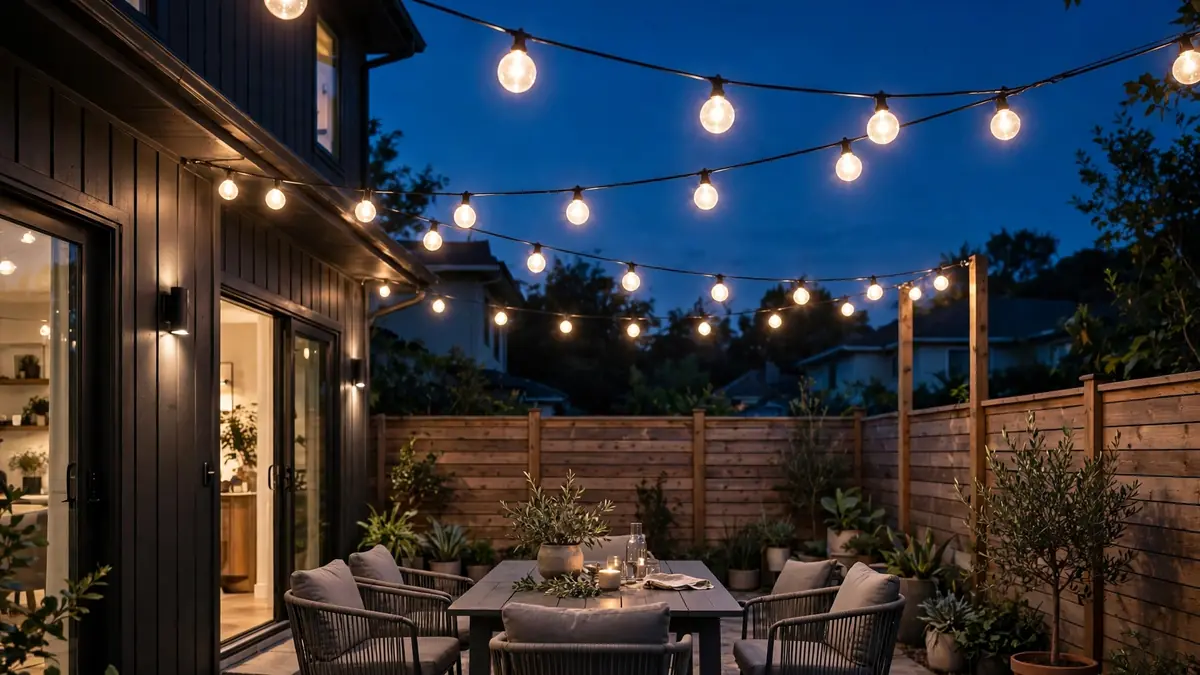
Instead of traditional mini lights, large globe-style string lights draped along a porch eave or fence line give you a softer, rounder glow that reads a little more modern and a little less like the classic holiday circuit. The big bulbs suit houses that already lean modern or minimalist, where tiny twinkle lights can look fussy.
Run the strands in a loose swag between the house wall, a fence post, and a sturdy pole, keeping the lowest point high enough to walk under without ducking. A zigzag pattern across a patio works too.
Use outdoor rated patio strings with shatterproof bulbs, since a broken bulb over a seating area is a nuisance. Support the strands with guide wires if the span is longer than 15 feet (4.6 m), so the weight does not pull the line down. A dimmer lets the brightness drop for a quiet evening.
17. Fence Line and Driveway Edge Lights
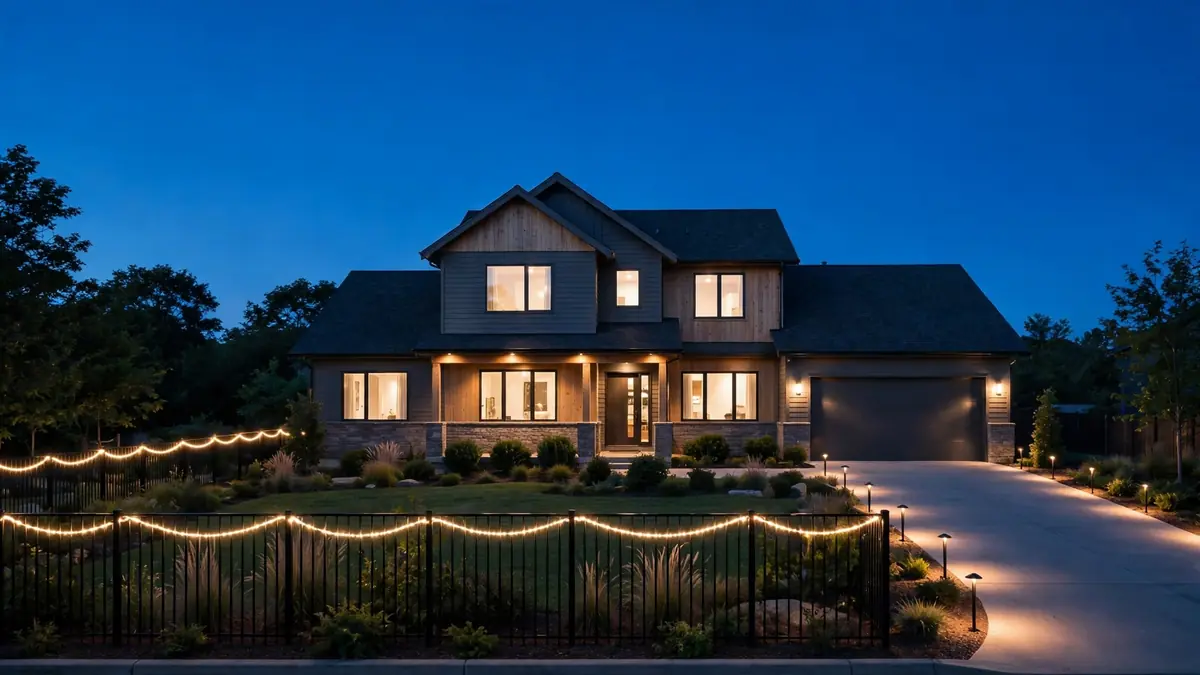
Running lights along the driveway edge and the front fence frames the whole property, and it makes the house look bigger after dark. Small globe or rope lights work well along a low fence, while stake lights mark the driveway edge. The line should follow the shape of the boundary, not cut across it.
Choose low-profile fixtures that sit flat or close to the ground along the driveway, since anything tall will be knocked over by a car door or a snow shovel. Rope lights suit a fence because they bend easily around corners and posts, and they give an even glow without the dotted look of individual bulbs.
Connect both runs to the same timer as the house lights, so the whole property switches on together.
How to Choose the Right Outdoor Christmas Lights
Start with colour, because it decides everything else. Warm white at 2700K is the elegant default for almost every house. It suits brick, stone, and painted siding, and it flatters greenery and wood. Cool white suits only a modern house with white or grey finishes, and it should never share a display with warm white.
Buy LED, outdoor rated, every time. LED uses far less power than old incandescent strings, stays cool to the touch, and lasts for seasons. Outdoor rated means the wire, the plugs, and the sockets are built for rain and snow. Indoor strings outside are a safety risk, not a saving.
Measure before you buy. Walk the roofline, the windows, and the walkway with a tape, write the lengths down, and add ten percent extra for corner drops and slack. One temperature, one bulb size, one brand where you can, because matching strands are what make a display look planned. Finish with a dusk-sensor timer, so the lights switch on as the sky darkens instead of on a fixed clock time that lags behind sunset.
Common Mistakes to Avoid
The most common mistake is mixing warm and cool white bulbs across different sections of the house without realising it. Check the Kelvin number on every box before you hang a single strand, because two boxes that both say white can glow in completely different colours.
The second mistake is too many colours. A house in red, green, blue, and gold at full brightness is the definition of overdone. Pick warm white as the base and add one accent colour in one area only, or skip the accent entirely.
The third mistake is lighting only the house and leaving the walkway, the windows, and the fence dark. A display reads as one design when the light reaches the edges of the property, not just the roofline.
The fourth mistake is cords across walkways and connections sitting on the ground where melting snow pools. Run cords along edges, lift connections off the ground, and use outdoor rated extension cords. The fifth mistake is no timer, which leaves lights burning all night or dark at dusk. A dusk-sensor timer fixes both.
Small Houses, Rentals and No-Ladder Options
A small house does not need a small display, it needs a focused one. One warm white roofline, lit wreaths on the windows, and lanterns on the walkway will make a cottage look finished without a single ladder climb past the porch. Skip the roofline entirely if the roof is steep, and put the effort into the windows and the door instead.
Renters have good options that need no drilling and no permanent fixings. Battery fairy lights weave through garland on a railing. Suction cup clips hold window outlines without marks. A projector aimed at the front wall from the ground gives a full lit-house effect with no strings at all, which also suits anyone who wants to avoid ladders. Check the lease or HOA rules first, since some communities restrict even projector displays.
Solar stake lights work for borders and accents with no cord and no outlet. Place the panel where it gets direct daylight, not under the eaves, since a shaded panel charges poorly on short winter days. The glow is softer than plug-in lights, so use solar for edges and let the house lights carry the display.
Safety Note
Work from a stable ladder with a helper holding the base, and never lean past the sides to reach a clip. If the roofline is steep, very high, or you are not comfortable on a ladder, call a licensed professional installer. Most offer takedown in January too, which is worth it on its own.
Use outdoor rated extension cords only, plug into a GFCI outlet, and keep every connection off the ground where water can pool. Do not overload one outlet with multiple long runs. If a strand is damaged, frayed, or has a cracked socket, throw it away instead of taping it. Check every strand for damage before you hang it, not after.
Frequently Asked Questions
What is the most common mistake with outdoor Christmas lights?
Mixing warm and cool white bulbs across different sections of the house without realising it. Two boxes can both say white lights and glow in completely different colours, so check the Kelvin number on the packaging. One temperature across the whole display is the single biggest thing that makes it look intentional.
Are net lights faster than wrapping string lights?
Yes, significantly, especially on shrubs and bushes. What takes an hour of wrapping by hand usually takes ten minutes by draping a net light over the top. Use one net per bush, and match the nets across a row for a finished look.
Do I need a professional to hang roofline lights?
Not necessarily, but if your roofline is steep, very high, or you are not comfortable on a ladder, it is worth the cost of a professional installer. Most offer takedown service in January too. For a single-story roofline with good clips and a stable ladder, most homeowners manage it in a few hours.
Are smart app-controlled lights worth it?
If you host more than once during the season or like changing colours for specific nights, yes. Smart strings let you keep warm white most nights and switch to red and green without swapping any lights. If you mostly want consistent warm white every evening, a simple dusk-sensor timer does the job for a fraction of the cost.
When should I take outdoor Christmas lights down?
Take them down in January. Remove them on a dry day, check each strand for damage as you coil it, and store the strands loosely in a dry box instead of stuffing them into a bag. Label each strand with where it hung, so next December starts in minutes instead of hours.
Conclusion
Elegant outdoor Christmas lights are a decision, not a budget. One warm temperature, one focal point, and light in the places people actually look will always beat a bigger display with no plan. Start with the roofline, add the walkway, and put the whole thing on a dusk-sensor timer. That is three moves, and the house will already look more intentional than half the street.
Save this list to your Christmas board on Pinterest, then pick the three or four ideas that fit your house and start with the one you can finish this weekend.