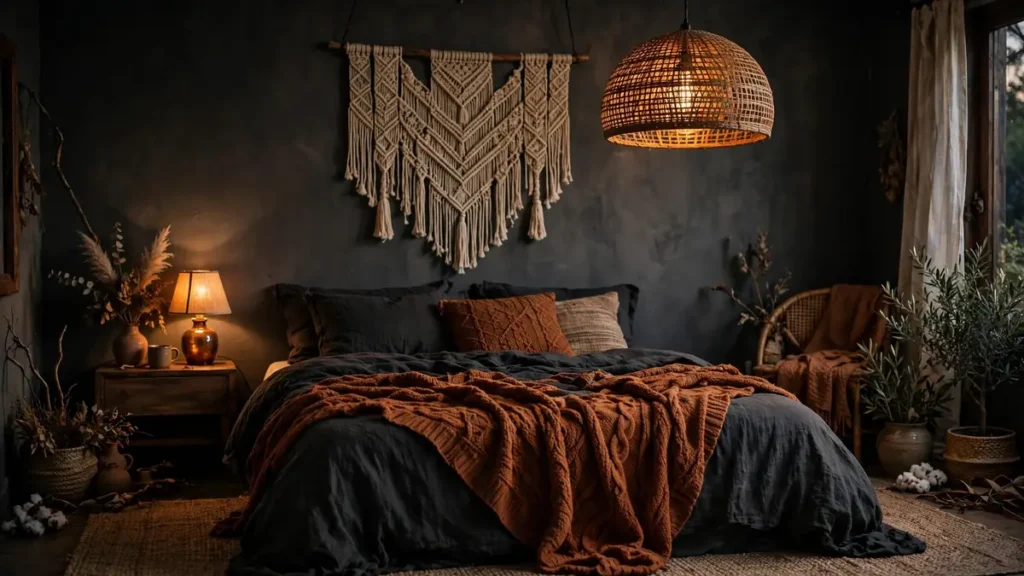
20 Luxury Warm Earth Tone Bedroom Ideas
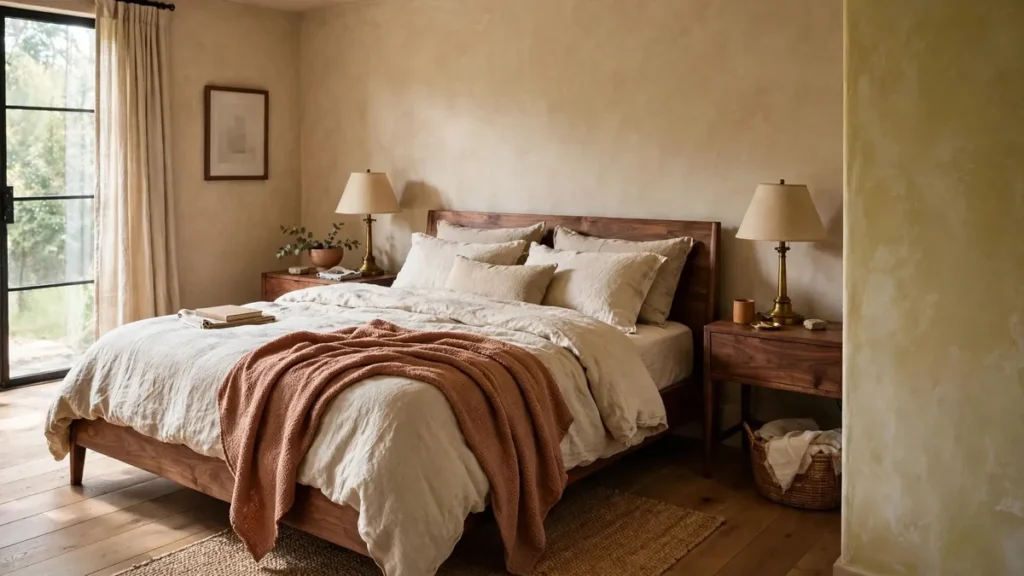
An earth-tone bedroom should feel warm and calm, but many end up flat. Every surface sits in the same beige, and nothing in the room stands out. The result looks dull instead of rich, even when the furniture and bedding are new.
The fix is not more beige. It is a mix of warm neutrals with deeper natural shades and contrasting textures. These luxury warm earth tone bedroom ideas show you how to combine sand, camel, terracotta, cocoa and olive with wood, linen, wool and stone. You will find 20 distinct looks, from light tonal rooms to deep cocooning schemes, plus the colors, materials and steps to recreate each one.
Each idea names the palette, the key materials and a clear starting point, so you can act on it without extra research. The looks work in large and small rooms, and many adapt to rentals or tighter budgets. Start with the palette that suits your light, then build the room in layers.
What Are Warm Earth Tones?
Warm earth tones are colors drawn from soil, clay, wood and stone. Think sand, camel, terracotta, warm taupe, cocoa, olive and warm cream. They can be light, like ivory and oatmeal, or deep, like chocolate brown and rust. What makes them warm is the yellow, red or orange undertone beneath the color. A gray beige with a cool undertone is not a warm earth tone, even if it looks neutral. Use these shades as the base of the room, then add one deeper tone for contrast.
| Palette | Best for | Light | Key material |
|---|---|---|---|
| Warm beige, cream and oatmeal | Small or dark rooms | Any light | Linen and wool |
| Chocolate brown and warm white | A cosy feature wall | Needs strong natural light | Walnut and brass |
| Terracotta and sand | A warm focal wall | South-facing can feel intense, use lighter sand | Oak and cream linen |
| Muted olive and camel | A calm, grounded room | North-facing suits it well | Leather and walnut |
| Mushroom and walnut | A quiet, soft room | Low light | Walnut and cream linen |
1. Layer Warm Beige, Cream and Oatmeal
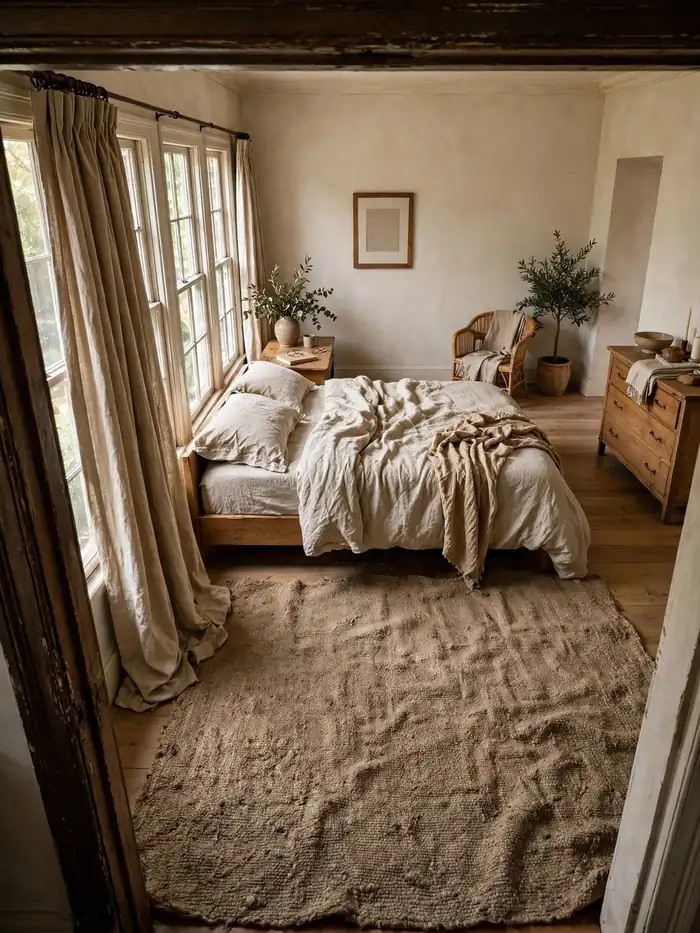
Start with warm ivory walls, then layer oatmeal bedding, sand curtains and a deeper beige rug. Ivory leads the scheme, oatmeal and sand fill the middle, and warm beige anchors it from the rug. Choose beige shades with undertones that complement each other. If you want to mix pink and yellow undertones, test large samples side by side in your bedroom before committing. Linen bedding, a wool throw and a woven rug add the texture that keeps the room from looking flat. In a small room, leave the largest surfaces light. Add the deeper beige only through the rug and cushions, as in these small bedroom decorating ideas.
🤍 Tonal Beige Layers
Walls: warm ivory
Bedding: oatmeal linen
Curtains: sand
Rug: deeper beige
Key move: Test large samples side by side.
2. Create a Rich Chocolate Brown Feature Wall
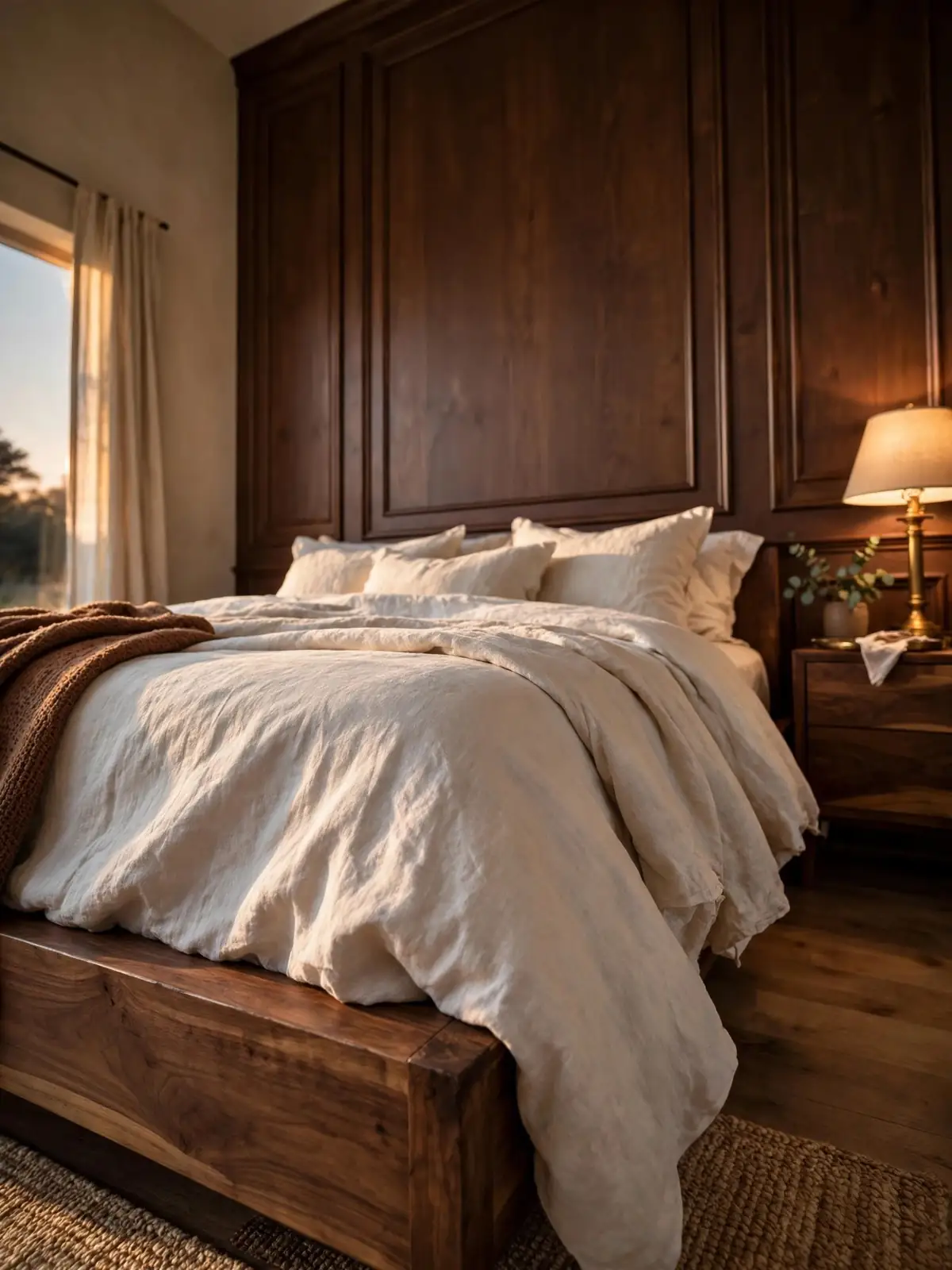
Paint the wall behind the bed in cocoa or chocolate brown, then keep the bedding warm white. Chocolate brown takes the lead, warm white keeps it bright, and walnut and soft brass warm the edges. Walnut furniture and a brass lamp stop the wall from feeling heavy, as in these chocolate brown bedroom ideas. Paint one wall when the room is small or dark, and color drench the whole room only when it has strong natural light. Test paint samples on the wall in morning light and again in the evening, since brown shifts a lot between the two. Renters can use dark brown bedding and a large headboard instead.
🤎 Chocolate Feature Wall
Wall: cocoa or chocolate brown
Bedding: warm white
Furniture: walnut
Accent: soft brass
Key move: Test samples in morning and evening light.
3. Pair Terracotta with Soft Sand
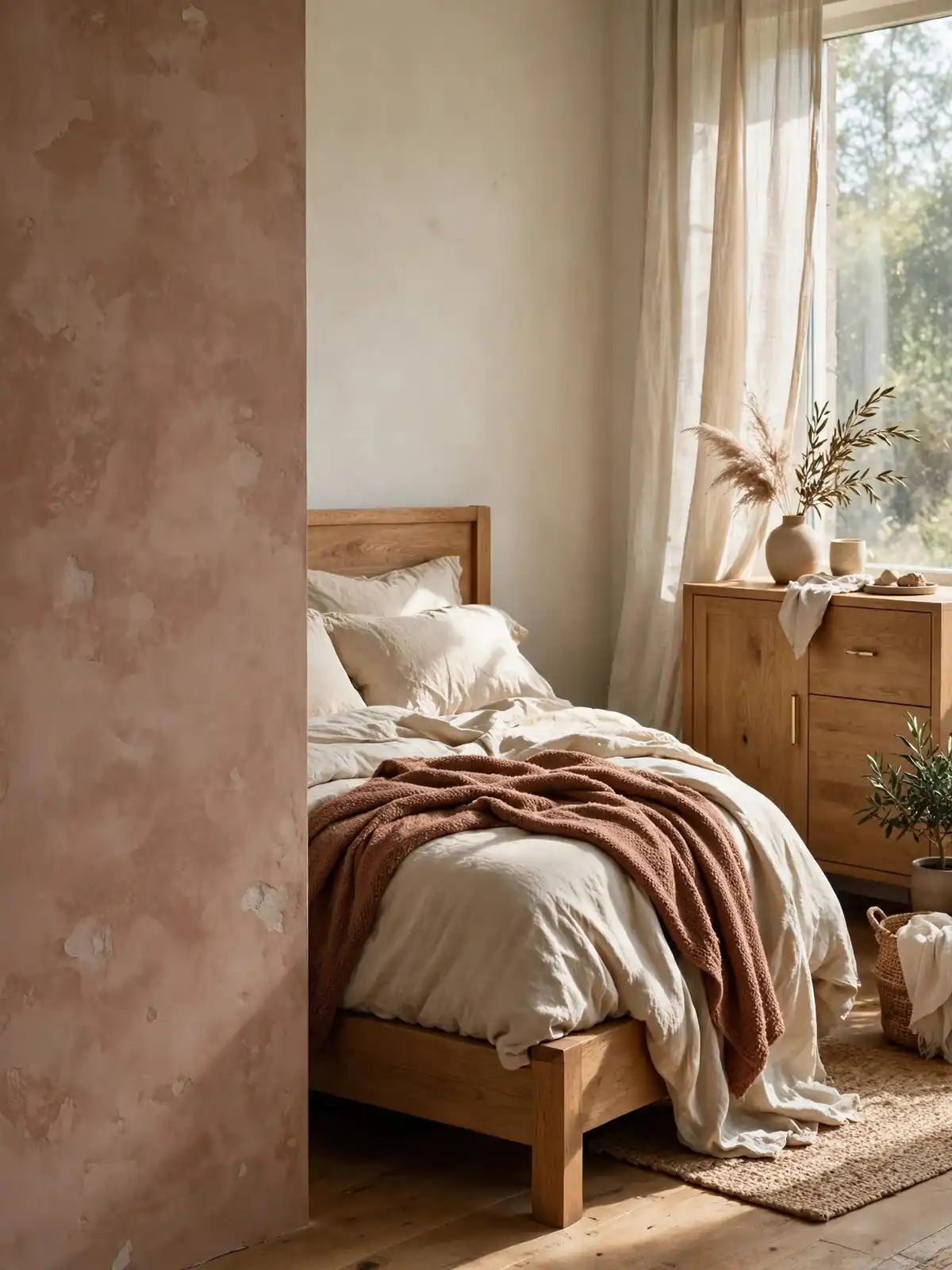
Let muted terracotta lead the room, then soften it with sand and ivory. Terracotta is the accent, sand is the base, and ivory and natural oak keep it calm. Bring the clay tone in through one wall, an upholstered headboard or a rust throw, and keep the rest of the room quiet. Oak furniture and cream linen soften the terracotta, keeping the room from feeling too intense or overly rustic. Start small if you are unsure: two terracotta cushions and a throw at the foot of the bed are enough to test the color. Add more only when the room still feels balanced.
🧱 Terracotta and Sand
Lead: muted terracotta
Base: soft sand
Bedding: ivory linen
Wood: natural oak
Key move: Start with two cushions and a throw.
4. Style a Muted Olive and Camel Bedroom
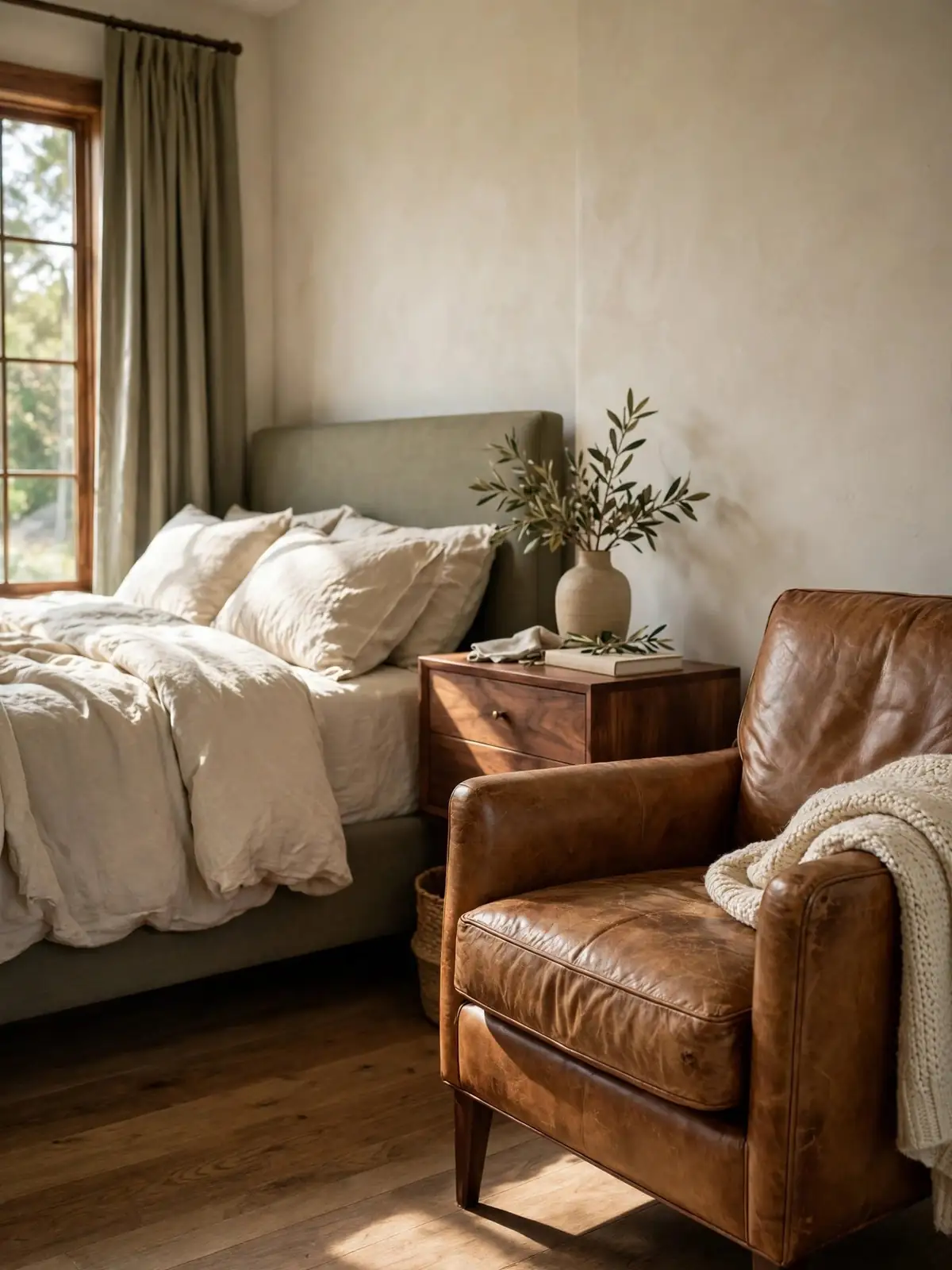
Muted olive brings a quiet green into the room without turning it bright. Olive leads, camel supports it, and warm cream and walnut round out the scheme. Use olive on one wall, the bed upholstery or full-length curtains. Then add camel through leather, a throw or warm wood, as in these olive green bedroom ideas. Cream bedding keeps the green from feeling heavy. The muted tone reads earthy because it sits close to sage and stone, not to a vivid garden green. In a small room, keep the olive to the bedding or curtains and leave the walls cream.
🫒 Olive and Camel
Lead: muted olive
Support: camel leather or wood
Bedding: warm cream
Furniture: walnut
Key move: Keep olive muted, not bright.
5. Use a Mushroom and Walnut Palette
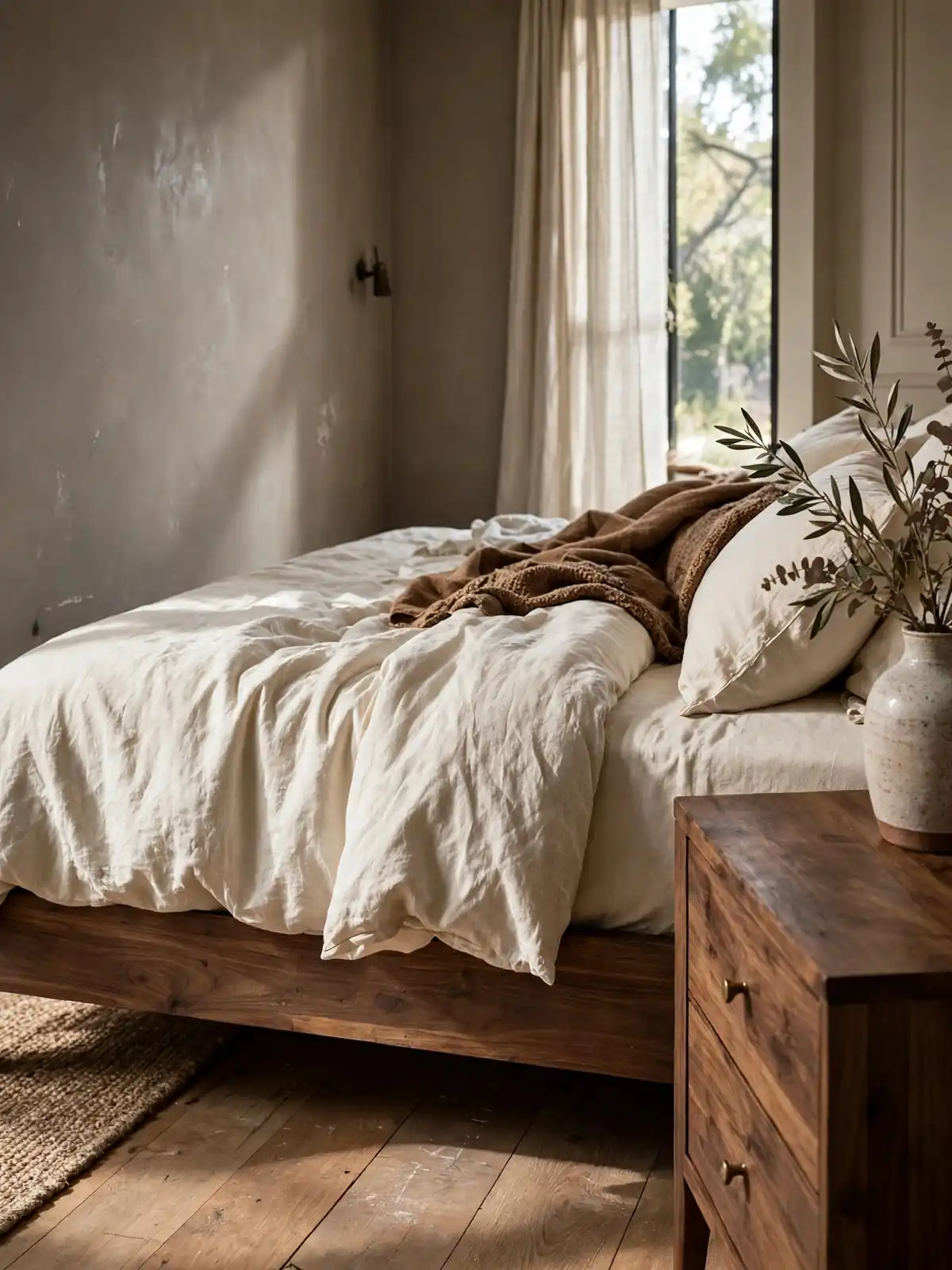
Mushroom and walnut make a quieter, more refined kind of luxury. Mushroom covers the walls, walnut anchors the furniture, and cream and warm brown lift the room. Cream bedding lifts the scheme, while a warm brown throw adds depth without noise. Choose a warm taupe with a pink or yellow undertone, and avoid a gray beige that reads cold in low light. Restraint is what makes it feel luxurious: few colors, clean lines and one or two honest materials. This palette suits a small room well, since the mid tones keep the walls from closing in.
🍄 Mushroom and Walnut
Walls: mushroom taupe
Furniture: walnut
Bedding: cream
Accent: warm brown throw
Key move: Choose a warm taupe, not a cold gray beige.
6. Make a Sculptural Upholstered Bed the Focal Point
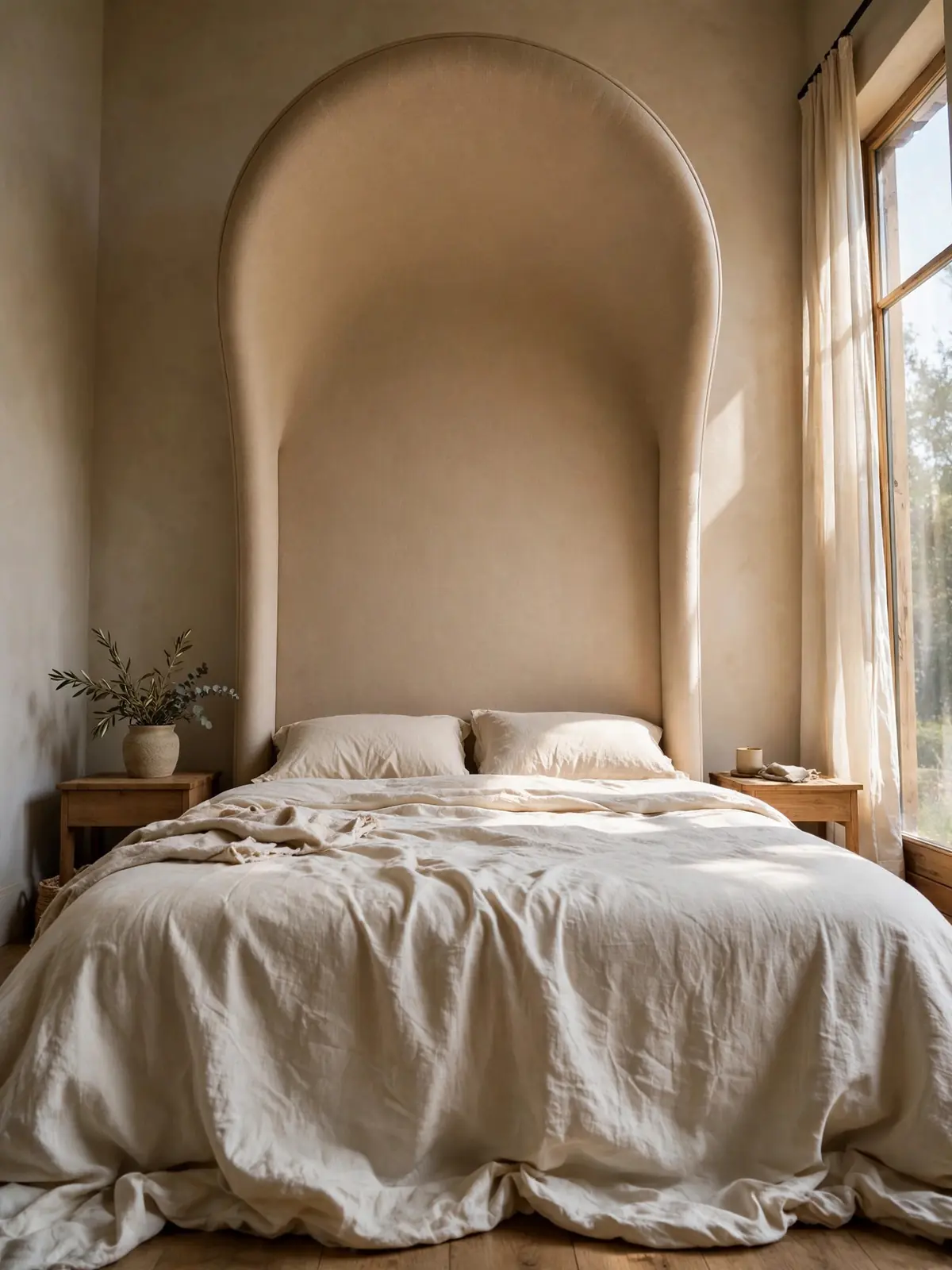
A curved, softly padded headboard can carry the whole room. Camel, taupe, warm beige and cream work together, with the headboard as the focal point and the rest kept quiet. Choose a headboard in camel or warm beige linen, then keep the nightstands and dresser simple so the silhouette stands out. The headboard should suit the bed and the wall. It must be wide enough to frame the pillows and tall enough to read as a feature. Never let it crowd a small room. Let the shape do the work, and keep the bedding plain.
🛏️ Sculptural Upholstered Bed
Headboard: curved, softly padded
Fabric: camel or warm beige linen
Bedding: plain cream
Furniture: simple and low
Key move: Let the shape be the feature.
7. Add Natural Walnut or Oak Furniture
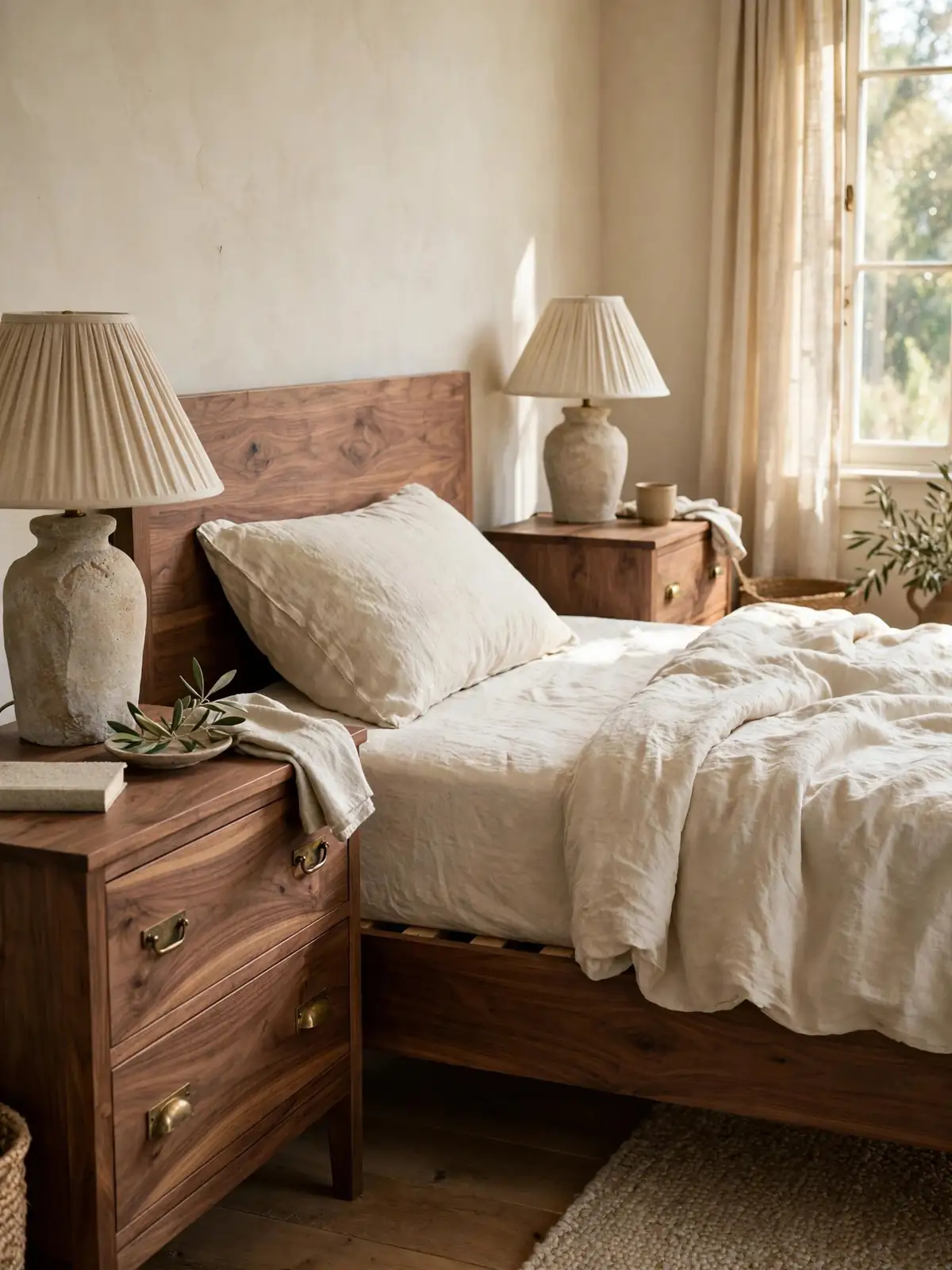
One wood family ties the room together. Walnut anchors the room, warm cream balances it, and oatmeal and aged brass add warmth. Use walnut or oak for the bed frame, nightstands or dresser, and keep the finish consistent across the main pieces. Avoid a showroom look by mixing the wood with linen bedding, a stone lamp base or a brass handle. The contrast of materials makes the wood feel chosen, not matched. A lower-cost start is one strong piece, such as a walnut bed frame, with simpler nightstands beside it.
🌳 Walnut or Oak Furniture
Wood: one family, walnut or oak
Bedding: warm cream linen
Mix: stone lamp base
Accent: aged brass handles
Key move: Mix wood with linen, stone or metal.
8. Build a Textured Limewash or Plaster-Look Wall
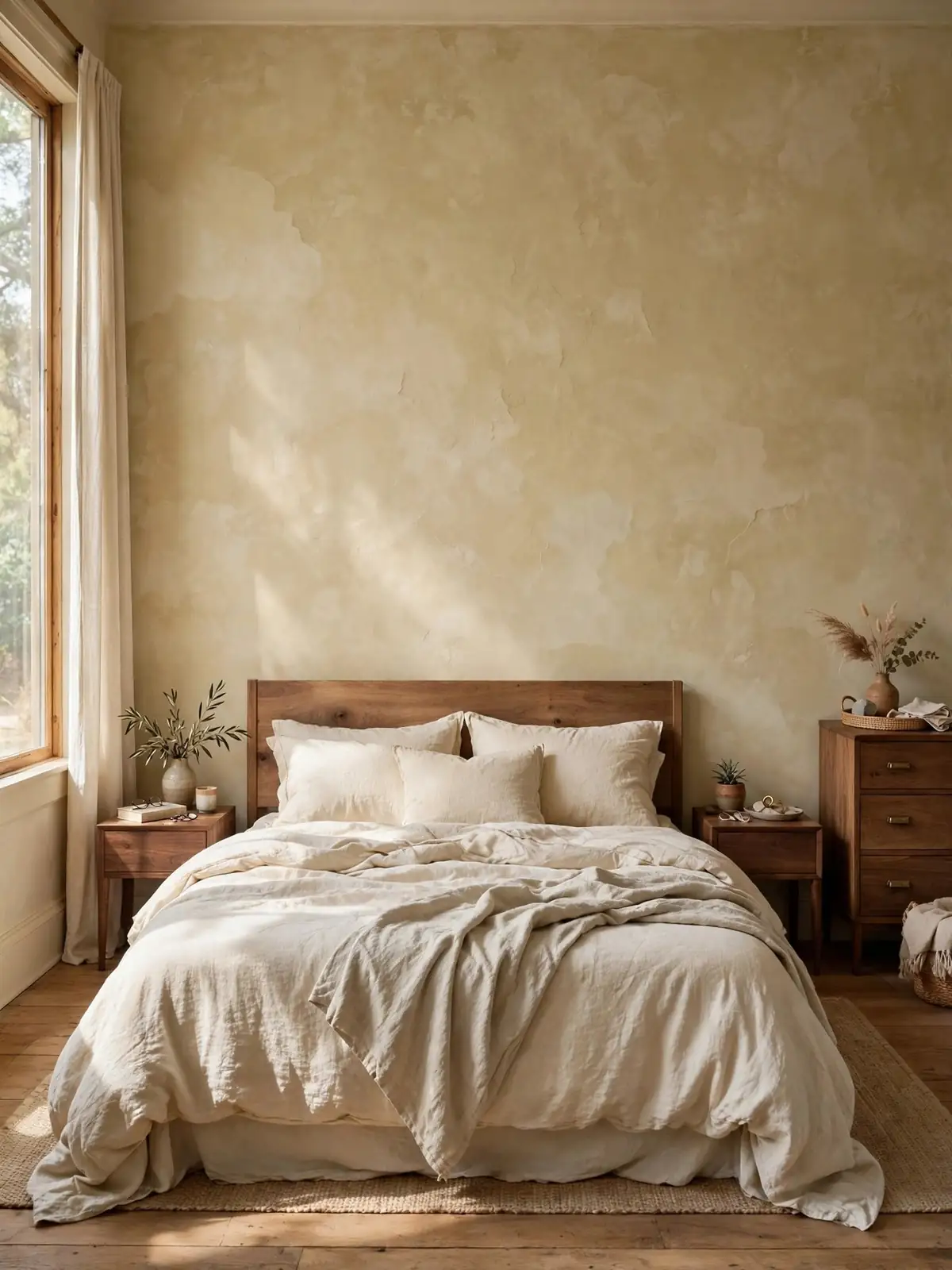
A limewash or plaster-look wall adds soft movement behind the bed. Warm beige, clay, mushroom and cream build the scheme, with the textured wall as the feature and cream bedding as the calm balance. The finish catches the light differently across the day, which gives a flat wall more depth. Real limewash and plaster differ from paint-effect finishes in cost, application and upkeep. Check what each option needs, including Farrow & Ball's limewash safety notes, before you commit. This is not a quick weekend change, and a poor finish is hard to undo. If you rent, a textured wallpaper can give a similar feel without touching the wall.
🧱 Textured Limewash Wall
Finish: warm beige or clay
Feature: wall behind the bed
Bedding: cream linen
Light: natural daylight
Key move: Check cost and upkeep before you commit.
9. Layer Linen Bedding in Earthy Shades
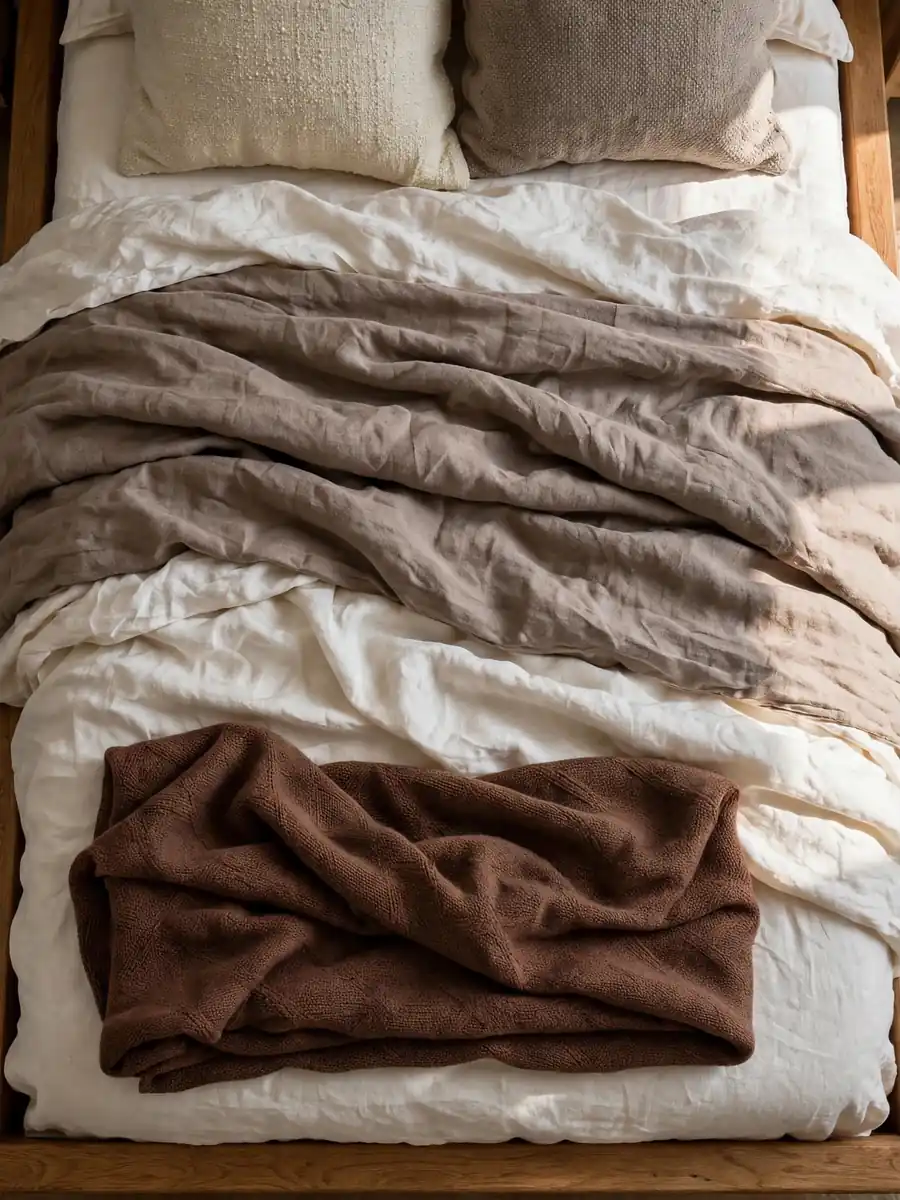
Linen is the easiest way to make an earth-tone bed feel rich. Ivory sheets form the base, taupe is the main layer, and oatmeal and cocoa add depth. Add a cocoa or rust throw at the foot of the bed, then finish with two or three textured cushions. Vary the weave and weight instead of adding more pillows. A smooth sheet, a washed duvet and a chunky throw give more interest than six matching cushions. Keep the bed neat and relaxed, with the layers folded back in a simple stack. The fabric is what makes it feel rich, not the pillow count.
🛏️ Layered Linen Bedding
Sheets: ivory linen
Duvet: taupe
Throw: cocoa or rust
Cushions: two or three textured
Key move: Vary weave and weight, not pillow count.
10. Bring in Bouclé and Wool for Tactile Contrast
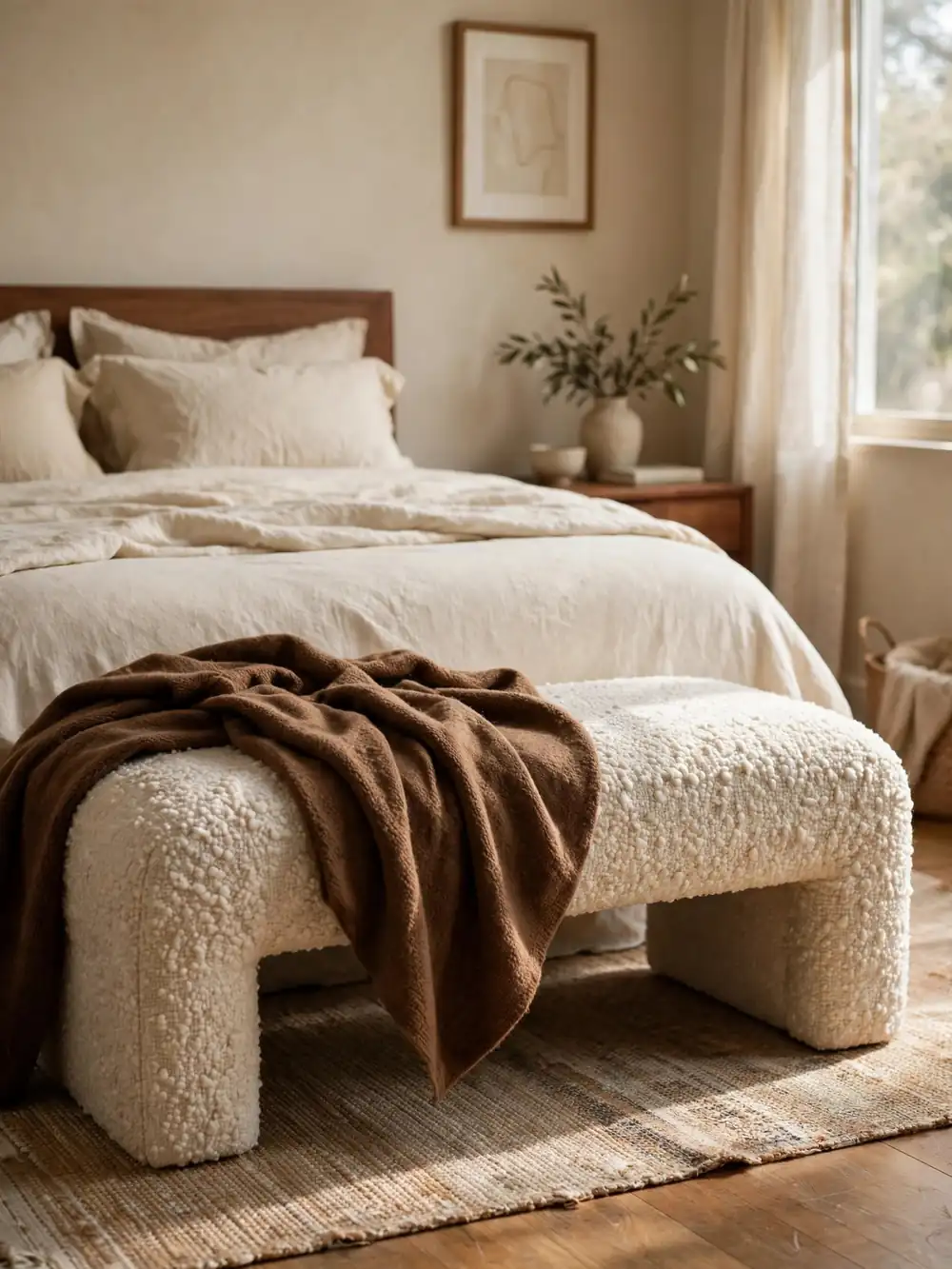
Bouclé and wool add a soft, nubby texture that smooth linen and wood cannot give on their own. Cream is the base, cocoa is the deep accent, and oatmeal and warm beige fill the middle. Place a bouclé bench at the foot of the bed or a bouclé chair in a corner. Then add a wool throw and a textured rug. One or two tactile pieces are enough: the contrast works because the rest of the room stays smooth. Too many bulky textures crowd a small room and make the bed look buried. Plain bedding lets the bouclé stand out.
🧶 Bouclé and Wool Texture
Bench: bouclé at the foot of the bed
Throw: wool
Rug: textured
Bedding: plain linen
Key move: One or two tactile pieces are enough.
11. Add a Natural Stone or Travertine-Look Accent
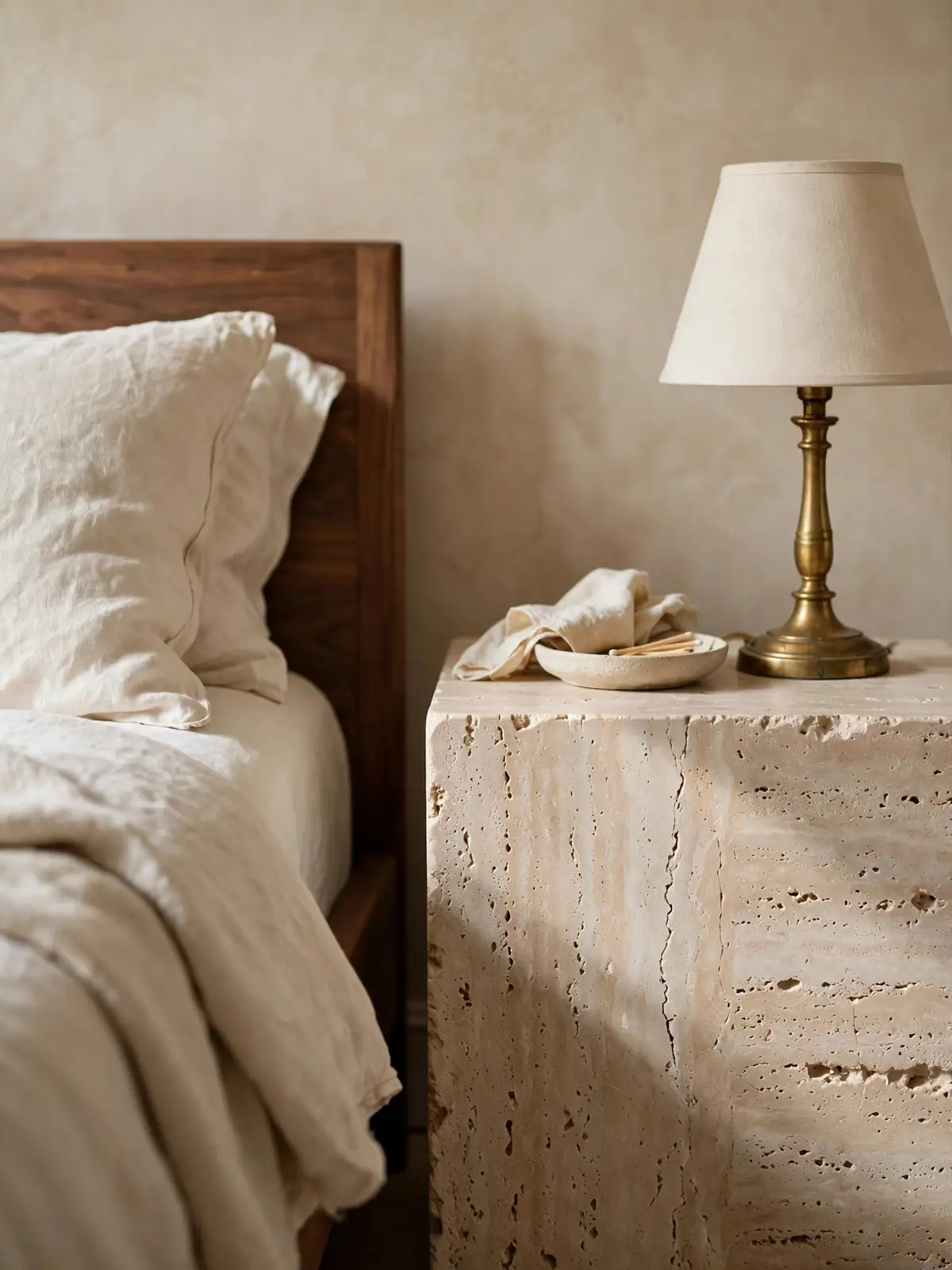
Stone adds weight and a cool touch that balances warm wood and soft linen. Warm beige and cream set the tone, sandy stone adds the accent, and walnut grounds the room. A travertine-look bedside table, lamp base or tray brings the material in without a renovation. The pale stone with its natural veins reads as a quiet luxury detail, not a bold statement. Start with one piece, such as a stone tray on the nightstand, and see how it sits with the bedding. A smaller accessory can give the same effect as a stone table for far less effort.
🪨 Stone or Travertine Accent
Piece: bedside table, lamp base or tray
Stone: warm beige or sandy
Wood: walnut anchor
Bedding: cream linen
Key move: Start with one stone piece.
12. Use a Layered Natural-Fiber Rug
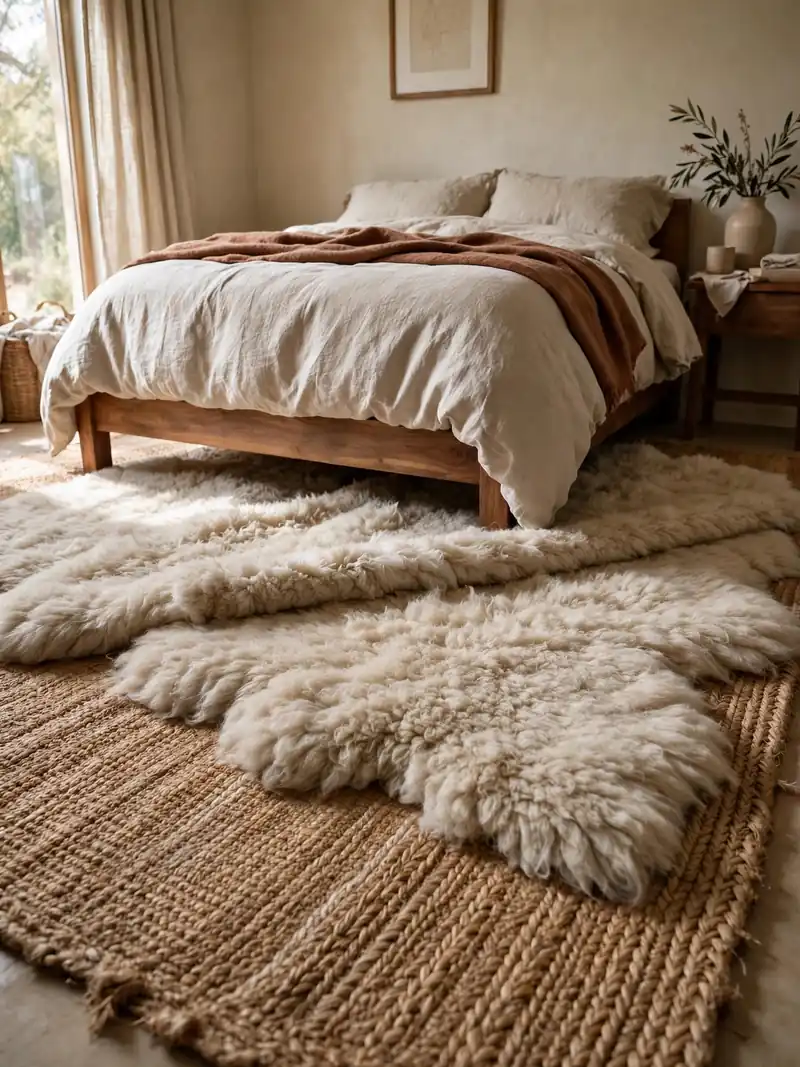
Layering two rugs adds depth and texture to a warm earth-tone bedroom. Start with a natural jute or sisal rug, then place a smaller wool or patterned rug on top. Jute is the texture, the top rug brings the color, and oatmeal, rust and walnut tie it together. A queen bed suits an 8×10 ft rug, a king a 9×12 ft rug, with 18-24 inches showing around the bed. The top rug should sit where you step out. Leave bare floor at the edges so the layers read as a choice. In a small room, skip the top layer and let one good jute rug do the work.
🧶 Layered Natural-Fiber Rug
Base: jute, sisal or flatwoven
Top: softer wool or patterned rug
Palette: jute, oatmeal, rust
Place: under and beside the bed
Key move: Size rugs to the bed and the room.
13. Frame the Room with Full-Length Warm Neutral Curtains
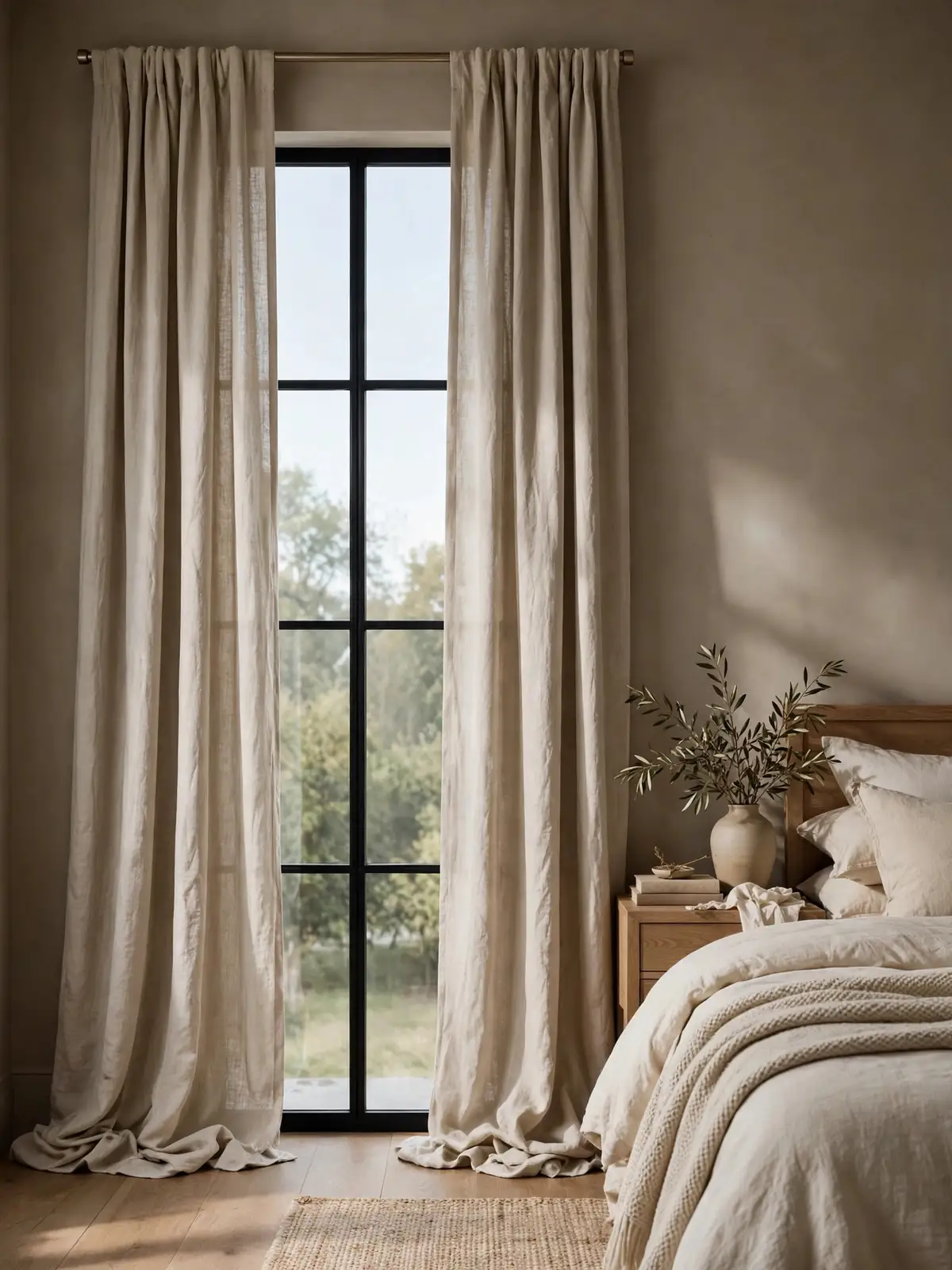
Floor-length curtains change the height of a room. The curtains lead in oatmeal and flax, warm taupe deepens the frame, and cream bedding keeps it light. Choose a linen-look or textured fabric that falls straight to the floor, and let the panels pool slightly for a relaxed look. Hang the track higher and wider than the window so the curtains cover the wall, not just the glass, which makes the window feel taller. The exact drop depends on your window and ceiling, so measure both before you buy. In a rental, a tension rod with light linen panels can give a similar soft frame.
🪟 Full-Length Warm Curtains
Fabric: linen-look or textured
Colors: oatmeal, flax, warm taupe
Hang: track higher and wider
Length: to the floor
Key move: Measure the window and ceiling first.
14. Design a Warm, Layered Lighting Scheme
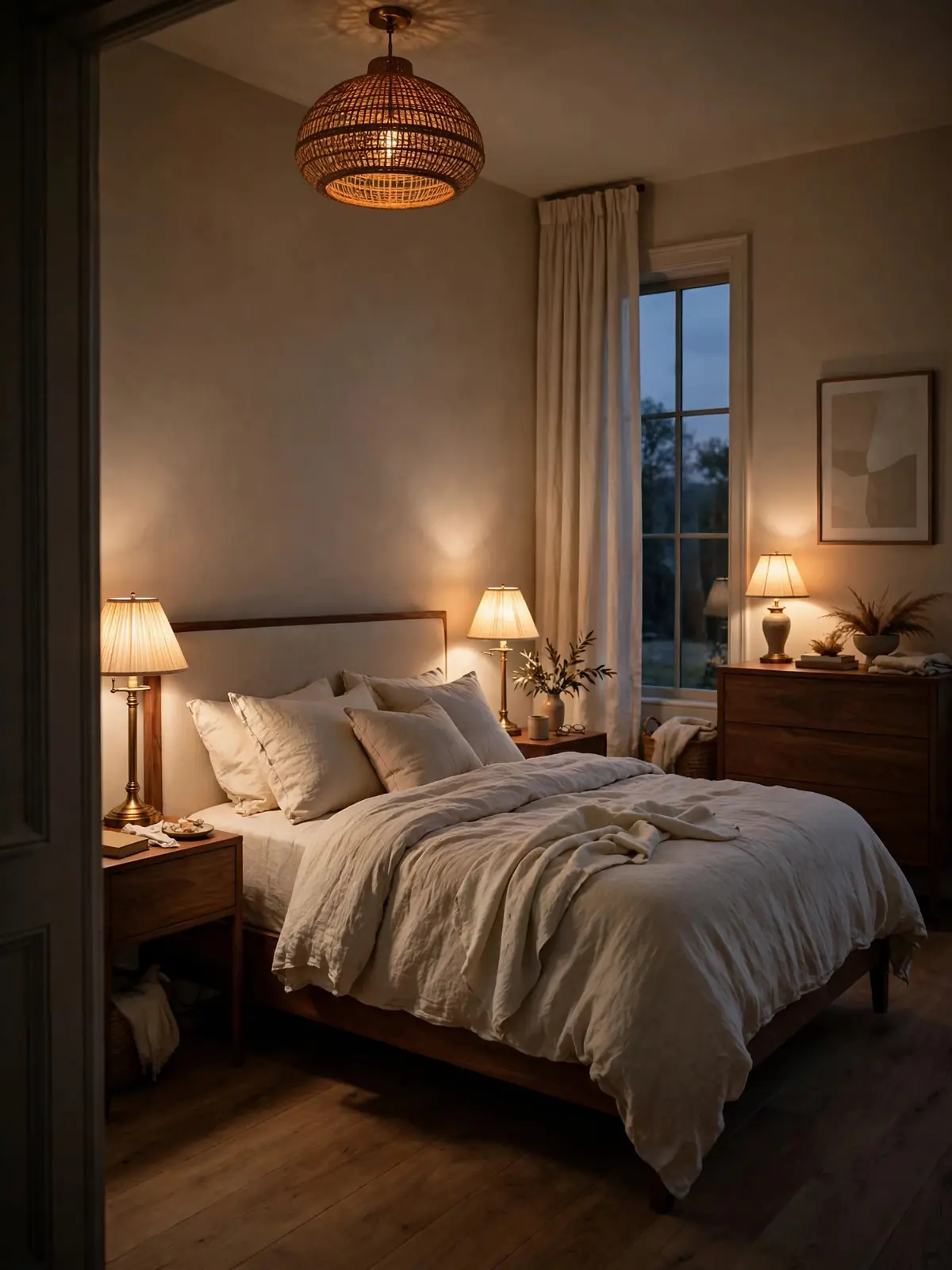
One ceiling light cannot make an earth-tone room feel warm. Warm white light is the feature, walnut and cream are the backdrop, and aged brass is the decor. Combine three sources. Start with a soft ceiling light and a bedside lamp on each side. Then add one accent, such as a small lamp on the dresser or a picture light. Choose warm-white bulbs around 2700K so the beige and brown tones stay rich instead of turning gray. Add a dimmer where you can, and keep the reading light low and close so it does not glare. The luxury is in the layers, as these bedroom lighting ideas show.
💡 Warm Layered Lighting
Ceiling: one soft light
Bedside: a lamp on each side
Accent: dresser lamp or picture light
Bulbs: warm white
Key move: Layer three sources, not one bright light.
15. Introduce Aged Brass or Bronze Details
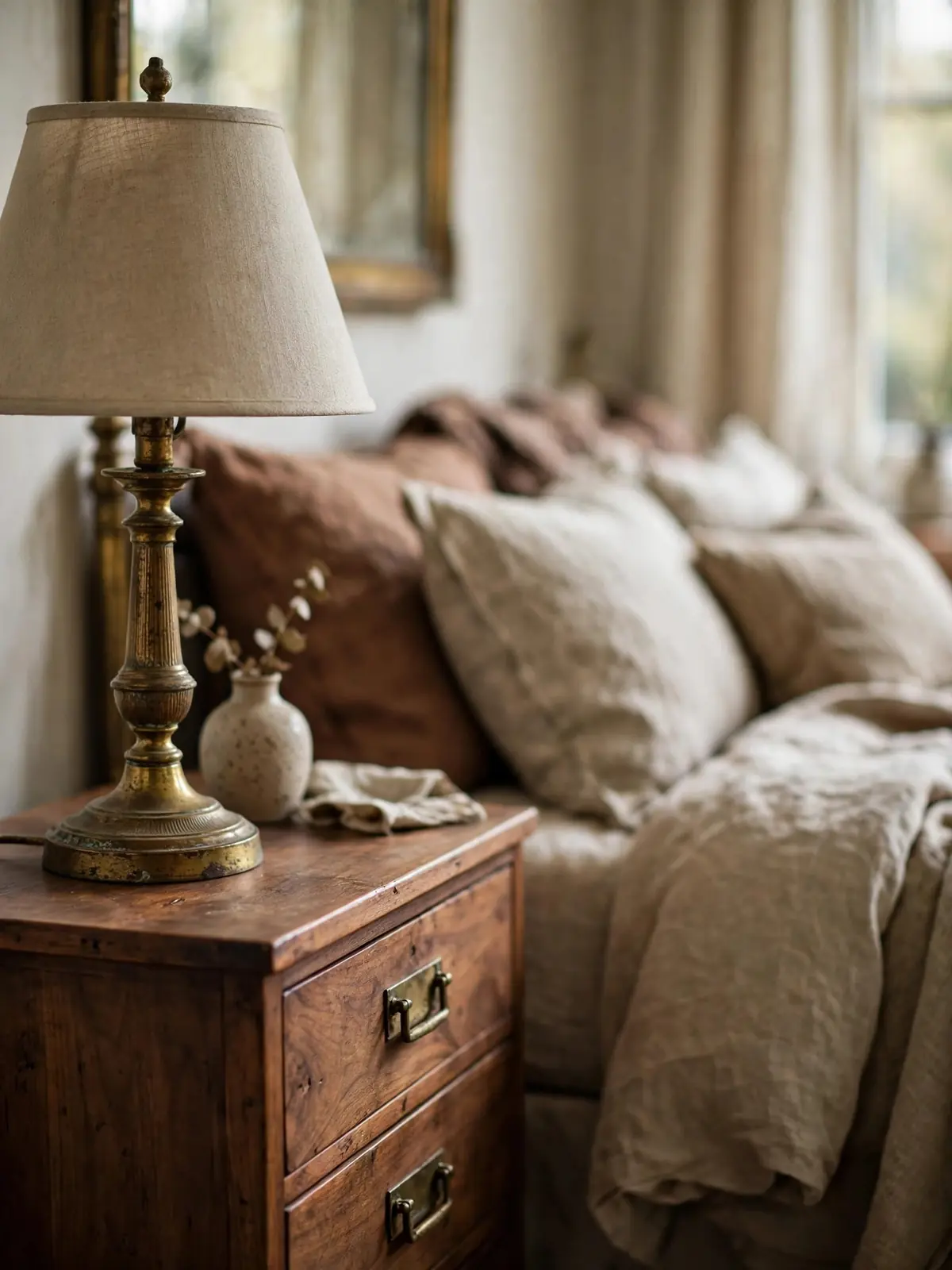
Aged brass warms up brown and beige without shouting. Cocoa gives the depth, oatmeal and cream soften it, and aged brass is the highlight. Use it on lamp bases, drawer handles, curtain hardware or a mirror frame, and keep the finish the same across the pieces. The metal should read as a quiet glint, not a shine, so choose brushed or aged finishes over polished ones. Do not make every item metallic: one brass lamp and matching handles are enough. The contrast of warm metal against matte linen and wood is what makes the room feel finished.
✨ Aged Brass Details
Use: lamp bases, handles, hardware
Finish: brushed or aged, not polished
Palette: cocoa, oatmeal, cream
Metal: one lamp and matching handles
Key move: Keep the finish the same across pieces.
16. Use Earthy Wallpaper or a Soft Organic Mural
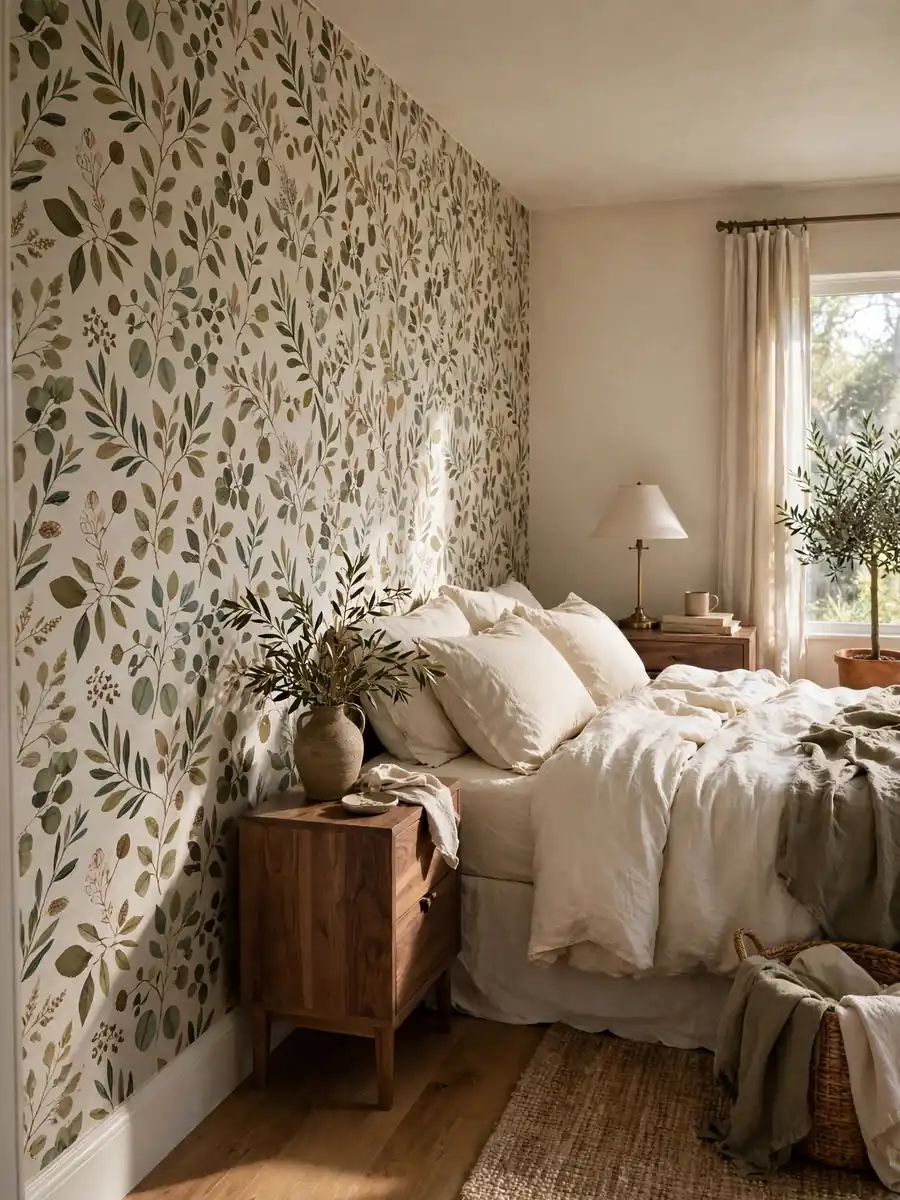
A restrained pattern can do what paint cannot. The wallpaper leads in clay, sand and olive, and warm cream bedding stays quiet beside it. Choose a botanical, textured or abstract pattern in muted earth tones, and use it on one wall behind the bed. Keep the bedding in plain cream or oatmeal so the pattern stays the focal point. If you rent, a removable wallpaper lets you try the look without paint, but check the product guidance for your wall type first. The pattern should feel calm at a glance, not busy up close.
🌿 Earthy Wallpaper or Mural
Pattern: botanical, textured or abstract
Colors: clay, sand, olive, cream
Place: one wall behind the bed
Bedding: plain cream or oatmeal
Key move: Keep the bedding quiet so the pattern leads.
17. Create a Calm Canopy or Draped Bed
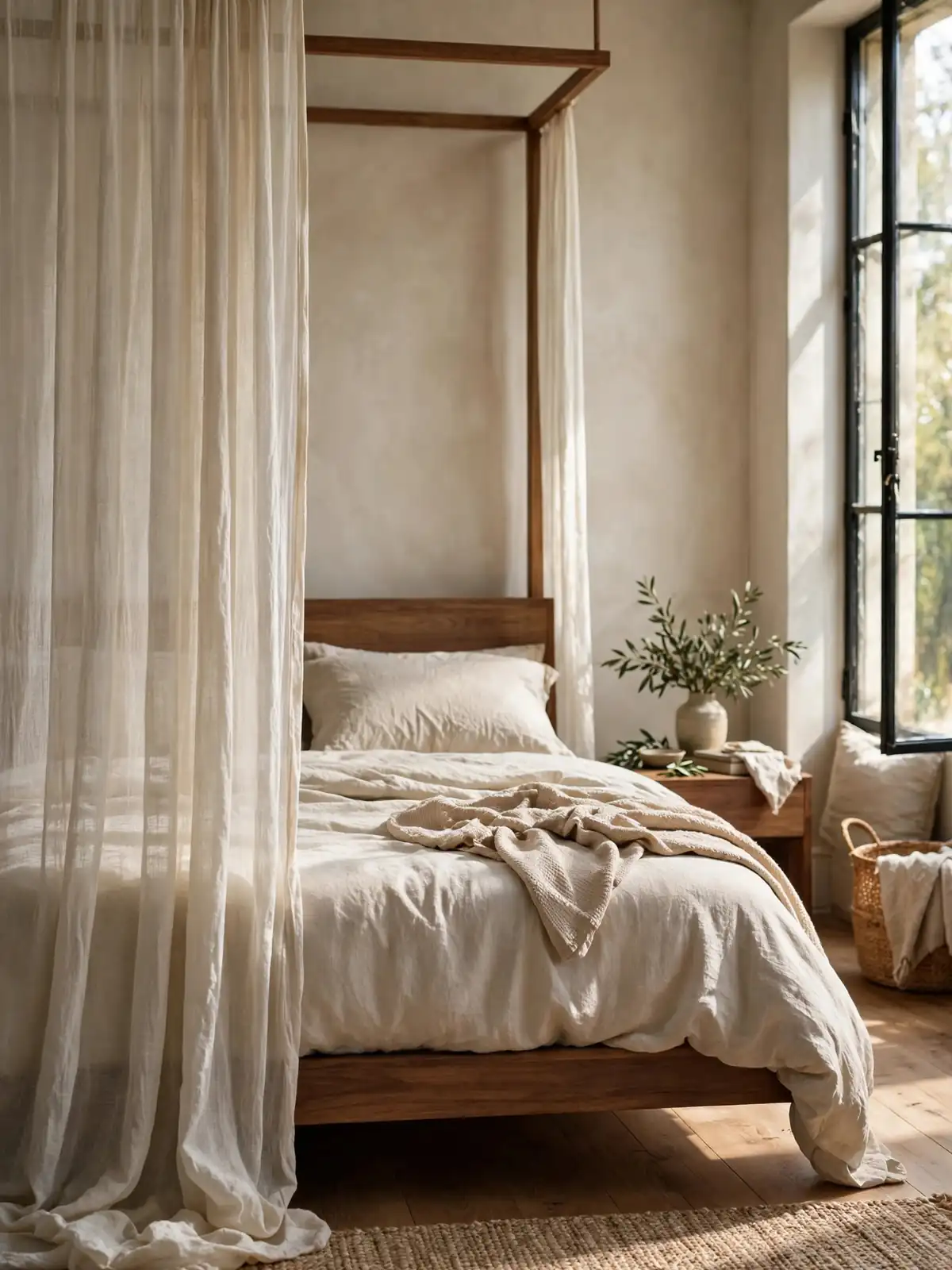
A canopy turns the bed into a soft, sheltered focal point. Warm cream and oatmeal soften the drapes, camel warms them, and walnut grounds the room. Use a simple frame or ceiling-mounted drapery in a natural fabric, and let sheer panels fall straight for a light effect. The room needs enough ceiling height for the fabric to hang clear of the bed, so check the height before you buy a frame. Fix the hardware into a solid ceiling or beam, and keep the fabric away from lamps and heaters. In a small room, sheer panels and no top frame keep the look open.
🛏️ Calm Canopy Bed
Fabric: natural, sheer panels
Frame: simple or ceiling-mounted
Palette: cream, oatmeal, camel
Wood: walnut anchor
Key move: Check ceiling height before you buy.
18. Add a Reading Corner in Camel, Rust and Wood
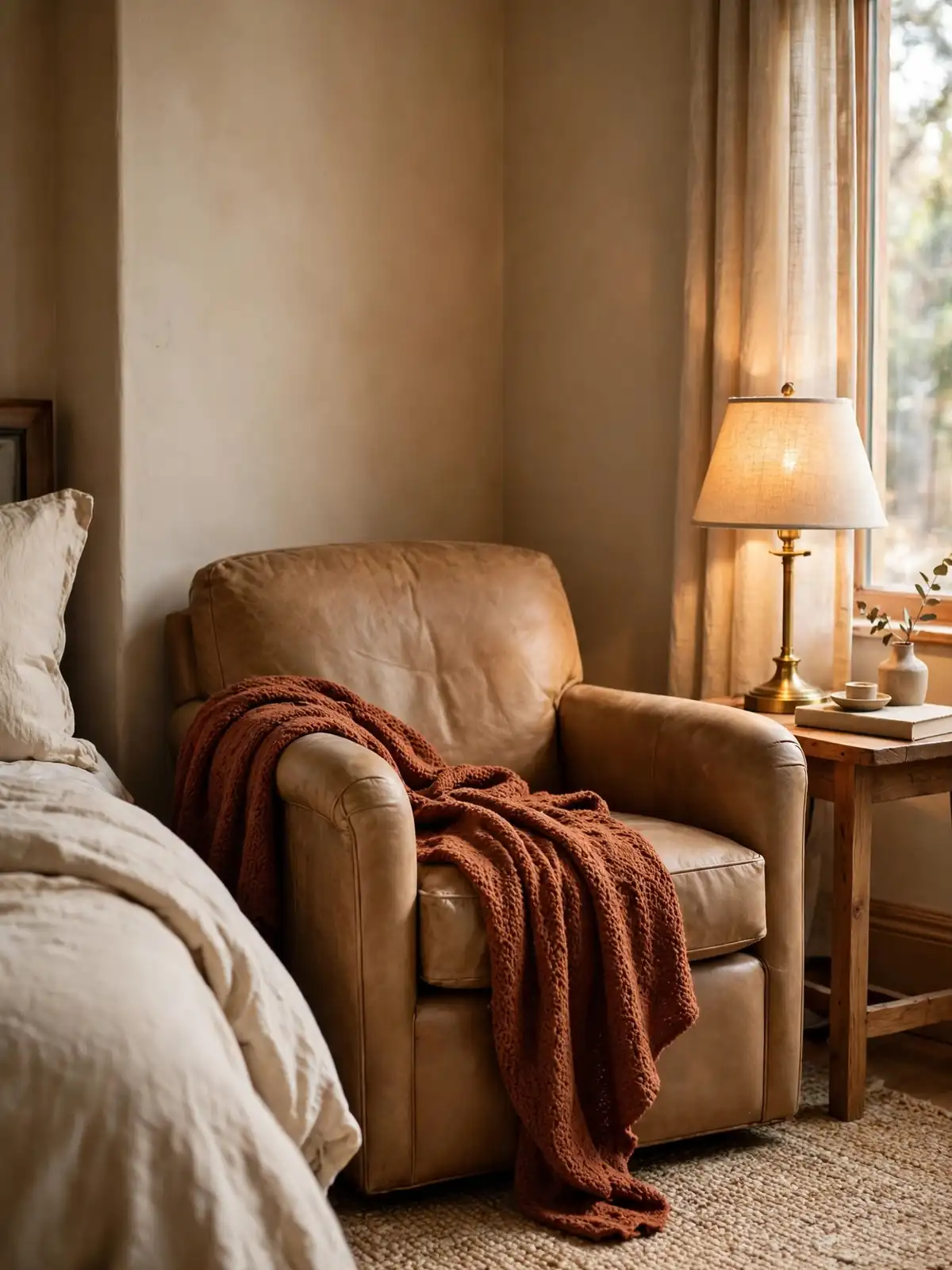
A small chair and side table turn an empty corner into a useful moment. Camel is the accent, rust adds warmth, and walnut and cream keep the corner grounded. Choose a camel or warm brown seat with a textured throw, then add a small wooden side table and a focused lamp. Scale the chair to the floor you have: it should leave a clear path around the bed and room to walk. A chair that blocks the door or crowds the bed ruins the calm the corner is meant to add. The styling stays simple: the throw, the lamp and one book.
📖 Reading Corner
Chair: camel or warm brown seat
Table: small wooden side table
Lamp: one focused light
Throw: textured rust
Key move: Leave a clear path around the bed.
19. Style Handcrafted Ceramics and Earthy Artwork
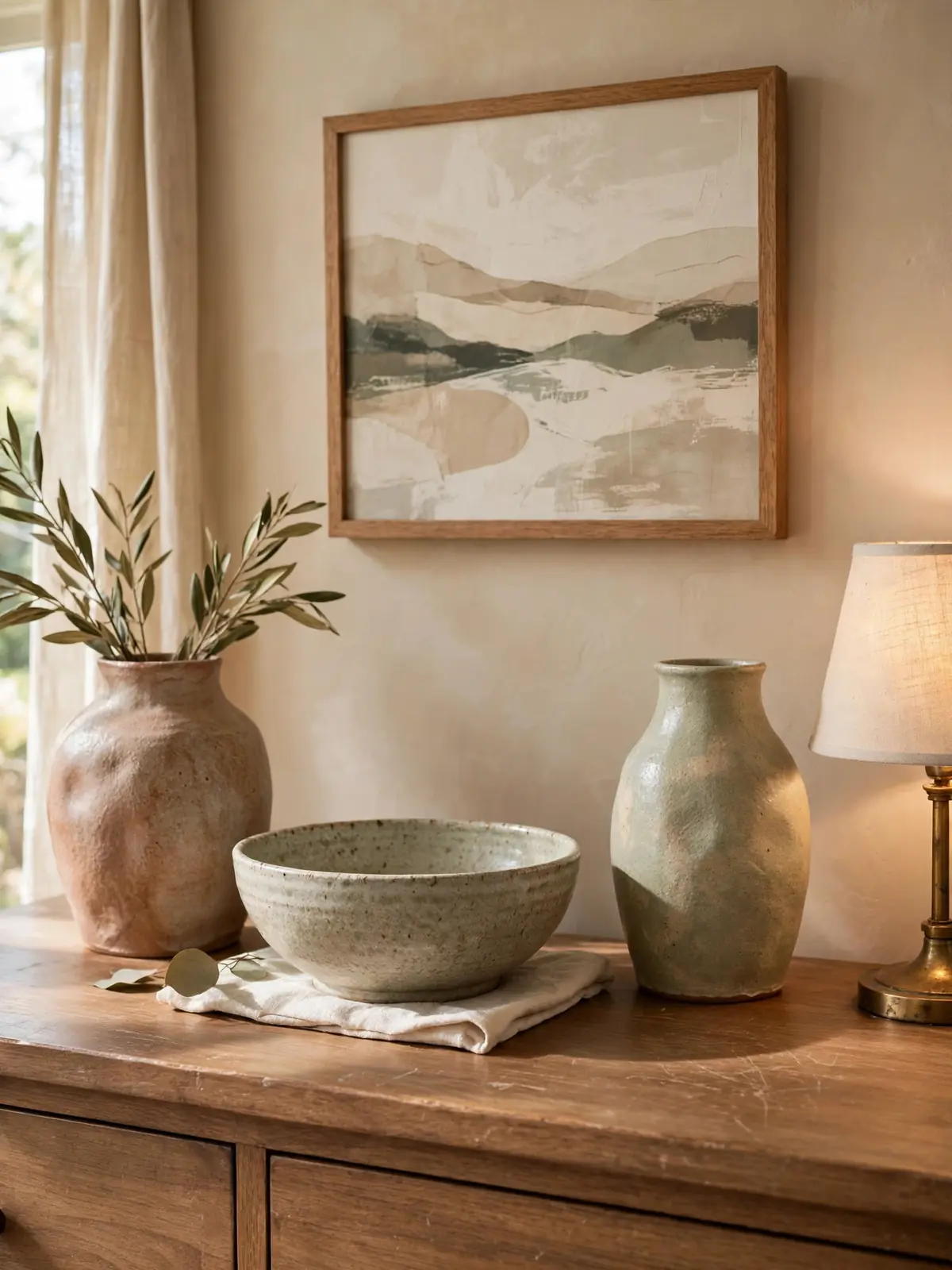
A few handmade-looking pieces give the room a personal, collected feel. The ceramics lead in clay and cream, brown and muted green support them, and the art is the second focal point. Group two or three ceramic vases or stoneware bowls on the dresser, then hang one abstract landscape or tonal print above it. Leave empty space around each group so the pieces read as chosen, not stored. The art should carry the same earth tones as the room, so the wall and the shelf feel connected. Stop before the shelf fills up: a cluttered display kills the calm this idea is meant to add.
🏺 Ceramics and Earthy Art
Ceramics: two or three vases or bowls
Art: one abstract landscape print
Colors: clay, cream, brown, muted green
Place: dresser and the wall above it
Key move: Leave empty space around each group.
20. Finish with a Calm, Clutter-Free Boutique-Hotel Layout
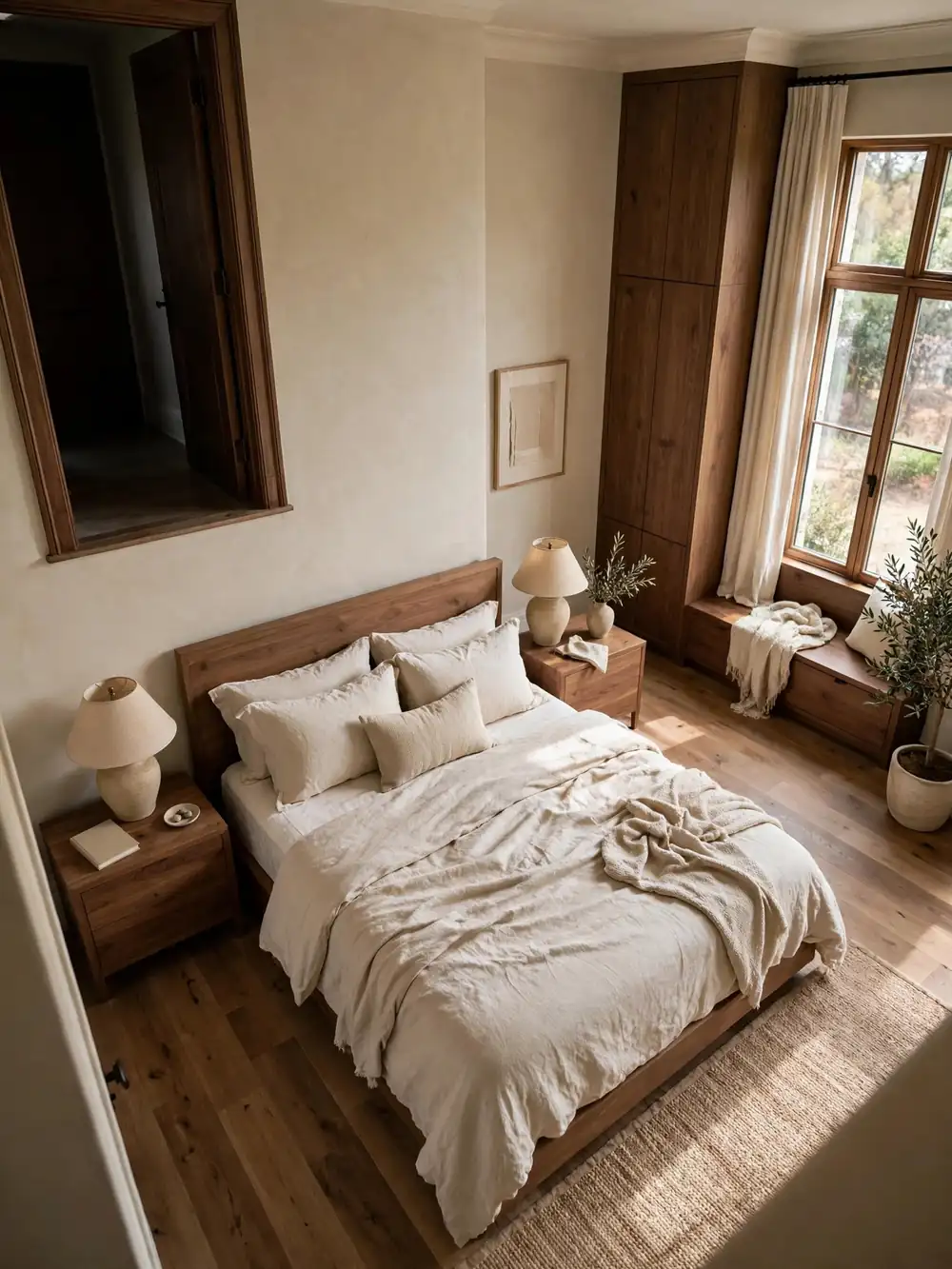
The last step is editing, not adding. Warm cream and oatmeal keep it light, walnut anchors it, and soft brass adds the finish. Use concealed storage for clothes and clutter, keep the bedside surfaces clear, and hide the cables behind the nightstand. Balance the room with symmetry, such as matching lamps, or with a deliberate asymmetry, such as one tall plant. Leave a clear route around the bed so the room feels easy to move through. What you remove matters as much as what you add, and a tidy room lets the colors and materials speak.
🏨 Boutique-Hotel Layout
Storage: concealed, clutter out of sight
Bedside: clear surfaces
Cables: hidden behind nightstands
Balance: matching lamps or one tall plant
Key move: Edit first, then add.
How to Make an Earth-Tone Bedroom Look More Luxurious
Layer tones, not just colors. Use a light, a mid and a deep shade from the same warm family. The contrast between them is what stops beige from looking flat.
Use the 60/30/10 ratio. Make about 60% of the room the dominant color, 30% the secondary color, and 10% the accent. The split keeps the palette balanced and stops one tone from taking over.
Choose natural materials. Wood, linen, wool, stone, clay and woven fiber age well and feel warm to the touch. One or two honest materials beat a room full of lookalikes.
Get the scale right. A headboard, rug or lamp that fits the bed and the wall makes the room feel planned. Pieces that are too small look lost, and pieces that are too large crowd the room.
Light in layers. A ceiling light, bedside lamps and one accent source let you change the mood through the day. Warm-white light keeps the earth tones rich.
Contrast the textures. Pair smooth linen with nubby wool, matte plaster with warm metal, and soft bedding with solid wood. The mix is what the eye reads as luxury.
Edit the accessories. A few well-chosen pieces with empty space around them look more expensive than a full shelf. Clear the bedside, hide the cables and let the palette breathe.
Which Earth Tone Suits Your Light?
North-facing rooms get cooler, bluer light, so warm earth tones balance them well. A mushroom, terracotta or chocolate brown wall warms up the cool light, and cream bedding keeps the room from feeling dark.
South-facing rooms get warm, yellow light, so deep warm tones can feel too intense there. Use lighter warm shades, such as oatmeal, sand or pale terracotta. Add a cool counterpoint, such as a muted olive cushion or a stone tray, to keep the room calm.
Common Mistakes to Avoid
Too many similar browns. Five shades of beige with no light or dark anchor turn the room into one flat wash. Add a cream base and one deep tone for contrast.
Clashing undertones. A pink beige next to a yellow beige can look dirty, even when both are warm. Paint large samples on poster board. Look at them in morning light and again in evening light. Compare each sample against a sheet of pure white paper to see whether its undertone leans pink, yellow, green or grey. For more on spotting undertones, read Benjamin Moore's guide to recognizing undertones.
Poor lighting. A single cool ceiling light flattens earth tones and makes the room feel gray. Layer warm light, and add a dimmer where you can.
Too many textures. Bouclé, wool, jute, rattan and velvet in one room fight each other. Pick two or three textures and repeat them.
Undersized rugs and art. A short rug and small art make the room feel unfinished. Size both to the furniture they sit with.
Copying a photo without checking your room. A look from a large bright room can fail in a small dark one. Match the idea to your light, ceiling height and floor space first.
Frequently Asked Questions
What colors go well with warm earth tones in a bedroom?
Warm cream, ivory, sand, camel, terracotta, cocoa, olive and warm taupe all work together. Pair a light base, such as ivory or oatmeal, with one deeper tone, such as cocoa or terracotta, for contrast. Walnut wood and aged brass add warmth, while cream linen keeps the room from feeling heavy.
How do you make an earth-tone bedroom look luxurious?
Layer three tones from the same warm family, then add natural materials such as wood, linen, wool and stone. Keep the scale right, light the room in layers with warm-white bulbs, and edit the accessories so a few pieces have space around them. Luxury comes from proportion, finish and restraint, not from expensive products.
Can dark brown work in a small bedroom?
Yes, if you use it in the right place. Paint one wall behind the bed, or bring dark brown in through the headboard and bedding, and keep the other walls and the ceiling light. Warm white bedding and a mirror or lamp stop the room from feeling closed in. Avoid color drenching a small dark room.
Which wood tones look best with beige and terracotta?
Walnut and oak work best, since both carry warm undertones that suit beige and terracotta. Walnut gives a deeper, more refined look, while oak keeps the room lighter. Keep to one wood family for the main furniture. Mix it with linen, stone or aged brass so the room does not look like a matched set.
How can I add earth tones without repainting my bedroom?
Start with bedding, curtains and a rug in oatmeal, terracotta or olive. Add a walnut tray, a stone lamp base or aged brass handles for warmth, then layer a wool throw and two textured cushions. These soft changes shift the whole palette, and you can build on them later with paint or wallpaper.
Conclusion
Luxury in a warm earth-tone bedroom comes from the palette, the materials and the editing, not from a big budget. Pick one anchor, such as a mushroom wall, a terracotta throw or a walnut bed frame, then build the room in layers around it. Test the colors in your own light, keep the textures to two or three, and leave enough empty space for the room to breathe. These luxury warm earth tone bedroom ideas work in large and small rooms, so start with the one that fits your space. Save the ideas you love on Pinterest, and come back when you are ready for the next layer.