Coquette Room Decor: 12 Ideas That Feel Soft, Not Cluttered
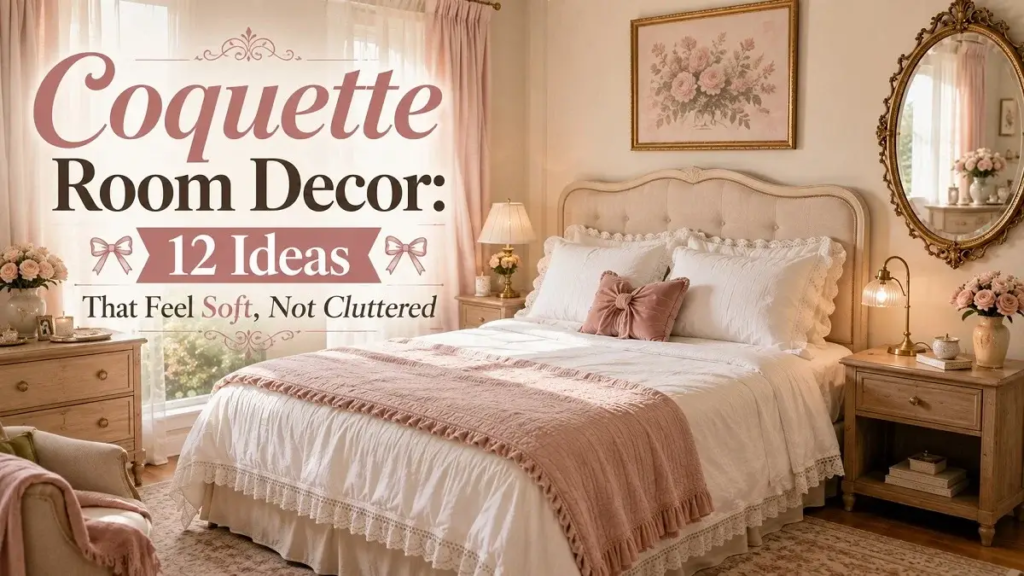
Coquette rooms often go wrong in the same way: every pretty object gets invited in, but none has enough space to shine. Bows compete with florals, lace covers every surface, and a bedroom that was meant to feel soft starts to feel busy.
Good coquette room decor does not depend on owning more. It comes from choosing the right details and knowing where to stop. These 12 ideas will help you shape the colors, bed, lighting, furniture, and finishing touches in a practical order—without replacing everything you already own or turning the room into a costume set.
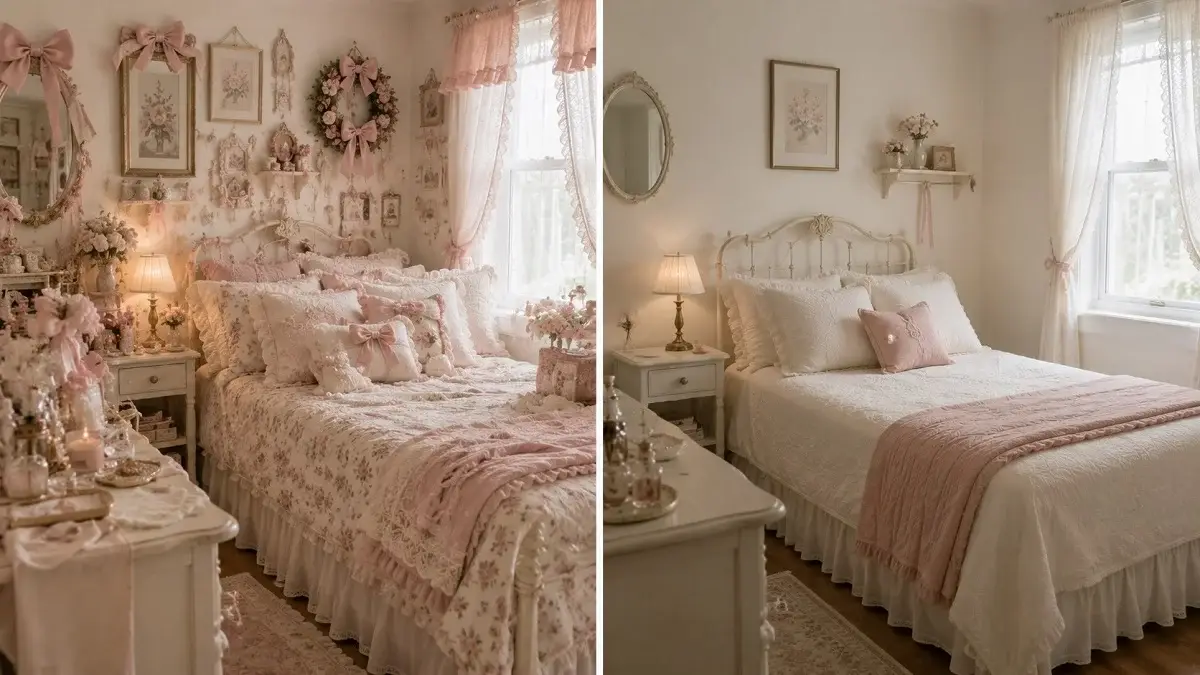
1. Decide Which Version of Coquette Suits Your Room
Coquette style is not limited to a pink bedroom. It can lean romantic, vintage, French-inspired, cottage-like, or clean and modern. Choosing one direction before shopping keeps unrelated pieces from competing with each other.
Look at the furniture and finishes already in the room. Warm wood works well with cream, faded florals, and antique brass. White furniture can support blush, pale blue, or soft green. Black furniture creates contrast, so lighter fabrics and fewer accessories usually work best.
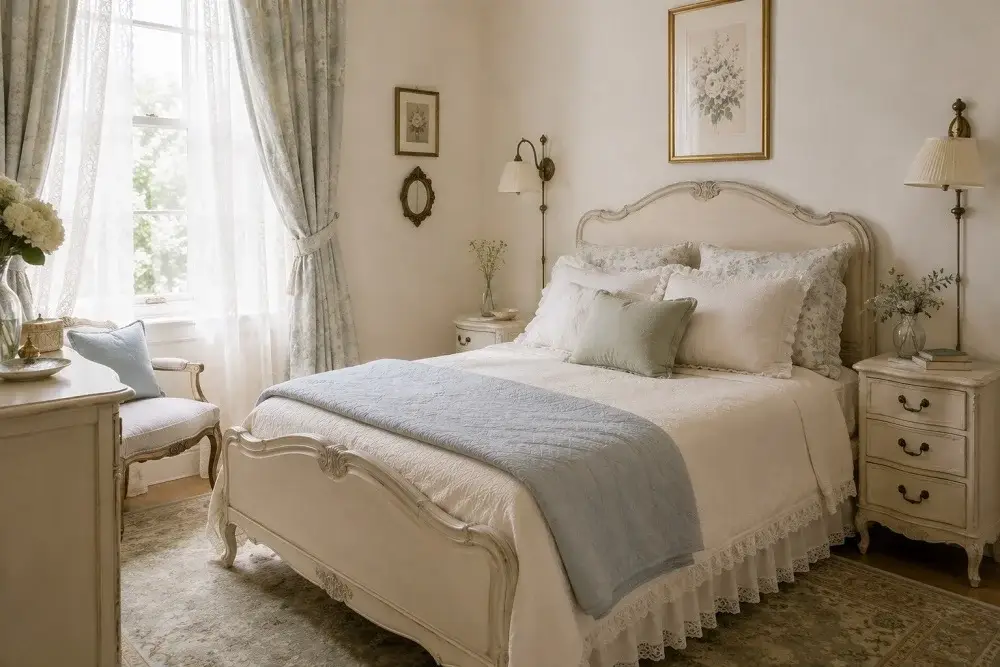
2. Build a Three-Color Palette Before You Buy Decor
Pick one light base color, one soft accent, and one grounding finish. A useful combination is warm white, dusty rose, and aged brass. Another is cream, sage green, and medium wood.
Let the base cover most of the room. Use the accent on bedding, art, or one chair, then repeat the grounding finish in two or three small places. This simple ratio keeps floral prints, ribbons, and vintage details connected instead of scattered.
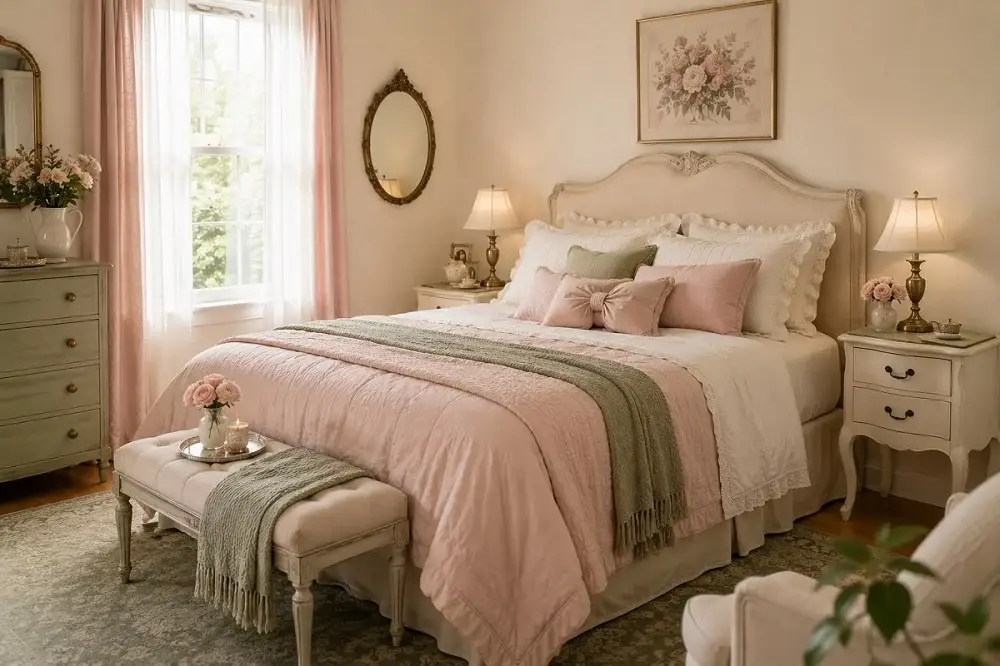
3. Make the Bed the Main Focal Point
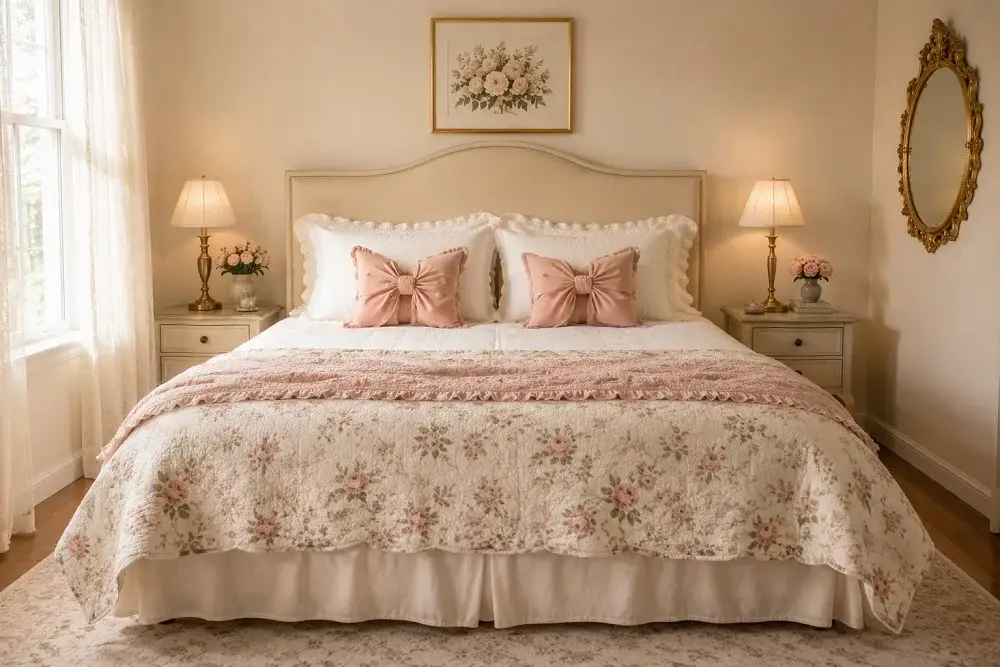
The bed is the largest object in most bedrooms, so let it carry the strongest coquette details. Begin with plain sheets and a solid duvet. Add interest with one floral coverlet, a ruffled throw, or two shaped cushions rather than using all three at full strength.
Keep everyday comfort in mind. A bed covered with decorative pillows may look attractive in a photograph but quickly becomes inconvenient. Two sleeping pillows, two decorative pillows, and one smaller accent cushion are enough for most beds.
4. Soften Dark Furniture Instead of Replacing It
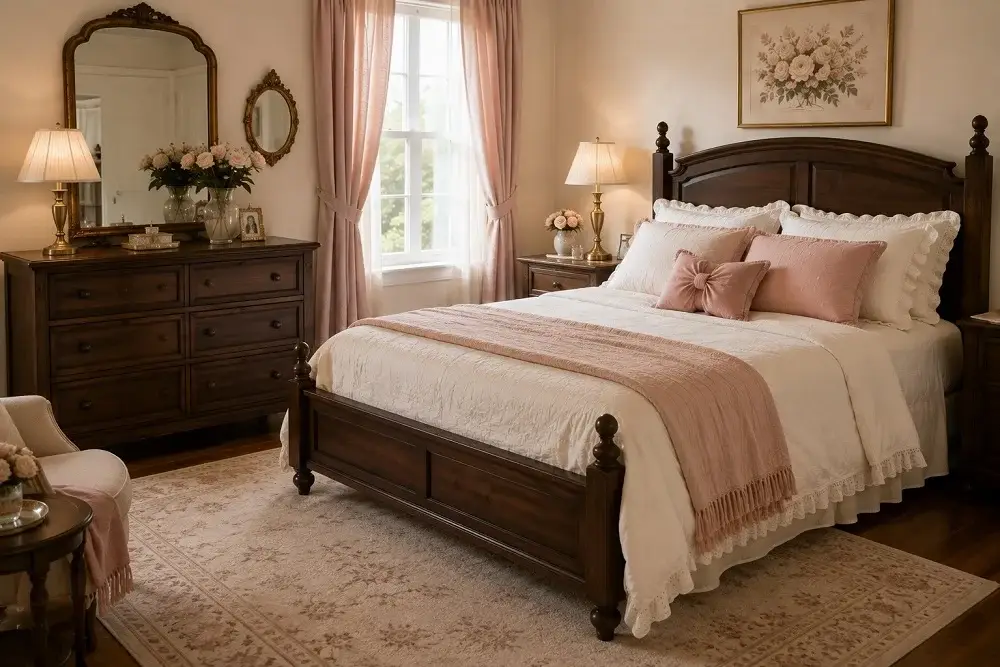
Dark wood, black metal, and modern furniture can remain in a coquette bedroom. Balance their visual weight with a pale rug, light bedding, soft curtains, and artwork with plenty of white space.
Repeat the dark finish once elsewhere, perhaps in a picture frame or lamp base. That small connection makes the furniture look deliberate. Painting every piece white is unnecessary and may remove the contrast that gives the room character.
5. Give Floral Pattern One Clear Job
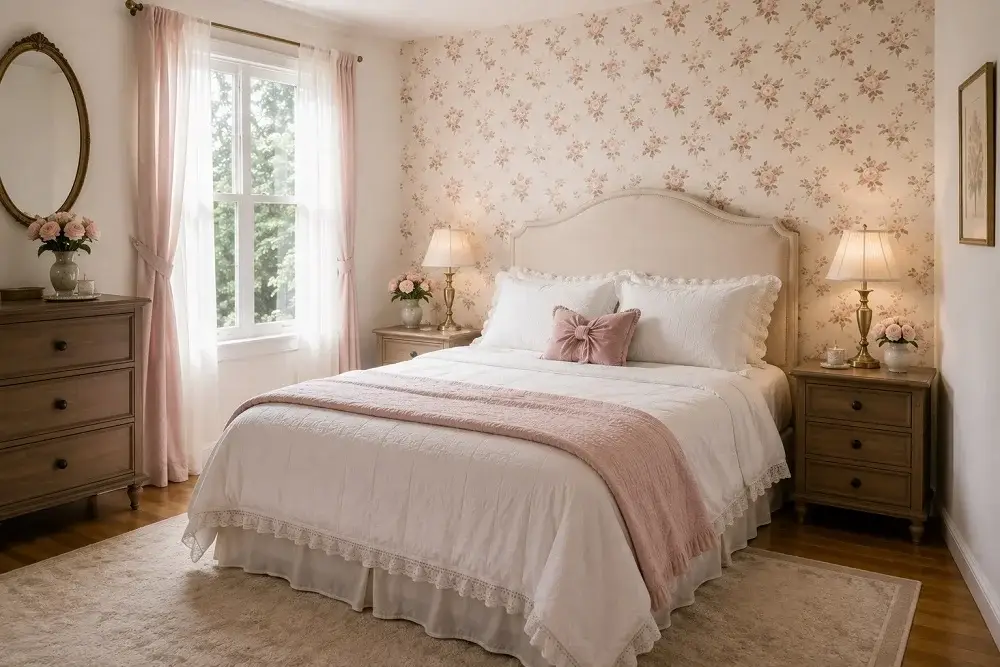
Florals work best when they have a defined role. Use them on wallpaper, bedding, curtains, or artwork—but avoid choosing a different floral pattern for every surface.
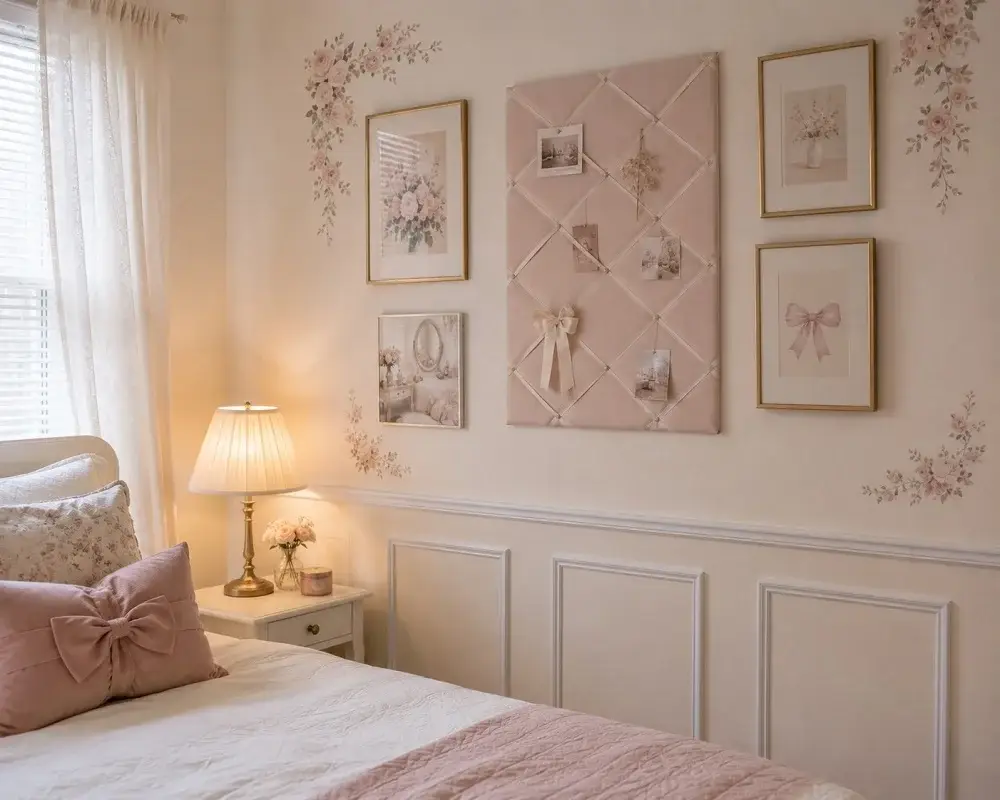
A feature wall behind the bed can provide enough pattern for the whole room. In a rental, try removable wallpaper inside framed panels or use a large floral print above the headboard. Pull one color from the pattern into the bedding so the wall feels connected to the rest of the space.
6. Layer Lace and Ruffles Where They Will Be Noticed
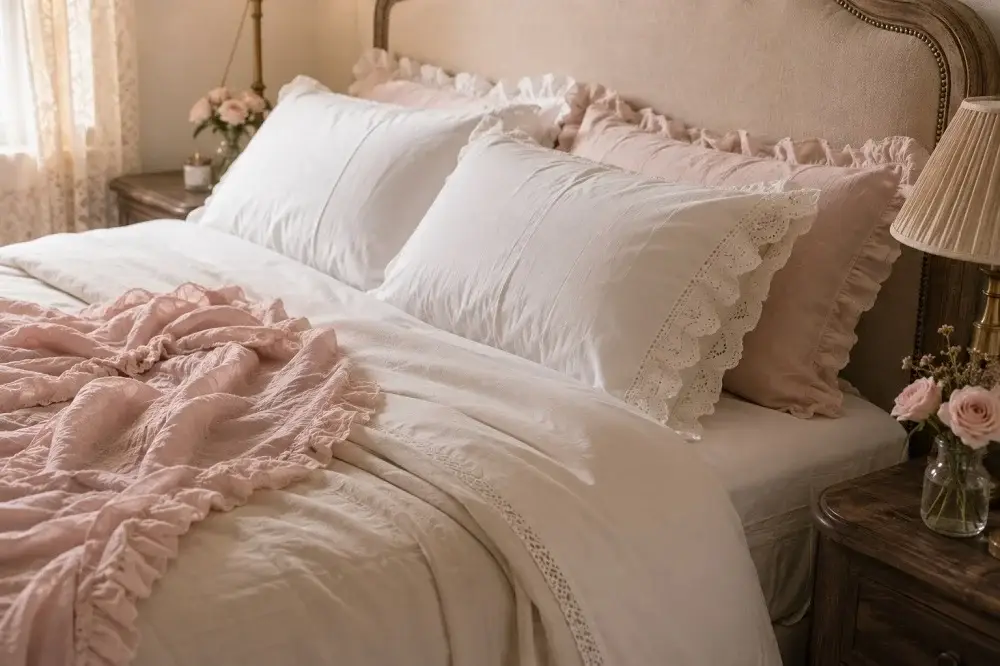
Lace trim and ruffles add texture, but they lose their effect when they appear everywhere. Choose one primary textile detail, such as a ruffled duvet edge, lace curtain panel, or gathered bed skirt.
Pair it with smoother fabrics. Cotton, linen, and velvet give the eye a place to rest and keep the room from feeling like a themed display. Washable textiles are a better choice than delicate pieces on surfaces you touch every day.
7. Use Layered Lighting to Change the Mood
A bright ceiling fixture alone can flatten a room. Combine general lighting with a bedside lamp and one smaller decorative source. Warm-white bulbs around 2700K usually flatter blush tones, wood, and brass better than cool blue light.
Wall sconces save space beside a small bed. A shaded table lamp creates a softer pool of light, while a dimmer gives you control at night. String lights can work, but keep them to one short, neat run rather than outlining every wall.
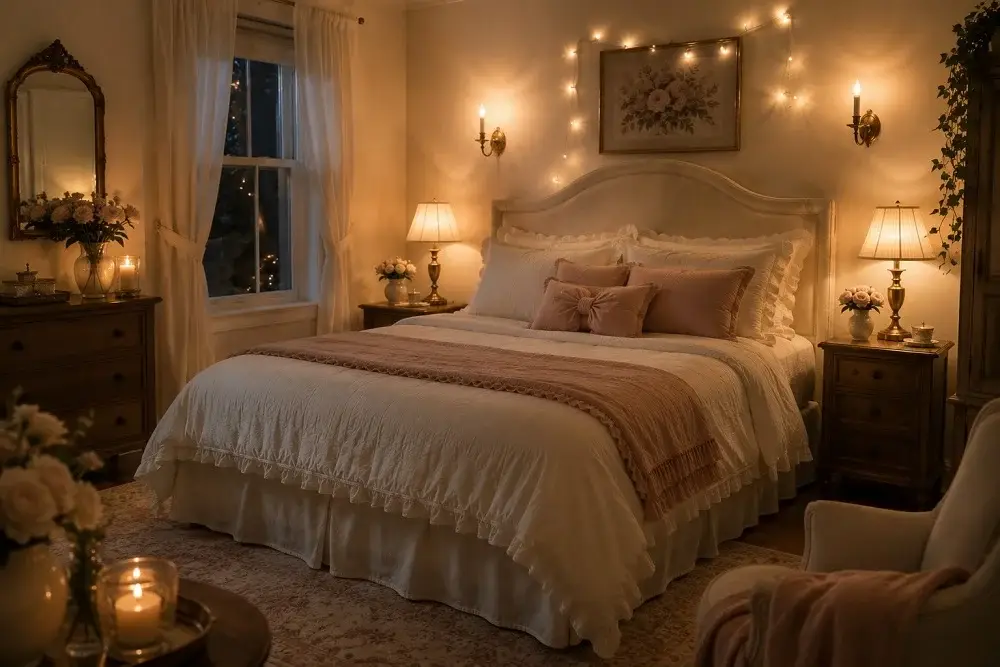
8. Let One Vintage-Style Piece Carry the Theme
You do not need a matching set of antique furniture. One ornate mirror, curved bedside table, carved frame, or vintage-style lamp can establish the mood.
Check secondhand pieces for loose joints, sharp edges, odors, and peeling finishes before bringing them indoors. If an older mirror is heavy, use wall anchors rated for its actual weight. A small piece with a distinctive shape often has more impact than several reproduction accessories.
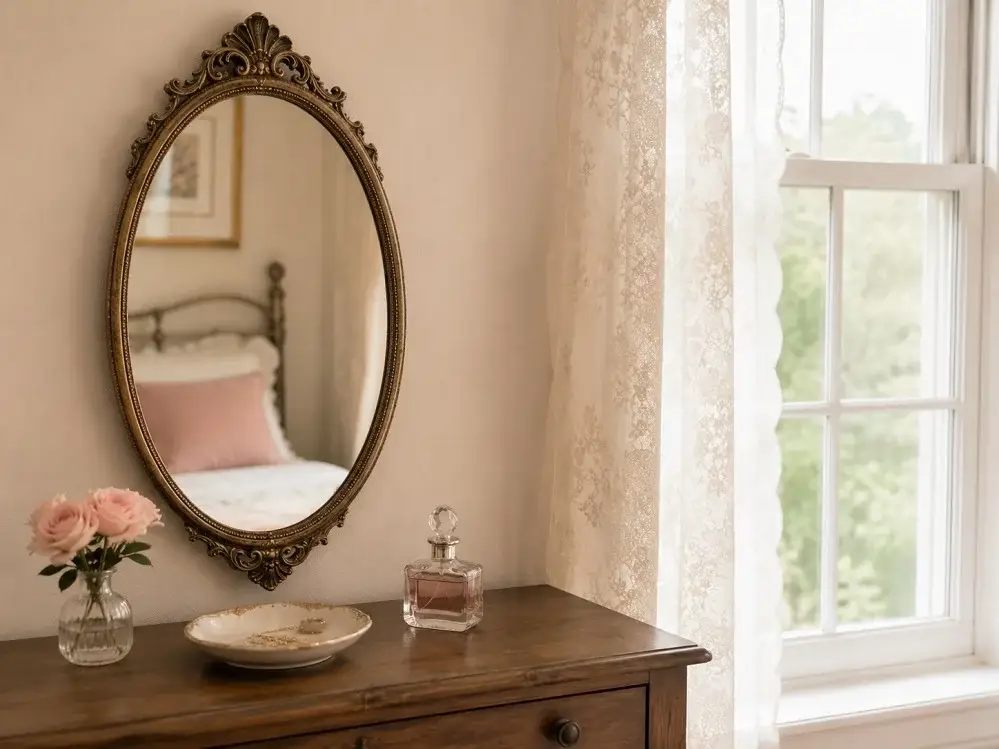
9. Turn a Small Desk Into a Practical Vanity
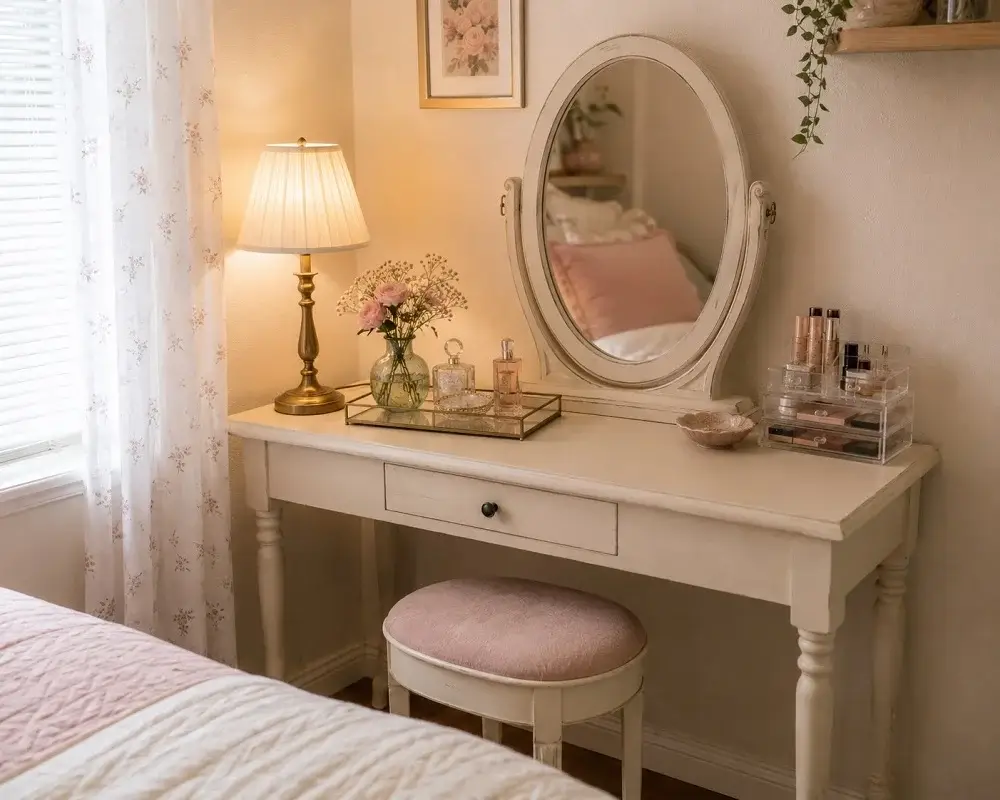
A separate vanity is not essential. A compact desk can serve as a dressing area, study surface, and bedside table when floor space is tight. Add a mirror, a comfortable stool, and one lamp that lights the face evenly.
Keep daily items in a drawer or shallow organizer. Display only a few attractive bottles or a small vase. Measure the chair clearance before adding storage underneath so the setup remains comfortable to use.
10. Group Small Accessories Instead of Spreading Them Around
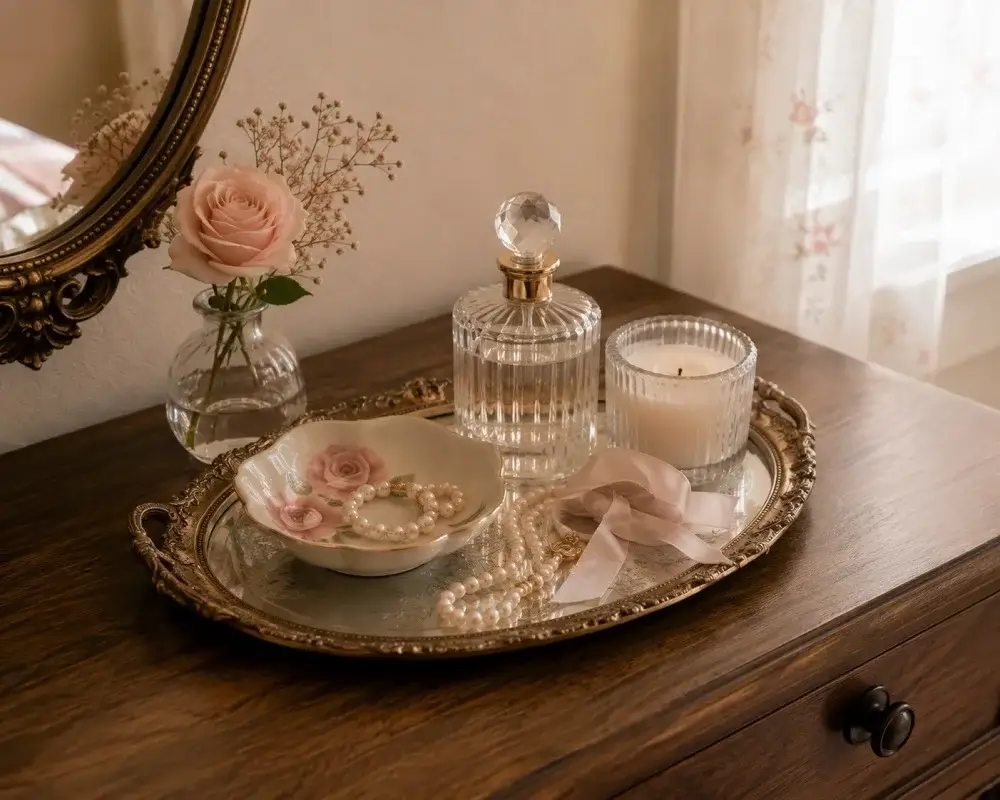
Perfume bottles, candles, jewelry dishes, and small frames create visual noise when placed on every available surface. Collect related pieces on a tray or within one defined area.
Leave part of the dresser, vanity, or nightstand empty. Clear space makes cleaning easier and helps the displayed items look intentional. A good editing rule is to remove one object whenever you add a new one to an already finished group.
11. Treat Bows as Accents, Not a Requirement
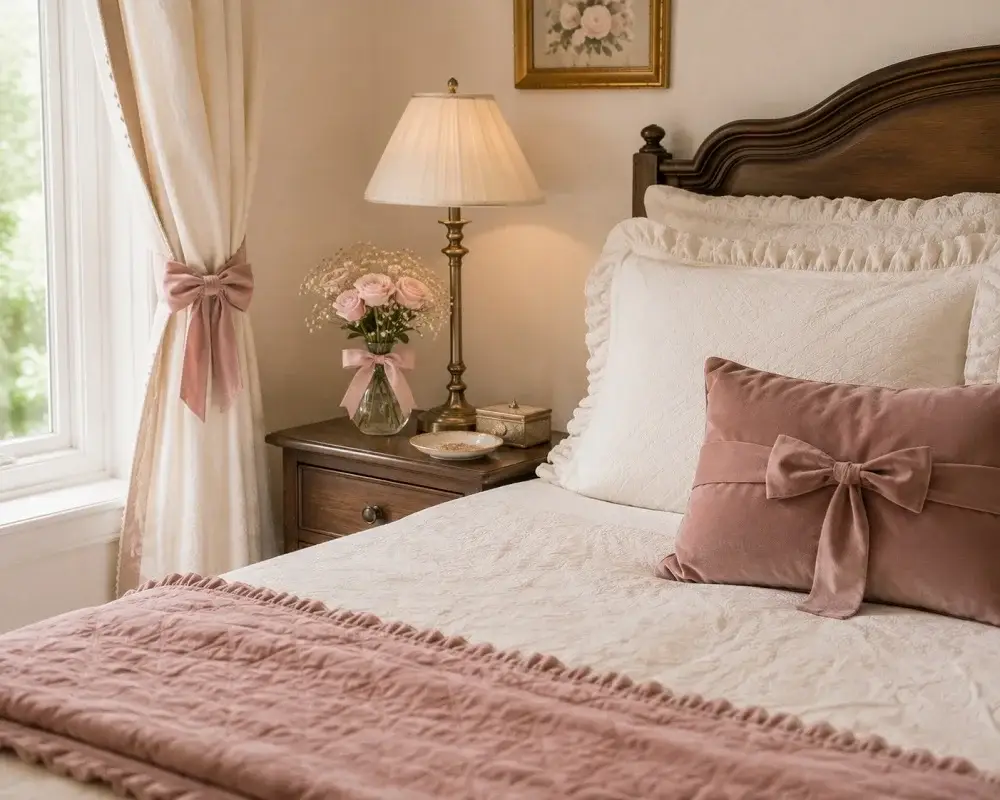
Bows are recognizable coquette details, yet the room does not need them on every pillow, handle, and frame. Try one bow cushion, a ribbon on a vase, or a fabric tieback.
Choose ribbon with enough body to hold its shape and repeat its color elsewhere in the room. If the bow is large or high contrast, let it be the only one in that view. Smaller tonal bows can be repeated more quietly.
12. Make the Look Work in a Rental or Small Bedroom
Use removable wallpaper, adhesive hooks rated for the object, tension rods, and lightweight frames when permanent changes are not allowed. Always test adhesive products in a hidden area because some can lift weak paint.
In a small bedroom, prioritize the bed, lighting, and one wall feature. Choose storage that uses vertical or under-bed space, and avoid placing decor in walking paths. A mirror can reflect daylight, but position it so it does not create glare from the window or bedside lamp.
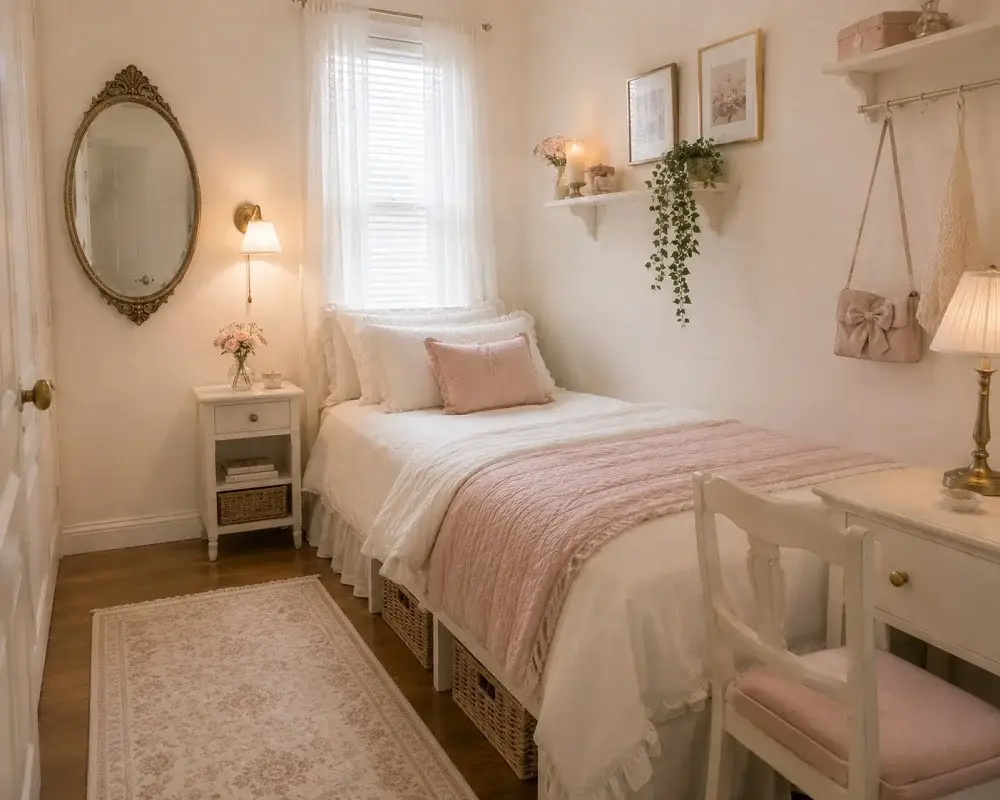
When the room feels nearly complete, take a photograph from the doorway. A photo often reveals repeated patterns, crowded surfaces, or colors that compete more clearly than standing inside the room does. Remove a few pieces, live with the result for a day, and add something back only if the space truly feels unfinished.
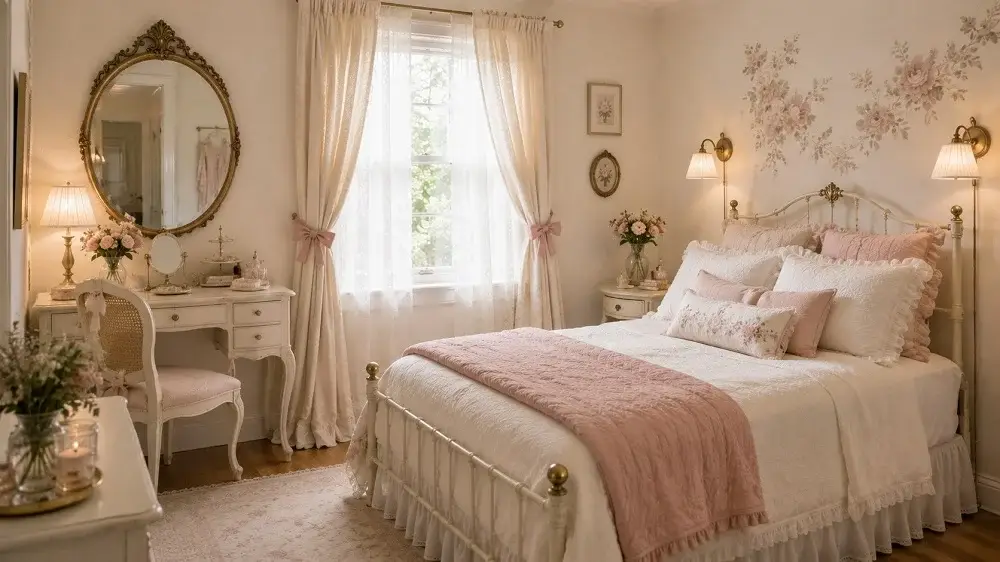
A finished coquette bedroom should feel calm before it feels decorative. From the doorway, your eye should notice the bed or feature wall first, then move naturally toward the smaller details. If everything demands attention at once, remove one pattern or accessory and look again.
The goal is not to fit every coquette trend into one room. Keep the colors that make the space restful, the vintage touches that give it character, and the everyday furniture that makes it useful. When every pretty detail has a purpose and enough room around it, the result feels collected, personal, and easy to live with.