Residential Roofers in West Palm Beach: What You Need to Know Before Hiring
Your roof doesn’t fail loudly. It fails slowly — a stained ceiling, a soft spot in the attic, a shingle that goes missing after a summer storm. By the time most West Palm Beach homeowners notice the signs, the damage has already been spreading for months. And in a city where the weather doesn’t hold back, that timeline matters more than most people realize.
Whether you’re dealing with storm damage, an aging roof that’s pushing 20 years, or a recurring leak that keeps coming back no matter how many quick fixes you throw at it, understanding how residential roofing works in South Florida will save you money, time, and a lot of stress.
Why West Palm Beach Is Hard on Roofs
The climate here is not neutral. West Palm Beach sits in one of the most weather-intense regions in the country — high humidity year-round, intense UV exposure, salt air from the coast, and a hurricane season that runs from June through November.
What many homeowners don’t realize is that West Palm Beach specifically falls within Florida’s High-Velocity Hurricane Zone (HVHZ). This isn’t just a designation — it carries real engineering consequences. Any material installed on a home here must carry a Miami-Dade Notice of Acceptance (NOA), and every installation must meet the ASCE 7-22 wind-load standards outlined in the Florida Building Code. These requirements are stricter than in most other parts of the state, and they affect everything from fastener spacing to the type of underlayment required.
Beyond the code requirements, the day-to-day conditions create a specific set of problems for residential roofs:
- UV degradation breaks down asphalt shingles faster than in northern states. A roof rated for 25 years in Ohio might realistically last 15–18 years here.
- Moisture and humidity accelerate mold, mildew, and wood rot underneath roofing materials, particularly in poorly ventilated attics.
- Wind uplift during tropical storms and hurricanes can strip shingles, crack tiles, and compromise the roof deck entirely. HVHZ-compliant systems are engineered specifically to address this with enhanced fastener patterns and secondary water barriers.
- Salt air near the coast, particularly for properties along the Intracoastal Waterway, corrodes metal fasteners and flashing over time. This makes material selection — especially for flashings and exposed metal components — a critical decision that directly affects long-term durability.
Any roofing contractor worth hiring in this area should understand these regional factors and factor them into every recommendation they make.
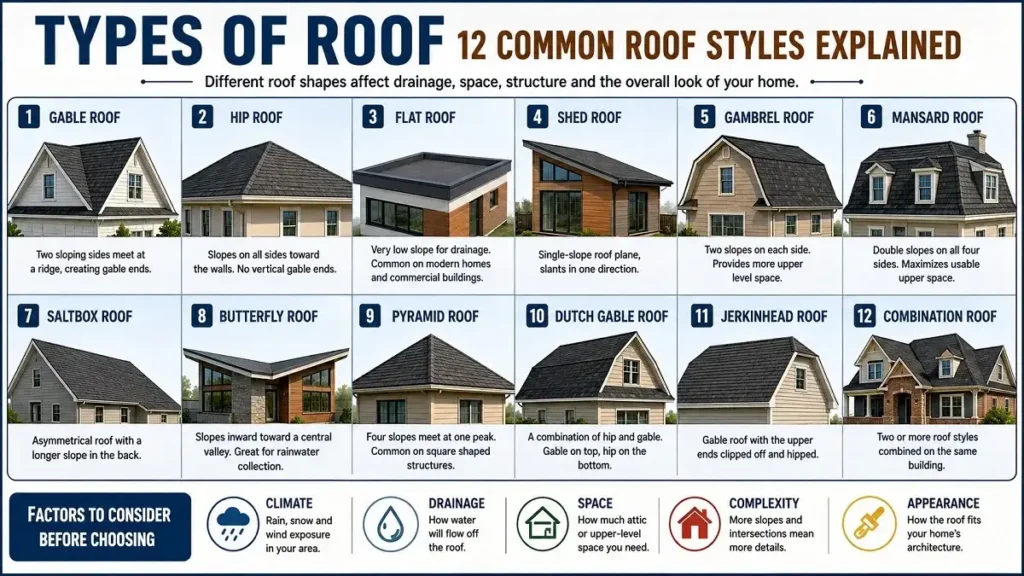
Types of Residential Roofing Common in West Palm Beach
The type of roof you have — or need — depends on your home’s age, structure, and budget. Here are the most common options in this area:
1. Asphalt Shingles
Asphalt Shingles remain the most widely installed residential roofing material in the region due to lower upfront costs and straightforward installation. Modern architectural shingles offer better wind resistance than older 3-tab designs, with many rated for winds up to 130 mph. In HVHZ areas, however, it’s important to verify that the specific shingle model carries the required Florida Product Approval.
2. Concrete and Clay Tiles
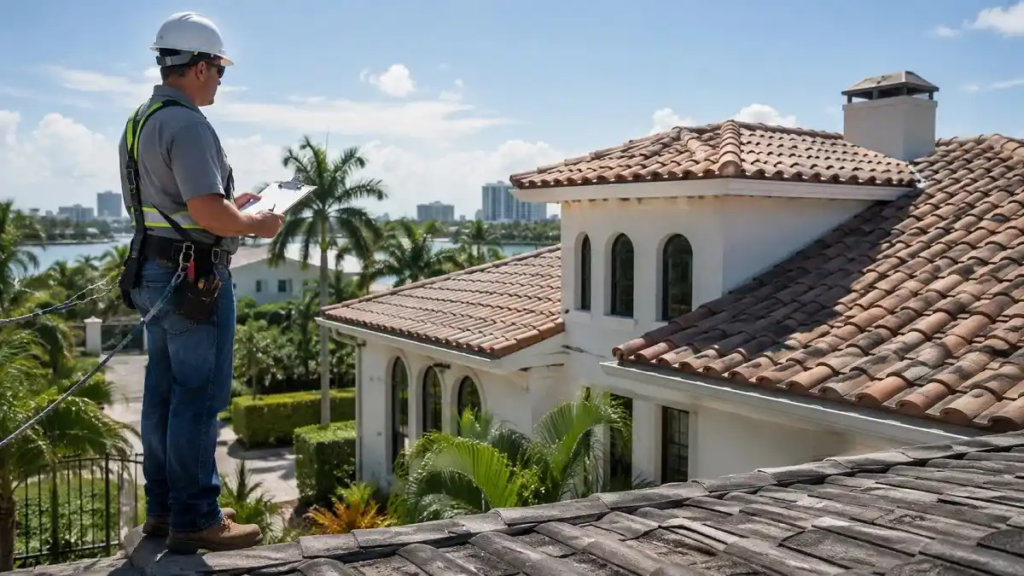
Concrete and Clay Tiles are common in South Florida, particularly in older neighborhoods and homes with a Mediterranean or Spanish architectural style. They’re durable, fire-resistant, and heat-resistant — but they’re heavy, which means the underlying structure needs to support the load. Repairs are more expensive because tiles need to be matched and handled carefully to avoid cracking.
If your home is located in a designated historic district — such as El Cid, Flamingo Park, or Northwood Village — the process involves an additional layer of oversight. Any visible roof replacement or restoration requires a Certificate of Appropriateness (COA) from the Historic Preservation Board (HPB), which reviews material profiles, colors, and flashing details to ensure the work is consistent with the neighborhood’s architectural character. This approval is separate from and precedes the standard building permit.
3. Metal Roofing
Metal Roofing has grown significantly in popularity over the past decade. Standing seam metal roofs can last 40–70 years, withstand high winds, and reflect heat effectively — a genuine advantage when cooling costs run high. The upfront cost is higher, but the long-term value is strong for homeowners who plan to stay.
4. Flat Roofing (Modified Bitumen or TPO)
Flat Roofing (Modified Bitumen or TPO) is common on additions, garages, and some mid-century homes. These systems require specific maintenance and drainage management, especially given the rainfall intensity in South Florida.
What Residential Roofing Services Actually Cover
When you call a roofing company, the scope of work can range from a minor repair to a full replacement. Here’s what each typically involves:
Roof Inspections
Roof Inspections are the starting point. A proper inspection covers the surface material, flashing, underlayment, ventilation, decking, gutters, and any penetrations (vents, skylights, chimneys). Many contractors now supplement this with thermal imaging — 4K drone thermography can detect subsurface moisture and hidden decking rot that isn’t visible from a ground-level look or even a standard walk. After any significant storm, it’s worth scheduling one even if you don’t see obvious damage.
Roof Repairs
Roof Repairs address specific problem areas — cracked or missing shingles, failed flashing, damaged fascia, or compromised pipe boots. In some cases, a repair may also involve reinforcing roof-to-wall connections or replacing deteriorated hurricane clips and straps, especially in older homes that predate current wind-load codes. Repair costs vary widely depending on severity and access, but catching issues early almost always costs less than waiting.
Roof Replacement
Roof Replacement becomes necessary when the damage is too widespread for repairs to be financially feasible, or when the roof has reached the end of its useful life. In Florida, insurance companies often factor roof age into policy decisions, which adds urgency for homeowners with aging roofs.
Storm Damage Restoration
Storm Damage Restoration is a specialized service that involves documenting damage, working with insurance adjusters, and restoring the roof to pre-storm condition. Companies that do this well understand the insurance process and can advocate on the homeowner’s behalf. They also know how to properly document secondary water barriers and impact-resistant materials — details that can make a meaningful difference in how quickly a claim is processed and approved.
How to Choose the Right Roofing Contractor
This is where most homeowners make mistakes. The cheapest bid is rarely the best value, and the most confident salesperson isn’t always the most qualified contractor. Here’s what to actually check:
- Licensing and Insurance — In Florida, roofing contractors must be licensed through the Department of Business and Professional Regulation (DBPR). Verify the license number directly on the state website (look for the CCC prefix on the license). Also, confirm they carry both general liability insurance and workers’ compensation. If they can’t provide certificates, stop the conversation there.
- Local Track Record — How long have they been operating in West Palm Beach specifically? Local contractors understand local permit requirements, building codes, and the particular demands of South Florida weather. National franchises sometimes subcontract work to crews unfamiliar with local conditions.
- Written Estimates and Contracts — Any reputable contractor will provide a detailed written estimate that specifies materials (including manufacturer and product line), labor scope, timeline, warranty terms, and payment schedule. Verbal commitments are not contracts.
- Manufacturer Certifications — Roofing manufacturers like GAF, Owens Corning, and CertainTeed certify installers who meet their training and quality standards. These certifications aren’t just marketing — they often allow contractors to offer extended manufacturer warranties that standard installers cannot. For example, GAF Master Elite® certification is held by fewer than 2% of roofers nationwide and requires proof of ongoing training and a strong claims history. It also unlocks access to warranties like the Golden Pledge® Ltd. Warranty, which covers both manufacturing defects and workmanship for up to 50 years.
- References and Online Reviews — Ask for three local references from work completed in the past 12 months. Also, check Google and the Better Business Bureau (BBB) for any patterns — not just isolated complaints but repeated issues with timelines, cleanup, or communication.
For homeowners who want to start with a contractor that’s already established in the area, the residential roofing experts in West Palm Beach at GM Roofing are a solid starting point for getting a professional assessment.
What Affects Roofing Costs in West Palm Beach
Pricing in South Florida carries a premium compared to national averages, driven by several factors:
- Material costs are higher due to supply chain logistics and the demand for hurricane-rated products — specifically, materials that carry Miami-Dade NOA approval.
- Labor costs reflect the training and licensing requirements specific to Florida, including knowledge of HVHZ installation standards.
- Permit fees vary by municipality, and West Palm Beach requires permits for roof replacements. If the property is in a historic district, the COA application adds an additional fee and timeline to the process.
- Roof complexity — multiple slopes, penetrations, and steep pitches add labor time and cost.
- Material selection — metal roofs cost more upfront than asphalt; tile falls in between.
As a rough benchmark: asphalt shingle replacements in this market typically run $8,000–$18,000 for an average-sized home, while metal roofing can range from $15,000–$35,000+. These numbers shift based on square footage, existing conditions, and material choices. Get at least three written quotes before deciding.
Maintenance That Extends Your Roof’s Life — and Protects Your Insurance Coverage
South Florida roofs don’t get a break between seasons, which means maintenance isn’t optional — it’s the difference between a 15-year roof and a 20-year one.
Annual professional inspections catch small issues before they escalate. Clean gutters twice a year, especially after hurricane season, to prevent water backup that can wick under edge flashing. Trim overhanging tree limbs — not just because branches can fall, but because the constant leaf debris accelerates moisture retention on the surface.
If you have tile, have a roofer walk the roof periodically to reset any loose or cracked tiles. Even a single cracked tile can let water into the underlayment without any visible surface evidence.
After any named storm passes through the area, schedule an inspection even if nothing looks damaged from the ground. Some of the most costly damage — lifted underlayment, cracked decking, shifted flashing — is invisible until it’s become a leak.
There is also a financial incentive to stay proactive. Florida insurers offer premium credits for homes that can demonstrate specific wind-mitigation features — particularly secondary water barriers, properly installed roof-to-wall connections (hurricane clips), and impact-resistant shingles or tiles. A formal wind mitigation inspection report documents these features and can reduce your annual premium by a meaningful percentage. This is one of the few home improvements where the maintenance cost can partially pay for itself through insurance savings over time.
For coastal homeowners, pay extra attention to metal flashings and exposed fasteners. Salt-air corrosion is a slow but persistent threat, and replacing corroded components before they fail is almost always more cost-effective than dealing with the interior water damage that follows.
The Bottom Line
Roofing is one of the highest-stakes home improvement decisions you’ll make. A bad decision — whether it’s choosing the wrong material, hiring an unlicensed contractor, or ignoring early warning signs — can lead to structural damage, failed insurance claims, and repair bills that far exceed what a proper job would have cost.
West Palm Beach homeowners face a specific set of challenges that make professional, local expertise non-negotiable. The combination of HVHZ code requirements, historic district compliance where applicable, hurricane risk, and year-round humidity means your roof is under constant stress. Treating it accordingly — with proper selection, installation, and maintenance — is the only way to protect both the investment and the home beneath it.
If you’re unsure where your roof stands, start with a professional inspection. The information you get is worth far more than the cost of the visit.