15 Chocolate Brown Bedroom Ideas for a Warm, Cozy Space

Chocolate brown is warm, rich, and surprisingly easy to live with when you pair it with the right colors. These 15 chocolate brown bedroom ideas show how to use this deep shade without making your space feel dark, heavy, or outdated.
You can start small with brown bedding or an upholstered headboard, or make a bigger statement with a chocolate brown wall. Cream, warm white, beige, muted green, natural wood, and soft textures can all balance the deeper color.
Whether you prefer a light bedroom or a moodier space, the key is deciding where brown will be the main color and where lighter shades will give your eyes a break.
Chocolate Brown Bedroom Palette at a Glance
| Design Goal | Pair Chocolate Brown With | Try It On |
|---|---|---|
| Light and relaxed | Cream + ivory | Bedding and curtains |
| Soft and tonal | Beige + caramel | Rugs and textiles |
| Earthy | Sage + natural wood | Pillows and furniture |
| Fresh and modern | Warm white | Walls and bedding |
| Cooler contrast | Dusty blue | Throws and artwork |
| More polished | Brass | Lamps and hardware |
1. Start With a Chocolate Brown Accent Wall
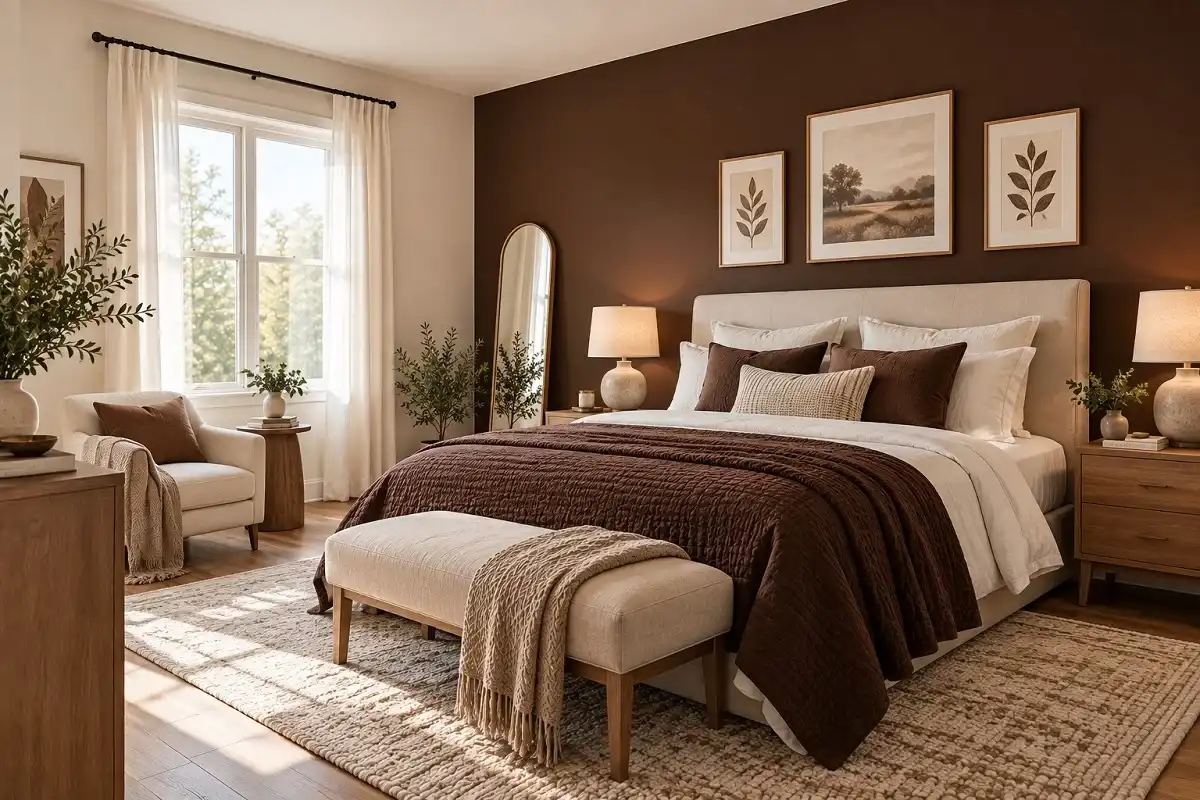
A chocolate brown accent wall is one of the easiest ways to use this color without making the whole bedroom dark. Place it behind the bed so the deepest shade creates a clear focal point.
Keep the remaining walls warm white, ivory, or a pale neutral. Light bedding and a softer rug will add contrast, while a wood nightstand can connect the darker wall to the rest of the room.
This approach works especially well when you like chocolate brown but are not ready to paint all four walls.
2. Pair Chocolate Brown With Cream
Chocolate brown and cream make a simple bedroom pairing because each color does a different job. Brown gives the room depth, while cream keeps the darker shade from taking over.
Try chocolate on the wall or bed frame, then use cream for the duvet, curtains, or upholstered furniture. An ivory throw can add another light layer without introducing a completely different color.
| 🍫 Chocolate Brown | → | 🥛 Cream | → | 🤍 Ivory | → | Warm Beige |

3. Layer Several Shades of Brown
A brown bedroom does not need to rely on one exact shade. Mixing chocolate, cocoa, caramel, tan, and walnut can give the room more depth while keeping the palette connected.
The easiest method is to place the darkest brown on one large surface and use lighter browns on smaller pieces. A chocolate headboard, caramel throw, tan rug, and walnut nightstands can work together without looking like a matching furniture set.
Texture matters here. Using slightly different materials helps each brown tone remain visible instead of blending into one flat block of color.

4. Make the Headboard the Brown Statement
You do not have to paint the walls to bring chocolate brown into a bedroom. A large brown headboard can provide enough color to anchor the bed while leaving the walls light.
Velvet gives brown a softer appearance, while leather or leather-look upholstery feels cleaner and more structured. Linen-look fabric is a quieter choice for a relaxed room.
This idea also makes sense for renters because the main color comes from furniture rather than permanent wall changes.

5. Soften Chocolate Brown With Beige
Beige creates a gentler transition than bright white. Pairing it with chocolate brown works well when you want a bedroom that feels calm rather than high-contrast.
Use beige on a rug, curtains, upholstered bench, or larger bedding pieces. Then bring chocolate brown into the bed, wall, or furniture. Oatmeal and sandy neutrals can add another layer without making the palette busy.
Keep enough difference between the shades so the room does not become one muddy brown tone.

6. Use Warm White for a Cleaner Modern Look
Warm white can make chocolate brown look sharper and more modern. It gives the dark color breathing room while keeping the overall palette softer than a stark black-and-white scheme.
A simple setup could include warm white walls, crisp neutral bedding, a chocolate brown bed, and one or two dark wood pieces. Keep accessories limited so the contrast remains the main design feature.
Best Colors to Pair With Chocolate Brown
| Color | What It Adds | Best Use |
|---|---|---|
| Cream | Soft contrast | Bedding, curtains |
| Beige | Tonal warmth | Rugs, upholstery |
| Sage | Earthy contrast | Pillows, textiles |
| Dusty blue | Cool balance | Throws, artwork |
| Burgundy | Deeper mood | Small accents |
| Brass | Warm highlight | Lamps, hardware |

7. Bring in Sage or Olive Green
Muted green gives chocolate brown an earthy direction. Sage is the softer choice, while olive creates a deeper and slightly moodier palette.
You do not need much green. A sage throw, two pillows, a small chair, or muted artwork may be enough. Natural wood and woven materials can connect the two colors without adding another strong accent.
For a richer take on green, emerald can create a stronger contrast than sage. The same balance used in emerald green bedroom ideas applies here: choose one dominant deep color and give it enough neutral space.

8. Cool the Palette With Dusty Blue or Navy
Brown naturally leans warm, so a little blue can bring balance. Dusty blue keeps the room soft, while navy creates a stronger contrast against chocolate walls or furniture.
Use blue selectively through pillows, a throw, curtains, or artwork. Keeping the largest textiles neutral prevents the room from turning into a strict brown-and-blue color scheme.
Dusty blue is particularly useful when you want brown to feel relaxed rather than rustic.

9. Add Brass or Gold Accents
Small metallic details can break up large areas of brown. Brass works especially well because its warm finish sits comfortably beside chocolate, walnut, and caramel tones.
Try it on bedside lamps, wall sconces, drawer handles, or a thin mirror frame. Two or three repeated metallic details usually look more intentional than filling the room with gold accessories.
Keep the finish restrained. The goal is to catch a little light, not make metallic decor the main feature.

10. Use Chocolate Brown Through Bedding
Bedding is a practical place to test chocolate brown before making permanent changes. A duvet, quilt, blanket, or pair of pillows can introduce enough of the color to change the mood of the room.
Instead of making every layer brown, break it up. Try a chocolate duvet with ivory sheets, or keep the main bedding cream and fold a deep brown throw across the foot of the bed.
This also makes the color easy to change later if you want a lighter seasonal look.

11. Mix Chocolate Brown With Natural Wood
Natural wood fits easily into a chocolate brown bedroom, but avoid matching every wood piece to the exact shade of the walls or bedding. Slight tonal differences make the room more interesting.
Walnut can reinforce a deeper palette, while medium oak gives the room a lighter break. A wood bed, nightstands, bench, or dresser is usually enough to introduce the material.
Keep some lighter fabric between dark wood and dark brown surfaces. That separation helps both materials stand out.

12. Add Texture So Brown Does Not Look Flat
A mostly neutral room can feel unfinished when every surface has the same texture. Chocolate brown benefits from mixing smooth, soft, and woven materials because those differences become visible even when the colors are similar.
Combine linen bedding with a wool throw, a bouclé chair, and a woven or jute-style rug. You do not need every texture at once; three or four materials are enough to give the bedroom depth.
How to Layer a Chocolate Brown Bedroom
| 1. Base | Chocolate brown wall, bed, or bedding |
| ↓ | |
| 2. Light Layer | Cream, ivory, or warm white |
| ↓ | |
| 3. Texture | Linen, wool, velvet, or bouclé |
| ↓ | |
| 4. Natural Material | Wood, jute, or woven fibers |
| ↓ | |
| 5. Accent | Sage, blue, or a small amount of brass |

13. Keep a Modern Chocolate Brown Bedroom Simple
Chocolate brown does not have to make a bedroom look traditional. A limited palette and clean furniture shapes can push it in a much more modern direction.
Choose one strong brown surface, such as a low upholstered bed or feature wall. Pair it with warm neutral bedding, uncluttered nightstands, simple lamps, and artwork with plenty of open space.
Avoid filling every empty surface. In a modern brown bedroom, the contrast between the darker color and quieter surroundings does much of the work.

14. Make Chocolate Brown Work in a Small Bedroom
Chocolate brown can work in a small bedroom, but placement matters. Instead of wrapping every surface in a deep shade, concentrate the color behind the bed or on one major piece of furniture.
Keep the bedding light and choose a pale or medium-tone rug. Slim bedside tables, raised furniture, and simple window treatments can also reduce visual weight.
Good lighting is especially important. Natural daylight should be allowed into the room during the day, while more than one light source can keep dark corners from disappearing at night.
Small Chocolate Brown Bedroom Formula
| ONE | Dark focal surface |
| + | Light bedding |
| + | Pale or medium-tone rug |
| + | Slim furniture |
| + | Good natural and artificial light |
| = | A cozy room without unnecessary visual weight |

15. Go Moody With a Luxury Chocolate Brown Bedroom
If the room receives enough light, you can take chocolate brown much further. Deep brown walls paired with an upholstered bed and layered neutral bedding can create a darker, more enclosed bedroom without relying on lots of decoration.
Dark wood works well in this setting, while a small amount of brass can reflect warm light. Add bedside lamps or wall sconces so the room has several softer light sources after sunset.
The luxury effect should come from material choices and balance rather than excessive decor. Good fabric, substantial bedding, warm lighting, and a few well-chosen details are more effective than filling the room with shiny accessories.

How to Keep a Chocolate Brown Bedroom From Feeling Too Dark
Chocolate brown absorbs more visual light than cream or pale beige, so a darker bedroom needs contrast. You do not necessarily need to use less brown; you need to decide where the lighter surfaces will sit.
Start with the bed because it takes up a large part of the room. Cream, ivory, or warm white bedding can immediately break up a dark wall. A lighter rug can do the same job at floor level.
Window treatments matter too. If privacy allows, choose curtains that can open fully during the day rather than permanently blocking part of the window.
Simple Lighting Plan for a Brown Bedroom
| Situation | What Helps |
|---|---|
| ☀️ Daytime | Natural light and curtains that open fully |
| 🌥️ Low-light room | Lighter bedding, rug, and larger pale surfaces |
| 💡 Evening | Bedside lamps or wall sconces |
| ✨ Overall | Several softer light sources instead of relying only on one ceiling light |
Mirrors can also help move available light around the room, but placement matters more than simply adding several mirrors. Position one where it can reflect a window or a lighter part of the bedroom.
Which Chocolate Brown Bedroom Idea Should You Try?
You do not need to redesign the whole room to use chocolate brown. For the smallest change, start with bedding, a throw, or a headboard. An accent wall gives the color more impact without committing every wall to a dark shade.
If you prefer an earthy room, combine brown with sage and natural wood. Cream and warm white are better choices when brightness is the priority, while dusty blue introduces cooler contrast. For a darker look, layer chocolate walls with textured fabrics, dark wood, and carefully placed warm lighting.
The best choice depends on the room you already have. Look at its natural light, floor color, furniture, and existing textiles before deciding how much chocolate brown to add.
Final Thoughts
The best chocolate brown bedroom ideas use the color with purpose rather than covering every available surface. A single dark wall can become a focal point, while bedding, wood, texture, or furniture can introduce brown in smaller amounts.
More importantly, give the darker shade something to work against. Cream and warm white bring brightness, beige creates a softer tonal look, sage adds an earthy note, and dusty blue can cool the palette. Texture and layered lighting help finish the room without adding unnecessary colors.
Ready to try chocolate brown in your bedroom? Start with one change, such as a brown accent wall, new bedding, or a textured headboard. Pair it with a lighter neutral and build the rest of the room slowly until the balance feels right.
For more inspiration, explore other bedroom color ideas to find a palette that fits your space and style.