
Twin Cities Window Replacement: Costs and Hiring Checklist
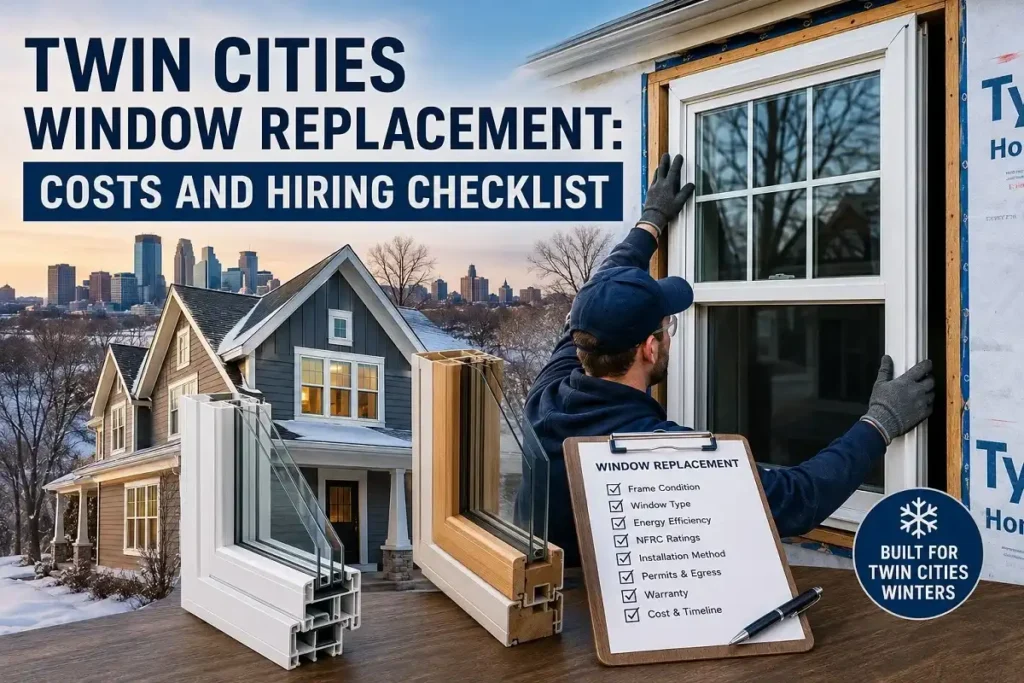
Twin Cities window replacement is not just a choice between vinyl, wood, and fiberglass. A good result depends on the existing frame, winter performance, water control, installation method, and the details hidden inside the quote.
That is why two estimates for the same house can differ by thousands of dollars. One may cover an insert window placed inside a sound frame. The other may include full-frame removal, new flashing, insulation, trim, and repairs to hidden rot.
I would compare the scope before comparing the total. A low number is not useful when the quote leaves the most important work undefined.
Best for sound frames Insert replacement
Best for damaged frames Full-frame replacement
Key cold-climate rating U-factor
Table of Contents
- Start With the Frame, Not the Window Brand
- What Twin Cities Weather Demands From a Window
- Read the NFRC Label Before Comparing Glass Packages
- Wood, Vinyl, and Fiberglass in This Climate
- Permit and Egress Questions to Ask Before Ordering
- How to Read a Window Replacement Quote
- What Window Replacement Usually Costs
- What Twin Cities Homeowners Say Goes Wrong
- How to Find the Best Window Company for Your Home
- Seven Questions to Ask Recent Local References
- Separate the Product Warranty From the Installation Warranty
- Red Flags That Matter More Than a Sales Discount
- Use a One-Page Bid Scorecard
- A Better Way to Compare Three Estimates
Start With the Frame, Not the Window Brand
An insert window keeps most of the old frame in place. It usually costs less, causes less disruption, and preserves interior and exterior trim. The trade-off is a slightly smaller glass area and no access to concealed damage around the opening.
Full-frame work removes the unit down to the rough opening. It is the better choice when the sill is soft, the frame is out of square, the opening leaks, or a previous installation was poorly flashed. It also gives the installer a chance to correct insulation and water-control problems.
Do not assume every window in a house needs the same method. A sheltered upper-floor opening may be suitable for an insert, while a weather-beaten lower window needs full-frame work.
Replacement may not be the first answer either. Sound older wood frames can sometimes be repaired, weather-stripped, reglazed, or fitted with storm windows. Before accepting a whole-house proposal, ask one contractor who performs repairs—not only replacements—to inspect the worst openings. That second opinion can prevent usable windows from being removed simply because replacement is the only service a salesperson offers.
What Twin Cities Weather Demands From a Window
Minnesota winters make heat loss and interior condensation easy to notice. The U-factor measures how readily the whole window transfers heat. A lower number means better resistance to heat flow. Compare whole-unit ratings rather than glass-only claims.
Solar heat gain coefficient, or SHGC, describes how much solar heat enters through the window. The best balance depends on orientation, shade, and room use. A sunny south-facing room may benefit from winter heat, while a west-facing bedroom may need stronger solar control.
Air leakage matters too. A high-performance unit can still feel drafty if the rough opening is poorly sealed. Ask how the crew will insulate the gap, protect the sill, connect flashing to the wall system, and seal the exterior without trapping water.
Read the NFRC Label Before Comparing Glass Packages
The NFRC label gives whole-window ratings for U-factor, solar heat gain, visible light, air leakage, and condensation resistance. That makes it more useful than a sales claim about the number of glass panes.
Hennepin County sits in the ENERGY STAR Northern Climate Zone. Current guidance points shoppers toward a U-factor of 0.22 or lower for the prescriptive Northern-zone path. Treat that as a screening point, then balance solar gain with the room’s direction and shading.
Keep a copy of the label or certified product data with the contract. It prevents a quoted glass package from being replaced with a different configuration at installation.
Wood, Vinyl, and Fiberglass in This Climate
Vinyl is common because it is affordable and needs little exterior maintenance. Frame quality varies, so compare reinforcement, corner construction, glass package, warranty terms, and dark-color limits rather than treating all vinyl windows as equal.
Fiberglass frames are slim, stable, and well suited to temperature swings. They often cost more than basic vinyl but may preserve more glass area and accept darker finishes with less movement.
Wood interiors offer a warm look and work well in older homes. Exterior cladding reduces maintenance, but joints, sills, and trim still need correct flashing. I would not choose wood solely for appearance without checking how the exterior assembly sheds water.
Permit and Egress Questions to Ask Before Ordering
Permit rules differ by city. Some local jurisdictions require a permit when the frame is replaced, the opening changes, or structural work is involved. Confirm the rule with the city where the property is located instead of relying on a contractor’s general statement about the metro area.
Bedroom windows may also need to meet emergency escape and rescue requirements. Replacing an old unit with a thicker frame can reduce the clear opening even when the outside dimensions remain the same. Ask for the proposed clear opening before ordering.
Homes built before 1978 can trigger lead-safe work practices when painted surfaces are disturbed. The quote should explain containment and cleanup rather than treating this as an unexpected add-on after work begins.
How to Read a Window Replacement Quote
| Quote item | What should be clear |
|---|---|
| Installation method | Insert or full-frame for each opening |
| Window specification | Series, frame, glass package, U-factor, SHGC, and air leakage |
| Water control | Sill pan, flashing method, exterior sealant, and trim work |
| Interior finish | Casings, jamb extensions, paint, stain, and wall repair |
| Contingencies | How rot, framing damage, or code upgrades will be priced |
| Protection | Permits, cleanup, product warranty, and labor warranty |
For a wider cost comparison, see our DIY versus professional window installation cost guide. It helps separate product cost from the labor and finish work in a full proposal.
A quote that says “replace ten windows” is not detailed enough. Model numbers matter because manufacturers sell several product lines under the same brand. Written installation details matter because the best unit can fail when the opening is not prepared correctly.
What Window Replacement Usually Costs
There is no dependable single price per window for the Twin Cities. Size, operating style, frame material, glass, trim, access, lead-safe procedures, and hidden damage all change the cost. A small vinyl insert and a full-frame wood bay window are not comparable jobs.
Ask each company to separate product, labor, permits, disposal, interior finish, and allowances. If one bid is far lower, identify the missing scope. If it is much higher, look for better glass, full-frame work, extensive trim, or a stronger warranty before assuming it is overpriced.
What Twin Cities Homeowners Say Goes Wrong
Local homeowner discussions show quote differences of tens of thousands of dollars for what initially sounds like the same project. Closer inspection often reveals different window lines, insert versus full-frame work, patio doors, custom sizes, trim, lead-safe procedures, glass packages, and warranty coverage.
The complaints are just as useful as the prices. Homeowners describe incorrect measurements, damaged siding, unfinished trim, weak insulation around old weight pockets, long service delays, and charges that changed after signing. Others report that a well-installed mid-priced window stayed comfortable while a premium product installed poorly remained drafty.
These comments should not be treated as a permanent ranking of local companies. Crews, ownership, product lines, and service quality change. Use repeated experiences to build questions, then verify the company handling your own job.
How to Find the Best Window Company for Your Home
- Define the problem first. List rot, drafts, failed glass seals, difficult operation, water staining, noise, and rooms that feel cold. A company should diagnose these issues before recommending a product.
- Build a mixed shortlist. Include an established local installer, a dealer that carries more than one brand, and a manufacturer-affiliated company if you want that option. Add a restoration specialist when older wood windows may be repairable.
- Verify Minnesota credentials. Search the business name in the Minnesota Department of Labor and Industry license lookup. Match the legal name and license number to the proposal, then request a current insurance certificate.
- Compare the installer, not only the showroom sample. Ask who measures, who installs, whether the crew is employed or subcontracted, and who returns for service. Measurement and water-management errors cannot be fixed by a better glass package.
- Request the same scope from every bidder. Give each company the same opening list and ask for separate prices for inserts, full-frame replacements, patio doors, trim, permits, lead-safe work, and likely repairs.
- Check recent jobs that resemble yours. A company experienced with vinyl inserts in newer homes may not be the best fit for a 1920s house with wood trim, old weight pockets, stucco, brick, or fragile cedar siding.
Seven Questions to Ask Recent Local References
- Did the final price match the signed scope?
- Were measurements correct on the first order?
- Did the crew protect siding, floors, landscaping, and interior trim?
- Were gaps insulated and exterior water-control details completed neatly?
- Did the windows operate, lock, and seal correctly at the final walkthrough?
- How did the company respond to service or warranty requests?
- Has the home felt less drafty through at least one winter?
Ask for projects completed one to three years ago, not only last month. A fresh installation can look clean before the first freeze-thaw cycle, wind-driven rain, or warranty call tests the work.
Separate the Product Warranty From the Installation Warranty
A “lifetime warranty” may cover glass or frame components while excluding labor, finish damage, service travel, accidental breakage, or ownership transfers. Get both the manufacturer warranty and the installer’s workmanship warranty before signing.
The contract should identify who handles a failed seal, leaking opening, broken hardware, cracked trim, or glass defect. If the seller, manufacturer, and installer are different companies, make sure responsibility does not disappear between them.
I would also ask how long replacement parts normally take and whether the company services products it no longer sells. A long warranty has limited value if no one accepts the service request.
Red Flags That Matter More Than a Sales Discount
- The salesperson will not identify the exact window series.
- Every opening is priced the same without inspection.
- The quote does not say insert or full-frame.
- Permit responsibility is unclear.
- Rot repair has no written rate or approval process.
- The warranty sounds broad but excludes installation labor.
- A temporary discount requires an immediate signature.
I would also ask who performs the work. A strong salesperson does not guarantee a strong installation crew. Confirm whether installers are employees or subcontractors and who handles service after the final payment.
Use a One-Page Bid Scorecard
| Compare | What to record |
|---|---|
| Company | Legal name, license, insurance, installer model, and recent similar jobs |
| Opening | Insert or full-frame, measurements, operating style, and tempered or egress requirements |
| Product | Manufacturer, exact series, frame, glass package, NFRC ratings, and color |
| Finish | Insulation, flashing, exterior trim, interior casing, paint or stain, and siding repair |
| Protection | Permit, lead-safe work, cleanup, product warranty, labor warranty, and service contact |
| Price | Base amount, allowances, optional upgrades, payment schedule, and quote expiration |
A Better Way to Compare Three Estimates
Use the same window list and requested scope for every bidder. Mark which frames appear sound, which rooms have comfort problems, and where water staining is visible. Then compare like with like.
Choose the proposal that explains the opening, product, installation, finish, and responsibility most clearly. The goal is not the lowest sticker price. It is a window system that controls air and water, performs through Minnesota winters, and can be serviced if something goes wrong.