
How to Fix a Cracked Mirror: A Complete DIY Repair Guide
You can fix a cracked mirror at home using a windshield repair kit or two-part epoxy resin. Clean the surface, apply a stabilizer film over the crack, inject resin into the gap, let it cure, then scrape off any excess. This method works best on hairline cracks and small chips under 6 inches.
Larger cracks or shattered mirrors need professional help or full replacement.
Can You Actually Fix a Cracked Mirror?
Yes, you can, but only if the damage is minor.
A small crack or chip does not mean your mirror is finished. With the right materials and a bit of patience, you can stop the crack from spreading and reduce its appearance significantly. The result may not be perfect, but it will be stable and far cheaper than buying a new mirror.
The key is acting fast. The longer a crack sits, the more dirt and moisture work their way into the gap, making repairs harder and less effective.
That said, not every crack is fixable. Shattered glass, deep structural breaks, or cracks that spread across most of the surface are beyond DIY repair. Knowing the difference before you start saves you time and keeps you safe.
Types of Cracks and What Each One Means
Before picking up a repair kit, take a close look at the damage. The type of crack tells you what approach to take.
Hairline crack: A thin, shallow line across the glass surface. Usually caused by impact or temperature stress. This is the easiest type to repair and the best candidate for a DIY fix.
Edge crack: A crack that starts at the border of the mirror and moves inward. These can be tricky because the glass is more vulnerable at the edges. Epoxy can stabilize them, but the result depends on how far the crack extends.
Spider crack: A series of lines spreading out from a central impact point, like a web. You can fill the main break, but the spread of smaller cracks may still remain visible after repair.
Chip or pit: A small piece of glass that has broken off, leaving a divot in the surface. These respond well to resin injection.
Shattered or multi-piece break: When the mirror has broken into several pieces or large fragments, repair is not realistic. Replacement is the only safe option.
According to ACE Decor Bath (2025), small chips and thin surface-level cracks are the best candidates for DIY repair, as they typically remain stable if addressed early.
What You Need Before You Start
You do not need professional tools to fix a minor mirror crack. Most of what you need is available at a local auto supply store or online for under $20.
Materials list:
- Windshield repair kit (contains resin, stabilizer film, and a syringe)
- Two-part epoxy adhesive (alternative to windshield kit)
- Clean microfiber cloth
- Dish soap and warm water
- Painter’s tape
- Razor blade or glass scraper
- Safety gloves
- Safety glasses
- A toothpick or fine-tip applicator
iFixit’s repair guide confirms that a standard windshield repair kit contains everything needed for mirror crack repair, including epoxy resin, stabilizer film, and a curing mechanism, and the process requires no special skills.
The windshield kit approach works because mirror glass and windshield glass behave similarly when cracked. The resin is designed to bond with glass on a molecular level, filling the gap and preventing moisture or debris from entering.
How to Fix a Cracked Mirror: Step-by-Step
This method uses a standard windshield repair kit, which is the most reliable option for hairline cracks and chips.
Step 1: Put on your safety gear. Before touching the mirror, put on gloves and safety glasses. Even small cracks can have sharp edges. If the mirror is framed, remove it carefully from the wall before working.
Step 2: Clean the surface thoroughly. Mix a small drop of dish soap with warm water. Dampen a microfiber cloth and wipe the entire mirror surface, paying close attention to the cracked area. Remove any dust, moisture, or loose glass fragments. Use a razor blade carefully to scrape out debris lodged in the crack. Let the mirror dry completely. Any residue left behind will weaken the bond.
Step 3: Apply painter’s tape around the crack. Tape off the area around the crack to protect the mirror frame and keep the repair tidy. Leave only the cracked section exposed.
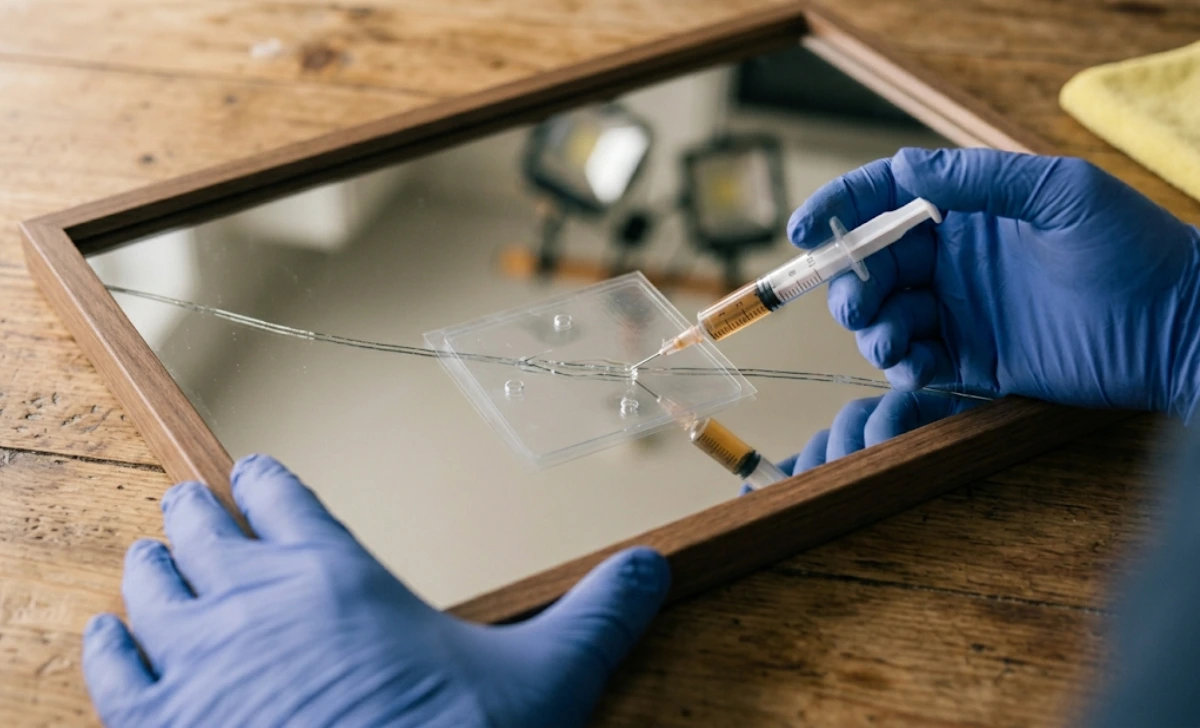
Step 4: Apply the stabilizer film. Peel the adhesive backing off the stabilizer film that came with your kit. Press it firmly over the crack, starting at one end and working to the other. Smooth out any air bubbles with your fingertip. The film holds the resin in place during application.
Step 5: Inject the epoxy resin. Fill the syringe from the kit with epoxy resin. Gently lift the edge of the stabilizer film and slide the syringe tip beneath it. Press the plunger slowly to inject resin directly into the crack. Work along the full length of the crack. The goal is to fill the gap, not coat the surface on top.
Step 6: Tap to remove air bubbles. Lightly tap the back of the mirror frame or the glass itself to help any trapped air rise to the surface. You can also gently press the film with a fingertip to push resin deeper into the crack.
Step 7: Let the resin cure. Follow the time listed on your kit’s instructions. Most resins take 20 to 60 minutes to cure in natural light. Some kits include a UV lamp to speed this up. Do not touch or move the mirror during this time.
Step 8: Remove the film and scrape excess resin. Once cured, peel off the stabilizer film slowly. Use a razor blade held at a flat angle to scrape away any resin that sits above the glass surface. Wipe with a clean cloth.
Step 9: Inspect the repair. Look at the mirror from different angles in good lighting. The crack should appear significantly less visible. For hairline cracks, the result can be nearly invisible. For wider cracks, some shadowing may remain.
Alternative Methods for Minor Damage
If a windshield kit is not available, there are two other approaches worth knowing.
Clear nail polish: Apply a thin coat of clear nail polish over a very small hairline crack. Let it dry, then apply a second coat if needed. This is a temporary fix that keeps moisture out and slows the spread. It does not restore the mirror’s appearance. Best used as a short-term solution until a proper repair kit is available.
Two-part epoxy adhesive: Products like Loctite or similar glass-bonding epoxies work well on chips and small breaks. Mix the two components as directed, apply with a toothpick along the crack, smooth the surface, and let cure. This creates a strong bond and works on slightly larger cracks than nail polish, though it can leave a faint line visible on close inspection.
When Replacing the Mirror Makes More Sense
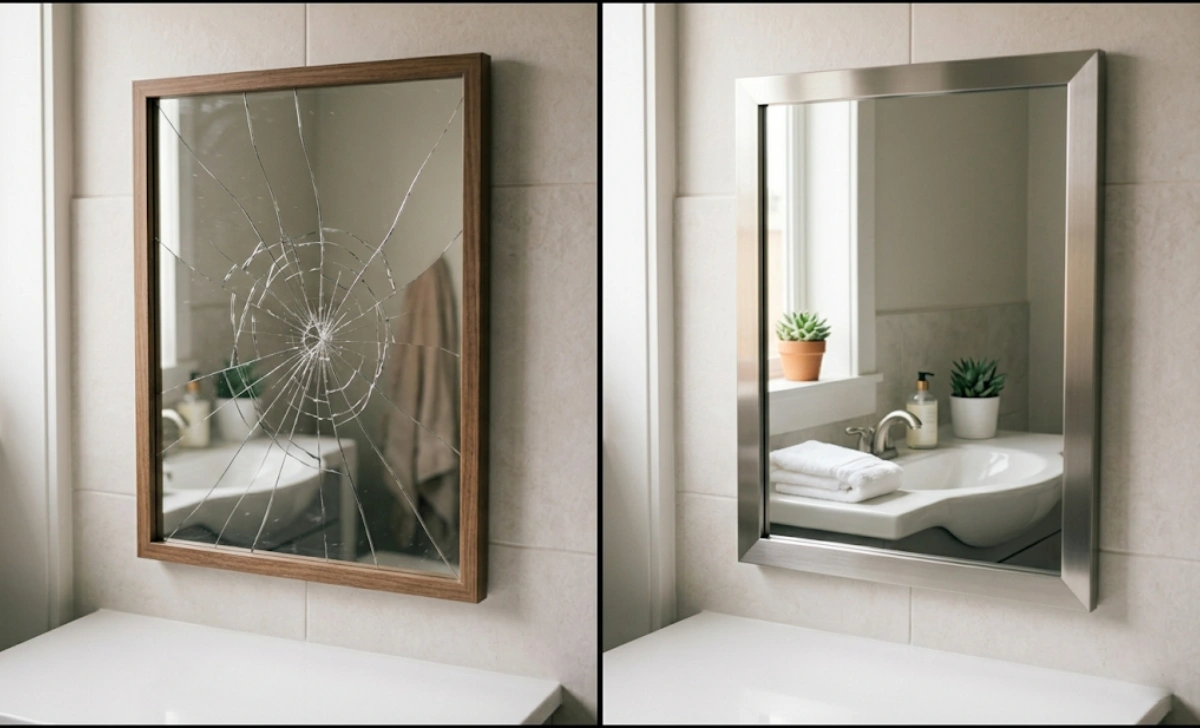
Some damage is not worth trying to repair. In those cases, the cost, effort, and safety risk involved make replacement the better choice.
Consider replacing the mirror if:
- The crack is longer than 6 to 8 inches
- The mirror has broken into multiple pieces
- There are spider cracks covering a large portion of the surface
- The mirror backing (the reflective coating) has separated from the glass
- The frame is also damaged and cannot hold the glass securely
- The mirror is in a high-traffic area where structural integrity matters (such as a bathroom wall mirror or door mirror)
According to HomeAdvisor (2025), professional mirror resilvering costs vary by size and condition, and in many cases replacing a standard mirror is more cost-effective than professional repair unless the piece has significant sentimental or antique value. Before buying a replacement, it helps to have a clear idea of your home’s overall aesthetic. Reviewing different interior design styles beforehand can help you choose a mirror that works with your existing decor rather than against it.
How Much Does Mirror Crack Repair Cost?
Costs vary depending on whether you do it yourself or hire a professional.
DIY repair cost: A standard windshield repair kit runs between $10 and $25 at most auto supply stores or online. This covers most minor repairs and can be used more than once.
Professional repair cost: According to Costowl, professional mirror scratch and crack repair typically runs no more than $50 per mark for minor damage. Glass replacement costs around $10 to $20 per square foot, depending on mirror size and type.
Full mirror replacement: Buying a new mirror ranges widely based on size, style, and where you shop. For bathroom or decorative mirrors, expect to pay anywhere from $30 for a basic replacement to several hundred dollars for a framed or custom piece. If you are shopping for something that suits a specific wall or room layout, browsing a curated selection like Wallapix can help you find the right size, shape, and finish without the guesswork.
If the mirror has antique value, professional resilvering is worth exploring. HomeAdvisor recommends comparing quotes from at least two or three local glass repair shops before committing, and bundling services (such as frame repair with resilvering) for a better rate.
Safety and Disposal: What to Do with Broken Glass
If any fragments have broken off your mirror, handle them carefully.
Wrap sharp pieces in several layers of newspaper or thick cardboard before placing them in a bag. Label the bag clearly as broken glass. Standard recycling programs do not accept mirrors, since the reflective coating causes the glass to melt at a different rate than bottles and jars.
Check your city or county waste website for guidance. The EPA (2025) notes that many local sanitation departments provide specific instructions for wrapping and labeling sharp glass items to protect waste workers. Some areas have building-material recyclers that accept construction glass, including mirrors.
If you enjoy working with your hands, broken mirror pieces can be repurposed into mosaic art, garden decorations, or picture frames rather than sent to landfill.
FAQs
Can you fix a cracked mirror permanently?
For small hairline cracks, a well-applied epoxy resin repair can last for years. The crack may still be faintly visible, but the glass will be sealed and stable. Larger cracks are harder to repair permanently and may need replacement.
Does clear nail polish really work on mirror cracks?
It works as a short-term solution for very small hairline cracks. It seals the gap and prevents moisture from entering. It does not restore the mirror’s appearance and is not a substitute for proper resin repair.
Is it safe to leave a cracked mirror on the wall?
A small, stable crack that is not spreading is generally safe in the short term. However, a mirror with a growing crack, multiple cracks, or structural damage should be repaired or removed promptly. A heavy mirror that fails while mounted poses a serious injury risk.
How long does mirror crack repair take?
The hands-on part of the job takes about 20 to 30 minutes. Curing time adds another 20 to 60 minutes, depending on the product and conditions. Avoid placing the mirror in direct sunlight during the curing process, as heat can cause the resin to cure too quickly and form bubbles.
When should I call a professional instead of doing it myself?
Call a professional if the crack is longer than 8 inches, if the mirror is heavy or fixed to the wall in a complex way, if the backing has separated, or if you are not comfortable handling broken glass. A local glass repair specialist can assess the damage and give you a quote quickly. If you are planning a wider room update at the same time, it is also worth understanding what an interior design professional can bring to the process — from mirror placement to overall room composition.