Small Entryway Ideas: Transform Your Tight Space
Small entryways demand smart design choices. Use vertical storage, mirrors to expand space, a focused colour palette, and multipurpose furniture. Keep the area clutter-free with hooks, floating shelves, and built-in cubbies. Good lighting and a single statement piece create warmth without overwhelming the room.
Why Your Small Entryway Matters
Your entryway is the first impression visitors get of your home. Even a tiny space sets the tone for the rest of your interior. According to the National Association of Home Builders, homeowners spend an average of 45 seconds in an entryway before moving to the main living area, making those seconds count for style and function.
A cramped entryway often feels chaotic. Coats pile up. Shoes scatter. Bags have nowhere to go. The problem isn’t lack of space; it’s lack of strategy. With the right approach, even a 4×6-foot entryway can feel intentional and inviting.
This guide gives you specific, actionable ideas to make your small entryway work harder for you.
Maximise Vertical Space
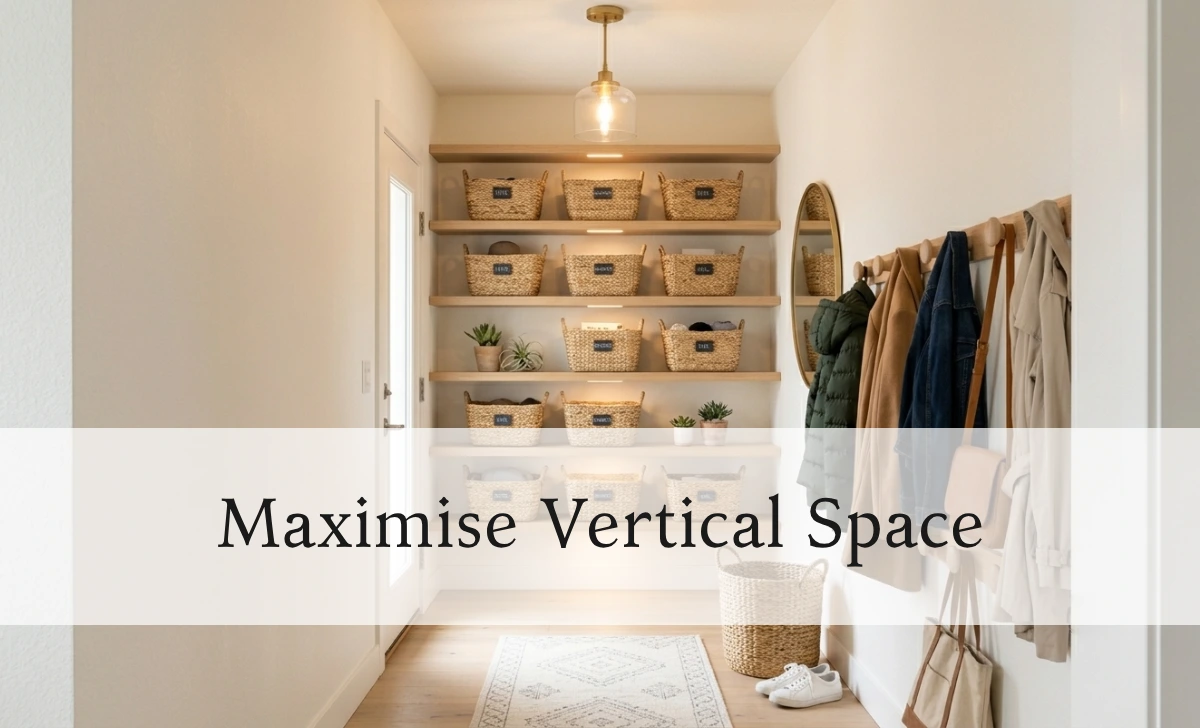
When floor space is limited, look up. Walls are your best asset in a small entryway. Install floating shelves from floor to ceiling to store baskets, books, or decorative items without eating into square footage.
Hooks are non-negotiable. Mount them at varying heights if you have family members of different sizes. A single wall of hooks can hold coats, bags, scarves, and umbrellas. Wall-mounted coat racks with integrated shelves combine storage and display in one compact piece.
Over-the-door organisers work well for narrow entryways. They hold shoes, small accessories, or cleaning supplies without taking up floor real estate. If your door swings inward, make sure the organiser doesn’t interfere with the door’s full opening.
Built-in cubbies or a shallow closet system can be a game-changer. Even adding a single narrow shelving unit to a closet—rather than hanging everything on a rod—gives you three times the storage capacity in the same footprint.
Use Mirrors to Expand the Space
A well-placed mirror doubles the visual size of a small entryway. Mirrors reflect light and create depth, making even a 3×3-foot corner feel airy. Choose a mirror at least 24 inches wide for noticeable impact.
Position the mirror across from a light source. Placing it opposite a window or lamp bounces light throughout the room. Lean a large mirror against the wall rather than hanging it for a flexible, less permanent look.
Consider a mirrored console table. It serves as a functional surface for keys, mail, and a lamp, while the mirrored base visually expands the space. Interior designer Sarah Barnard notes that mirrored surfaces “are one of the easiest ways to make a small space feel twice as large without major renovation.”
Avoid oversized decorative frames around mirrors in tight spaces. Keep it simple. A thin frame or frameless design feels less heavy than ornate wood or metal.
Choose a Focused Colour Palette
Light colours make small spaces feel larger. White, soft grey, pale blue, or warm cream walls create an open, airy backdrop. You can always add colour through accessories like a runner rug, throw pillows on a bench, or artwork.
If you prefer colour on walls, stick to one or two tones. Painting all four walls different colors splinters a small space visually. A single accent wall works only if the other three walls are neutral.
Keep larger pieces—the rug, furniture, door—in cohesive tones. A dark hardwood floor with charcoal furniture can work, but pair it with light walls so the room doesn’t feel boxed in.
Add personality through textiles and smaller items. A runner rug in a warm neutral with subtle pattern, throw pillows, or plants bring in colour and texture without overwhelming the space.
Invest in Small Entryway Furniture
Choose furniture that serves at least two purposes. A storage bench with hidden compartments provides seating and hides shoes or off-season items. A narrow console table can display decorative pieces on top and hold a drawer for keys and gloves underneath.
Furniture scale matters in tight spaces. Opt for pieces with thin legs rather than bulky bases. Legs create visual space between the furniture and floor, making the room feel less cramped. A sofa-sized bench would overwhelm a small entryway; a slim seating piece 36-42 inches wide is sufficient.
Avoid cabinets that stretch the full wall unless you have minimal floor space. A 24-30 inch wide cabinet with shelving above leaves room to move and prevents the space from feeling blocked.
A simple wooden ladder shelf (36 inches tall) leans against the wall and holds baskets, plants, or bags without requiring installation. For renters or those who move frequently, this is an adaptable solution.
Small Entryway Ideas for Storage
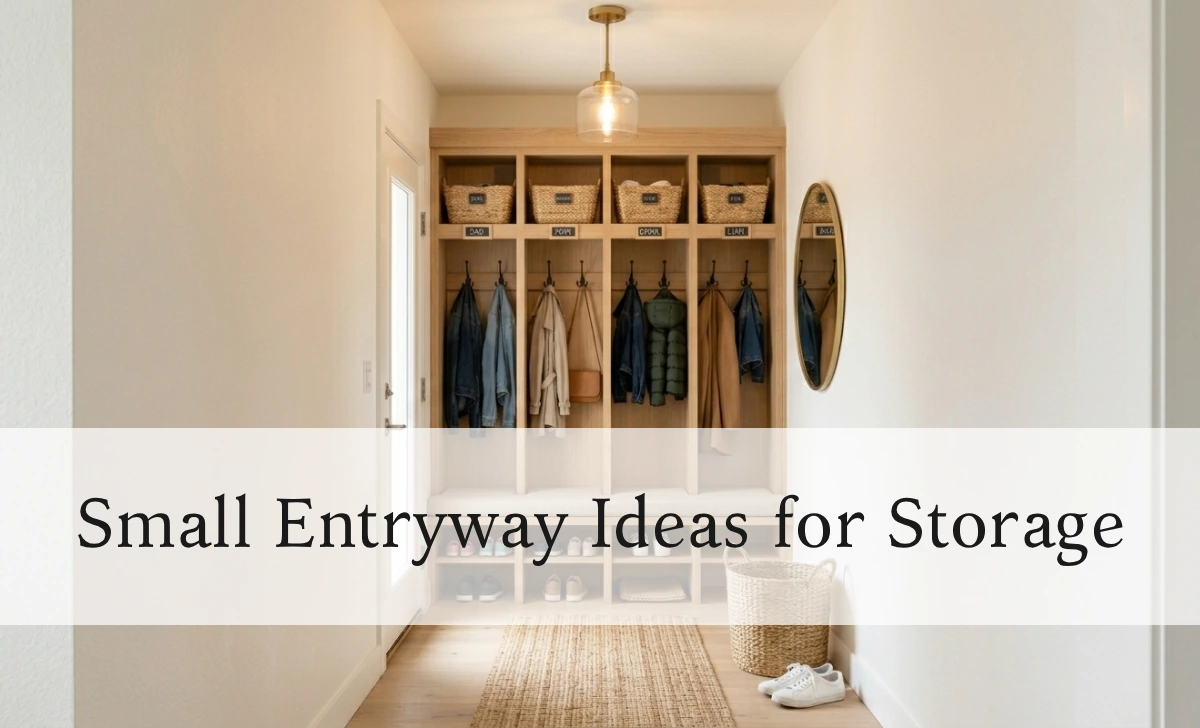
Baskets are essential. Woven baskets on shelves or under a console table corral clutter while adding texture and warmth. Label them: shoes, scarves, gloves, seasonal items. Clear labelling keeps family members accountable for organisation.
Pegboard systems are underrated. Mount a pegboard on one wall and add hooks, shelves, and bins in a custom arrangement. It’s adjustable, affordable, and works in modern and traditional interiors.
Stackable storage cubes can fit into corners or under a shelf. They hold shoes, winter accessories, or extra items and take up minimal floor space. Choose cubes with doors if you want to hide contents.
Use the back of your door. Over-the-door shoe organisers, coat racks, or thin shelving units maximise this overlooked real estate. Just ensure they don’t interfere with the door’s swing or closing mechanism.
Add Lighting That Works
Small entryways need good lighting. Dark corners feel cramped and unwelcoming. A flush-mount or semi-flush ceiling fixture provides ambient light without taking up space. If your entryway is very narrow, a single fixture centred on the ceiling is sufficient.
Add a table lamp on a console or shelf for layered lighting. Soft, warm light (2700K colour temperature) feels inviting. Avoid harsh, cold lighting that makes tiny spaces feel clinical.
Wall sconces flanking a mirror add visual interest and functional light. Install them 60-66 inches from the floor, 12-18 inches on either side of the mirror’s centre. This setup works beautifully in small entryways and requires no floor space.
If you don’t have a ceiling fixture, consider a plug-in pendant light or track lighting. These temporary solutions work well in rentals or as an interim update.
Small Entryway Ideas for Style
A single statement piece anchors the space without cluttering it. This might be a striking rug, an original piece of artwork, a sculptural vase, or a decorative mirror with an interesting frame. Choose one focal point and keep everything else supportive.
Plants bring life to an entryway. A tall plant in a corner works well. Hanging planters from a shelf or wall hook add greenery without eating floor space. Low-light plants like pothos or snake plants thrive in dimly lit entryways.
Keep décor minimal. Each item should have a purpose or bring you genuine joy. Excess décor makes tiny spaces feel cluttered, not cosy.
Incorporate natural materials like wood, rattan, or jute. These add warmth without requiring much visual real estate. A wooden bench, rattan basket, or jute rug creates character in a small footprint.
Common Small Entryway Mistakes to Avoid
Overstuffing shelves. Just because you have storage doesn’t mean you should fill every inch. Negative space makes a room feel intentional and organised.
Using dark colours throughout. While black or navy works as an accent, painting all walls dark will shrink your small entryway further.
Choosing furniture that’s too deep. A 24-inch console table works better than a 36-inch one in a small entryway. Every inch matters.
Ignoring the ceiling. If your entryway has 9 or 10-foot ceilings, capitalise on that vertical space with tall shelving or a high-mounted light fixture.
Neglecting the floor. A runner rug, tile work, or paint treatment can define the entryway and make it feel intentional rather than like a leftover corner.
Small Entryway Ideas for Renters
Renters face unique constraints: no permanent installations, limited paint options, and no wall damage allowed. Use command hooks and damage-free picture hangers. Mount floating shelves using heavy-duty adhesive strips rated for your items’ weight.
Lean furniture against walls rather than anchoring it. A tall ladder shelf, room divider, or leaning mirror creates function without commitment. Removable wallpaper works for one accent wall without landlord pushback.
Use a runner rug to define the space and protect the existing floor. Area rugs also hide stains or wear on hardwood or tile. Choose a non-slip rug pad to prevent tripping hazards.
Baskets, bins, and freestanding shelving units give you storage flexibility. When you move, you take them with you.
Real-World Examples of Small Entryway Ideas
A 4×5 foot entryway in a New York City apartment uses a 24-inch console table with a mirror above, pegboard to the right, and a woven storage basket underneath. The setup holds coats, keys, and shoes while the mirror doubles the visual space. Total investment: under 300 dollars.
A minimalist home uses floating shelves above a wooden bench. Three shelves hold rotating seasonal décor; the bench provides seating and shoe storage. Neutral tones and good lighting keep the 5×6-foot space feeling open.
A family entryway incorporates a wall of cubbies, each labelled with a family member’s name. Hooks hang inside each cubby for backpacks and coats. A narrow bench at the bottom provides seating for putting on shoes. This system keeps the space organised despite heavy foot traffic.
FAQs
What’s the best colour for a small entryway?
Light, neutral colours like white, soft grey, pale blue, or warm cream make small entryways feel larger. You can add colour through textiles, art, and accessories without overwhelming the room.
How do I store coats in a small entryway?
Wall hooks, pegboards, and over-the-door racks are your best options. A narrow coat closet with additional shelving multiplies storage capacity. Choose a slim coat rack if floor space is extremely tight.
Should I use a rug in a small entryway?
Yes. A runner rug defines the space, protects flooring, and adds warmth. Choose one in neutral tones to avoid further dividing a small room visually. A non-slip rug pad keeps it secure.
What furniture works best in a tiny entryway
A narrow console table (24-30 inches wide) with a mirror above, a slim storage bench, or a compact shelving unit work well. Prioritise pieces with thin legs and hidden storage to maximise function without bulk.
Can I make a very dark small entryway feel bigger
? Yes. Light-colored walls, strategic mirror placement, and good lighting are your tools. Even a dark-floored entryway feels larger with pale walls and reflected light from mirrors or lamps.
How do I organise a small entryway for a family?
Use labelled storage baskets, cubbies with assigned family members’ names, wall hooks at varying heights, and a shoe organiser. Vertical storage and consistent organization systems prevent chaos