Lipstick Plant Varieties: A Complete Guide for Home Growers
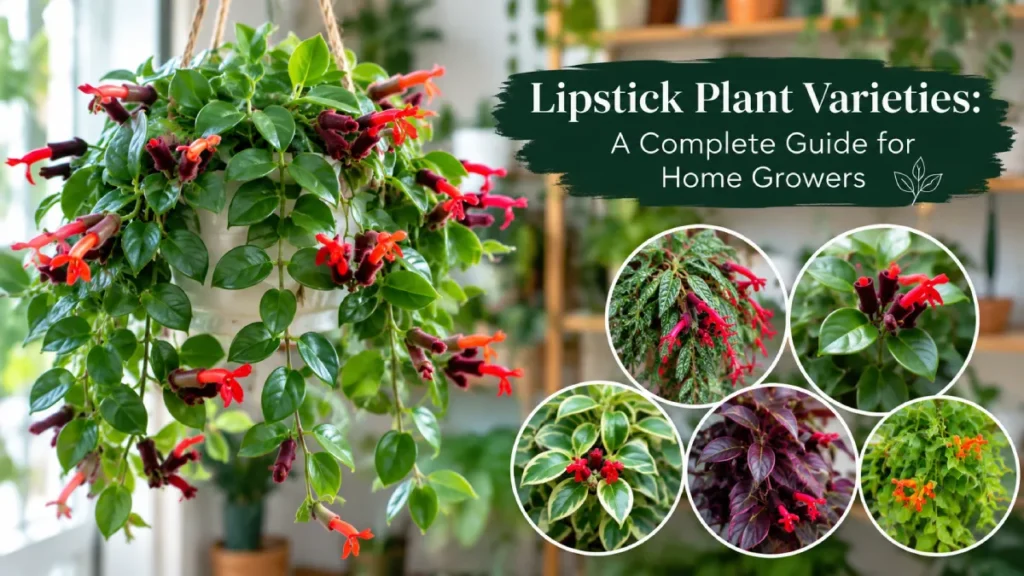
The lipstick plant (Aeschynanthus spp., pronounced ee-skin-AN-thus) is one of the most rewarding flowering houseplants you can grow indoors. It is named for its tubular blooms, which push out of dark, waxy calyxes exactly the way a lipstick rises from its tube.
With more than 185 species in the genus, plus a steady stream of hybrids, picking the right one can feel overwhelming. Below you will find 18 of the most popular varieties compared side by side, followed by a complete care guide and fixes for the problems growers actually run into.
What Is a Lipstick Plant?
A lipstick plant is a tropical, vining perennial in the Gesneriaceae family, the same family as African violets. It is native to the warm, humid forest canopies of Southeast Asia, particularly Malaysia, Indonesia, and the Philippines, where it grows as an epiphyte clinging to trees and rocks rather than rooting in the ground. That epiphytic habit is the single most useful thing to know about it: its roots are adapted to breathing freely, so dense, compacted soil is its worst enemy.
Indoors it grows as a hanging houseplant, with trailing stems that reach one to three feet.
Key characteristics include:
- Foliage: Glossy, waxy leaves — sometimes curled, twisted, or variegated.
- Flowers: Tubular blooms in red, orange, pink, or yellow, emerging from darker calyxes.
- Growth habit: Trailing in most varieties, upright in a few, ideal for hanging baskets or elevated shelves.
- Pet safety: Non-toxic to cats, dogs, and humans, though the sap can mildly irritate sensitive skin, so it is wise to wear gloves when taking cuttings.
Lipstick Plant Varieties at a Glance
Use this table to narrow down your shortlist, then read the full descriptions below for the details that separate similar-looking varieties.
| Variety | Bloom Color | Growth Habit | Difficulty |
|---|---|---|---|
| Mona Lisa | Red-orange | Trailing | Easy |
| Black Pagoda | Orange with red tips | Trailing | Easy |
| Rasta (Twister) | Red to orange | Compact trailing | Moderate |
| Variegata | Red | Trailing | Moderate |
| Mini Variegated | Red-orange | Compact trailing | Easy |
| Bolero Bicolor | Red-orange bicolor | Trailing, bushy | Moderate |
| Raspberry Ripple | Pink-red | Trailing | Moderate |
| Thai Pink | Pink | Trailing | Moderate |
| Pink Polka | Coral-pink | Long trailing | Moderate |
| Purple Star | Magenta-purple | Upright | Moderate |
| Cassiopeia | Red-orange | Trailing | Easy |
| Coral Flame | Coral | Trailing | Easy |
| Tangerine | Orange-yellow | Trailing | Easy |
| Fireworks | Red | Trailing, upright blooms | Easy |
| Curly Q (Krakau) | Red | Trailing | Moderate |
| Radicans | Bright red | Vigorous trailing | Easy |
| Lobbianus | Red with yellow throat | Trailing | Easy |
| Big Apple | Deep red, up to 4 inches | Compact trailing | Easy |
18 Lipstick Plant Varieties Explained
Every variety below wants the same thing from you: bright, indirect light. Where a plant has an unusual tolerance or a stricter requirement, it is called out in its description.
1. Mona Lisa (Best-seller)
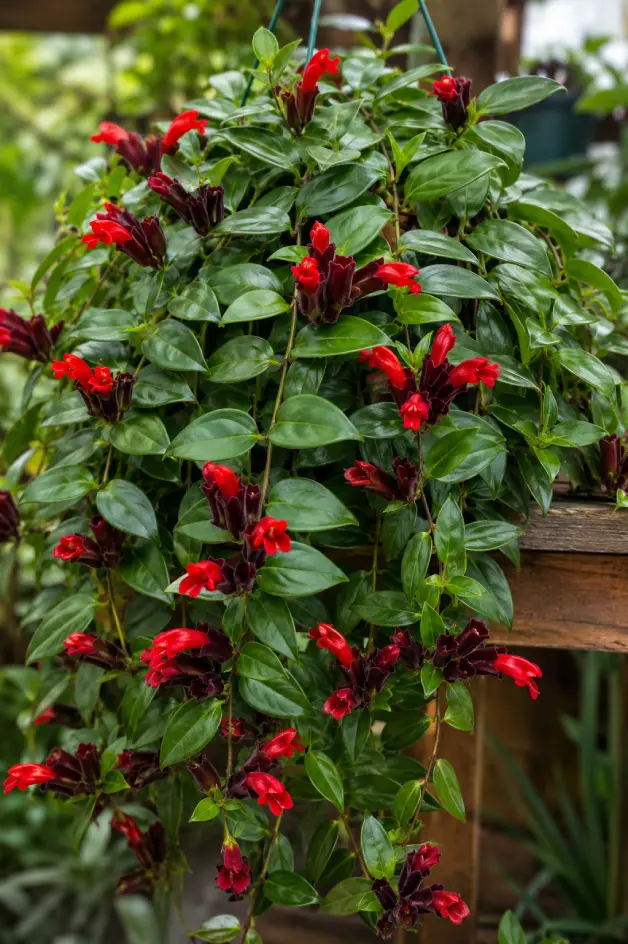
The most widely available and affordable lipstick plant, Mona Lisa produces vibrant red-orange flowers against dark, glossy green leaves. Its blooms emerge from a burgundy calyx, creating a striking color contrast even before the flower fully opens, and it flowers nearly year-round with consistent care. It is the best possible starting point for a first-time grower.
Best for: Hanging baskets near a bright window.
2. Black Pagoda
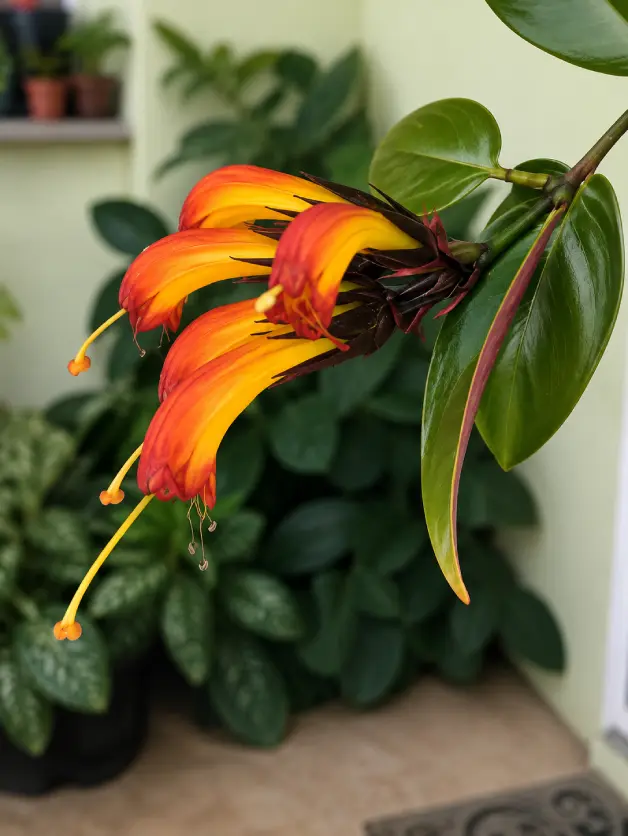
Botanically Aeschynanthus longicaulis, Black Pagoda is grown as much for its foliage as its flowers. Its dark leaves are marbled with yellow, green, and maroon speckling, with heavier maroon mottling on the undersides that earned it the nickname “tiger lipstick plant.” Orange-red blooms appear in late winter and spring, but the patterned leaves carry the plant the rest of the year.
Best for: Shelves where the leaf pattern can be seen up close.
3. Rasta (Twister)
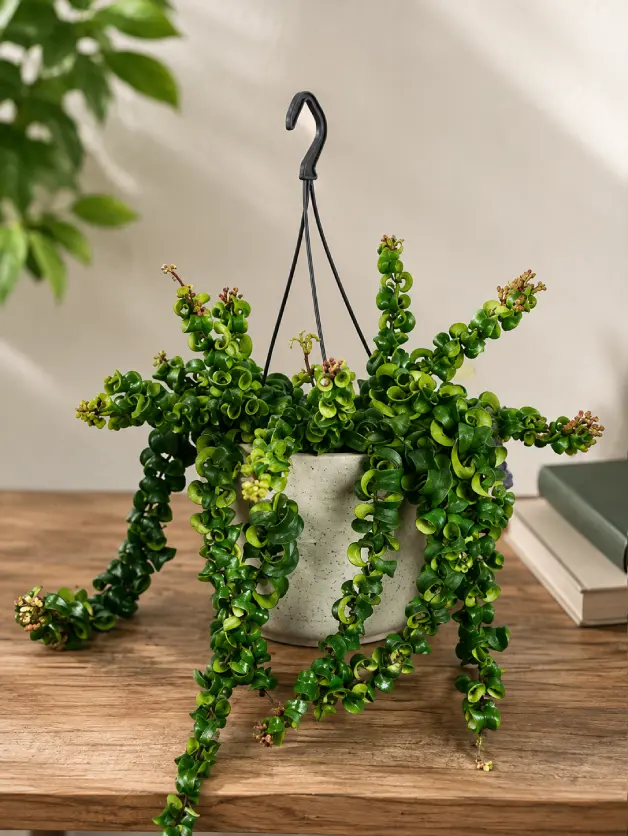
Rasta is defined by its densely curled, waxy leaves, which coil tightly along short, compact stems. Its red-to-orange blooms arrive in late summer and early fall, and its dense growth habit makes it a good fit for smaller hanging pots where a vigorous trailer would quickly outgrow the space.
Best for: Bathrooms or kitchens with higher humidity.
4. Variegata
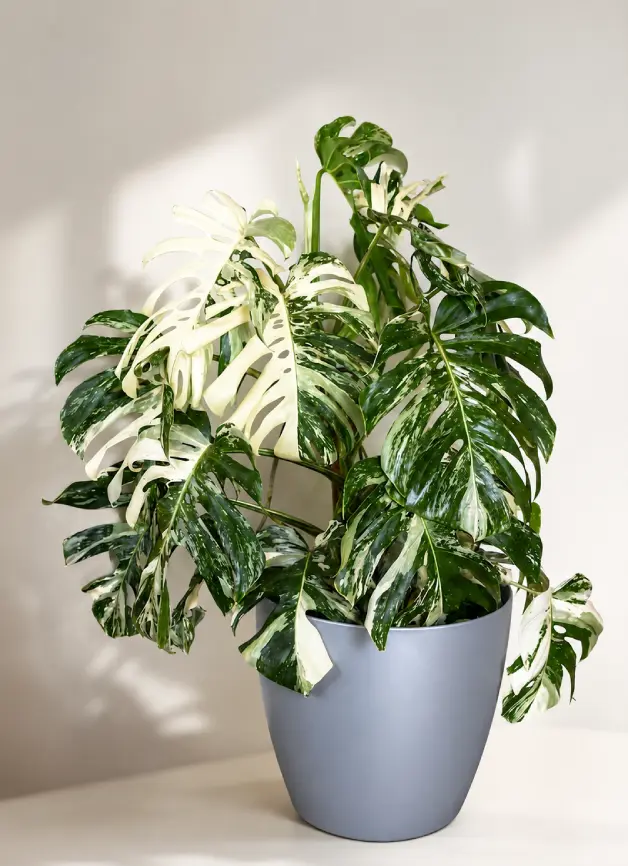
This cultivar features dark green leaves streaked with white or cream, adding visual interest year-round, with red blooms in fall and winter. It is naturally pest-resistant. Because variegated leaves carry less chlorophyll than solid green foliage, this one needs noticeably brighter light than most to hold its coloring and keep flowering.
Best for: Adding texture to a mixed plant display.
5. Mini Variegated
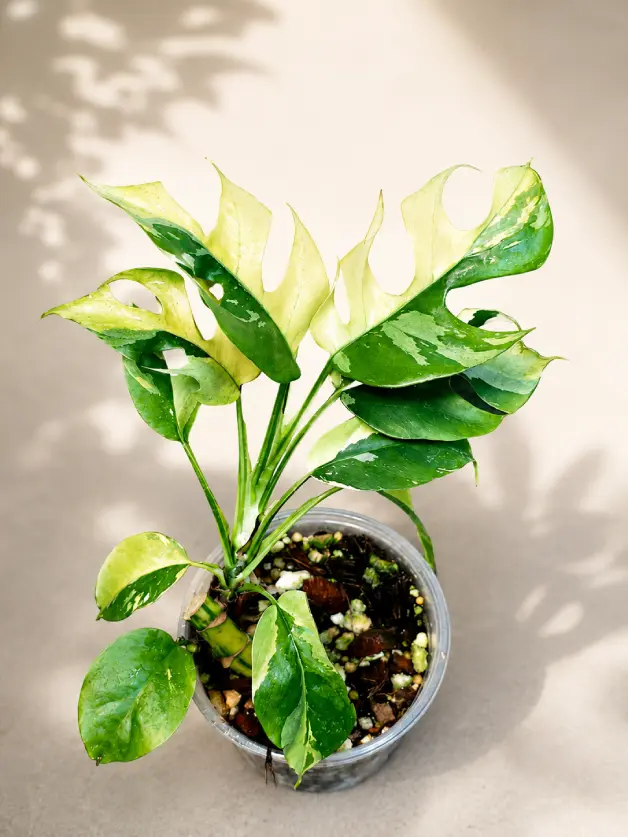
A compact version of the variegated lipstick plant, this variety fits neatly into 2 to 4 inch pots and carries small red-orange blooms above gold-flecked leaves. Its slow growth means it rarely needs repotting more than once every couple of years.
Best for: Desks, small shelves, or gifting.
6. Bolero Bicolor
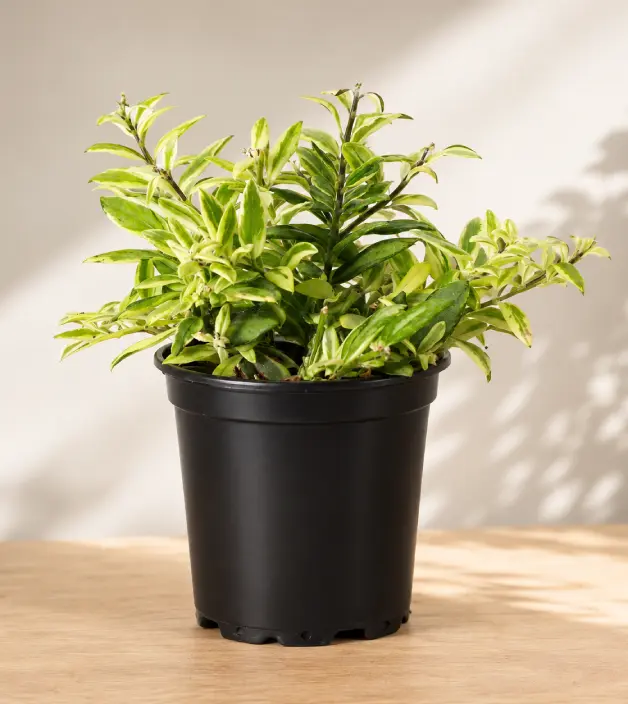
With long, lance-shaped leaves and tubular flowers that blend red and orange in a single bloom, Bolero Bicolor flowers generously through spring and summer. It branches more freely than most varieties, filling out into a fuller, bushier plant rather than a few long runners.
Best for: Growers who want a dense, well-filled trailing plant.
7. Raspberry Ripple
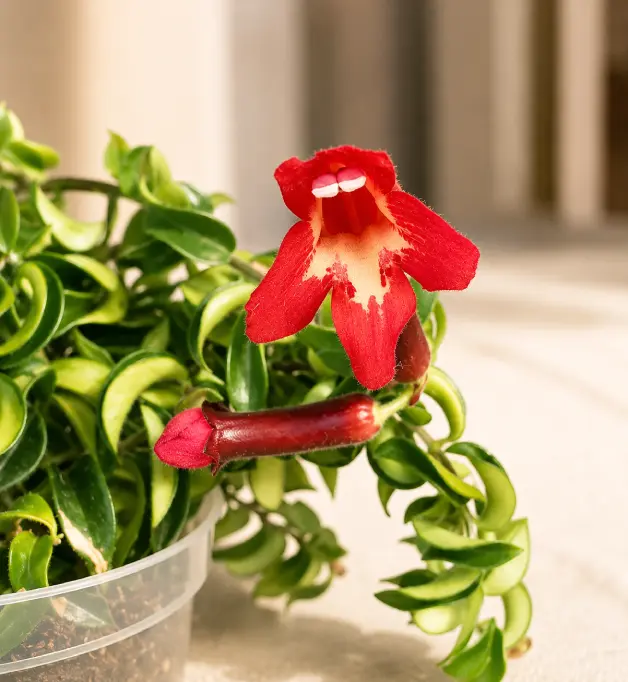
A hybrid cultivar with pink and cream variegation marbled across green foliage, Raspberry Ripple pairs that patterning with raspberry-toned flowers. Because the variegation is unstable, the exact pattern varies from plant to plant.
Best for: A softer, pastel look in home decor.
8. Thai Pink
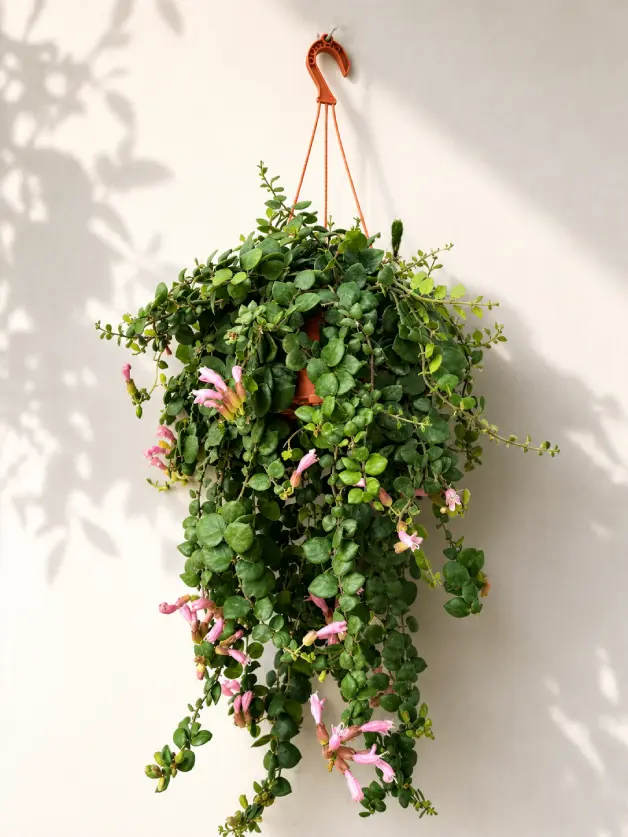
Thai Pink features heart-shaped glossy leaves and upright pink blooms that emerge from bronze and dark pink calyxes, flowering heavily in spring. Its flowers can reach close to three inches long, making it one of the largest-bloomed varieties you can buy.
Best for: Growers who want the biggest pink flowers available.
9. Pink Polka
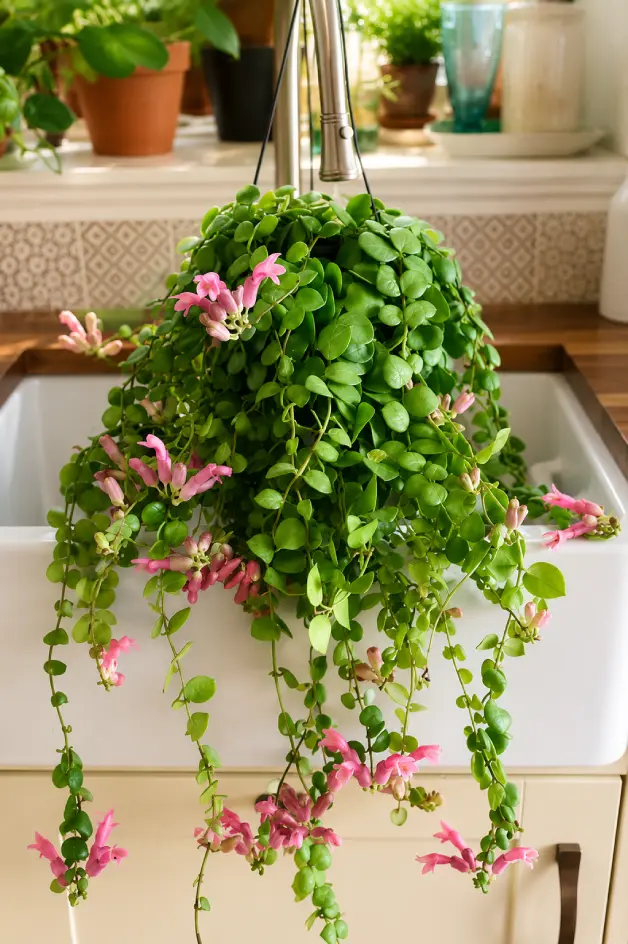
This variety shows off pink variegation on heart-shaped leaves, with coral-pink flowers carried on long trailing vines. New growth carries the most vivid pink coloring, so the plant looks its best when it is actively putting out fresh stems.
Best for: Hanging baskets in soft, natural light.
10. Purple Star
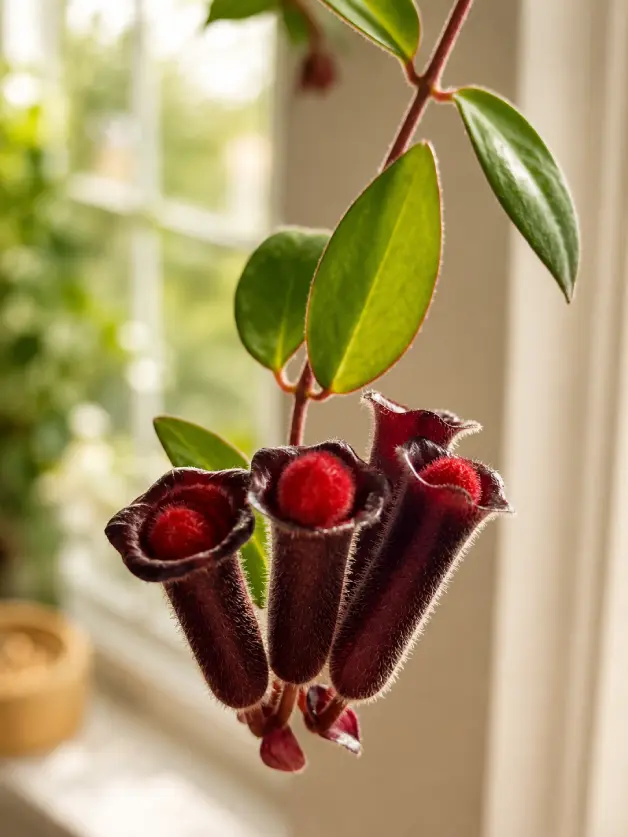
Purple Star produces magenta and reddish-purple blooms from a dark green or burgundy calyx and can flower year-round with attentive care. Unlike almost every other lipstick plant, it holds itself upright without support, so it works on a surface rather than only in a basket.
Best for: Tabletops and desks where a trailing plant will not work.
11. Cassiopeia
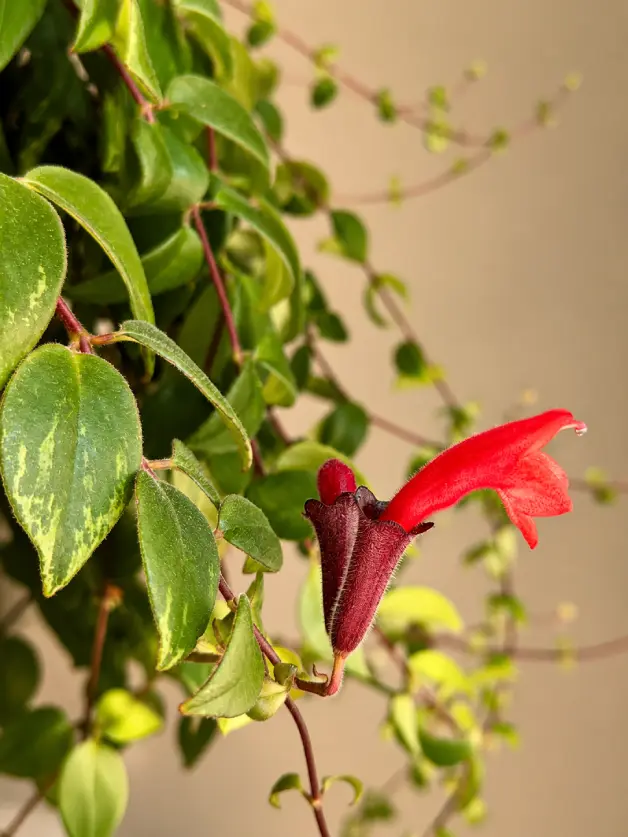
Cassiopeia stands out for its bold red-orange blooms emerging from reddish-purple tubes. Those tubes stay colorful long after the flowers themselves drop, which gives the plant a far longer display than varieties that go plain green between bloom cycles.
Best for: Extended seasonal color from summer into autumn.
12. Coral Flame
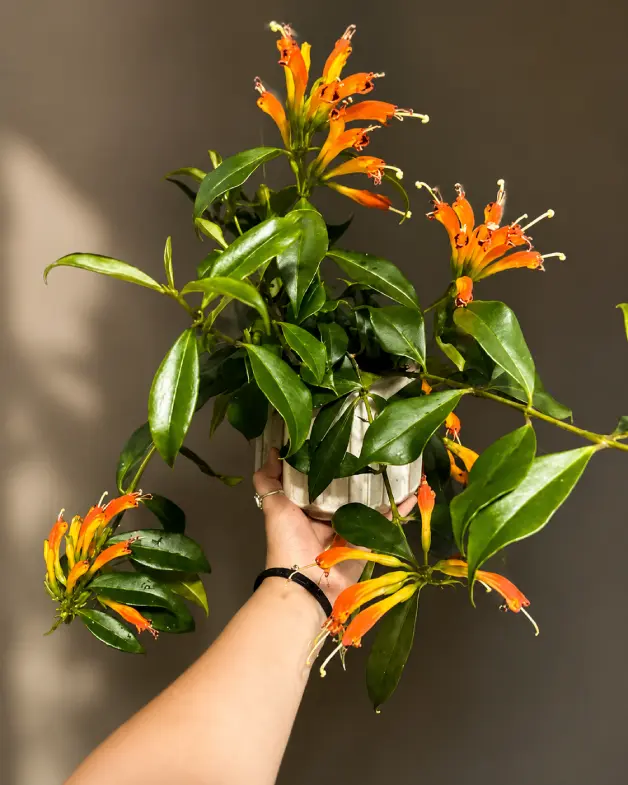
Coral Flame carries coral-toned blooms above slightly cupped leaves. It is also sold under the name “New Guinea,” so do not be surprised to see it labeled differently depending on the nursery.
Best for: Mantels or elevated surfaces where vines can hang freely.
13. Tangerine
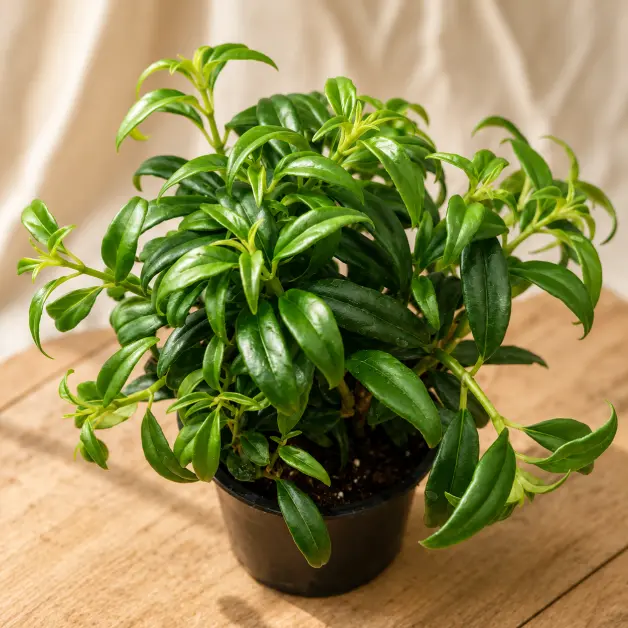
Tangerine produces cheerful orange-yellow blooms, making it one of the few widely available lipstick plants that skips the red palette entirely. If you want the shape without the classic scarlet, this is the easiest one to source.
Best for: Sunrooms and bright breakfast nooks.
14. Fireworks
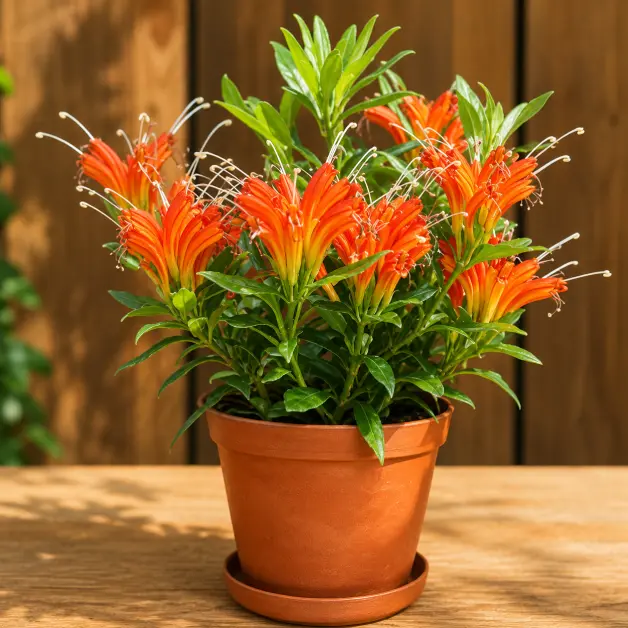
Fireworks holds its red blooms upright above the foliage instead of letting them dangle, which is where the name comes from. It is one of the most reliable bloomers in the genus and tolerates drier air better than most varieties, a real advantage in centrally heated homes.
Best for: Entryways and rooms where humidity is hard to keep up.
15. Curly Q (Krakau)
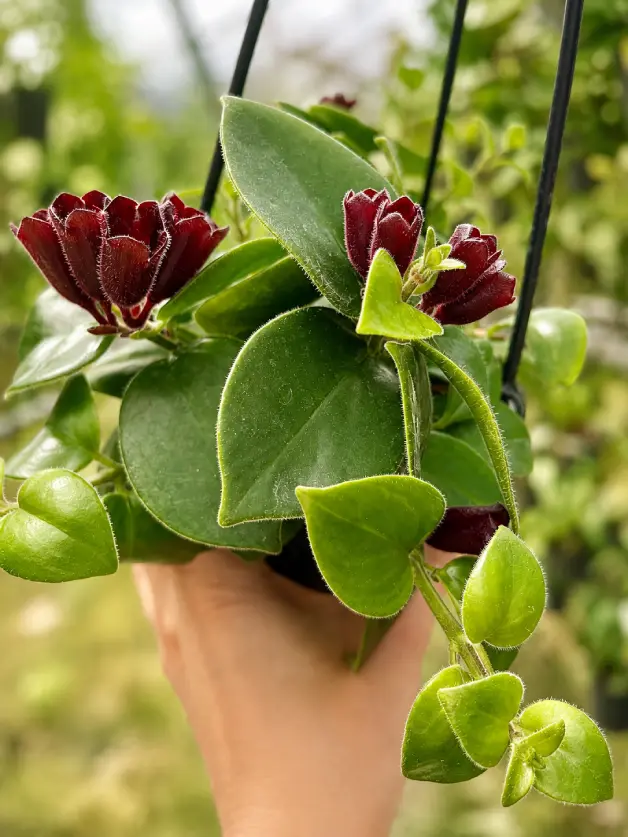
Also sold as Krakau, this variety carries shiny dark green leaves that curl and twist along long trailing vines, paired with rich red flowers. Where Rasta coils tightly on short, compact stems, Curly Q’s twist is looser and spread across much longer runners. The curl becomes more pronounced in brighter light, so give it your best-lit spot if the texture is what you are after.
Best for: Plant collectors seeking unusual leaf shapes.
16. Radicans (Classic Favorite)
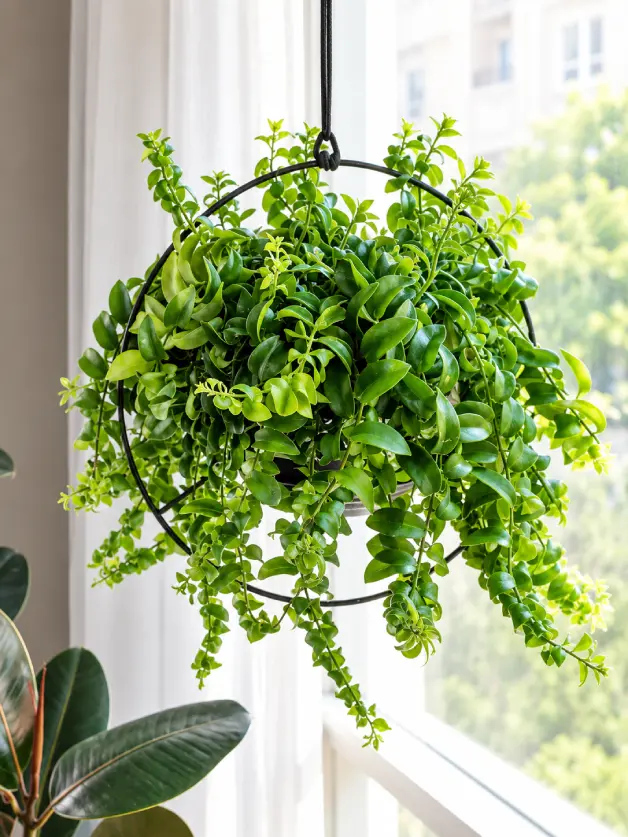
Often simply called the “common lipstick plant,” Aeschynanthus radicans is the quintessential variety: small, oval, dark green leaves and clusters of bright red blooms that appear prolifically in spring and summer. It has a vigorous trailing habit and responds exceptionally well to pruning, making it a robust choice for large hanging baskets.
Best for: Traditional hanging displays and first-time growers.
17. Lobbianus
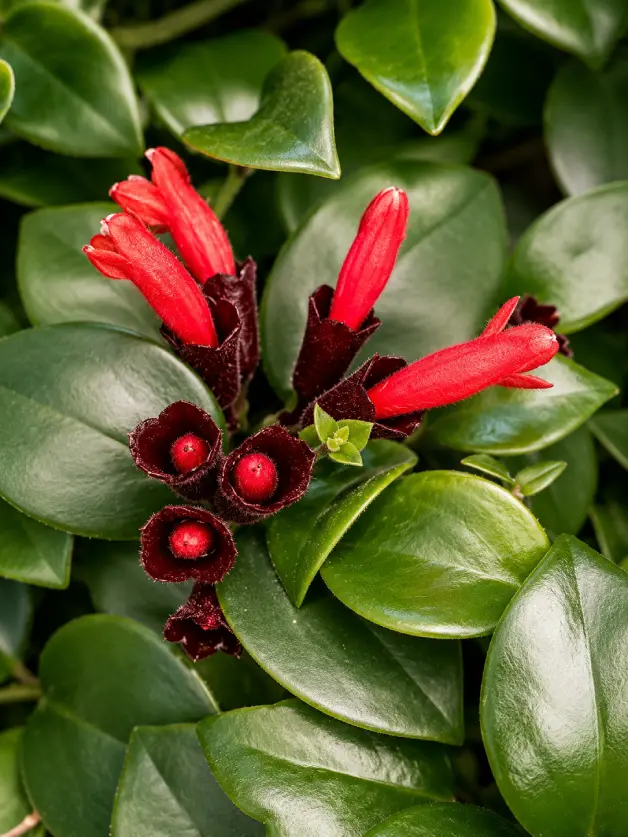
Aeschynanthus lobbianus produces vivid red flowers with a distinctive yellow throat, creating a fiery, two-tone effect, and it flowers from early spring straight through to late autumn. Its thick, waxy, narrow leaves store water well, making it the most drought-tolerant variety on this list and the most forgiving of a missed watering.
Best for: Adding a tropical, exotic flair to sunrooms.
18. Big Apple
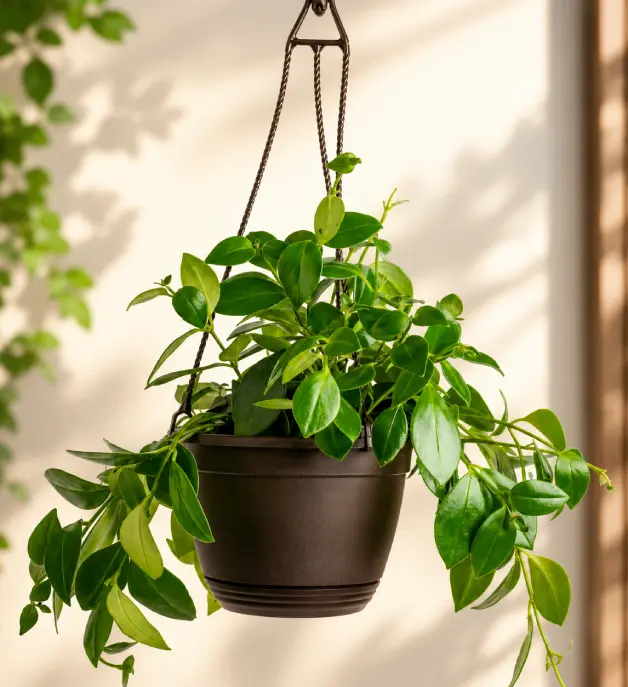
A hybrid grown for size, Big Apple carries deep red blooms that can reach four inches in length, set against broad, glossy green leaves. Despite the oversized flowers, it stays a relatively compact grower, so it fits shelves that a vigorous trailer would overwhelm.
Best for: A showstopping centerpiece on a bright desk or shelf.
Lipstick Plant Care Guide
Light
Lipstick plants need bright, indirect light to bloom well. Direct sun can scorch the leaves, while low light leads to leggy growth and few flowers. An east-facing window with gentle morning sun works well; in south- or west-facing rooms, filter the light with a sheer curtain.
They are also somewhat photoperiodic, responding to the lengthening days of spring by setting flower buds. If natural light is limited, a full-spectrum grow light run 12 to 14 hours a day will encourage blooming.
Water
Water when the top one to two inches of soil feel dry, keeping the soil consistently moist but never soggy. Overwatering is the leading cause of root rot and the most common reason for yellowing leaves, so if the foliage starts to yellow, let the soil dry out further between waterings before changing anything else. Underwatering tends to show up as leaf drop rather than yellowing, so check soil moisture before assuming the plant is dying back.
Soil & Potting
Use a loose, fast-draining mix that mimics what an epiphyte gets in the wild. The ideal recipe is 2 parts standard potting soil, 1 part orchid bark, and 1 part perlite, which keeps the mix from compacting and lets air reach the roots. A slightly acidic pH between 6.1 and 6.5 helps the plant take up nutrients efficiently.
Repot every 1-to-2 years in spring, moving up just one pot size (generally 6 to 8 inches for mature plants). Signs it is time include roots circling the drainage holes, water running straight through the pot, or noticeably slowed growth. Always choose a pot with ample drainage holes.
Feed with a diluted, balanced liquid fertilizer every four to six weeks during spring and summer, the plant’s active growing season.
Temperature & Seasonal Adjustments
Lipstick plants prefer 65 to 85°F (18 to 29°C), and below 50 to 60°F you can expect leaf drop. Keep them away from cold drafts, air conditioning vents, and heating registers, since sudden temperature swings near winter windows and doors are one of the most common causes of leaves falling off.
In winter, reduce watering frequency and stop fertilizing entirely, as growth naturally slows. Giving the plant slightly cooler nights of around 60°F in late fall mimics its natural rest period and can trigger a heavier flush of blooms the following spring.
Aim for 50 to 80% humidity using a humidifier, a pebble tray, or by grouping plants together. Avoid leaving the leaves consistently wet, which invites fungal problems. Airflow matters just as much as moisture: these plants evolved in breezy forest canopies, and stagnant air encourages fungus, so run a small oscillating fan nearby if the room feels stuffy.
Dealing with Pests and Diseases
Lipstick plants are generally pest-resistant, but watch for aphids, mealybugs (cottony white clusters on stems), and spider mites (fine webbing and stippled leaves), especially in dry conditions. Neem oil or insecticidal soap, diluted according to the package instructions, usually clears them up. Always isolate an affected plant so pests do not spread to nearby houseplants.
On the disease side, Botrytis (gray mold) can appear on flowers when humidity is high without airflow, while leaf spot usually results from water splashing onto the foliage. Remove affected leaves and increase ventilation.
Bloom Cycles & Troubleshooting
Individual blooms last two to three weeks, and a well-cared-for plant produces waves of flowers several times a year, peaking in spring and summer. Deadheading spent flowers redirects the plant’s energy into new buds rather than seed.
Use this list to diagnose the most common complaints:
- No flowers at all: Almost always insufficient light. Move the plant to a brighter spot and give it a few weeks to respond.
- Yellowing leaves: Usually overwatering. Let the soil dry further between waterings.
- Leaves dropping: Cold exposure, a draft, or underwatering.
- Buds dropping before opening: A reaction to sudden change — a draft, a temperature swing, erratic watering, or being moved. Stability is the fix.
Prune after flowering, trimming back up to one-third of the vine just above a leaf node and favoring softer stems over woody growth. Regular pruning encourages bushier growth and more blooms in the next cycle, and it keeps variegated varieties producing the fresh growth that carries their brightest coloring. Avoid pruning right before or during flowering, as it will delay blooms.
Take 4 to 6 inch cuttings from healthy stems, remove the lower leaves, and root them in water or moist potting mix. A leaf alone will not work — the cutting must include at least one node. Rooting hormone improves success rates, and cuttings root fastest in warm, bright conditions. Once roots develop, transplant into a well-draining pot; expect the first blooms in roughly 6 to 12 months depending on the variety.
Conclusion
Across more than 185 species and a growing list of hybrids, there is a lipstick plant for nearly any home style or lighting situation. Start with Mona Lisa, Fireworks, or Radicans if you are new to the plant, then branch into the variegated and collector varieties once you have its light, humidity, and watering rhythm figured out.
When shopping, look for firm, healthy leaves and check the undersides for pests. You will find these plants at local nurseries, big-box garden centers, and specialist online retailers. Give one a bright spot and a well-draining pot, and it will reward you with waves of tubular blooms for years to come.