Design Your Garden Like a Personal Monument: The Homenumental Approach
You walk into your backyard on a Saturday morning, coffee in hand. You’ve spent money on plants, time on weeding, effort on watering. There are flowers. There are shrubs. There’s green everywhere.
So why does it feel empty?
This is what most yards look like — a collection of plants with no real purpose, no connection to your home, no story. The garden exists, but it doesn’t belong to you.
What you’re missing isn’t more plants. It’s a design philosophy.
The answer is homenumental garden design — the idea that your outdoor space should be as intentional and meaningful as any room inside your home. Not fancy. Not complicated. Just yours. This article walks you through a practical framework to transform a disconnected yard into a purposeful outdoor space that reflects who you are and how you actually live. By the end, you’ll know exactly where to start — and what to do first.
What Does a “Homenumental” Garden Actually Mean?
A homenumental garden treats your outdoor space as a personal monument. But here’s the thing — a monument doesn’t have to be grand or expensive. It can be a bench where your family gathers every summer. An oak tree planted when your daughter was born. A fire pit built from salvaged stone. A sundial passed down from your grandmother. A custom gate your grandfather built by hand.
The core idea: form follows purpose. Before you buy a single plant or hire a contractor, decide what you want your garden to actually do. Will it be a retreat for quiet mornings? An entertainment hub for summer gatherings? A playground for kids? A space for growing vegetables? The garden advice: a monumental approach starts there — with intention, not with Instagram inspiration.
Every element, from the largest hardscaping structure to the smallest flower, should earn its place because it serves a purpose or holds meaning. That purpose might be visual, functional, or deeply personal. When you design this way, something shifts. Your yard stops feeling like a blank space to fill and starts feeling like an extension of your home — a place that tells your story.
Four Types of Garden Monuments
Not all monuments look the same. Here are the four primary types:
| Monument Type | Primary Purpose | Examples |
|---|---|---|
| Memorials | Space for remembrance | Bench with plaque, engraved stone, dedicated flower bed, memorial tree |
| Artistic Focal Points | Visual interest and beauty | Sculpture, unique birdbath, decorative obelisk, water feature |
| Functional Landmarks | Beauty serving a practical purpose | Sundial, ornate gate, custom fire pit, pergola for gathering |
| Living Monuments | Growing tribute | Oak tree with birth marker, rose bush memorial, heritage fruit tree |
Each type serves a different need. You might combine several — a fire pit (functional landmark) surrounded by a memorial garden bed (memorial) with comfortable seating (gathering space). The garden advice: monumental framework says: choose elements that mean something to you, then build everything else around them.
Why Function Doesn’t Diminish Meaning
Here’s what many people get wrong: they separate beauty from purpose. “The decorative stuff goes here. The practical stuff goes there.” But the best gardens blend them. A pergola isn’t just pretty — it provides shade for outdoor dining. A raised bed isn’t just functional — it becomes a visual anchor. A water feature isn’t just decoration — it draws birds and creates a gathering point.
In fact, a garden that serves a real purpose becomes more beautiful because it’s lived in, not just looked at.
How Do You Match Your Garden to Your Home’s Architecture?
Your garden doesn’t exist in a vacuum. It lives next to your house — and they should speak the same visual language.
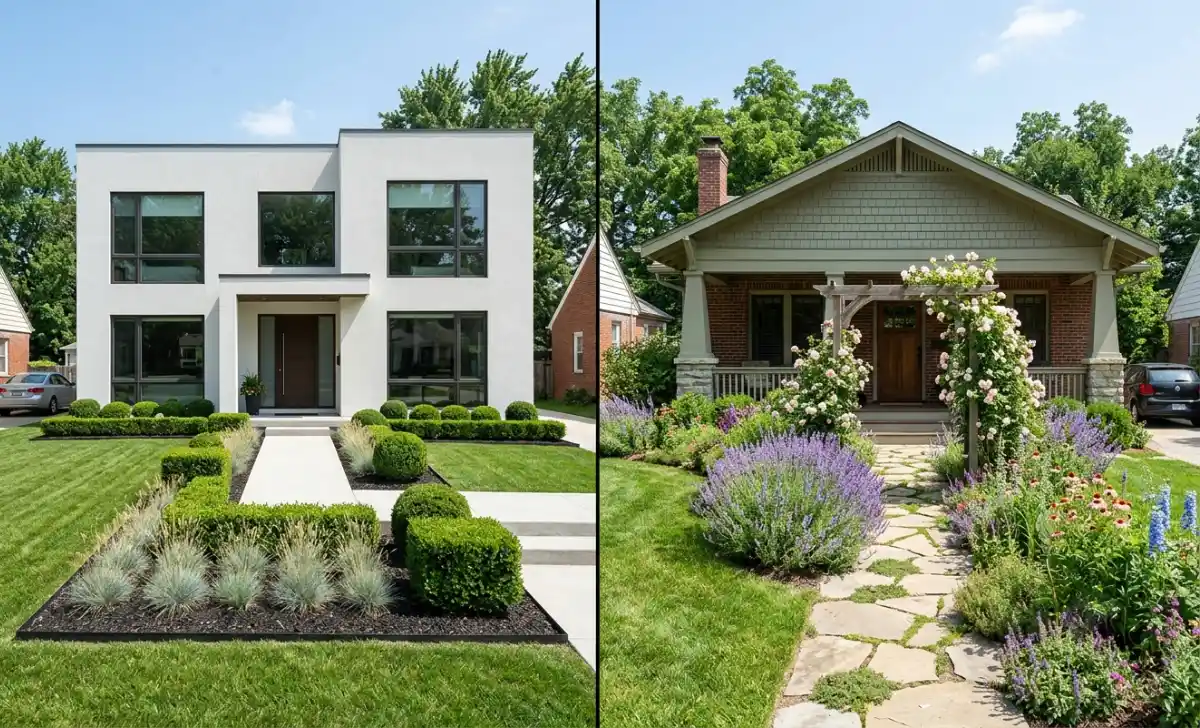
An Arts and Crafts home with natural materials and organic lines pairs beautifully with a cottage garden: flowing flower beds, relaxed plant combinations, winding paths. A modern home with clean lines and geometric shapes calls for structured plantings: boxwood hedges, ornamental grasses in drifts, raised beds with sharp edges. A charming cottage home wants an organic, abundant garden full of colour and texture.
When your garden matches your home’s architecture, something clicks. The space feels intentional instead of scattered. Your property tells a single coherent story instead of multiple conflicting ones.
The “Inside Out” Approach
Here’s a practical principle: place your highest-maintenance, highest-impact plants closest to your house. Save the easier, lower-maintenance species for the far edges of your property.
This does three things. First, it improves curb appeal immediately — the plantings everyone sees from the street get your best effort. Second, it makes maintenance easier. You’re tending plants just steps from your back door and hose, not trekking across the yard. Third, it creates a visual hierarchy that feels intentional. Your home is the main character. The garden supports it.
A suburban homeowner with a colonial-style house might place mature hydrangeas, boxwood hedges, and flowering perennials in the 10-foot zone around the house foundation. Then, moving outward, add lower-maintenance native plants that need less water and care. The front of the home gets the showiest plants. The back gradually becomes wilder and more relaxed.
Shadow Zones and Sightlines
Two things most homeowners overlook: shadows and views.
Your home casts shadows — often long ones, especially in the morning and late afternoon. Heavy shade combined with soil competition from foundation roots makes that 6-foot zone around your house foundation tough for most plants. Solution: keep plants at least 6 feet from the foundation, choose shade-tolerant species (hostas, ferns, Japanese maple), or embrace the shadow zone as a hardscaping opportunity (patio, gravel, bench).
Second, think about sightlines from inside your home. The view from your kitchen window, your bedroom, your living room. A well-designed garden doesn’t reveal everything at once. Use hedges, pathways that curve, and focal points positioned to draw the eye. This creates mystery — something that makes the garden feel bigger and more interesting than it actually is.
What Should You Plan Before Planting a Single Seed?
Most people skip this step. They see a plant they like and stick it in the ground. Then six months later, they’re frustrated because nothing looks cohesive.
Spend an afternoon observing and planning instead.
Defining Your Garden’s Purpose
What do you actually want to do in your garden? Is it a peaceful morning retreat where you drink coffee and read? An entertainment zone for summer dinners? A safe space for kids to play? A productive vegetable and herb garden? A low-maintenance green space that you simply enjoy looking at?
Be honest. If you hate weeding and watering, don’t design a garden that requires both every week. If you love tending plants and trying new things, go for it — design accordingly. If your family throws big summer parties, design around that. Your garden should fit your life, not the other way around.
Zoning Your Outdoor Space
Divide your yard into functional zones, like you would inside your home. Not every part of your yard needs to serve the same purpose.
Step-by-step zone planning:
- Observe sunlight — Walk your property at 9 AM, noon, and 3 PM. Mark full sun areas (6+ hours), partial shade (3–6 hours), full shade (<3 hours)
- Define your zones — Dining area? Play zone? Quiet retreat? Work/garden area?
- Locate zones by sunlight — Vegetables need full sun. A quiet reading corner can be shaded.
- Design pathways — At least 4 feet wide (two people side-by-side)
- Consider proximity to water — Every zone should be within reasonable hose reach
- Think about scale — A massive water feature in a tiny courtyard overwhelms the space. A small bistro set in a sprawling acre feels lonely
- Check sightlines — How does each zone look from your house windows?
Real example: A suburban homeowner in the Midwest with a 1/4-acre lot creates three zones. Near the house: a patio with container gardens (full sun, high visibility, frequent use). Mid-yard: a dining zone with a pergola and native perennials (partial shade, family gatherings). Back corner: a quiet reading spot with shade-loving plants and a bench (full shade, personal retreat). Pathways connect all three.
How Do You Build the Structural Bones of Your Garden?
Imagine a house without walls — just furniture floating around. That’s a garden without structure.
Structure comes from two things: hardscaping and structural plants. Hardscaping is the built stuff — stone retaining walls, wooden pergolas, brick patios, gravel paths, raised beds. Structural plants are the permanent, evergreen elements — boxwood hedges, yew shrubs, ornamental grasses, evergreen trees.
Here’s the order: Build hardscaping first. Add structural plants second. Wait a full season before adding perennials and seasonal colour.
Why? Because hardscaping and structural plants create the skeleton that holds the garden together year-round. When winter comes and everything else dies back, these elements keep your garden looking intentional, not abandoned. They define space, create boundaries, and give every seasonal planting something to lean against.
A common mistake: someone plants 50 perennials in spring, loves how it looks, then gets disappointed in winter when it all disappears. Had they started with hardscaping and structural plants, winter would look clean and intentional instead of bare and sad.
Think of it this way — the bones come first. The flesh and flowers come later.
What’s the Smartest Way to Prepare Soil and Pick Plants?
H3a: Soil Health Is Non-Negotiable
Before you buy a single plant, test your soil. Grab a kit from any garden centre. You’re looking for pH (ideally 6.0–7.0 for most plants) and basic nutrient levels.
If your soil is poor — compacted clay, sandy with no organic matter, or depleted from years of neglect — fix it before planting. Work 2–4 inches of compost, aged manure, or leaf mould into the top 6 inches of your existing soil. If the problem is severe (solid clay or contaminated soil), build raised beds and fill them with quality growing medium.
This single step — improving soil with organic matter — will improve almost any soil type. Better drainage in clay. Better water retention in sand. Better nutrient availability everywhere. You can’t skip this. Plants living in poor soil will struggle no matter how perfect your design is.
Choosing Plants That Actually Belong in Your Yard
Now comes the fun part — picking plants. But approach it strategically, not randomly.
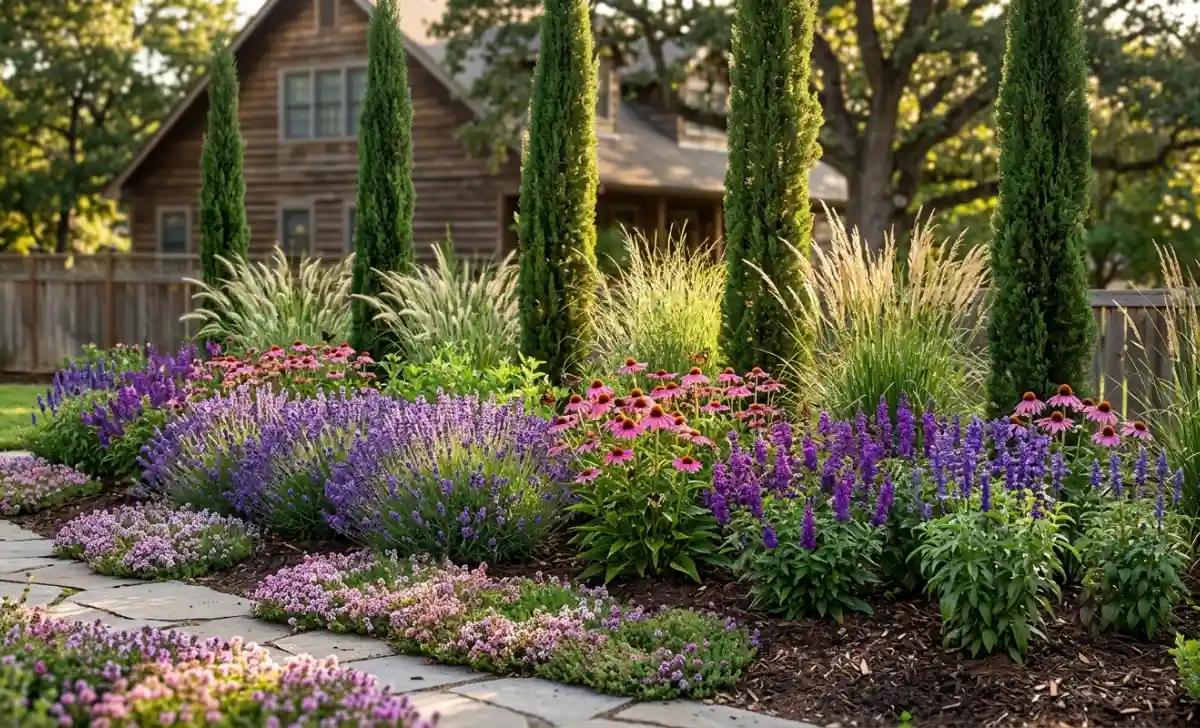
Start with native plants. Native plants grow naturally in your region, so they’re adapted to your climate, soil, and water patterns. They need less fertiliser, less water once established, and less pest management. They’re the backbone of a low-maintenance garden. For example, a sweep of coneflowers and black-eyed Susans along a Midwestern front walkway needs almost no extra watering once established.
Think foliage, not just flowers. Blooms last weeks. Foliage lasts months. A garden full of plants chosen only for their flowers will look great in May and disappointing in August. Choose plants for interesting leaf colour, texture, and form. Ornamental grasses, sedums, hostas, and evergreens carry the garden when flowers fade.
Plant in repetition. Twenty lavender plants in a sweeping drift look intentional and beautiful. Twenty random plants scattered throughout look confused. Repetition creates rhythm and makes even small plants look impactful.
Group plants by needs. Keep high-water plants together. Group shade lovers together. Plants with similar requirements will thrive together and make maintenance simpler.
Here’s a quick breakdown:
| Plant Category | Role in Garden | Examples |
|---|---|---|
| Structural | Permanent framework, year-round presence | Boxwood, yew, Italian cypress, ornamental grasses, evergreen hedges |
| Perennials | Reliable seasonal colour, mid-height interest | Lavender, echinacea, salvia, daylilies, coreopsis |
| Annuals | Short-term burst of color | Zinnias, petunias, marigolds (use sparingly in the 30% zone) |
| Native Species | Low-maintenance backbone | Coneflowers, black-eyed Susans, serviceberry, Joe-Pye weed |
| Climbers | Vertical interest, softens hardscaping | Clematis, wisteria, climbing hydrangea |
One more note: The 70/30 rule applies here. 70% of your plantings should be permanent structural plants and reliable perennials. 30% can be seasonal annuals and experimental plants. This ratio ensures your garden looks good most of the year, not just during peak bloom season.
How Do You Keep Your Garden Looking Great Without Losing Your Weekends?
This is where most people get overwhelmed. But there’s a system.
The 70/30 Rule
Already mentioned, but it’s worth repeating because it changes everything: 70% permanent structural plants and reliable perennials + 30% seasonal annuals and experimental plants = a garden that looks good year-round without constant effort.
The 70% carries your garden. The 30% lets you add colour and variety without overwhelm. In spring, add some zinnias and marigolds. In summer, refresh with new annuals if the first planting has faded. In fall, plant mums or ornamental kale. The structural plants stay; the seasonal stuff comes and goes.
This ratio is the difference between a garden that owns your weekends and one that fits into them.
Seasonal Maintenance at a Glance
Here’s what actually needs doing each season:
| Season | Key Tasks |
|---|---|
| Spring | Remove winter debris, cut back dead growth, apply fresh mulch layer, plant perennials and new structural plants, divide overgrown perennials |
| Summer | Deep water 1x/week (1 inch total), deadhead spent flowers, monitor for pests, plant annuals to refresh colour |
| Fall | Plant spring bulbs, cut perennials back, add leaves as mulch, plant mums or seasonal plantings, divide spring bloomers |
| Winter | Minimal work — observe structure, plan next season, prune bare branches if needed |
Watering smart: One deep watering per week beats daily shallow watering. Water early morning or evening (less evaporation). Use drip irrigation or a soaker hose at the plant base, not overhead sprinklers. This reduces disease and gets water to roots, not leaves.
Mulching matters: 2–3 inches of organic mulch (shredded bark, straw) suppresses weeds, retains moisture, and gradually breaks down into soil-improving compost. Keep mulch a few inches away from plant stems — direct contact can rot them.
Companion planting basics: Marigolds near vegetables deter pests. Basil near tomatoes improves flavour. Flowering plants attract beneficial predators like ladybugs. A shallow dish of water with rocks attracts birds that eat garden pests. Learn how to preserve garden flowers year-round — dried flowers from your garden make excellent winter interest and arrangements.
One final thought: gardens don’t need perfection. A little disorder, some volunteers popping up, slight variations in how plants fill in — these are features, not bugs. A garden that looks too perfect feels sterile.
What Finishing Touches Turn a Good Garden Into an Unforgettable One?
You’ve got structure. You’ve got plants. You’ve got a plan. Now make it personal.
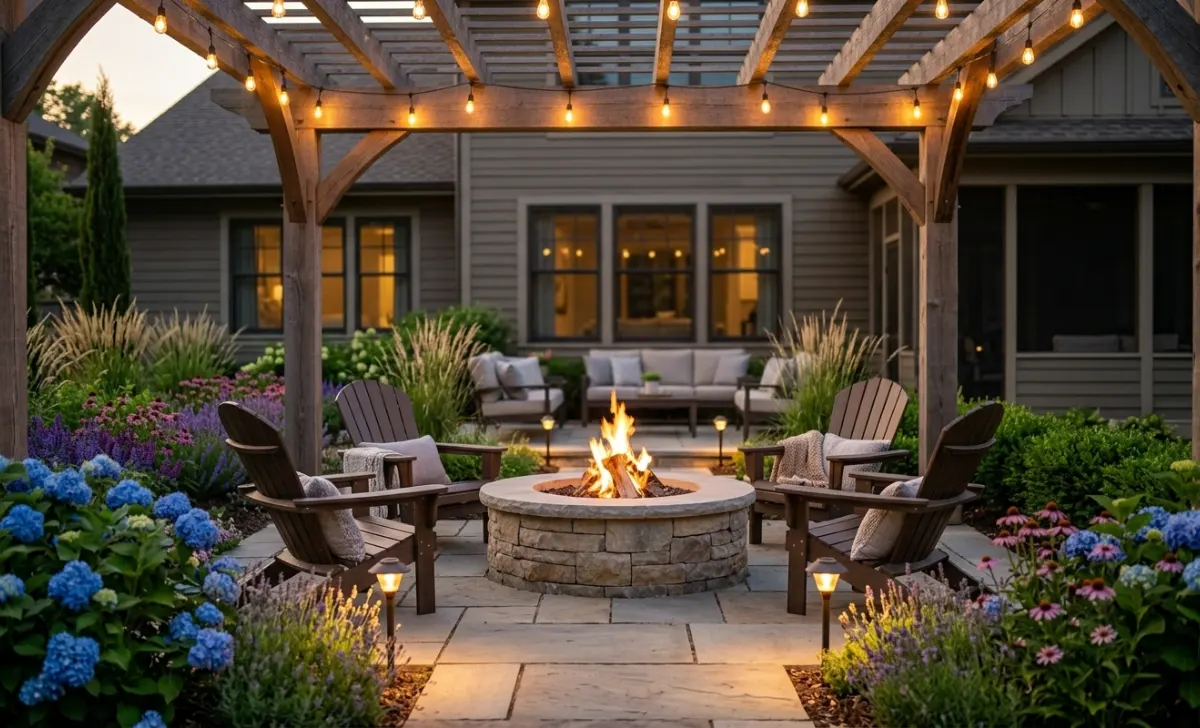
Add at least one focal point. Every good garden needs something that stops you mid-stride. A sculpture. A water feature. A specimen tree. A custom fire pit. An ornate gate. A weathered bench. The focal point is the exclamation mark of your garden — the thing that makes someone say, “That’s beautiful.”
Lighting changes everything. Solar path lights along a walkway. Spotlights on specimen trees at night. String lights draped on a pergola for evening gatherings. Lighting isn’t just practical — it extends your enjoyment of the garden into evening and creates mood.
Position seating intentionally. A bench at the end of a path becomes a destination. A small bistro set in a quiet corner invites lingering. Seating scaled to the space (not oversized, not cramped) signals that this garden is meant to be experienced, not just looked at. For fruit-bearing plants like figs, consider placement where you can enjoy them while seated — near a patio or seating area where you can harvest and enjoy.
These finishing touches are what transform a garden from “nice plants in a yard” to “a space I actually want to spend time in.” They’re the difference between a yard and a home extension.
And here’s the thing about finishing touches — they often cost less than plants. A simple bench, solar lights, and thoughtful seating arrangement can matter more than filling every space with flowers.
FAQs
What exactly is a Homenumental Garden?
A garden designed around personal purpose and meaning. Instead of planting randomly, you start by deciding what you want your garden to do (relaxation, gathering, play, food) and what elements hold meaning to you. Every plant and hardscaping feature should earn its place by serving that purpose or holding significance.
How do I make my garden look professionally designed?
Follow three principles: (1) Match your garden style to your home’s architecture. (2) Use the 70/30 rule — 70% permanent structural plants, 30% seasonal colour. (3) Add hardscaping and focal points before planting. Most yards fail because people add plants without structure. Structure first, colour second.
What is the 70/30 rule?
70% of your plantings should be permanent structural plants (evergreens, hedges, ornamental grasses) and reliable perennials. 30% can be seasonal annuals and experiments. This ratio keeps your garden looking intentional year-round without constant work.
How do I match my garden to my house style?
Look at your home’s architectural style. Arts and Crafts homes pair with cottage gardens (organic, flowing). Modern homes suit structured plantings (clean lines, geometric shapes). Colonial homes work with traditional perennials and hedges. Your garden should speak the same visual language as your house.
What plants are best for a low-maintenance garden?
Native plants adapted to your region, evergreen structural plants (boxwood, yew), ornamental grasses, and reliable perennials (lavender, echinacea, coreopsis). Focus on foliage over flowers. Avoid plants that need constant deadheading, heavy fertiliser, or frequent watering once established.
How do I start transforming a small backyard?
Start small. Claim one 4×4 corner or a single garden bed. Plan that space (sun exposure, purpose, style), improve the soil, plant it intentionally, maintain it for a full season. Once you see what works, expand to the next zone. Small successes build confidence and skills.
Conclusion
Your garden isn’t a decorating problem. It’s a design problem — and it’s solvable.
The core ideas:
- Start with purpose, not plants. What do you want your garden to do?
- Build structure first (hardscaping and structural plants), add colour second
- Match your garden’s style to your home’s architecture for cohesion
- Use the 70/30 rule to keep maintenance manageable
- Add finishing touches (focal points, seating, lighting) that make the space livable
Here’s your action step: This weekend, spend 30 minutes observing your yard. Where does the sun hit at different times? Where do you naturally want to sit? What does your home’s architectural style tell you about garden style? Then claim one small corner — a 4×4 section — and plan it intentionally. Improve the soil. Plant it thoughtfully. Tend it for a season.
You don’t need a landscape architect. You don’t need a huge budget. You need intention.
Your garden is a living story. One that reflects your life, your home, your values, and your choices. Start writing it this weekend.