How to Dry Flowers Without Them Falling Apart (5 Methods That Actually Work)
You finally got around to drying that bouquet — hung it upside down, waited two weeks — and when you touched it, the petals just… crumbled into dust. Frustrating doesn’t even cover it.
Here’s what nobody tells you upfront: most dried flowers don’t fall apart because of the method you used. They fall apart because of what happened before you started drying. Getting flowers to dry without falling apart really does come down to three things: timing the cut right, controlling the environment, and choosing a method that suits the flower you’re working with.
Once you fix those, everything else gets a lot easier.
This guide walks you through exactly what causes flowers to crumble, then gives you five practical methods for drying them properly — including options that don’t require silica gel, work fast, and actually preserve the colour.
Why Do Dried Flowers Fall Apart? (Start Here)
Before we get into methods, let’s talk about the real problem. Because if you skip this part, no technique will save you.
Harvesting too late is the biggest culprit. Flowers that are already fully open — at peak bloom — have petals that are soft and moisture-heavy. By the time they dry, the structure is already weakened. You want to cut them when they’re about 75% open, not 100%.
Timing really is everything when it comes to harvesting from the garden. It’s the same reason fruit growers watch their crops so carefully — miss the window, and the yield suffers. If you grow your own flowers and struggle with getting garden timing right, it’s worth reading up on how unexpected crop losses happen — the principles of harvest timing translate across almost everything you grow.
High humidity is the second thing that ruins everything. If you’re air-drying flowers in a bathroom, laundry room, or any space that traps moisture, the flowers will mould or go limp before they dry properly. You need a dry, dark, well-ventilated room.
Skipping the prep step is the third mistake. Leaves left on the stems hold moisture and slow down the drying process dramatically. Strip them off before you hang anything.
Fix these three things first. Everything after that is just choosing the method that fits your situation.
How Long Does It Take to Air-Dry Flowers?
This is one of the most common questions — and most guides give a vague “two to four weeks” answer that doesn’t actually help.
What Affects Drying Time Most?
Two things matter more than anything else: the flower type and your environment. A delicate lavender stem in a dry summer room dries completely differently from a thick peony head in a damp autumn basement. Here’s a more honest breakdown by flower size:
- Small, thin-petaled flowers (like lavender, chamomile, or baby’s breath): 7–10 days
- Medium blooms (like roses, zinnias, or marigolds): 2–3 weeks
- Large, thick flowers (like peonies, dahlias, or sunflowers): 3–4 weeks, sometimes longer
A dry room with a ceiling fan running can cut days off the timeline. A damp basement can add weeks — and introduce mould.
Touch-test before you declare them done. The stems should feel completely rigid — like a dried twig, not like a bendy straw. If there’s any give, give it more time.
How to Dry Flowers at Home Without Silica Gel
Now that you know what affects timing, here’s the method question most people Google first — what if you don’t have silica gel sitting around? The good news is you genuinely don’t need it for most flowers.
Here are three no-silica methods that consistently work:
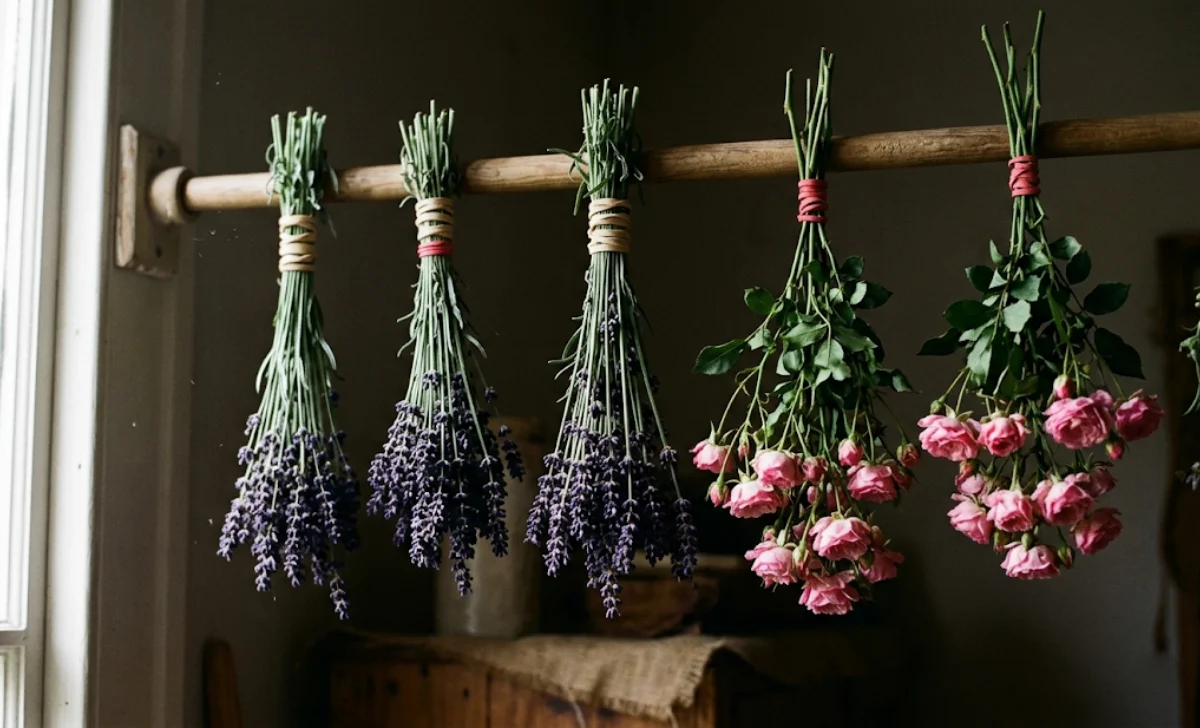
1. The Hanging Method (Most Reliable for Beginners)
This is the classic approach, and it works because it’s simple and consistent.
What you need: Rubber bands, string or twine, and a dark, dry room.
Steps:
- Cut stems at a 45-degree angle to help them release moisture
- Strip all leaves from the lower two-thirds of each stem
- Group 4–6 stems together (don’t pack them tight — air needs to circulate)
- Secure at the base with a rubber band, not a string (rubber bands tighten as stems shrink)
- Hang upside down from a hook or tension rod in a dark, dry room
The upside-down position keeps the stem straight and the flower head from drooping as it loses moisture. Dark rooms preserve colour far better than sunny windowsills — UV light fades petals fast.
Roses from a bouquet work especially well with this method — but give them a day or two in fresh water first to fully open before you hang them. Trying to dry a tight bud results in petals that never fully set. If you’ve got a sentimental bouquet you want to keep, we’ve got a full walkthrough on this — [Internal Link: How to Dry Roses From a Bouquet for Keepsakes].
Check every few days. Don’t rush it.
2. How to Dry Flowers in a Book Step by Step
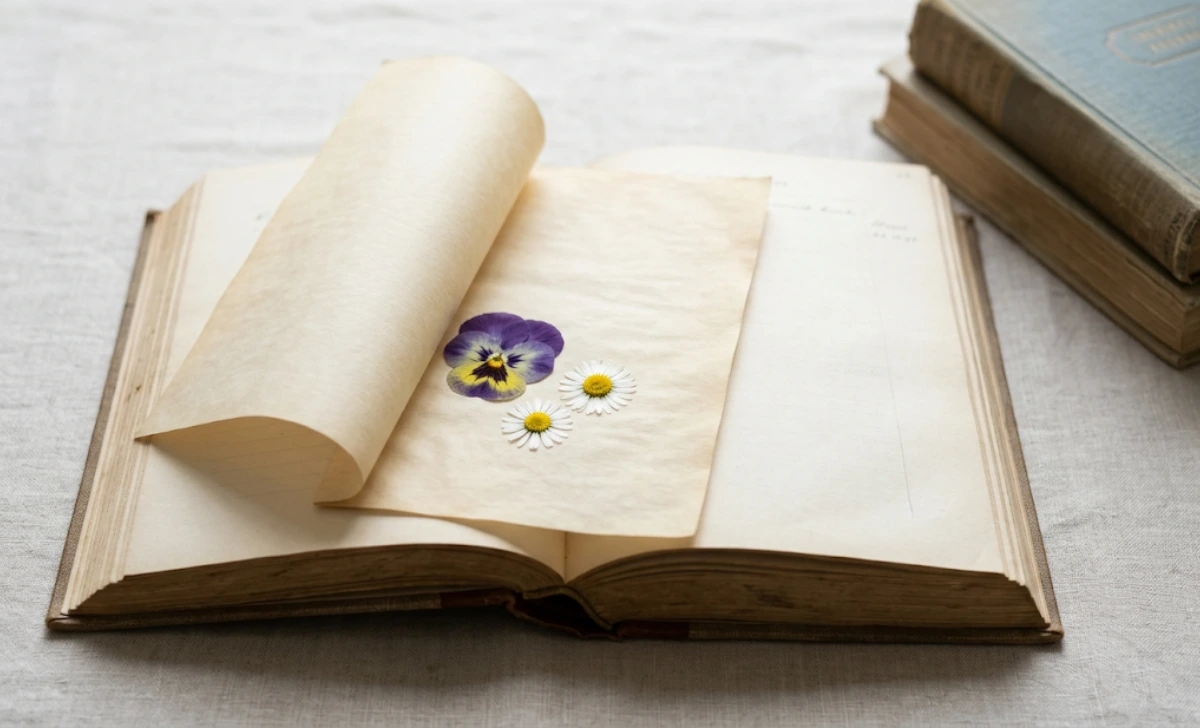
This method is genuinely satisfying and works beautifully for flat, delicate flowers — think pansies, violets, small daisies, herb flowers, and thin rose petals.
What you need: A heavy book, absorbent paper (parchment or coffee filters work great), and something heavy to stack on top.
Steps:
- Place a sheet of parchment paper on an open page of a heavy book
- Arrange your flower face down on the paper — don’t let petals overlap
- Cover with another sheet of parchment
- Close the book and stack 2–3 more books (or something equally heavy) on top
- Leave for 2–4 weeks, changing the parchment paper after the first week if it feels damp
The key trick most people skip: changing the paper. Damp paper sitting against your flower for three weeks is how you get mould. Swap it out after day 7, and you’ll get much cleaner results.
These pressed flowers are perfect for resin crafts, shadow boxes, greeting cards, and framing.
3. Using a Hairdryer on Low Heat
If you need something between air drying and microwaving, a hairdryer on the cool or lowest heat setting works surprisingly well for small blooms.
Hold it about 6–8 inches away from the flower and move it in slow, steady circles — you’re evaporating surface moisture, not cooking the petals. It takes roughly 10–15 minutes per small bunch. Once they feel dry to the touch, let them rest for a few hours before handling.
This works best for sturdy flowers like marigolds, zinnias, and dried herb sprigs. Skip it for anything with very thin or overlapping petals — the airflow can pull them apart before they’ve had a chance to set.
4. Glycerin Preservation (For Flexible, Long-Lasting Results)
This one’s a bit different — instead of removing moisture, you’re replacing it with glycerin, which keeps the flowers soft and pliable rather than brittle. It’s also one of the more budget-friendly, low-waste options if you’re trying to go green at home without spending a fortune — glycerin is inexpensive, reusable, and leaves no chemical residue.
Mix one part glycerin with two parts warm water. Trim the stems fresh, place them in the solution, and leave for 2–6 days, depending on the stem thickness. The leaves and petals will absorb the glycerin and change colour slightly — often a richer, deeper tone.
This method works especially well for eucalyptus, ferns, and magnolia leaves. Not ideal for delicate blooms, but excellent for foliage and woody stems.
Sometimes you don’t have two weeks. Maybe you want to preserve a birthday bouquet before it wilts completely, or you just don’t have the patience for the slow methods. Fair enough.
The Microwave + Paper Towel Method
This genuinely works, and it takes under 30 minutes for small flowers.
- Place the flower between two layers of paper towels
- Microwave on the lowest power setting (usually defrost/10%) for 30-second intervals
- Check after each interval — the paper towel absorbs the released moisture
- Repeat until petals feel dry but not scorched
- Let cool completely before handling (they’re fragile when warm)
Roses, small marigolds, and herb flowers respond really well to this. Large blooms with thick heads don’t work as well — the outside dries before the inside, and you get rot in the centre.
Total time: 20–45 minutes, plus a few hours of rest before use.
Can You Dry Flowers in an Air Fryer?
This one’s been making the rounds on Reddit crafting communities, and the short answer is: sort of.
You can use an air fryer at the absolute lowest setting (around 95–100°F if your model allows that low) for 2–4 hours. The problem is that most home air fryers run hot, and even on low, they can scorch or over-dry delicate petals almost instantly.
If you want to try it, use sturdier flowers (marigolds, zinnias), check every 20 minutes, and don’t walk away. It’s more of a hands-on experiment than a reliable method. The microwave approach above is more predictable for most people.
How to Keep Colour When Drying Flowers
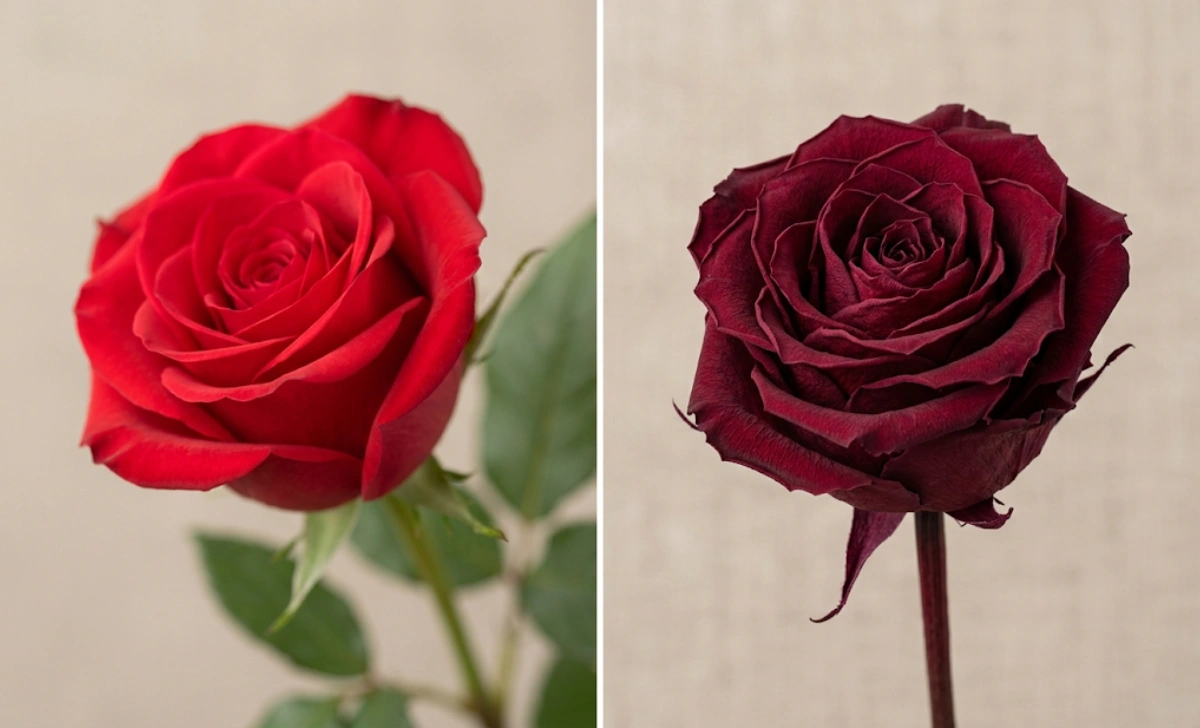
Colour loss is almost always a prep and environment problem. The two biggest factors are light exposure and harvest timing — and both are easy to control once you know what to watch for.
Dry in darkness. Even indirect sunlight fades petals during the drying process. A closet, or simply draping a box over your hanging bunch, makes a visible difference by the time they’re done.
Cut at the right time. Flowers picked early in the morning — before the afternoon heat kicks in — retain colour better. Flowers that have been sitting in a vase for a week before drying will always look more faded, regardless of the method.
Avoid heat drying for colour-sensitive flowers. Microwave and oven methods are faster but cause more colour change. Air drying in a dark, dry room consistently produces the most vivid results — it just takes longer.
Seal with hairspray after drying. Once your flowers are completely dry, a light coat of unscented hairspray held about 12 inches away locks the petals in place and adds a small amount of UV protection. It’s not a perfect fix, but it genuinely extends how long they hold their colour.
Tips to Stop Dried Flowers From Crumbling
You’ve done everything right — dried them properly, stored them — but they’re still fragile and shedding petals. Here’s how to handle that.
Don’t store them somewhere warm. Heat continues to draw out residual moisture even after drying, which makes petals brittle over time. A cool, dry room is best. Avoid windowsills, spots above radiators, or anywhere that gets afternoon sun through a window.
Handle them as little as possible. Dried flowers don’t have the structure of fresh ones. Every time you touch them, you risk snapping a stem or losing a petal. Arrange them once in a vase or display, and leave them there.
Use a light hairspray or flower sealant spray as soon as they’re dry — this adds a protective coating that reduces crumbling significantly.
Avoid high-humidity rooms. Dried flowers left in a bathroom or kitchen can actually start to reabsorb moisture from the air and go soft again. This is called rehydration, and it’s just as damaging as never drying them properly in the first place.
What to Do Next
Start with one method — the hanging method if you have time, the microwave method if you don’t. Get the prep steps right first (timing the cut, stripping leaves, choosing a dry room), and the rest follows naturally.
Once you’ve got dried flowers on hand, the fun part starts: pressing them for frames, making wreaths, adding them to resin, or putting a simple bunch in a vase that lasts all year. They also make beautiful accents for outdoor spaces — if you’re working on your garden and want ideas for displaying them along pathways or garden borders, these cheap DIY garden path ideas pair really well with dried flower arrangements for a finished, put-together look.
If you’re thinking about what to do with your dried flowers next, check out [Internal Link: How to Make a Dried Flower Shadow Box — Step-by-Step Guide] — it’s a satisfying next project once you’ve got the drying part down.
FAQs
Can I dry any type of flower using these methods?
Most flowers work well with air drying and pressing. Flowers with a high water content — like tulips, hydrangeas, and succulents — are trickier and often don’t hold their shape as well. Roses, lavender, statice, strawflowers, and globe amaranth are the easiest to work with as a beginner.
My dried flowers went mouldy. What went wrong?
Almost always a humidity or airflow problem. Either the room was too damp, the stems were packed too close together, or the flowers were still too fresh-cut when you started. Make sure there’s real airflow around each bunch and that your drying space is genuinely dry — not just “not visibly wet.”
How long do dried flowers last once they’re done?
With proper storage, 1–3 years is realistic. In direct sunlight, they’ll fade and become brittle within a few months. Keep them away from heat, moisture, and direct light, and they’ll hold up surprisingly well.
Do I need to use a flower press, or is a heavy book fine?
A heavy book works perfectly well. A dedicated flower press just makes it slightly easier to apply even pressure and swap out paper. If you’re pressing flowers regularly, a press is worth it. For occasional use, any thick hardcover book does the job.