
Italian Fig Crop Loss: What’s Causing It, Who’s Hit Hardest, and What Farmers Are Doing Now
Italian fig crop loss refers to the sharp drop in fig yields across southern Italy caused by late frosts, heatwaves, heavy rainfall, and spreading disease. In 2025, some Apulian farmers reported losses of up to 70% in spring production alone. Climate change is the primary long-term driver, disrupting the stable Mediterranean growing conditions that Italian fig trees have depended on for centuries.
Italy’s fig farmers aren’t describing a run of bad luck. They’re describing a pattern.
Season after season, yields shrink, harvest windows shorten, and production costs climb while output falls. In 2025, the early fig season in Apulia started badly and got worse. A sudden spring frost killed flowers before they could set fruit. Heavy rain and hail waterlogged what remained. Some trees in Cisternino and Martina Franca produced nothing at all.
This article explains what is causing Italy’s fig crisis, which regions are worst affected, how farmers are fighting back, and what home gardeners should know before planting their own fig trees.
What Italian Fig Crop Loss Actually Means
Italian fig crop loss is not a single event. It is a worsening, multi-season trend in which fig trees across southern Italy consistently produce fewer fruits, or produce fruit that cannot be harvested, sold, or exported.
In some areas, losses in a single season have reached 60 to 70 per cent. That is not a slow decline. It is a collapse that wipes out farm income, breaks export commitments, and forces growers to question whether figs are still worth growing.
Italy is one of the world’s leading fig producers. The main commercial regions are Apulia, Calabria, Campania, and Sicily. Popular varieties include Dottato, Brogiotto, and Nero, each tied to specific local climates and generations of farming knowledge. For many small operations in the south, figs are the only significant source of annual income.
When one bad season hits, families don’t just lose revenue. They lose the capital needed for the next planting cycle.
Italian Fig Crop Loss Is Worst in Apulia
Apulia has always been the centre of Italian fig production. It still is. It is also where the damage is most severe.
In May 2025, Francesco Palasciano of Cuore Verde farm in Fasano reported a 70 per cent drop in spring fig production across rural and hilly areas. “It looked like it would be a promising year,” he told FreshPlaza. “However, a sudden frost damaged the green and black flowers, which fell to the ground shortly afterwards.”
The ripening window also collapsed. Figs that normally arrive in mid-June came at the end of May instead, compressing the entire harvest into just a few days. That kind of compressed timing puts impossible pressure on farm labour, cold storage, and transport logistics.
In Molfetta, sales manager Michelangelo De Chirico estimated a production drop of around 50 per cent for early figs. He noted that the zone between Molfetta, Giovinazzo, and Terlizzi was especially hard hit by early fruit dropping. A new export order from Switzerland, arranged on the strength of the previous year’s production, had to be cancelled entirely.
Nicola Coniglio of Adelfia confirmed the same picture, calling 2025 “comparable to the previous two years” in terms of frost damage and low yields. That word “comparable” matters. This is not one bad season. It is a three-year trend.
Three Weather Events Behind the Crisis
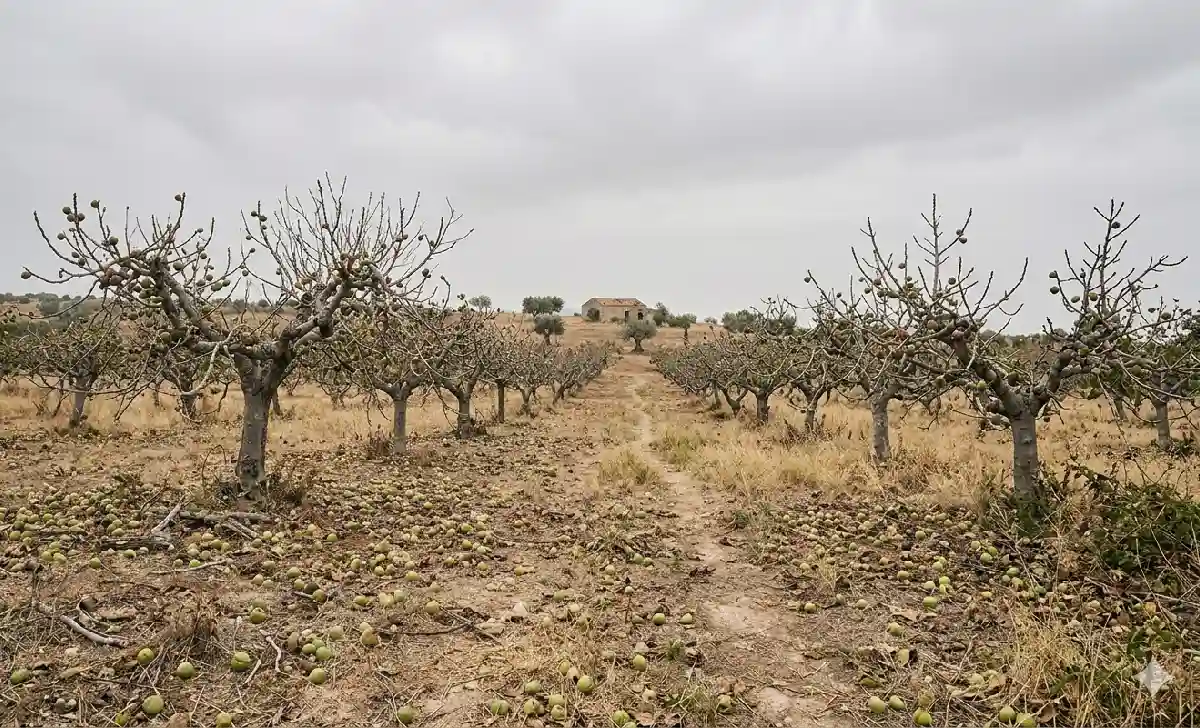
The 2025 season in Apulia was shaped by three overlapping weather problems. Each one alone would have set the season back. Together, they destroyed it.
Late spring frost: A frost event in early April killed fig flowers and young buds during their most vulnerable stage. When flowers die before they can be fertilised, there is no fruit. Growers across the province of Bari and the Brindisi area all reported the same phenomenon.
Heatwaves compressing the ripening window: Above-normal temperatures in May caused fruit to ripen 17 to 23 days ahead of schedule. This shortened the harvest window and overwhelmed every stage of the supply chain from picking to packing.
Heavy rain and hail: Gaetano Modugno of Evergreen in Polignano a Mare reported that hail and sustained rainfall loaded the surviving fruit with water, reducing its firmness significantly. Soft, water-heavy figs bruise easily during transport. European buyers accustomed to the firmness of Turkish figs rejected much of what Apulia had to offer that season.
The problem is the combination and the fact that it keeps repeating. A single frost event in an otherwise normal season can be absorbed. Three consecutive damaging seasons cannot.
Pests and Disease Making Things Worse
Weather is the most visible problem, but it is not working alone. Rising temperatures and shorter cold winters are allowing pest populations to establish and spread more easily.
The Fig Mosaic Virus (FMV) is one of the most damaging threats at the orchard level. It causes leaves to yellow and curl, reduces fruit size, and spreads quickly between trees. Once it takes hold in an orchard, it is nearly impossible to eliminate. Italian researchers are working on FMV-resistant varieties, but these are not yet commercially available at scale.
Bark beetles, fig moths, and sap beetles target trees already weakened by drought or temperature stress. When a tree is struggling from a frost event or heat damage, it has fewer resources to resist insect attack. The combined pressure of disease and pests strips orchards of both short-term yield and long-term viability.
Integrated Pest Management (IPM) is becoming the standard response among more forward-thinking growers. This approach combines natural predators, scheduled monitoring, and targeted treatment to reduce damage without degrading soil health or creating chemical resistance.
The Economic Toll Goes Beyond the Farm
When fig yields fall by half or more, the financial damage spreads far beyond individual farms.
Small operations that depend entirely on figs have no buffer. A 30 per cent yield loss can make a season unprofitable. A 70 per cent loss can end a farming business. When farms stop operating, seasonal agricultural workers lose weeks of income. Rural communities in Apulia and Calabria are losing population. Traditional farming knowledge, built up over generations, disappears with the people who held it.
Export markets take a lasting hit too. Italian figs carry a quality premium with buyers in Northern Europe. When supply falls short, buyers turn to Turkey, Spain, or North Africa. Once those supply relationships form, they are difficult to reverse even when Italian yields recover.
Fig prices on international markets have increased in response to tighter supply. On paper, that looks like good news for growers. In practice, the price premium tends to benefit distributors and export brokers more than the farmers absorbing the losses at the source.
Francesco Palasciano summarised the downstream effect clearly: “When there is little produce, it means the plant has suffered, and the fruit won’t last long.” Short shelf life limits market options even for the fruit that does survive.
The Climate Change Factor
Palasciano’s assessment of the long-term problem was direct. “The real problem is climate change. The fig tree can no longer adapt to its former habitat. Every year, it produces less. If this continues, many will be forced to switch to growing different crops.”
Fig trees evolved for a specific Mediterranean balance: mild winters, dry summers, and predictable seasonal transitions. That balance is becoming less reliable across southern Italy each decade.
Climate projections for southern Europe through the 2030s point toward continued warming and increasingly irregular rainfall. Summers will bring more intense heat events. Winter temperature swings will grow less predictable, creating exactly the late frost conditions that damaged 2025’s early fig crop.
Some farmers are already exploring alternative crops. Almonds and prickly pear tolerate higher heat and lower water availability. Olives require less precise seasonal conditions than figs. The transition, if it happens widely, will take years to complete and will carry a cultural cost that is hard to measure in any financial report. In Italy, fig trees are passed down through families. They mark generations and connect households to the land in a way that few other crops do.
How Farmers Are Responding to Italian Fig Crop Loss
Italian growers are not standing still. Many have already started changing their methods at every level of production.
What is working:
- Frost covers and windbreaks: Protective nets and physical barriers shield young trees and developing flowers from sudden cold during the critical spring period.
- Drip irrigation: Consistent, targeted moisture delivery reduces the heat stress that weakens trees and makes them more vulnerable to disease.
- Canopy pruning: Opening the tree’s canopy improves air circulation, reduces heat load on individual fruits, and makes pest monitoring easier.
- Staggered variety planting: Growing early, mid-season, and late fig varieties spreads risk across the calendar. If one window is hit by the weather, the others may survive.
- Integrated Pest Management: Combining biological controls with careful monitoring reduces pest damage without the side effects of heavy chemical use.
- Agrivoltaic systems: Research farms in southern Italy are testing solar panels positioned above crops to provide shade during peak summer heat. The panels generate electricity while protecting the fruit below.
Some Apulian cooperatives are also experimenting with new cultivars bred for temperature resilience, aiming to find varieties that don’t depend on the stable conditions that no longer consistently exist.
Francesco Palasciano remains cautiously hopeful about the September harvest season. The winter rains in 2025 produced good vegetative growth, which could extend the late-season campaign. “The real concern,” he noted, is extreme summer heat waves that could burn fruit before it matures.
Growing Fig Trees at Home: What the Crisis Teaches You
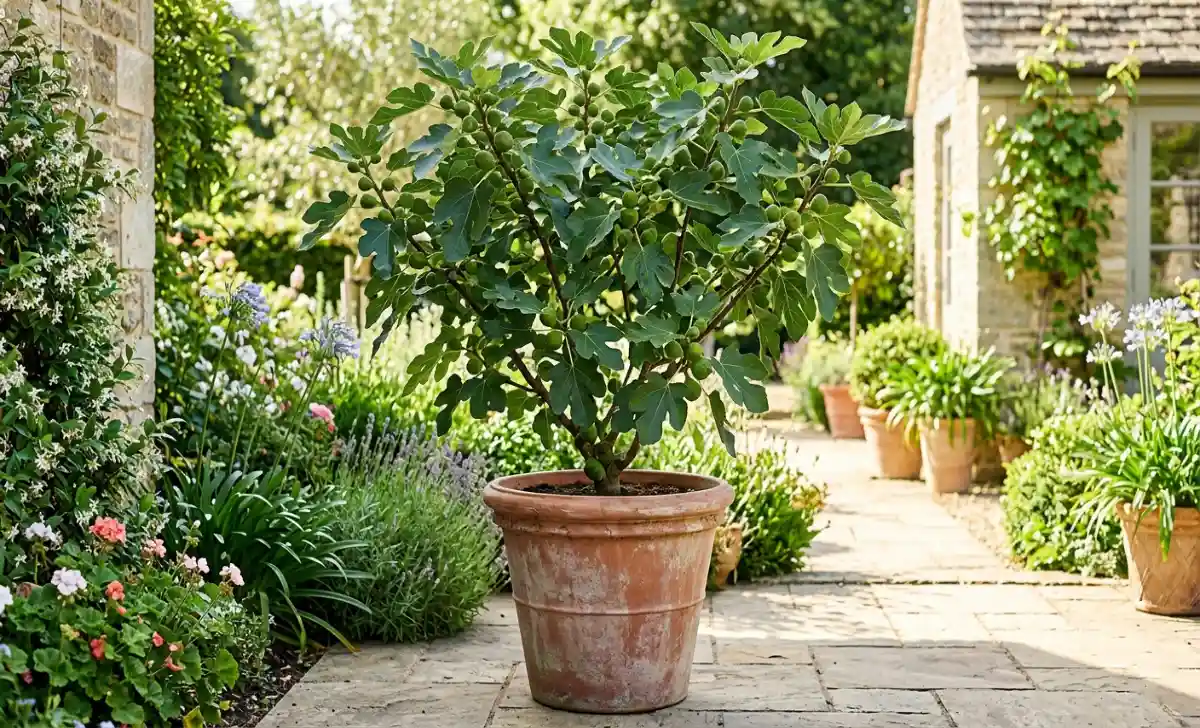
The challenges facing Italian commercial fig farmers offer direct, practical lessons for anyone growing a fig tree in a home garden.
Soil drainage is the priority. Figs need well-drained, slightly alkaline ground. Waterlogged soil cuts off oxygen to the roots and creates the exact conditions that allow fungal infections to take hold, which is one of the compounding problems in Apulia during heavy rain years. If you are building out a garden space, good path and drainage design matters from the start. Ideas for cheap DIY garden path designs can help you improve layout and drainage without a large budget.
Container growing is increasingly common even among professional growers, and for good reason. A mix of loam, compost, and sharp sand gives the tree excellent drainage. Pots also let you move the plant indoors or under cover when frost threatens, which addresses one of the main damage mechanisms seen in Apulia. Trees in containers produce fewer total fruits but often deliver better quality per branch than large, unmanaged orchard trees.
For home gardeners who want to grow food in a resource-conscious way, fig trees are a natural fit with a lower-impact garden approach. Mulching retains moisture between waterings, composting builds the soil structure figs need, and rainwater collection reduces dependence on treated water. If you are building a greener home garden from scratch, this guide to going green at home without spending a fortune covers practical steps that apply directly to food gardens.
Figs also work well alongside other low-maintenance trees and shrubs that don’t compete aggressively for water. If you are choosing companion plants for structure and year-round interest, the Eagleston Holly tree is one option worth considering. It is a drought-tolerant evergreen that adds screening and greenery without the high water needs that would stress a fig’s root zone.
Fig trees generally take two to three years after planting to produce a meaningful harvest. They fruit on new growth, so annual pruning keeps yields coming. Plant in late winter or early spring to give the roots time to establish before summer heat arrives.
FAQs About Italian Fig Crop Loss
What is the Italian fig crop loss?
It refers to the significant drop in fig yields across Italy’s southern growing regions, particularly Apulia, Calabria, and Sicily. Losses stem from late spring frosts, heatwaves, heavy rainfall, and spreading diseases like Fig Mosaic Virus. In some Apulian areas during 2025, up to 70 per cent of spring production was lost in a single season.
Which Italian region is most affected?
Apulia is the hardest hit. The zones around Molfetta, Giovinazzo, Terlizzi, Cisternino, and Martina Franca have seen the most consistent and severe losses over the past three seasons.
Why do Italian figs drop before they can be harvested?
Early fruit drop is mainly triggered by sudden temperature changes, particularly frost during the flowering stage. Pest pressure, heavy rain, and heat-driven accelerated ripening also cause fruit to fall before it reaches maturity.
Can fig trees recover after a damaging season?
Yes, if the tree itself remains structurally healthy. Weather-damaged seasons do not necessarily cause permanent harm. If root rot, viral disease, or bark beetle damage is involved, recovery takes longer and may require removal of infected material or soil treatment.
Are Italian figs still available to buy?
Yes, though supply has been tighter and prices higher in recent seasons. Dried figs and late-season varieties harvested from August onward have been more consistently available than the early spring fioroni crop, which has seen the worst losses.
What should home gardeners take from Italy’s fig crisis?
Protect trees from frost during the flowering stage. Maintain well-drained soil. Avoid overwatering, especially during cool periods. Container cultivation is a practical option in climates with unpredictable frosts. Choose varieties bred for your local conditions.