Do Raspberries Need Full Sun? Here’s What Actually Affects Your Harvest
You finally planted that raspberry patch you’d been thinking about for years. You picked a spot, amended the soil, gave it space — and now, season after season, you’re getting a handful of berries when you expected quarts. Sound familiar?
Nine times out of ten, the culprit is sunlight. Not the soil. Not your watering schedule. The spot.
So do raspberries need full sun? The short answer is yes — but there’s a lot more to it than just “plant in a sunny spot.” The timing of sun exposure, how many hours you’re actually getting, and what variety you’re growing all make a real difference. This guide walks you through all of it: what full sun actually means for raspberries, what happens in partial shade, how to protect your berries from too much heat, and how to figure out exactly what your yard is giving you before you plant.
Do Raspberries Really Need Full Sun to Grow?
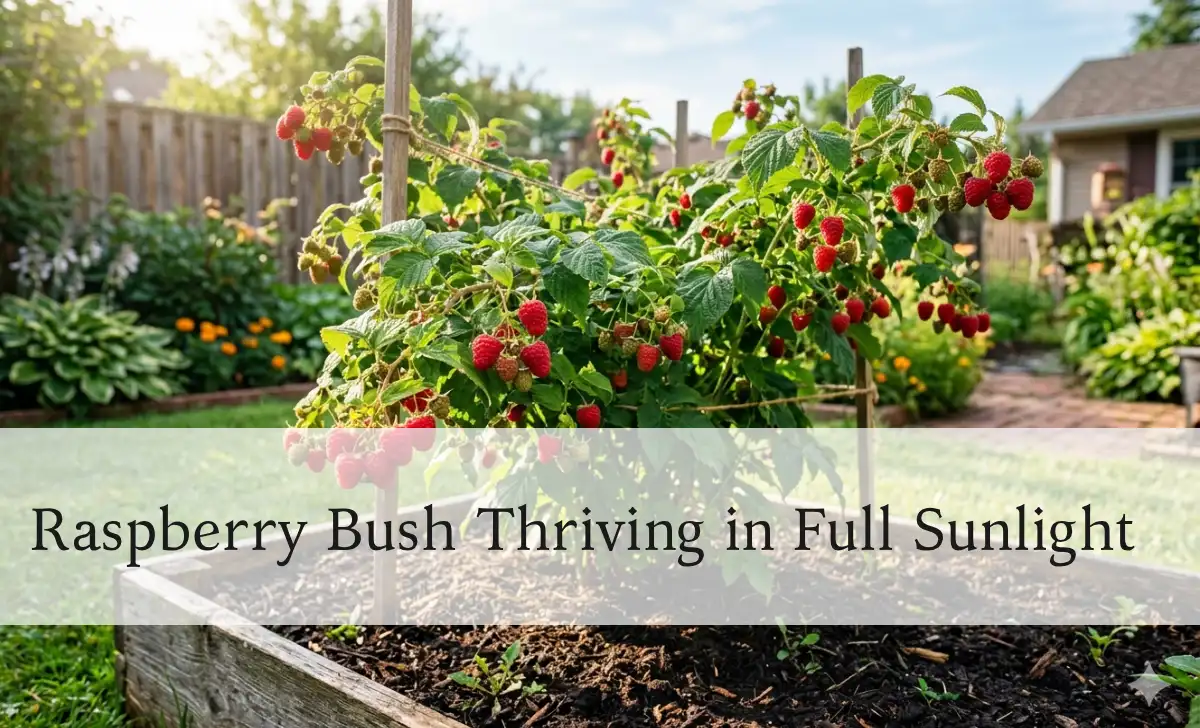
Yes — raspberries (Rubus idaeus) are sun-hungry plants. They perform best with at least 6 to 8 hours of direct sunlight per day, and 8 or more hours is the sweet spot for maximum fruit production. Sunlight is what drives sugar development in the berries, encourages strong cane growth, and helps keep moisture-related diseases at bay.
That said, raspberries can survive with less sun. “Survive” is the key word, though. A plant getting only 4 hours of sun a day will technically stay alive, but you’ll likely be disappointed come harvest time. Less sun almost always means fewer berries, smaller fruit, and blander flavour.
What Counts as “Full Sun” for Berry Plants?
In gardening terms, “full sun” means a minimum of 6 hours of direct, unfiltered sunlight each day. For raspberries specifically, more is better — 8 hours is ideal, and many experienced growers aim for even longer exposure when possible.
Here’s the catch: that 6-hour minimum assumes fairly consistent, direct light. Dappled sun through tree canopy, or light that’s partially blocked by a fence for part of the day, doesn’t really count as full sun even if the clock says 6 hours. You want clear, direct rays hitting the plant.
How Many Hours of Sun Do Raspberries Need Each Day?
The table below shows what you can realistically expect at different sunlight levels. Think of it as a quick gut-check before you commit to a planting spot.
| Sun Hours/Day | Condition | Impact on Yield | Impact on Berry Quality |
| 8+ hours | Full Sun | Maximum — best fruit set and flavour | Sweetest, largest, deepest colour |
| 6–8 hours | Full Sun (acceptable) | Very good — minor reduction possible | Excellent, nearly full flavor |
| 4–6 hours | Partial Shade | Moderate — up to 30–40% less fruit | Slightly tart, smaller berries |
| 2–4 hours | Heavy Partial Shade | Poor — 50%+ fewer berries | Bland, watery, poor colour |
| Under 2 hours | Deep Shade | Very poor — may not fruit at all | Minimal production; plant declines |
The numbers above aren’t hypothetical — research on small fruit production consistently shows that reduced light leads to lower sugar accumulation in berries and shorter primocane (first-year cane) growth. Shorter canes mean fewer flowering sites the following year, which directly reduces your harvest.
Morning Sun vs. Afternoon Sun — Does It Matter?
In my experience, morning sun is genuinely better for raspberries — and I’d take 6 hours of eastern morning light over 8 hours of blazing western afternoon sun any day. Here’s why.
Morning sun is gentler. It dries dew off the leaves quickly, which reduces the risk of fungal disease. Afternoon sun, especially in the South (think USDA Zones 7–9), can be brutally intense and actually cause more harm than good — contributing to heat stress and sunscald on the fruit.
If you’re in the upper Midwest or Northeast (Zones 3–5), afternoon sun is rarely a problem, and you should grab every hour of it you can. But if you’re gardening in Texas, the Carolinas, or anywhere that sees consistent 90°F+ summer heat, a spot with morning sun and a bit of afternoon shade might actually outperform a full-sun location.
Can Raspberries Grow in Partial Shade — and Should You Try?
Technically yes. Practically speaking, it depends on how much shade you’re dealing with.
If your yard is shaded by a neighbour’s oak tree until around 9 or 10 a.m. but gets solid sun for the rest of the day, you’re probably fine — especially if you pick the right variety. But if you’re looking at a north-facing bed that gets 3 or 4 hours of filtered light, raspberries are going to struggle.
The main issues with too much shade aren’t just about yield. Shaded plants produce longer, weaker canes (called floricanes in their second year) that are more prone to flopping over. Poor air circulation in shaded areas also sets the stage for botrytis (grey mould) and other fungal problems.
How Shade Affects Fruit Yield and Flavour
When raspberries don’t get enough light, photosynthesis slows down. Less photosynthesis means fewer carbohydrates are available for fruit development. The result? Fewer berries that are smaller, less sweet, and slower to ripen.
Plants receiving fewer than 4 hours of direct sun may produce 50% fewer berries compared to the same variety grown in full sun. And those berries that do form tend to be watery and tart rather than the plump, sweet fruit you’re hoping for.
Shade-Tolerant Raspberry Varieties Worth Considering
No raspberry variety truly “loves” shade — but some handle reduced light better than others. If partial shade is your reality, these varieties give you the best shot:
- Crimson Night — one of the more shade-adaptable red varieties; produces well even with 4–5 hours of sun
- Heritage — a classic everbearing variety with solid performance in slightly less-than-ideal light conditions
- Jewel (black raspberry) — slightly more shade-tolerant than most reds; good for woodland edges
- Fall Gold — a yellow everbearing type that handles partial shade reasonably well
That said, even these varieties will produce noticeably more in full sun. Think of shade tolerance as damage control, not an upgrade.
What Happens When Raspberries Get Too Much Sun?
Here’s a problem most growing guides gloss over: yes, too much sun — specifically too much intense afternoon heat — can actually damage your berries. It’s called sunscald, and if you’ve ever walked out to your patch and found white, bleached-out berries that should be bright red, you’ve seen it in action.
What Is Sunscald and How Do You Prevent It?
Sunscald happens when the surface temperature of the berry gets too high from direct, intense sun exposure. The cells in the fruit essentially cook, turning white or pale yellow instead of ripening to their normal colour. Sunscalded berries are soft, mealy, and flavourless — not worth eating.
It’s most common in Zones 7 and above during peak summer heat (July and August), but it can happen anywhere if you get an unexpected heat wave.
Heat-related fruit damage isn’t unique to raspberries, either. Growers of other crops deal with the same frustrations — Italian fig farmers have seen significant crop losses from heat waves and erratic weather in recent seasons, a reminder that protecting fruit crops from temperature extremes is an increasingly important part of backyard gardening.

Here’s what you can do to prevent it:
- Plant raspberries where they receive afternoon shade (eastern or north-facing exposure) in hot climates (Zones 7–9)
- Use shade cloth rated at 20–30% during peak summer weeks — it blocks harsh light without significantly cutting into photosynthesis
- Water deeply in the morning to help plants stay cool during afternoon heat
- Mulch heavily around the base (3–4 inches of straw or wood chips) to keep soil temperatures down
- Avoid planting against south-facing walls or light-reflecting structures like white fences, which amplify heat
How to Pick the Best Sunny Spot for Your Raspberry Plants
Sunlight is the biggest factor, but it’s not the only one. The ideal raspberry site checks several boxes at once. Here’s a step-by-step way to evaluate any spot in your yard before you plant:
Spacing, Drainage, and Soil — The Other Half of the Equation
- Track sun exposure for a full day. Stand at the spot in the morning, afternoon, and evening. Note when direct sun starts and when it ends. Do this on a clear day for the most accurate read.
- Check drainage after rain. If water pools or stays soggy for more than an hour, that spot has a drainage problem. Poor drainage leads to root rot, which kills raspberries faster than shade ever will. Raised beds are a smart fix here.
While you’re laying out your raspberry area, it’s also a good time to think about access. A simple path between rows makes weeding, harvesting, and maintenance far easier — and it doesn’t have to cost much. These cheap DIY garden path ideas cover options that work well in tight spaces and look better than you’d expect for the price.
- Test your soil pH. Raspberries prefer a pH of 5.6 to 6.2. You can pick up an inexpensive test kit at most garden centres. If your pH is off, even a perfect sunny spot won’t give you great results.
- Look for air circulation. Avoid low-lying spots where cold air settles (late frost can kill new canes) and spots surrounded by walls or dense plantings that trap humidity.
- Check for competition. Nearby trees don’t just shade your raspberries — they compete for water and nutrients too. Keep your planting at least 10 feet from established trees if possible.
- Confirm adequate space. Raspberries spread by underground runners. Plan for a row at least 3 feet wide, with 18–24 inches between plants within the row and 6–8 feet between rows.
Summer-Bearing vs. Everbearing Raspberries and Sun Exposure
Summer-bearing raspberries (like Heritage or Canby) fruit once per season on second-year floricanes. They depend heavily on the previous summer’s sun exposure to build strong canes that fruit the following year. This means poor sunlight doesn’t just affect this year’s harvest — it sets back next year’s production too.
Everbearing raspberries (like Caroline, Encore Red, or Anne) fruit on first-year canes in late summer and fall, then again on those same canes the following spring. Because you’re harvesting on current-year growth, everbearing types can be slightly more forgiving in lower-light situations — a partial sun spot may still give you a decent fall crop even if the spring crop is minimal.
That said, everbearing doesn’t mean shade-tolerant. It just means the margin for error is a little wider. If you’re working with a spot that gets 5 or 6 hours instead of 8, an everbearing variety like Caroline or Encore Red is a better bet than a summer-bearer.
Black raspberries (like Jewel) and golden varieties (like Fall Gold or Anne) round out the options. Blacks are a bit more shade-adaptable; goldens need full sun as much as reds do.
How to Measure Sunlight in Your Yard Before Planting
One of the most common mistakes home gardeners make is guessing at how much sun a spot gets. Your eye isn’t a reliable instrument here — it’s easy to overestimate light because a spot that feels bright doesn’t necessarily mean it’s getting enough direct rays.
Simple Tools and Methods to Track Your Yard’s Sun Patterns
The simplest method: the pencil-and-paper walk. Go outside every hour from 7 a.m. to 7 p.m. on a clear summer day and mark down whether your target spot is in direct sun or shade. Count the direct-sun hours. This takes 15 minutes total across the day and gives you a reliable number.
A slightly more accurate option: a sun calculator app. Apps like Sun Seeker or Sun Surveyor let you point your phone at a spot and see exactly when the sun will hit it throughout the day and across seasons. Useful if you’re planning for spring planting during winter.
The most accurate tool: a sunlight meter. Devices like the Solu-Cal or similar garden sun meters sit in the soil and measure light intensity over a full day, then give you a reading. They run $15–30 at most garden centres and are worth it if you’re serious about optimising your planting location.
One more thing to keep in mind: measure in summer, not spring. The sun angle changes significantly between April and July. A spot that gets 7 hours of sun in April might only get 5 once the trees leaf out. Always assess sunlight during the season when your raspberries will actually need it most.
The Bottom Line on Raspberries and Sunlight
Raspberries are one of the most rewarding crops you can grow at home — but they don’t negotiate much on sunlight. Give them the right spot, and they’ll produce reliably for a decade or more. Shortchange them on sun, and you’ll be pulling a cup of berries from a patch that should be giving you quarts.
Here’s a quick summary of the most important points:
- Raspberries need at least 6 hours of direct sun per day; 8+ hours produces the best yields and sweetest fruit
- Morning sun is preferable to harsh afternoon sun, especially in hot climates (Zones 7–9)
- Partial shade (4–6 hours) is workable but expect noticeably fewer, smaller, less flavorful berries
- Sunscald from too much intense heat is a real risk — mulch, morning watering, and afternoon shade protection can help
- Everbearing varieties like Caroline and Encore Red handle marginal sun slightly better than summer-bearing types
- Measure your yard’s actual sun hours on a clear summer day before you commit to a planting spot
- Good drainage and proper soil pH (5.6–6.2) matter as much as sunlight — don’t skip those checks
If your yard gets at least 6 solid hours of direct sun, you’re in good shape. If it’s closer to 4 or 5, lean toward an everbearing variety and do what you can to maximise the light you have — trim back overhanging branches, avoid planting near tall structures, and choose a south- or east-facing orientation. You might be surprised what you can pull off with a little planning.
One more thing worth knowing: raspberry canes produce delicate blossoms before the fruit sets. If you’re interested in preserving any of those flowers — or other blooms from your garden — this guide to drying flowers without them falling apart covers five methods that actually hold up over time.
FAQs
Can raspberries grow in partial shade?
Yes, but with noticeable trade-offs. Plants in 4 to 6 hours of sun will produce fruit, but yields can drop by 30 to 50% compared to a full-sun location. Shade-tolerant varieties like Crimson Night or Jewel give you the best chance in lower-light conditions.
How many hours of sun do raspberries need?
A minimum of 6 hours per day, with 8 or more being ideal for maximum yield and berry sweetness. The more direct sunlight, the better — as long as you’re in a climate where afternoon heat doesn’t become a problem.
What happens if raspberries don’t get enough sun?
Reduced sunlight leads to fewer flowers, smaller fruit, and blander flavour. Canes also tend to grow taller and weaker (reaching for light), making them more prone to flopping over and to fungal disease due to poor air circulation.
Do raspberries need afternoon shade in hot climates?
In Zones 7 through 9, yes — some afternoon shade is actually beneficial. Intense afternoon sun combined with 90°F+ heat can cause sunscald, turning berries white and rendering them inedible. In those regions, morning sun with light afternoon shade often produces better results than all-day exposure.
Can you grow raspberries on the north side of a house?
Generally not recommended. North-facing beds in most of the US get significantly less direct sun, especially in spring and fall when cane development is critical. Unless you’re in a very southern location where that shade is actually an advantage, the north side of a house is not ideal for raspberries.
Does sunscald ruin raspberry fruit?
Yes. Sunscalded berries turn white or pale, become soft and mushy, and lose most of their flavour. Once a berry is sunscalded, it won’t recover. Prevention — through siting, mulching, and shade cloth during heat waves — is the only real fix.
Do everbearing raspberries need more sun than summer-bearing?
Not more — but they’re slightly more forgiving in lower-light conditions because they fruit on current-season canes. Summer-bearing types build their fruiting wood over two seasons, so consistently poor sunlight compounds over time. Both types still prefer full sun.