Metal vs Wood Bed Frame: Which One Is Better for You?
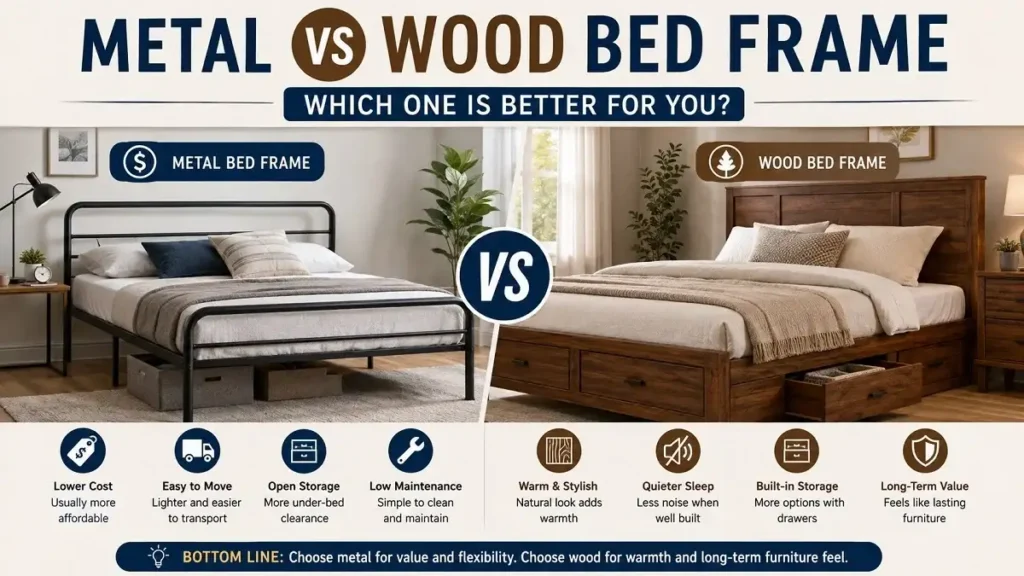
A metal bed frame is usually the better choice if you want something affordable, easy to move, simple to clean, and strong for the price. A wood bed frame often makes more sense if you care about a warmer look, quieter sleep, built-in storage, and furniture you plan to keep for years.
Neither material is automatically better. Construction quality, center support, slats, joints, finish, and mattress requirements can matter just as much as the material itself.
Pick metal for lower cost, easier moving, and simple upkeep. Pick wood for a warmer look, quieter feel, and furniture you plan to keep long term.
Metal vs Wood Bed Frame: Quick Comparison
Here is the simplest way to compare the two before looking at the details.
| Metal Bed Frame | Wood Bed Frame |
|---|---|
| Usually more affordable | Often costs more, especially solid wood |
| Often lighter and easier to move | Usually heavier and more substantial |
| May squeak if hardware loosens | Often quieter when well built |
| Commonly offers open under-bed space | More likely to include built-in drawers |
| Best for budgets, renters, and frequent movers | Best for long-term rooms, natural styling, and a furniture-like feel |
If you have not chosen your mattress or frame size yet, start there. This guide to bed sizes and room dimensions can help you work out how much space the frame will actually take up.
What Makes Metal and Wood Bed Frames Different?
Metal frames are usually made from steel or iron, while wood frames may use solid timber or engineered wood. The material affects weight, appearance, maintenance, and how the frame reacts to moisture, but it does not tell you everything about quality.
A sturdy metal frame with good joints and strong center support can outperform a poorly made wood frame. In the same way, a solid wood bed with secure joints can last far longer than a cheap frame made from weak particleboard.
The better approach is to compare the complete frame rather than choosing by material alone.
Which Bed Frame Is More Durable?
Both metal and wood bed frames can last for many years when they are well made. The main difference is how each material tends to wear.
Metal does not crack or split like wood, and a good protective finish helps it handle normal bedroom humidity. Exposed or poorly coated metal, however, can rust in damp conditions.
Solid wood can also stay strong for years, but changes in humidity may cause small amounts of shrinking or swelling. Hardware and joints can loosen over time and may need tightening.
Instead of relying on a fixed lifespan estimate, look at how the frame is built.
Signs of a Well-Built Bed Frame
Strong center support, especially on larger bed sizes.
Secure joints that do not shift when pressure is applied.
Stable legs and a frame that does not flex or wobble.
Metal vs Wood Bed Frame for Strength and Mattress Support
Metal is not automatically stronger just because it feels harder. The amount of weight a frame can safely hold depends on its design, size, center supports, legs, joints, and manufacturer rating.
A well-designed metal platform can support a heavy mattress and multiple sleepers, but a strong hardwood frame can do the same. Cheap versions of either material may flex, wobble, or fail much sooner.
Slat design also matters, especially with foam, latex, and hybrid mattresses. These mattresses often need closely spaced support, but the exact maximum gap depends on the mattress manufacturer.
📌 Good To Know
Check the frame’s stated weight limit and compare its slat spacing with your mattress requirements. These details are more useful than assuming one material is always stronger.
Which Is Quieter: Metal or Wood?
A well-built wood frame often has an advantage if noise is one of your main concerns. Wood does not produce the same metallic rubbing sound that can develop when loose metal parts move against each other.
That does not mean every metal bed squeaks. Welded designs have fewer moving joints, while rubber pads between contact points can help reduce noise.
Wood beds can develop squeaks too. Loose hardware or movement around the joints may create creaks over time.
If you are a light sleeper or share your bed with someone who moves often, pay attention to joint design and customer feedback about noise rather than choosing by material alone.
Which Costs Less?
Metal bed frames usually cost less at the entry and mid-range levels. This makes them a practical choice for guest rooms, rentals, first apartments, and bedrooms being furnished on a tighter budget.
Wood covers a wider price range. Engineered wood can be fairly affordable, while large frames made from solid oak, walnut, or other hardwoods can cost considerably more.
A lower price does not always mean better value. A cheap frame that starts wobbling or bending may cost more in the long run if you have to replace it.
Compare the support system, hardware, finish, warranty, and overall construction before deciding which option offers better value for your needs.
Maintenance and Cleaning
Metal frames are generally easy to maintain. Exposed rails and legs can be wiped clean, and simple designs often have fewer broad surfaces where dust can settle.
The main concern is damage to the protective coating. If bare metal becomes exposed in a humid room, rust can develop around scratches, joints, or bolts.
Wood also needs regular dusting, but its finish may require more care. Wipe up moisture quickly and tighten the hardware if the frame begins to move.
Tighten loose hardware before movement gets worse.
Clean spills and moisture from the frame promptly.
Do not ignore scratches that expose bare metal in a damp room.
Do not leave water sitting on a wood finish.
Non-upholstered frames of either material are usually easier to clean than heavily padded beds because fabric can trap more dust and takes longer to maintain.
Which Is Easier to Assemble and Move?
Metal often has the advantage if you move frequently. Many frames use rails, bolts, or folding sections that can be separated into smaller pieces.
Wood frames tend to be heavier, especially when made from solid timber. Large headboards, footboards, drawers, and thick side rails can also make them harder to carry through narrow halls or stairs.
Assembly still depends on the individual design. A simple wooden platform can be easier to put together than a metal frame with several braces and connection points.
Check the packed dimensions and total weight before ordering.
Measure tight doors, stairs, and hallways if the frame has large solid pieces.
Check whether the headboard, side rails, and other large sections can be removed for moving.
Storage: Which Frame Works Better?
Both materials can work well if bedroom storage matters, but they often handle it differently.
Metal platform frames commonly leave open space underneath. This makes it easy to slide boxes, baskets, or bags below the bed and remove them when needed.
Wood frames are more commonly available with built-in drawers or lift-up storage. These options keep belongings hidden and can make better use of a small room, although they also add weight and moving parts.
| Metal Storage | Wood Storage |
|---|---|
| Open clearance works well with removable boxes and baskets. | Built-in drawers keep stored items hidden. |
| Storage can be changed or removed easily. | Lift-up designs can make use of most of the space below the mattress. |
Check the actual under-bed clearance or drawer dimensions rather than judging storage space from product photos.
Style and Bedroom Design
Wood has a warm, natural appearance. Oak, walnut, pine, and stained finishes can work with traditional, rustic, Scandinavian, minimalist, and modern bedrooms.
Metal often looks lighter because its rails and legs can be thinner. Black steel works well in modern or industrial spaces, while painted or decorative metal frames can suit softer and more traditional rooms.
Neither material limits you to one style. A slim wooden platform can look modern, while a detailed metal frame can create a vintage look.
Choose a finish that works with the furniture and colors already in your bedroom.
Which Bed Frame Is Better in a Humid Room?
Humidity can affect both materials, although in different ways.
Unprotected metal can corrode if moisture reaches its surface. A rust-resistant or powder-coated finish provides better protection, but scratches should still be checked over time.
Wood can absorb and release moisture as humidity changes. This may cause slight movement around joints or panels, particularly with poorly dried or lower-quality timber.
💡 Humid Room Tip
Keep the room reasonably dry and ventilated. Avoid placing either frame directly against a wall that regularly feels damp.
Metal vs Wood Bed Frame: Which Should You Buy?
If you are still deciding, choose based on the feature that matters most to you.
If strength and durability are your main priorities, there is no automatic winner. Construction quality should decide the purchase.
What to Check Before Buying Either Type
Look beyond the styling photos and check how the frame is actually built.
Bed Frame Buying Checklist
Enough center support for the bed size.
Slat spacing that matches your mattress requirements.
Secure side rails, stable legs, and joints that do not wobble.
A stated weight limit suitable for the mattress and sleepers.
Compatibility with any box spring or foundation your mattress needs.
For metal, look for a durable protective finish and secure joints. For wood, check whether the frame uses solid timber, plywood, MDF, particleboard, or a combination of materials.
Final Buying Recommendation
Choose a metal bed frame if you want a lower-cost, lighter, easy-to-move option. It is especially practical for renters, guest rooms, smaller spaces, or anyone who expects to move the bed regularly.
Choose a wood bed frame if you want a quieter, warmer-looking bed that feels more like permanent bedroom furniture. It is often the better fit when appearance, built-in storage, and long-term use matter more than portability or initial cost.
Pick metal for value and flexibility. Pick wood for warmth and long-term furniture appeal. If support and durability matter most, compare construction quality rather than material alone.
FAQs: Metal vs Wood Bed Frame
Are metal bed frames strong enough for heavy mattresses?
Many are, but strength varies by model. Check the manufacturer’s weight limit, center support, legs, and slat system rather than assuming every metal frame can handle the same load.
Remember that the total load includes the mattress, sleepers, bedding, and anything else placed on the bed.
Do wood bed frames squeak less than metal ones?
Wood frames are often quieter, but either material can squeak when joints become loose. Metal usually makes noise where hardware or rails rub together, while wood can creak as joints move.
Good construction and secure hardware matter more than material alone.
Which type is easier to assemble?
Simple metal frames are often quick to assemble and easier to carry because their parts tend to be lighter. Wood frames can take longer if they include heavy panels, drawers, or a large headboard.
Check the assembly instructions and packed weight before buying if you plan to put the bed together yourself.
Can I use any mattress on a metal or wood frame?
Most mattress types can work with either material, but the support system must meet the mattress manufacturer’s requirements.
Foam, latex, and hybrid mattresses often need closely spaced slats or a solid platform. Check the recommended slat spacing before placing the mattress on the frame.
Which bed frame is better for a child’s bedroom?
Either material can work well. Focus on stability, rounded or protected edges, secure hardware, strong slats, and a frame that does not wobble.
For bunk or raised beds, follow the manufacturer’s age, weight, guardrail, mattress, and assembly instructions rather than choosing based only on metal or wood.