
How to Install Solar Panels in Your Home: A Complete Guide (2026)
Installing solar panels in your home involves assessing your roof, choosing the right system size, hiring a certified installer, pulling permits, and connecting to the grid. Most residential systems cost $20,000 to $30,000 before incentives. After the federal tax credit and state rebates, the real cost drops significantly. The average homeowner recoups the investment in 7 to 10 years and saves $1,500 or more per year on electricity bills.
Why More Homeowners Are Going Solar Right Now
Electricity prices keep rising. The average U.S. residential electricity rate has climbed every year for the past decade, and there’s no sign of that changing.
Solar gives you a way out. Once your panels are up and your system is paid off, the energy they produce is essentially free. That’s why the Solar Energy Industries Association (SEIA) reported that the U.S. surpassed five million residential solar installations in 2024, a number expected to double by 2030.
This guide walks you through every stage of how to install solar panels in your home, from the first check on your roof to the day your meter starts spinning backwards.
Is Your Home Ready for Solar Panels?
Before anything else, you need to know if your home is a good candidate.
Roof condition and age matter most. Installers won’t put panels on a roof that’s less than five years from needing replacement. If your roof is old, replace it first. Solar panels typically last 25 to 30 years, so your roof needs to last at least that long underneath them.
Roof orientation and tilt affect how much energy your system produces. South-facing roofs at a 30- to 45-degree pitch work best in the northern hemisphere. East- or west-facing roofs still work, but with reduced output.
Shading is a serious issue. Trees, chimneys, and neighbouring buildings that cast shade on your roof during peak sun hours can cut your system’s output by 20 to 40 per cent. A site assessment from a qualified installer will measure shading with precision tools.
Structural load capacity must be verified. A standard residential solar array adds about 3 to 4 pounds per square foot to your roof. Most roofs handle this without issue, but older or weaker structures may need reinforcement.
If your roof scores well on these four points, you’re ready to move forward.
Understanding How Home Solar Systems Work
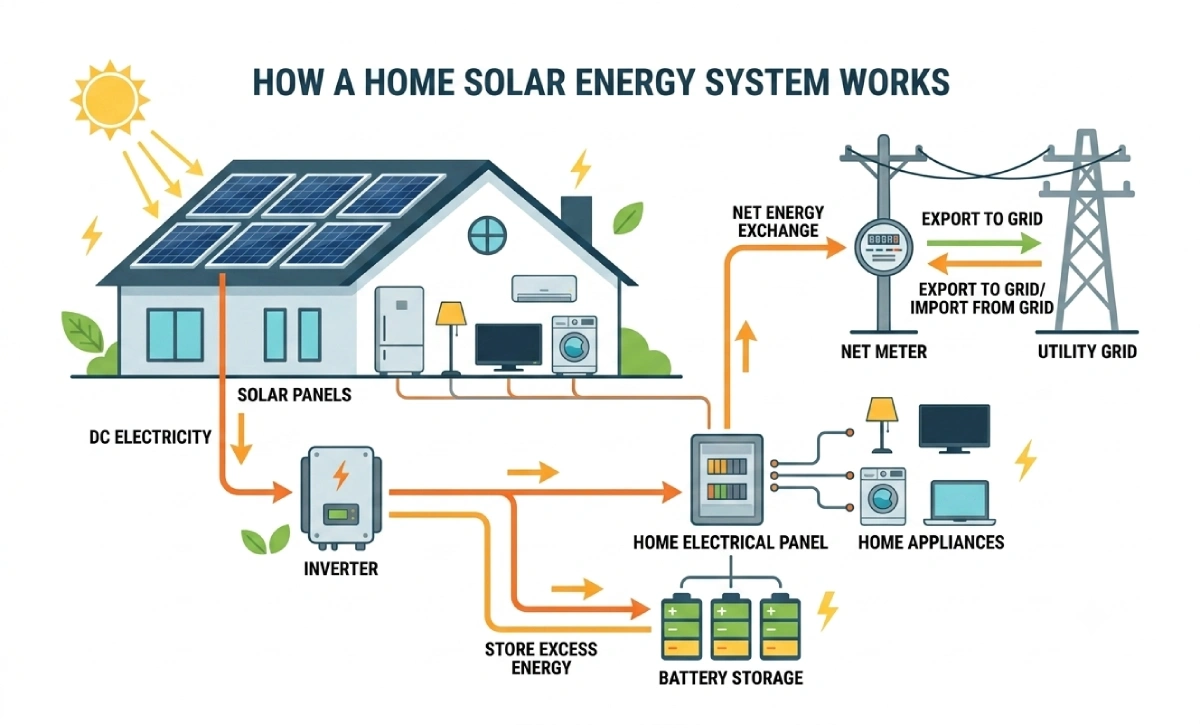
Solar panels work through the photovoltaic effect. Panels made from silicon cells absorb sunlight, which excites electrons and creates a direct current (DC). That DC power travels to an inverter, which converts it to alternating current (AC), the type your home uses.
From the inverter, electricity flows to your main panel and out to your appliances. Any surplus energy either goes into a battery system or feeds back into the utility grid in exchange for credits through a program called net metering.
The main components of a home solar system include:
- Solar panels (the panels that generate electricity from sunlight)
- Inverter (converts DC to AC; either a string inverter or individual microinverters per panel)
- Racking and mounting hardware (secures panels to your roof)
- Net meter (tracks energy production vs. consumption)
- Battery storage (optional, stores excess energy for nighttime or outage use)
Three system types are available:
- Grid-tied: connected to the utility grid, no battery required
- Off-grid: fully independent, requires a large battery bank
- Hybrid: connected to the grid but also includes battery backup
Most homeowners choose grid-tied systems. They cost less, require less maintenance, and still provide significant savings.
How Much Does It Cost to Install Solar Panels?
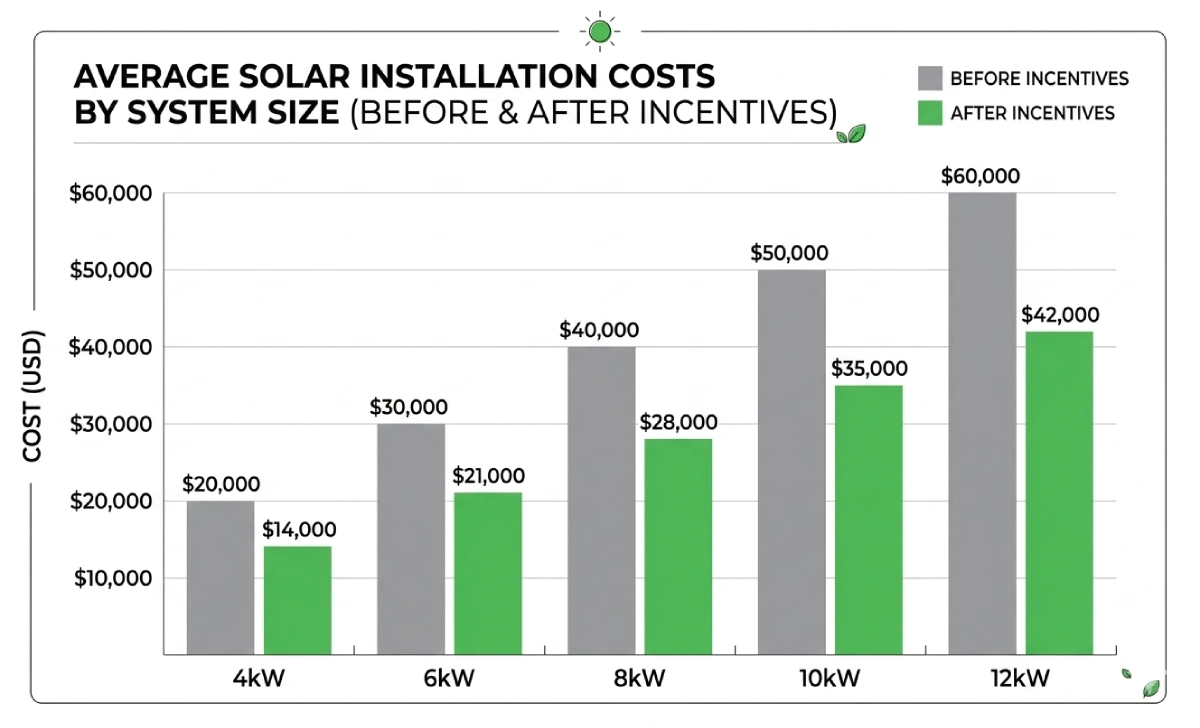
Cost is the first question most homeowners ask, and the honest answer is that it varies.
According to EnergySage market data, the typical home requires about 12 kilowatts (kW) of solar energy, which costs an average of $30,505 before incentives. Smaller systems of 6 to 8 kW run between $15,000 and $24,000 before any credits.
Average solar installation costs by system size (before incentives):
| System Size | Estimated Cost |
|---|---|
| 4 kW | $10,000–$14,000 |
| 6 kW | $15,000–$21,000 |
| 8 kW | $20,000–$28,000 |
| 10 kW | $25,000–$35,000 |
| 12 kW | $30,000–$42,000 |
Prices vary by region, installer, panel brand, and roof complexity. The Southwest and Texas generally see lower costs per watt ($2.07 to $2.85/W), while Mountain West and Northeast markets run higher ($2.66 to $3.80/W).
Important note on the federal tax credit: The 30% federal Residential Clean Energy Tax Credit was available through the end of 2025. As of 2026, homeowners using third-party ownership arrangements (leases or power purchase agreements) may still access business-claimed credits. Always confirm current federal and state incentives with a tax professional before you sign anything.
Most homeowners save between $1,500 and $3,000 per year on electricity, and over 25 years, total savings can range from $37,000 to over $150,000 depending on your location and electricity rates.
“Solar costs have seen dramatic declines over the past decade, and even with recent tariff pressures, solar remains one of the most reliable long-term investments a homeowner can make,” reports Solar.com based on 2025 market analysis.
Step-by-Step: How to Install Solar Panels in Your Home
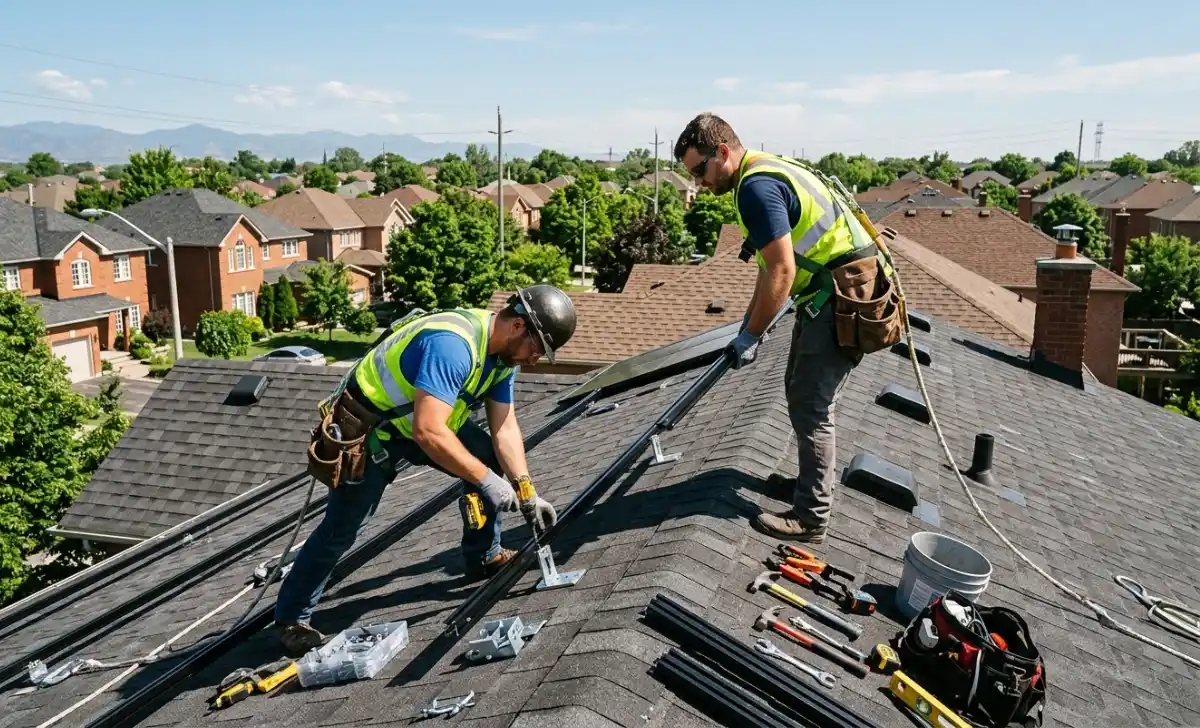
The installation process from first call to first kilowatt typically takes two to three months. Here’s what happens at each stage.
Step 1: Audit your energy usage. Pull 12 months of electricity bills. Look at your monthly kilowatt-hour (kWh) usage. This number determines what size system you need. A family using 900 kWh per month needs a different system than one using 1,500 kWh.
Step 2: Get multiple installer quotes. Contact at least three certified installers. Look for NABCEP (North American Board of Certified Energy Practitioners) certification. Compare total system cost, panel brand, warranty terms, and the installer’s track record. Shopping multiple quotes can save thousands.
Step 3: Site assessment and system design. Your chosen installer sends a technician to evaluate your roof, measure shading, confirm structural integrity, and design a system tailored to your home. They’ll produce a layout showing panel placement and expected output.
Step 4: Pull permits and approvals. This is the step most homeowners underestimate. Permits are almost always required for solar installations, whether through your local city or county or your utility company. Your installer handles the paperwork, but this process can take four to eight weeks depending on your municipality. Grid-tied systems also need utility interconnection approval.
Step 5: Install the racking and panels. On installation day, the crew preps your roof, attaches the racking system to your rafters, and mounts the panels. Steel or aluminium hooks anchor through tiles or shingles and attach to the roof structure. Installers seal every penetration point to prevent leaks.
Step 6: Wire the system. Wiring runs from panels down through the roof to the inverter, which is usually placed in the attic, garage, or near your main electrical panel. The inverter connects to your breaker panel. This stage requires a licensed electrician in most states.
Step 7: Final inspection and utility approval. A municipal inspector checks the installation for code compliance. Then your utility company installs or upgrades your meter to a net meter that can track both energy you draw from the grid and energy you send back.
Step 8: System activation. Once the utility flips the switch, your system goes live. Most installers set up a monitoring app so you can track daily energy production and spot performance issues early.
Solar pairs well with other home automation tools too. If you’re already building out a connected home, read our overview of smart home solar integration to see how solar monitoring, smart thermostats, and energy management systems can work together.
Choosing the Right Solar Panels
Not all panels are equal. The type you choose affects cost, efficiency, and how much roof space you need.
Monocrystalline panels are the most common for residential installations. They’re made from single-crystal silicon, carry efficiency ratings of 15 to 22 per cent, and last the longest. They cost more upfront but produce more power per square foot, which matters on smaller roofs.
Polycrystalline panels cost less and work well in high-sunlight climates. Their efficiency ranges from 13 to 17 per cent, and they take up more space for the same output.
Thin-film (amorphous) panels are lightweight and flexible but far less efficient. They’re better suited for RVs or off-grid cabins than residential rooftops.
For most homeowners, monocrystalline panels offer the best return over the long term.
Solar Incentives and Financing Options
Even if the upfront cost feels steep, several tools can make solar financially accessible.
Federal Tax Credit: The 30% Residential Clean Energy Tax Credit reduced the cost of installations completed through December 31, 2025. Confirm availability for your situation with a tax advisor for 2026 and beyond.
State and local incentives: Many states offer additional rebates, property tax exemptions on the added home value from solar, and sales tax waivers on solar equipment. New York’s NY-Sun program, for example, offers incentives that can reduce costs by thousands of dollars.
Net metering: Most utilities credit you for excess electricity your panels send to the grid. This directly offsets your monthly bill. Policies vary by utility and state, so check your utility’s current net metering terms before committing.
Financing options include:
- Solar loans (rates typically 5.5 to 7 per cent as of 2025, per EnergySage data)
- Home equity loans or lines of credit
- Solar leases (you pay a fixed monthly amount; the installer owns the panels)
- Power Purchase Agreements (PPAs), where you buy the electricity your panels produce at a locked-in rate
Ownership (buying outright or via loan) offers the best long-term savings. Leases and PPAs lower upfront costs but limit your savings and can complicate a home sale.
Can You DIY Install Solar Panels?
It’s technically possible, and some homeowners with electrical experience do it. DIY solar can save $5,000 to $10,000 in labour costs.
But there are real tradeoffs.
Most utility interconnection agreements require a licensed electrician for the final connection. Many municipalities won’t issue permits to unlicensed homeowners. And if something goes wrong, you’re liable. Manufacturer warranties on panels and inverters often require professional installation to remain valid.
DIY makes more sense for off-grid cabins or standalone battery systems. For a full grid-tied home installation, hiring a professional is almost always the smarter choice.
If you want a lower-stakes starting point, building your own backup power setup is a practical first step. Our guide to building a DIY solar generator covers everything you need to get started without taking on a full rooftop installation.
See also: How to Choose a Certified Solar Installer (U.S. Department of Energy)
How Solar Panels Affect Your Home’s Value
Research consistently shows that solar panels increase home values. According to SolarReviews data, solar adds approximately 6.9 per cent to a home’s value. A separate U.S. Department of Energy study found that homes with solar sell for about $15,000 more on average.
Homes with solar also tend to sell faster. Buyers increasingly view solar as a practical feature, like an updated kitchen or a finished basement, rather than a novelty.
One caveat: leased systems can complicate a sale. The buyer either has to take over the lease or you have to pay it off at closing. If you plan to sell within five years, owning your system outright is the cleaner path.
See also: Will Solar Increase My Home’s Resale Value?
Solar makes financial sense at more than just the residential level. If you’re a contractor, builder, or property owner weighing options across different project types, take a look at our breakdown of residential and commercial solar projects to understand how scope, equipment, and permitting differ between the two.
FAQs
How long does the solar installation process take from start to finish?
Most residential installations take two to three months from the initial consultation to activation. The physical installation itself takes one to three days. The rest of the time is permits, utility approvals, and scheduling.
How many solar panels does the average home need?
The average U.S. home uses about 886 kWh per month. A 7 to 12 kW system, or roughly 17 to 30 panels, covers most of that usage depending on your location and roof orientation. Your installer will calculate the exact number based on your actual energy bills and site conditions.
Do solar panels work on cloudy days?
Yes, but with reduced output. Panels generate electricity from daylight, not direct sunlight. On overcast days, output typically drops by 10 to 25 per cent. Rainy climates like Seattle still see positive returns on solar due to high local electricity rates and available incentives.
What maintenance do solar panels require?
Very little. Panels are designed to last 25 to 30 years with minimal upkeep. An annual visual inspection and occasional cleaning to remove dirt or debris is usually enough. Most systems include remote monitoring so you can catch performance drops early.
What happens to my solar system during a power outage?
Standard grid-tied systems automatically shut off during outages for safety reasons. If you want power during a blackout, you need a battery storage system or a solar system with a specific transfer switch that isolates your home from the grid.