How to Be Better at Interior Design Mintpaldecor: A Complete Guide
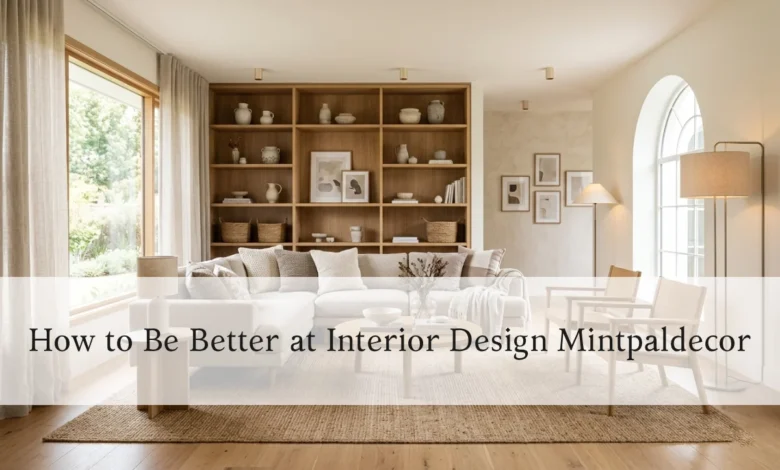
Learning how to be better at interior design with Mintpaldecor means understanding the core principles of space, colour, light, and proportion before anything else. This guide covers the exact skills, habits, and decisions that separate a well-designed room from a cluttered one. Whether you are a beginner or have some experience, these practical steps will help you design spaces that feel intentional and look great.
Most people who struggle with interior design are not lacking creativity. They are missing a clear process. A room that looks “off” usually has nothing to do with budget or taste. It comes down to a few foundational decisions that were made without a plan.
The good news is that interior design is a learnable skill. You do not need a degree to get noticeably better at it. You need the right knowledge, a consistent habit of practice, and a reliable resource like Mintpaldecor to guide your decisions.
This article walks you through exactly that.
What Interior Design Actually Involves
Interior design is the process of planning and shaping the interior of a space so it works well and looks good at the same time. It covers furniture placement, colour choices, lighting strategy, material selection, and traffic flow.
It is not just about decoration. Decoration is one layer of design. Real interior design starts with how a space functions for the people who live in it.
According to the U.S. Bureau of Labour Statistics, interior designers held about 87,100 jobs in 2024, and employment in the field is projected to grow 3% from 2024 to 2034. That steady growth reflects how much people value professionally designed spaces. But you do not need to be a professional to think like one.
How to Be Better at Interior Design Mintpaldecor: Core Principles First
Before you buy a single piece of furniture or pick a paint colour, understand the five principles that guide every good design decision:
- Balance: Visual weight should feel even. You can achieve this symmetrically (matching items on both sides of a focal point) or asymmetrically (different objects with similar visual weight on each side).
- Proportion: Every piece in a room should feel the right size relative to the space and to other objects around it.
- Rhythm: Repeating colours, shapes, or patterns creates a sense of movement and consistency throughout a room.
- Contrast: Differences in texture, colour, or material create visual interest. Without contrast, rooms feel flat.
- Harmony: All elements should feel like they belong in the same space. Nothing should look accidental.
Mintpaldecor builds its design advice around these fundamentals. Once you understand them, every other decision becomes much easier to make.
How Colour Theory Changes the Way You Design
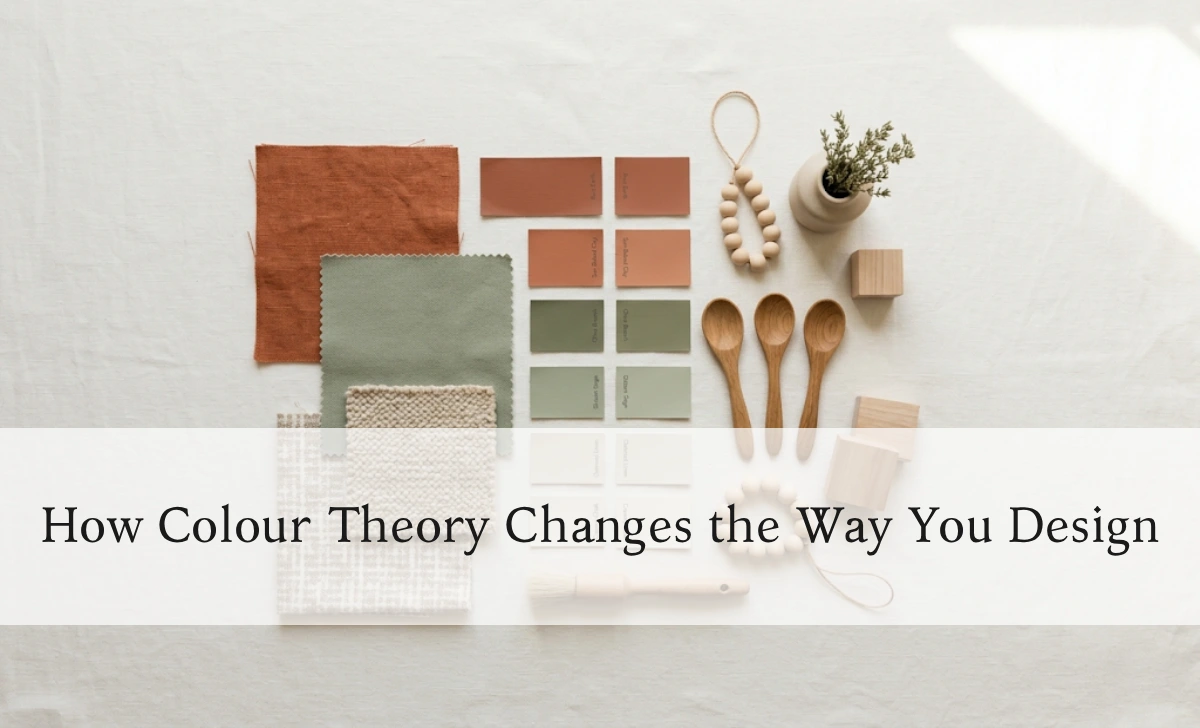
Colour is one of the most misused tools in interior design. Many people choose colours they personally love without thinking about how those colours interact with light, space, and furniture.
Here is what the research shows: warm tones like terracotta, amber, and rust create a sense of energy and cosiness. Cool tones like blue, sage, and grey create calm and openness. Neutral palettes give you flexibility because they work with nearly anything you add later.
A 2024 report found that spending on home improvements in the U.S. surged by 81% between 2014 and 2023. One of the most consistent drivers behind that spending was colour refreshes. Repainting a room or changing soft furnishings costs relatively little but dramatically changes how a space feels.
When choosing colours:
- Start with one anchor colour and build around it.
- Use the 60-30-10 rule: 60% dominant colour, 30% secondary colour, 10% accent.
- Test paint colours on your actual wall in natural and artificial light before committing.
- Keep ceiling colour slightly lighter than walls to make the room feel taller.
Lighting: The Skill Most Beginners Skip
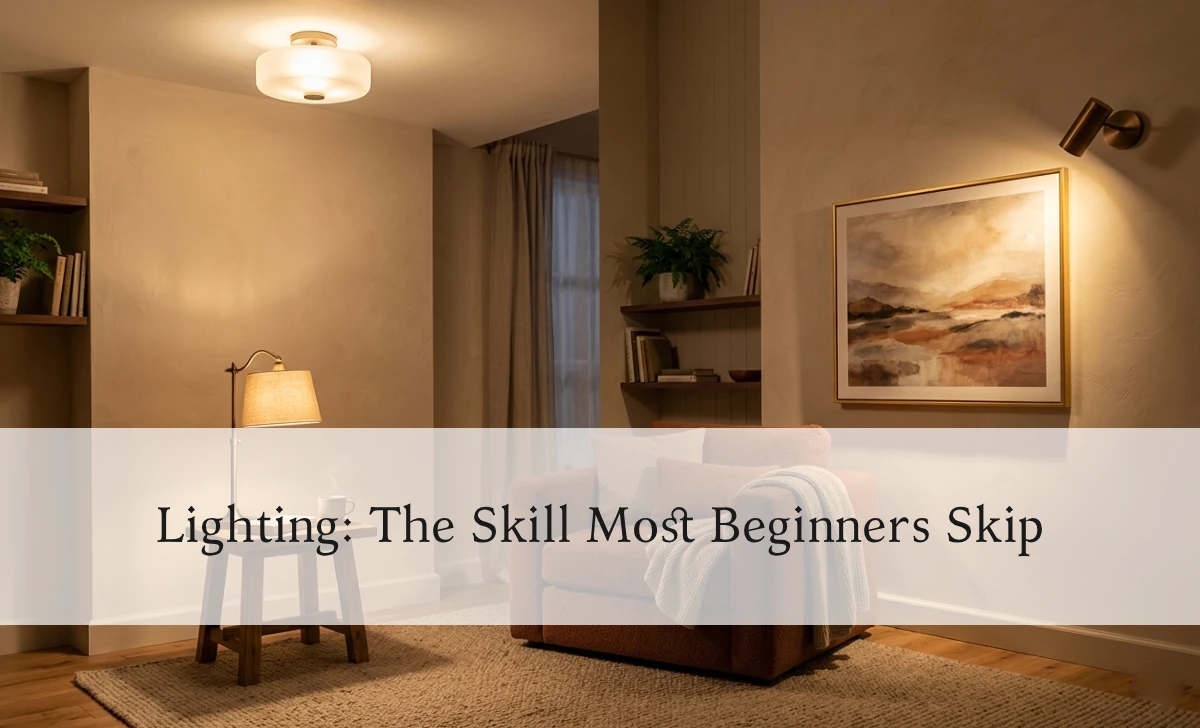
Lighting is the most underrated skill in residential interior design. Most beginners rely on one overhead light source per room. Professional designers layer three types of light: ambient (general), task (specific work areas), and accent (to highlight features).
Getting this right changes everything. A well-lit room feels larger, warmer, and more intentional. The same furniture in poor lighting will look cheap and disorganised.
Practical steps you can take right now:
- Add floor lamps or table lamps to rooms with only overhead lighting.
- Use warm-white bulbs (2700K–3000K) in living areas and bedrooms.
- Install dimmer switches so you can control mood at different times of day.
- Place accent lighting near artwork, shelving, or architectural features.
Mintpaldecor consistently highlights lighting as one of the fastest ways to improve any room without changing the furniture at all.
Space Planning: How to Arrange Furniture the Right Way
Poor furniture arrangement is the most common design mistake in homes. People push furniture against walls because it feels safe. In most rooms, that is actually the wrong choice.
Floating furniture away from walls creates defined zones and makes conversation areas feel more natural and connected.
Here is a simple process for planning any room:
- Measure the room accurately, including doors, windows, and any fixed features.
- Identify the focal point, which could be a fireplace, TV, or window.
- Arrange seating to face or angle toward that focal point.
- Leave at least 18 inches of clearance between a sofa and a coffee table.
- Keep traffic pathways at least 30–36 inches wide so movement feels easy.
Small rooms benefit from furniture with legs because they allow light to pass underneath, making the floor visible and the space feel larger.
Texture and Material: Adding Depth to Any Room
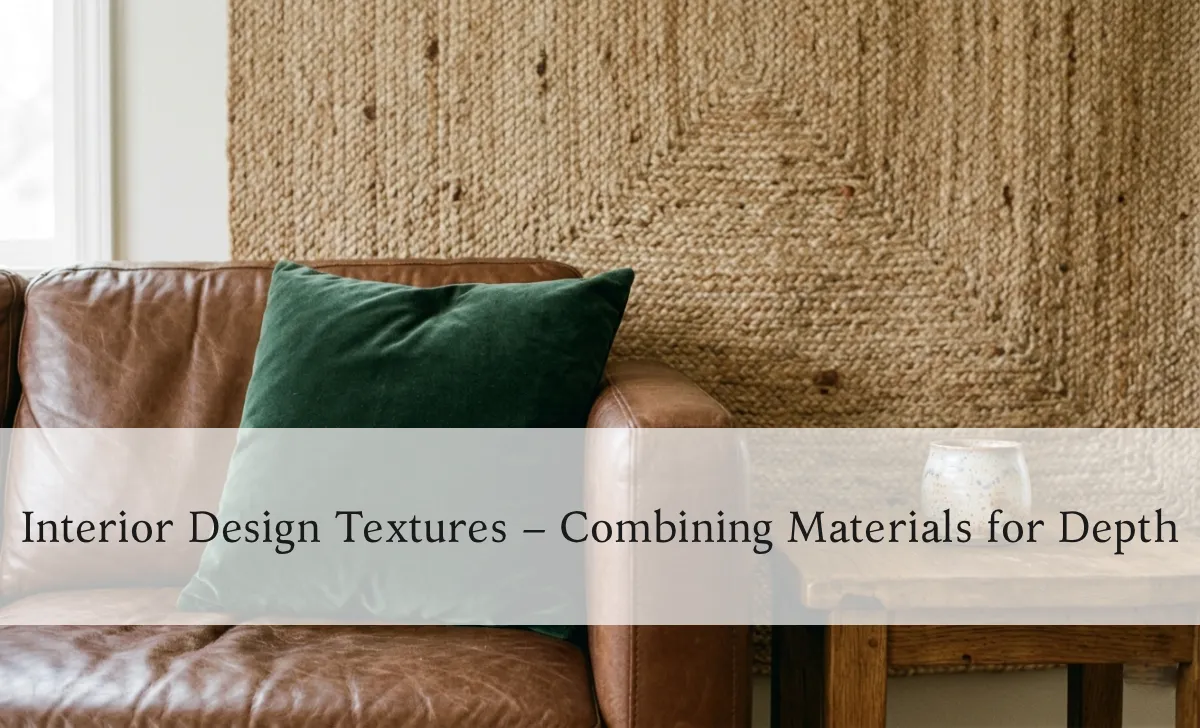
A room decorated entirely in one material feels one-dimensional. Combining textures is what gives a space personality and depth.
Think about contrast in physical feel: rough linen next to smooth leather, matte concrete beside polished wood, woven baskets against glass shelving. These combinations create richness without requiring you to add more objects.
A few combinations that consistently work well:
- Velvet cushions on a leather sofa
- Jute rugs under a glass coffee table
- Wooden shelving with ceramic and metal accessories
- Linen curtains against painted brick or textured wallpaper
You do not need to spend a lot. Changing your cushion covers, adding a woven throw, or swapping out a synthetic rug for a natural fibre one can shift the feel of a room significantly.
Sustainable Design: A Practical Approach, Not a Trend
Sustainable interior design has moved well past being a niche preference. Demand for eco-friendly building materials increased 35% in 2024, and the market for sustainable interior design products is projected to reach $25 billion by 2025.
That does not mean you need to rebuild your home. Sustainability in everyday design looks like this:
- Choosing furniture made from reclaimed or responsibly sourced wood
- Buying secondhand pieces and refinishing them instead of buying new
- Selecting low-VOC paints to improve indoor air quality
- Adding plants to improve both aesthetics and air circulation
- Investing in quality over quantity so pieces last longer
Mintpaldecor regularly covers sustainable design choices that work for real budgets, not just high-end renovations.
How to Build Your Design Eye Over Time
Getting better at interior design is partly knowledge and partly a trained eye. The trained eye develops through consistent exposure to good design and deliberate practice on small projects.
Here are habits that accelerate skill development:
- Follow design accounts and save rooms that appeal to you. After a few weeks, look for patterns in what you saved. That tells you something real about your aesthetic preferences.
- Analyse rooms you find unpleasant and try to identify why. Is it scale? Colour clash? Poor lighting? This kind of critical thinking builds your design vocabulary.
- Start with one room and finish it before moving to the next. Incomplete projects do not teach you nearly as much as completed ones.
- Visit furniture showrooms, model homes, or design exhibitions. Seeing real spaces in person develops spatial awareness faster than looking at photos.
As design educator and author Sarah Susanka noted, “The rooms that feel best are the ones that balance what you need with what you love.” That balance comes from understanding, not from having a large budget.
Budget-Friendly Ways to Improve Any Room
You do not need to spend thousands to see a real difference. Some of the most impactful changes cost very little.
High-impact, lower-cost improvements:
- Repaint with a fresh, well-chosen colour (one of the best returns for any room)
- Replace cabinet hardware in kitchens and bathrooms for an instant update
- Add mirrors to smaller rooms to reflect light and create the illusion of more space
- Hang curtains higher and wider than the window to make ceilings appear taller
- Group smaller objects in odd numbers; threes and fives read better than pairs or fours
- Remove items from surfaces. Editing a room down often improves it more than adding to it.
A kitchen remodel can return up to 80% of the investment when done well. Bathroom renovations see around 70% ROI. But even without renovation, consistent small improvements compound into a noticeably better space over time.
Why Mintpaldecor Is Worth Bookmarking
Mintpaldecor is a practical interior design resource built for people who want real guidance, not just aesthetic inspiration. The site covers colour theory, space planning, furniture arrangement, and home improvement tips in a format that is easy to apply.
What sets it apart is the focus on practicality. The content is written for real homes and real budgets, not staged photoshoots. Whether you are redesigning a small apartment or refreshing a family living room, the advice translates.
If you are looking to go deeper on specific topics covered here, check out Mintpaldecor’s guide on interior decoration tips and smart design ideas and their piece on interior design tips for transforming your home with style.
FAQs
How do I start improving my interior design skills with no experience?
Start with the fundamentals: balance, proportion, and lighting. Pick one room and focus on those three things before worrying about anything else. Read one reliable resource consistently, like Mintpaldecor, and practice small changes rather than trying to redesign everything at once.
How important is lighting in interior design?
It is one of the most important elements, and the one most beginners overlook. Layering ambient, task, and accent lighting transforms a room without touching a single piece of furniture. Bad lighting makes even expensive rooms look flat.
Can I get better at interior design without spending a lot of money?
Yes. Repainting, rearranging furniture, changing textiles, adding mirrors, and editing out clutter are all high-impact changes that cost relatively little. Most rooms benefit more from subtraction than addition.
What is the 60-30-10 colour rule?
It is a simple guideline for balancing colour in a room. Use your dominant colour for 60% of the space (walls, large furniture), a secondary colour for 30% (accent furniture, curtains), and a bold accent for 10% (cushions, art, small objects). It creates visual balance without making the room feel too busy or too flat.
How do I know if a room is well-designed?
A well-designed room feels comfortable and easy to move through. Nothing calls too much attention to itself. Lighting, scale, texture, and colour all feel consistent. You do not notice individual choices because the overall effect reads as a whole. That is the goal.