Virtual Interior Designer: What It Is, How It Works, and How to Find the Right One
A virtual interior designer is a licensed or experienced design professional who works with you entirely online, using photos, floor plans, and video calls instead of in-person visits. You get a full design plan, furniture recommendations, and a shopping list, all delivered digitally. Services typically cost $150 to $7,500 per room, depending on scope and the designer’s experience level.
What Is a Virtual Interior Designer?
You want a well-designed home, but hiring a traditional interior designer feels like too much: too expensive, too complicated, too many appointments. A virtual interior designer solves that.
Instead of meeting you in person, a virtual designer works entirely online. You share photos of your space, fill out a style questionnaire, and discuss your budget. The designer creates a full plan and sends it back digitally. No in-home visits. No local-only limitations.
The service goes by a few names: e-design, online interior design, and remote interior design. They all mean roughly the same thing. You get a real design professional working on your space without either of you needing to be in the same room.
This is not a new idea, but it has grown fast. According to Mordor Intelligence, the virtual interior design services market was valued at approximately $18.2 billion in 2024 and is expected to grow at an annual rate of 11.21% through 2029.
How the Virtual Design Process Works
Every service has its own steps, but the process follows a consistent pattern across most providers.
Here is what to expect from start to finish:
- Style quiz or intake form. You answer questions about your taste, your budget, and how you use the space. Some platforms use this to match you with a compatible designer.
- Room measurements and photos. You take photos from multiple angles and measure the room. Accurate measurements are critical for layouts and furniture sizing.
- Designer consultation. Depending on the service, this is a video call, a message thread, or both. You discuss priorities, pain points, and any furniture you want to keep.
- Design concept. Your designer creates a mood board and preliminary layout for your review.
- Revisions. Most services include at least one round of edits based on your feedback.
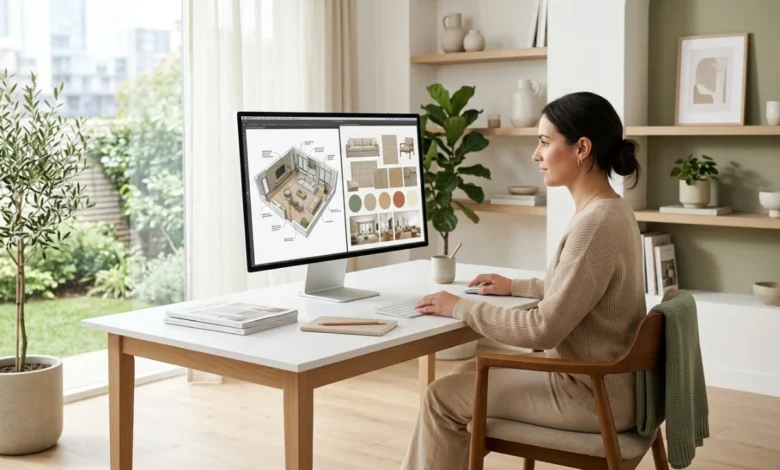
- Final package. You receive a complete design plan with a floor plan, a furniture shopping list with direct links, paint color recommendations, and in some cases, 3D room renderings.
The timeline varies. Budget platform services can deliver in under a week. Custom, full-service virtual designers typically take two to four weeks per room.
What a Virtual Interior Designer Actually Delivers
This is where people get surprised, usually in a good way.
A complete virtual design package typically includes:
- A scaled floor plan showing furniture placement
- A mood board with colours, textures, and a visual direction
- A curated shopping list with product links and price breakdowns
- Paint colour recommendations with specific brand and code references
- Layout rationale explaining why each piece is placed where it is
- Revision rounds to refine the plan before you shop
Higher-end services add 3D renderings so you can see the finished room before spending a dollar on furniture. Some include renovation guidance, material selections, and detailed finish schedules for remodelling projects.
What you do not get is someone physically handling the sourcing, deliveries, or installation. You execute the plan yourself or hire local help. That is the main trade-off compared to traditional full-service design.
How Much Does a Virtual Interior Designer Cost?
Pricing varies more than most people expect, and understanding why helps you pick the right level of service.
According to designer Joshua Jones of JJones Design Co., three general tiers cover most of what is available today.
Budget tier: $150 to $600 per room. These services come mostly from platform companies like Havenly or Spacejoy. Designers work within a set of partner vendors, and timelines are short. This level works well for a first apartment or a simple refresh. Keep in mind that independent sourcing and long-term designer relationships are limited at this price point.
Mid-range custom design: $700 to $2,500 per room. Experienced independent designers fall here. You get a more personalised process, multiple revision rounds, open-ended vendor sourcing, and a designer who can work with you on future rooms. This is where most people who want real customisation should look.
Full-service virtual design: $3,000 to $7,500 and up per room This tier mirrors traditional in-person design, just done remotely. It often includes renovation planning, finish selections, technical specifications, and close collaboration through a project from start to finish.
One thing people underestimate: pricing also reflects experience. Many budget-platform designers are early in their careers, which is how most designers start. As experience grows, so does the scope of what they offer, and so does the cost.
Virtual Interior Designer vs. Traditional Interior Designer
Both get you a designed space. The differences come down to process, price, and who controls execution.
| Factor | Virtual Designer | Traditional Designer |
|---|---|---|
| Cost per room | $150 to $7,500 | $5,000 to $30,000+ |
| In-person visits | None | Required |
| Location limits | None | Usually local only |
| Turnaround | Days to weeks | Weeks to months |
| Execution support | You handle it | Often managed by a designer |
| 3D visualization | Available at some tiers | Standard at higher levels |
For most homeowners doing a room refresh or furnishing a new space, virtual design covers the need without the overhead. For a full renovation with contractors, complex sourcing, and site visits, a traditional designer may still make more sense.
How to Choose the Right Virtual Interior Designer
With dozens of options available, these are the questions worth asking before you commit.
Does their portfolio match your taste? Look at completed projects, not just styled photos. If their work looks nothing like what you want, move on.
What does the package actually include? Ask specifically: How many revision rounds? Is a floor plan included? Are 3D renderings available? What format do you receive the final files in?
Can they source from any vendor? Platform designers are often limited to partner brands. Independent designers can source from anywhere, which matters if you have specific preferences or existing pieces to work around.
How do they communicate? Some designers work through a platform’s messaging system. Others do video calls. Know how involved you want to be and whether their workflow matches that.
What are previous clients saying? Look for reviews that speak to communication and accuracy of the final plan, not just the visuals. A beautiful mood board that does not account for your actual room dimensions is not useful.
Internal link suggestion: [See how to measure your room correctly before starting a virtual design project] or [How to build a realistic home decorating budget].
The Role of AI in Virtual Interior Design
AI tools are becoming a bigger part of this space, though they do not replace a real designer.
According to a January 2026 report from Research and Markets, the AI-driven virtual interior design market grew from $1.52 billion in 2024 and is projected to reach $5.65 billion by 2029. The main applications include room visualisation tools, product recommendation engines, and AI-generated mood boards.
Wayfair’s Decorify tool, launched in 2023, lets users upload a photo and see their room restyled in different aesthetics within seconds. IKEA partnered with Meta in early 2024 to launch a virtual design experience through Meta Quest. These tools are useful for early-stage exploration, but they do not provide what a designer provides: personalised judgment, sourcing experience, and a plan built around your actual budget and constraints.
Think of AI tools as a starting point, not a substitute. A strong virtual interior designer uses these tools alongside their own expertise.
FAQs
Is a virtual interior designer worth it?
For most people, yes. If you have been living with a space that does not work and you have been putting off dealing with it, a virtual designer gives you a clear plan to follow. The cost is a fraction of traditional design, and you avoid the common mistake of buying furniture that does not fit or does not work together.
How long does a virtual interior design project take?
Budget platform services can deliver a design package in three to seven days. Mid-range independent designers usually take two to four weeks per room. Full-service virtual designers working on larger projects or renovations may take six to ten weeks.
Can a virtual designer help with a renovation?
Yes, at the higher service tiers. Full-service virtual designers provide finish schedules, material selections, and layout specifications that contractors can work from. They will not be on-site, but they can review photos and communicate with you throughout the build process.
What do I need to get started?
Most virtual designers ask for: room dimensions and measurements, photos from multiple angles, a rough budget for furniture and decor, and a few inspiration images that reflect what you like. Some ask you to fill out a detailed intake form or take a style quiz before the first consultation.
What if I already own furniture I want to keep?
Tell your designer upfront. A good virtual designer works around existing pieces rather than recommending a full replacement. Share photos and measurements of anything you plan to keep, and the design plan will incorporate those items into the final layout.