Marble Countertops for Kitchens: Types, Pros, Cons & Care
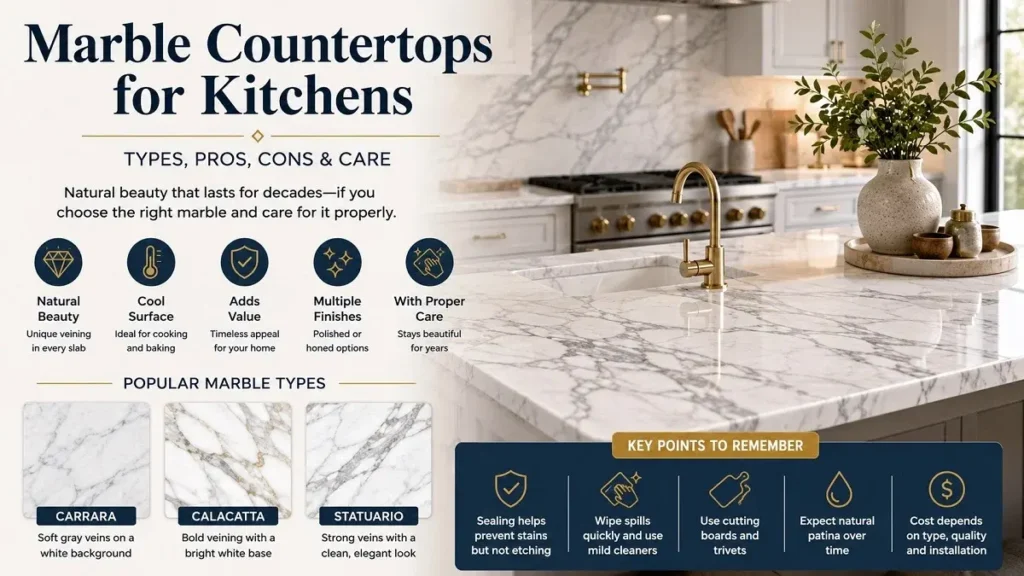
Marble countertops bring natural color, distinctive veining, and a cool work surface to a kitchen. The trade-off is that this natural stone needs more care than some alternatives because it can scratch, stain, and react with acidic foods.
If you appreciate natural variation and do not mind the surface developing character over time, marble can be a good fit. Before choosing a slab, it helps to understand the main varieties, finishes, maintenance needs, costs, and how the material compares with other popular countertop options.
What Are Marble Countertops?
Marble is a natural stone formed when limestone changes under heat and pressure. Because each slab develops naturally, its color, veining, and pattern are unique rather than printed or manufactured.
One slab may have fine gray lines across a soft white background, while another may feature bold veins and stronger contrast. For this reason, it is better to view the full slab before fabrication instead of making a decision from a small sample alone.
The stone also tends to feel cool to the touch, which can be useful when working with pastry or dough. Its appearance and feel are appealing, but they should be weighed against the maintenance it requires in a working kitchen.
Popular Types of Marble for Kitchen Countertops
The type of marble you choose affects the color, pattern, and overall character of the countertop. Even slabs sold under the same name can look quite different, so the actual piece of stone matters more than a catalog photo.
Carrara Marble
Carrara usually has a white to light gray background with soft gray veining. Its pattern is often more subtle than Calacatta, making it a good option when you want the countertop to complement the kitchen rather than become its main visual feature.
It works well with traditional, farmhouse, transitional, and modern interiors because its coloring is relatively understated.
Calacatta Marble
Calacatta typically has a brighter white background with larger, more dramatic veins. Depending on the slab, those veins may appear gray, beige, or gold.
Because the pattern can be bold, vein placement deserves extra attention. On a large island or long countertop run, the direction and position of the veins can strongly influence the finished look.
Statuario Marble
Statuario is another light Italian stone known for a clean white background and noticeable gray veining. Its pattern often falls between the softer look of Carrara and the dramatic movement found in many Calacatta slabs.
The exact appearance varies from slab to slab, so comparing full pieces in person is more useful than relying only on online images.
Other Marble Options
White Italian varieties are not the only choices. Natural marble is also available in cream, beige, gray, brown, green, and darker tones, depending on its source.
If you are open to more color, ask to see several available slabs rather than limiting the search to familiar names. Local availability can also affect both selection and price.
Pros and Cons of Marble Countertops
Marble works well in some kitchens and requires more compromise in others. Its strongest advantages are its natural variation, distinctive appearance, and ability to work with many design styles.
Because every slab is different, the finished countertop has a pattern that is unique to the stone. The surface can also develop a soft patina over time, which some homeowners see as part of its natural character.
The main drawback is sensitivity to everyday wear. Marble is softer than some other countertop stones, so knives, abrasive materials, and hard impacts can leave scratches or marks.
It is also porous, which means liquids can enter the stone and cause discoloration if spills remain on the surface. Sealing helps reduce absorption, but it does not make the countertop completely stain-proof.
Acid creates a different problem. Lemon juice, vinegar, wine, tomatoes, and some household cleaners can react with the stone and leave dull areas known as etch marks.
Staining and Etching Are Different
A stain happens when a substance is absorbed and changes the stone’s color. An etch mark forms when acid reacts with the surface and changes its finish. Sealing can reduce liquid absorption, but it does not prevent acid etching.
Honed vs Polished Marble: Which Finish Is Better?
The finish affects both appearance and how signs of daily use show on the countertop. The two most common choices for kitchens are polished and honed marble.
A polished finish is smooth and reflective, which makes the colors and veins appear more vivid. The glossy surface looks crisp, but dull etch marks may stand out because they contrast with the surrounding shine.
Honed marble has a matte or low-sheen surface. Its softer appearance can make light scratches and etching less obvious, which is one reason some people prefer it in kitchens that see frequent use.
| Feature | Polished Marble | Honed Marble |
|---|---|---|
| Appearance | Glossy and reflective | Matte or low sheen |
| Veining | Appears more vivid | Appears softer |
| Etching | Can be easier to notice | Often less visually obvious |
| Overall look | Crisp and formal | Soft and natural |
Neither finish removes the need for careful cleaning and protection. The better choice depends on the appearance you prefer and how comfortable you are with visible signs of use.
How to Choose a Marble Slab for Your Kitchen
Start by viewing the full slab whenever possible. Natural variation means two pieces with the same marble name may have noticeably different backgrounds, vein thickness, movement, and contrast.
For large islands and long countertop runs, discuss the layout before fabrication. Ask where seams are likely to appear and how the veins will flow across adjoining sections. Sink and cooktop cutouts can also change which parts of the pattern remain visible.
Edge profiles affect the finished appearance but do not need to be complicated. An eased edge creates a clean outline, while bevel, bullnose, and ogee profiles add more detail. The right option depends on the kitchen style, slab thickness, and fabrication choices.
A knowledgeable supplier or fabricator can also help you plan seams, cutouts, support, and vein placement. If you are considering custom marble countertops, review these details before fabrication begins so you know how the selected slab will appear in the finished kitchen.
How to Clean and Maintain Marble Countertops
For daily cleaning, use a soft cloth with warm water and a mild cleaner that is suitable for natural stone. Avoid abrasive products and acidic cleaners, as they can damage or dull the finish.
Wipe up coffee, wine, tomato sauce, citrus juice, oils, and similar spills promptly. Use a cutting board instead of preparing food directly on the stone, and place trivets under hot cookware to reduce unnecessary wear.
Sealing can help slow the absorption of liquids. There is no single resealing schedule that suits every countertop because the stone, finish, sealer, and level of use all affect how long the protection lasts. Follow the guidance provided for your specific stone and sealing product.
Small scratches, etches, and signs of wear may still appear over time. Together, these changes can form a patina. Some people enjoy that aged appearance, while others prefer a countertop that stays more visually consistent.
How Much Do Marble Countertops Cost?
The final cost depends on several parts of the project rather than the stone name alone. Slab availability, color, pattern, thickness, countertop size, fabrication, edge details, and local installation costs can all affect the price.
A complex layout may require more fabrication work. Islands, unusual shapes, multiple seams, decorative edges, sink or cooktop cutouts, and carefully matched veins can increase the amount of planning and labor involved.
When comparing quotes, make sure each one covers the same scope of work. Check whether templating, fabrication, delivery, installation, cutouts, and removal of the old countertop are included so you can compare the totals fairly.
Marble vs Quartz, Granite and Quartzite
Appearance is only one part of choosing a countertop. Maintenance, durability, and how much natural variation you want should also influence the decision.
| Material | Type | Main Advantage | Main Consideration |
|---|---|---|---|
| Marble | Natural stone | Distinctive natural veining | Can etch, stain, and scratch |
| Quartz | Engineered surface | Low routine maintenance | Does not offer natural slab variation |
| Granite | Natural stone | Hard, durable surface | Has a different visual character |
| Quartzite | Natural stone | Some varieties offer a marble-like appearance with greater hardness | Care and performance vary by stone |
Quartz and quartzite are different materials despite their similar names. Quartz countertops are engineered using mineral particles and binders, while quartzite is a naturally occurring stone. Confirm which material you are viewing before comparing performance or maintenance requirements.
Are Marble Countertops Right for Your Kitchen?
Marble may suit you if natural variation matters more than keeping the surface looking unchanged. It can work well for homeowners who are comfortable cleaning spills quickly and accepting small etches or scratches as the countertop ages.
It may be less suitable if you want a surface that needs very little attention or if dull marks and changes in the finish would bother you. A busy kitchen does not automatically rule it out, but daily habits and maintenance expectations should be part of the decision.
Before buying, compare full slabs and think about how you use your kitchen. The right countertop should fit both the design of the room and the level of care you are comfortable providing.
Conclusion
Marble countertops are a good fit for kitchens where natural stone, distinctive veining, and character matter more than having a surface that always looks untouched. Carrara, Calacatta, Statuario, and other varieties offer different looks, while honed and polished finishes give you further control over the final appearance.
Before choosing marble, consider how comfortable you are with routine care and the possibility of stains, scratches, etching, and patina over time. View the full slab before fabrication, discuss seams and vein placement, and compare marble with quartz, granite, and quartzite. The best choice is the surface that suits both your kitchen design and the way you use it every day.