
15 Unique Rustic Basement Bar Ideas for a Cozy Hangout
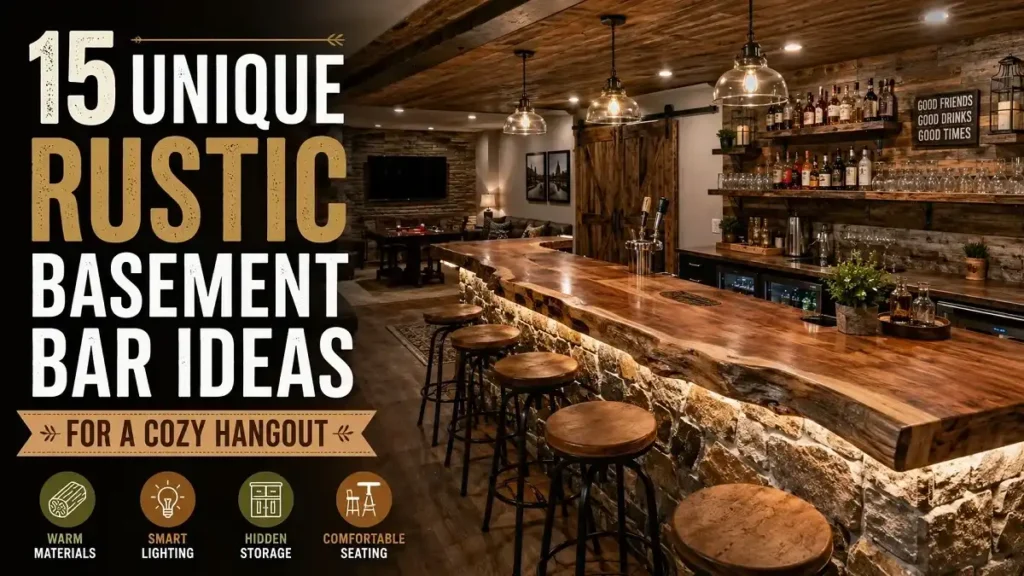
A rustic basement bar should feel warm, relaxed, and useful. You do not need to copy the same dark wood, brick wall, and neon-sign setup seen in every home bar.
The best rustic basement bar ideas mix character with smart use of space. Below are 15 different ideas, from live-edge counters and hidden storage to under-stair bars and built-in booths. Each one offers a practical way to turn an unused basement area into a comfortable place for drinks, games, and time with friends.
💡 Before You Choose a Design
Think about three things first: how much space you have, whether you need plumbing, and how many people you want to seat. Those choices will narrow down the best bar style much faster than choosing materials first.
15 Unique Rustic Basement Bar Ideas
1. Build a Live-Edge Wood Bar Top
A live-edge counter can become the main feature of your basement bar without needing much extra decoration. Instead of cutting the front into a perfect straight line, the natural shape of the wood stays visible.
Walnut, oak, and maple all work well for this look. Pair the top with simple dark cabinets or a black base so the wood gets most of the attention. Use a durable sealed finish that can handle spills and regular cleaning.
2. Turn an Empty Corner Into an L-Shaped Rustic Bar
You do not need a large basement to build a useful bar. An empty corner can hold an L-shaped setup with a short counter, two or three stools, and storage underneath.
Use wood on the bar front and keep the nearby walls lighter. This stops a small basement from feeling crowded. Open shelves above the counter can hold glasses and a few bottles without taking up floor space.
This layout also keeps the center of the room open for a sofa, game table, or TV area.
3. Create a Stone Bar Front Instead of a Stone Wall
Stone is a natural fit for rustic design, but covering a full basement wall can make the room feel heavy. A more focused option is to use stone veneer only on the front of the bar.
Top it with a smooth wood or stone counter to create contrast. The stone adds texture where people will notice it most, while the rest of the basement can stay simple.
⚠️ Small Basement Tip
Avoid covering several walls with dark stone. One accent surface is usually enough to create a rustic look without making the room feel smaller.
4. Use Reclaimed Wood as a Ceiling Feature
Reclaimed wood does not have to cover the bar itself. Using it above the bar can define the area and help an open basement layout feel more organized.
Wood planks can cover a small ceiling section, or faux beams can frame the bar. Add warm pendant lights between them to draw attention upward.
Keep the surrounding ceiling lighter if your basement is low. Too much dark wood overhead can make a short room feel cramped.
5. Build a Rustic Bar Into an Old Cabinet or Hutch
A vintage hutch, sideboard, or large cabinet can become a compact dry bar with little construction. This works well if you want a rustic look without installing permanent cabinetry.
Use the lower drawers for tools, napkins, and serving supplies. The upper shelves can display glasses and bottles. A small lamp or hidden light strip can make the cabinet feel like its own bar zone at night.
Choose a piece with real wood grain or natural wear rather than trying to make a new cabinet look old.
6. Combine Black Pipe Shelves With Hidden Storage
Industrial pipe shelving works well with rustic basement design, but too many open shelves can become cluttered. A better setup mixes a few display shelves with closed cabinets below.
Use black iron pipe and thick wood boards for glasses, bottles, or simple decor. Keep less attractive supplies behind doors.
This gives you the industrial look while keeping the space easy to clean and organize.
| Storage Type | Best Use | Why It Works |
|---|---|---|
| Open shelves | Glassware and display bottles | Keeps everyday items easy to reach |
| Closed cabinets | Tools, mixers, napkins, extra supplies | Reduces visual clutter |
| Drawers | Small accessories | Makes small items easier to organize |
7. Add a Whiskey Barrel Base to a Small Bar
Instead of filling the room with barrel furniture, use one or two whiskey barrels as a focused design detail. Two barrels can support a wood counter and create a small freestanding bar.
Another option is to use half a barrel at the end of a standard cabinet run. It breaks up the straight lines and gives the bar a more custom look.
Make sure any barrel used as part of the structure is clean, stable, and properly secured.
8. Design the Bar Around a Beverage Fridge
A basement bar becomes much easier to use when cold drinks are close by. Instead of adding a beverage fridge at the end, make it part of the layout from the start.
Place an under-counter fridge between wood cabinets and use matching trim around it. Add a small counter above for opening drinks and serving snacks.
If plumbing is difficult or expensive in your basement, this setup can give you a useful dry bar without adding a sink.
Wet Bar or Dry Bar?
Dry bar: Best when you mainly need storage, a counter, and a beverage fridge.
Wet bar: Better if you entertain often and want a sink for washing glasses or preparing drinks.
9. Mix Brick With Light Wood Instead of Dark Wood
Brick and dark brown wood can look good together, but the combination may feel too heavy in a basement with little natural light. Pairing brick veneer with white oak, pine, or another light wood creates a better balance.
Use the brick as a backsplash and keep cabinets or shelves lighter. Black hardware can connect the two materials without adding another strong color.
This gives the room rustic warmth while keeping it open and bright.
10. Create a Rustic Coffee-and-Cocktail Bar
A basement bar does not have to serve only one purpose. A coffee-and-cocktail setup can make the area useful during the day and when guests visit at night.
Keep a coffee maker and mugs on one side, then use the other side for glasses and drink supplies. Drawers or small baskets can keep both zones organized.
A wood counter, simple shelves, and warm lighting help the two uses feel like one design.
11. Add a Sliding Barn Door to Hide Bar Storage
Barn doors are often used for rooms, but a smaller version can hide shelves or storage behind the bar. This gives a familiar rustic detail a practical job.
Mount one or two sliding wood panels over a wall cabinet or recessed storage area. When closed, they hide bottles, appliances, and supplies. When open, everything stays easy to reach.
This works best on a wall with enough room for the doors to slide without covering switches or nearby cabinets.
12. Build a Rustic Bar Under the Basement Stairs
The area below a staircase is often too awkward for normal furniture, but it can be a smart location for a compact bar.
Fit lower cabinets beneath the taller part of the stairs and use the shorter area for shelves or bottle storage. A wood counter can follow the available wall space without needing a full bar.
Lighting is important here. Small wall lights or under-shelf LEDs can brighten the counter without taking up space.
📐 Best Small-Space Options
For a tight basement, prioritize the corner bar, converted hutch, under-stair bar, or hidden cabinet bar. These designs use wall space instead of taking over the center of the room.
13. Use Corrugated Metal as a Small Accent
Corrugated metal can bring a barn or workshop feel to a rustic bar, but it works best in small amounts.
Try it on the bar front, cabinet end panels, or the wall between lower and upper shelves. Pair it with warm wood so the metal does not make the basement feel cold.
Weathered or matte finishes usually look better in this setting than bright, shiny panels.
14. Add a Built-In Booth Beside the Bar
Bar stools are useful, but they are not always comfortable for long evenings. A built-in booth beside the bar gives guests another place to sit and can make the basement feel more like a private pub.
Use a simple wood bench with a padded seat and place a small table in front. Storage drawers beneath the bench can hold games, extra glasses, or serving items.
This setup works well in narrow rooms because the bench sits directly against the wall and does not need walking space behind it.
15. Create a Hidden Rustic Bar Behind Cabinet Doors
If your basement serves several purposes, you may not want the bar visible all the time. A hidden bar gives you the function when needed and a cleaner room when it is not in use.
Build the setup inside a tall cabinet or shallow wall unit. Behind the doors, include a wood counter, glass storage, lighting, and space for a compact beverage fridge if the cabinet is deep enough.
When the doors close, the bar almost disappears. Aged wood, black hardware, or tongue-and-groove panels can keep the rustic style consistent.
Which Rustic Basement Bar Idea Fits Your Space?
| Basement Type | Best Bar Idea | Main Advantage |
|---|---|---|
| Small basement | Corner or under-stair bar | Uses space that might otherwise stay empty |
| Multi-use basement | Hidden cabinet bar | Can disappear when not in use |
| Large entertainment room | Live-edge bar with booth seating | Creates a strong gathering area |
| No plumbing nearby | Dry bar with beverage fridge | Adds function without a sink |
| Dark basement | Brick with light wood | Keeps the rustic look without making the room heavy |
How to Keep a Rustic Basement Bar From Feeling Too Dark
Rustic design often uses wood, brick, stone, leather, and black metal. Using all of those dark materials together can make a basement feel smaller than it really is.
Choose one or two strong materials and balance them with lighter surfaces. For example, combine a stone bar front with a light wood counter or pair a brick backsplash with pale cabinets.
Lighting makes just as much difference. Pendant lights over the counter provide task lighting, while under-shelf LEDs brighten darker corners. A dimmer lets you use stronger light when preparing drinks and softer light when relaxing.
💡 Easy Design Rule
If your bar has a dark wood counter, stone front, or brick wall, balance it with at least one lighter element such as pale cabinetry, a light ceiling, or warm layered lighting.
Where Should You Spend Your Basement Bar Budget?
Put more of your budget into the parts you will use every time. A durable countertop, stable cabinets, comfortable seating, and good lighting usually matter more than signs or themed decorations.
You can save money by using reclaimed wood only in small areas, converting an existing cabinet, or adding stone veneer where it has the most impact. Vintage furniture can also add character without requiring a full custom build.
| Spend More On | Save Money On |
|---|---|
| Countertop | Decorative signs |
| Cabinet structure | Small accent pieces |
| Comfortable seating | Full-wall decorative finishes |
| Useful lighting | Extra themed accessories |
Plan the functional parts first. Once the counter, storage, fridge, seating, and lighting work well together, you can add smaller rustic details over time.
Make the Rustic Style Feel Personal
A memorable rustic basement bar does not need every farmhouse or cabin feature at once. Using fewer materials often creates a cleaner and more natural result.
Choose the idea that fits your room and the way you entertain. A live-edge counter may be enough for one basement, while another might benefit more from an under-stair setup or hidden cabinet bar.
The best result comes from getting the layout right first, then adding rustic details that support the space instead of competing with it.