Michael Jackson House: Inside Neverland Ranch and Other Homes
Michael Jackson House searches usually lead to Neverland Ranch, the roughly 2,700-acre California estate he called home from 1988 until 2005. Yet Neverland was only one part of his residential story. Jackson grew up in a 672-square-foot bungalow in Gary, spent much of his early fame at Hayvenhurst in Encino, stayed in a Las Vegas mansion known as Thriller Villa, and lived in a rented Holmby Hills estate during his final months.
This guide starts with Neverland because it is the house most people mean when they search for Michael Jackson’s home. It then follows the other properties in chronological order, separating homes he owned from family properties, rentals, and temporary residences.
Editorial note: Property figures below are tied to dated reporting and real-estate records. Where contemporary and later reports disagree, the difference is explained instead of forcing one figure.
Michael Jackson’s Homes at a Glance
| Home | Location | Connection | Key detail |
|---|---|---|---|
| Childhood home | Gary, Indiana | Jackson family home until 1969 | About 672 square feet |
| Hayvenhurst | Encino, California | Family compound; Michael lived there about 1971-1988 | Two-acre property with a recording studio |
| Neverland Ranch | Near Los Olivos, California | Michael’s best-known owned residence, 1988-2005 | About 2,700 acres |
| Thriller Villa | Las Vegas, Nevada | Rental associated with 2007-2009 | About 27,259 square feet |
| Final residence | Holmby Hills, Los Angeles | Rented mansion during his final months | Reported rent of $100,000 per month |
Neverland Ranch Was Michael Jackson’s Most Famous House
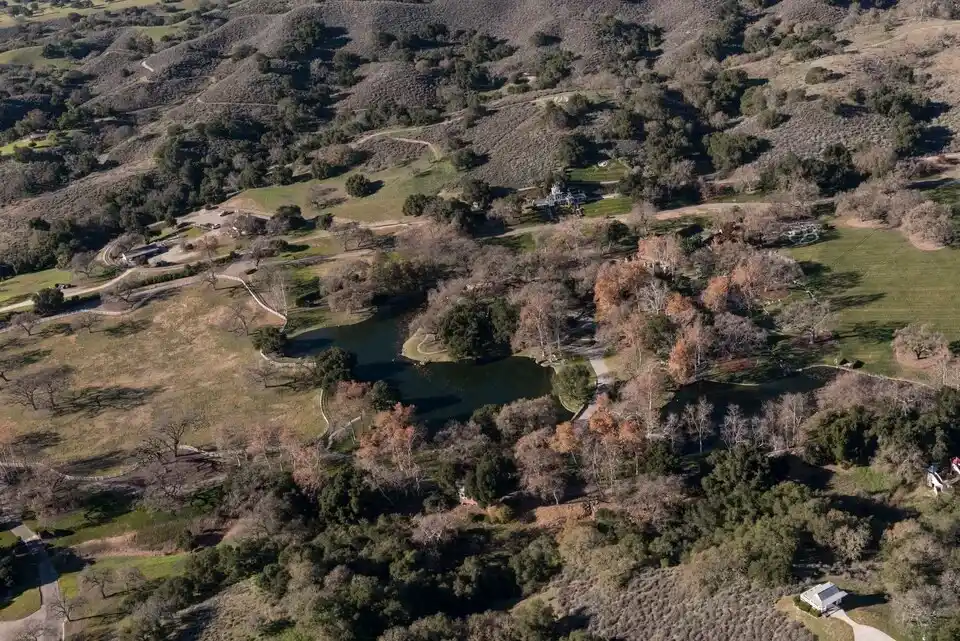
Neverland Ranch sits in Santa Barbara County, about five miles north of Los Olivos and near the Santa Ynez Valley. The property was previously known as Sycamore Valley Ranch. Jackson renamed it after the fantasy island in J.M. Barrie’s Peter Pan.
Jackson first encountered the property while working with Paul McCartney on the “Say Say Say” music video in 1983. He acquired the ranch in 1988, when he was 29, and transformed it into a private residence, retreat, and entertainment complex.
The price record needs context. A March 1988 Los Angeles Times report published before the transaction closed discussed a figure near $28 million and noted an earlier $17 million offer. Later property reporting, including the estate’s resale coverage, generally uses about $19.5 million as the completed purchase price. For that reason, this article treats $19.5 million as the best-supported figure while preserving the contemporary discrepancy.
How Big Was Neverland Ranch?
The estate covered roughly 2,700 acres of rolling land near Los Padres National Forest. Later listings described a roughly 12,598-square-foot, Normandy-style main house with six bedrooms, seven full bathrooms, and two half bathrooms. The first-floor primary suite included a private loft and two bathrooms.
The house was only one part of the compound. Realtor.com’s property summary identifies three guesthouses, a 5,500-square-foot movie theater with a stage, barns, animal facilities, corrals, a maintenance shop, and a staff area. Outdoors, the estate included a four-acre lake with a waterfall, a pool and pool house, tennis and basketball courts, and broad mountain views.
Inside Neverland: What the Verified Listings Show
Neverland’s private rooms were more restrained than its amusement areas. The main house used Normandy and Tudor-inspired forms, with timber details, fireplaces, warm finishes, and doors opening toward terraces and gardens. The first-floor primary suite made daily living possible without crossing the full house, while guest accommodation was spread across separate buildings.
The estate also had a large screening theater with a stage. Earlier listing coverage described balcony seating and theatrical trap doors. These details are more dependable than undated “inside Neverland” galleries, which often mix images from Hayvenhurst, Las Vegas, Holmby Hills, hotels, and exhibitions.
Architecture critic Christopher Hawthorne noted in the Los Angeles Times that the main house was built in 1981 for developer William Bone. His account also shows how the Victorian-style train station and playful landscape borrowed from theme-park design without making the residence itself a literal amusement building.
The Railway, Theater, Zoo, and Amusement Rides
Neverland became famous because Jackson added facilities rarely found at a private home. The estate had a movie theater, amusement rides, a petting zoo, and railways that moved guests around the large grounds. One steam locomotive was named Katherine after his mother.
The train station and tracks became some of the property’s most recognizable structures. Rides included carnival-style attractions, while the animal collection at different times included exotic and domestic species. These features turned the grounds into a private park, but they were separate from the main house.
Many rides and zoo animals were removed after Jackson stopped living at the ranch. When the estate returned to market, the train station and tracks remained, but it was no longer operating as Jackson’s private amusement park. TIME’s 2015 reporting described the rides and zoo animals as gone while the railway structures remained.
Why Did Michael Jackson Leave Neverland?
Jackson stopped treating Neverland as his home after the 2005 criminal trial in which he was acquitted. He said the police searches had changed how he felt about the property. He then spent time abroad and in several temporary residences rather than returning to live at the ranch.
The property later faced serious financial pressure. In 2008, an investment connected to Colony Capital helped prevent foreclosure. Ownership and debt arrangements changed, and the property was eventually prepared for sale under its former name, Sycamore Valley Ranch.
Who Owns Neverland Ranch Now?
Billionaire businessman Ron Burkle bought the property in December 2020 for approximately $22 million. That figure was the sale price, not the value of the ranch while Jackson lived there.
The distinction matters because the estate had been listed for much more. It entered the market in 2015 at about $100 million, later fell to $67 million, and was subsequently offered near $31 million before the $22 million transaction. The long price decline reflected the unusual size, maintenance demands, remote location, and limited pool of buyers.
Neverland is privately owned and is not operated as a regular public museum or theme park. Fans can see parts of the entrance area from public approaches, but ownership does not provide general access to the grounds or house.
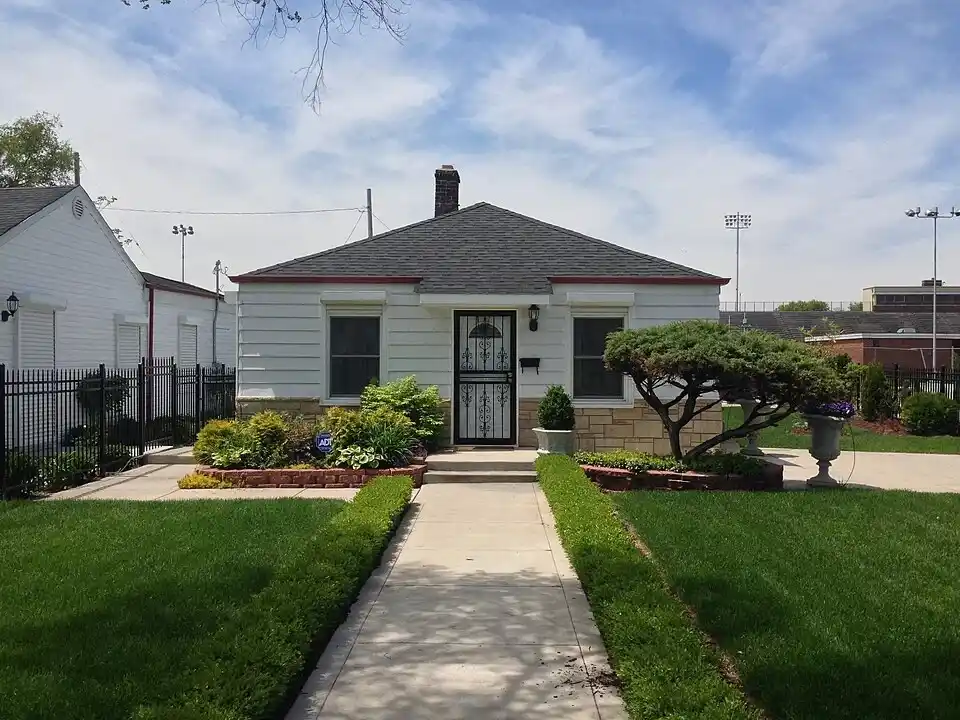
Michael Jackson’s Childhood Home in Gary, Indiana
Michael Jackson’s first home was very different from Neverland. Joseph and Katherine Jackson bought the small house in Gary in January 1950. Michael later grew up there with his parents and siblings before the Jackson 5’s success moved the family to California in 1969.
The one-story bungalow was built in 1949 and measures about 672 square feet. It is commonly described as a two-bedroom, one-bath Minimal Traditional house. The simple rectangular form, low roof, and small footprint stand in sharp contrast to Jackson’s later estates. The limited space meant the large family shared bedrooms and used nearly every part of the home.
The property remains a landmark for fans. A memorial in front of the house and visits from around the world have made it an unofficial pilgrimage site. Local reporting and historical summaries continue to connect ownership to the Jackson family, including Katherine Jackson.
WBEZ’s local history of the Jackson family home provides useful context about the house and its place in Gary.
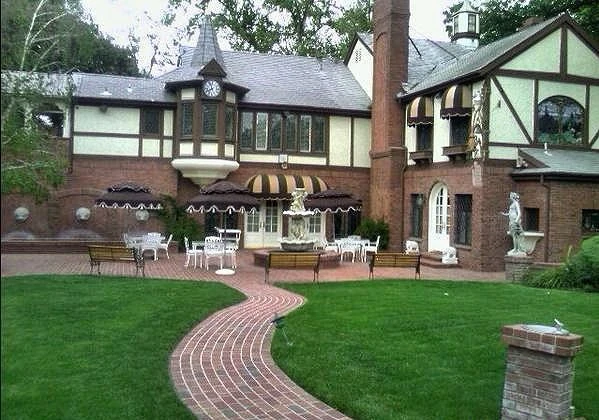
Hayvenhurst: The Jackson Family Home in Encino
After moving west and spending time in hotels and homes connected to music-industry contacts, the Jackson family settled at Hayvenhurst in Encino in 1971. The two-acre compound became Michael’s main home until he moved to Neverland in 1988.
The property changed as the family’s career grew. Contemporary reporting says the original 1,570-square-foot ranch house was moved to the rear and used as a recording studio, while a much larger Tudor-inspired residence was built at the front. A 1988 Los Angeles Times property report described an approximately 11,500-square-foot main house, a four-car garage, and about 850 square feet of additional living space above it.
Hayvenhurst matters because it bridges the family’s early success and Michael’s adult independence. He lived there through the years associated with Off the Wall, Thriller, and Bad. The property has remained connected to the Jackson family rather than functioning as a standard celebrity-house attraction.
Thriller Villa: Michael Jackson’s Las Vegas Rental
After leaving Neverland and spending time outside the continental United States, Jackson was linked to a large Las Vegas residence known as Thriller Villa or Hacienda Palomino. He stayed there periodically between 2007 and 2009.
The Spanish-Mediterranean complex measures about 27,259 square feet on roughly 1.7 acres. Forbes’ property coverage described a four-bedroom, nine-bath main residence, an underground art gallery, and flexible spaces used for private events. The residence is relevant to Jackson’s timeline, but it was not one of his confirmed purchases.
Thriller Villa should not be confused with the Victorian house used in the “Thriller” music video. It should also not be listed as a confirmed Michael Jackson purchase. The stronger evidence describes it as a residence he rented or occupied while another owner held the property.
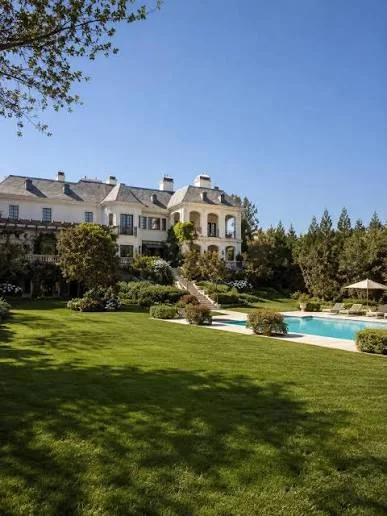
The Holmby Hills Mansion Where Michael Jackson Spent His Final Months
In late 2008, Jackson moved into a mansion in Holmby Hills, Los Angeles, as he prepared for the planned “This Is It” concerts. He was renting the property and reportedly paid $100,000 per month.
The final residence was a 17,171-square-foot French chateau, not the 12,598-square-foot Normandy-style house sometimes attached to it online. That smaller set of figures belongs to Neverland’s main house. Los Angeles Times property reporting says Jackson rented the Holmby Hills estate for $100,000 per month. It was later listed for $23.9 million in 2012.
Built as a formal Los Angeles estate, the house used grand staircases, French-inspired interiors, a screening room, pool, and pool house. Jackson lived there with his children while rehearsing for the planned This Is It concerts. He died at the residence on June 25, 2009.
This house answers the question “Where did Michael Jackson live when he died?” It was not Neverland, and it was not a property he owned. Treating it as his final purchased mansion would misstate the ownership record.
From Neverland to His Final Los Angeles Home
After leaving Neverland in 2005, Jackson’s residential record became less settled. He spent time in Bahrain and Ireland, then returned to the United States and stayed in Las Vegas. By late 2008 he had moved into the Holmby Hills rental while preparing for his London concerts. These stops explain why search results sometimes call several different properties his “last home,” even though the Los Angeles rental was his final residence.
Did Michael Jackson Own All of These Houses?
No. Neverland was his major personal property, while Hayvenhurst was the Jackson family compound. His Gary childhood house belonged to his parents and remained connected to the family. Thriller Villa and the Holmby Hills mansion were rentals or residences controlled by other owners.
This difference explains why a list of every place Jackson stayed is not the same as a real-estate portfolio. Hotels, borrowed homes, overseas stays, and leased mansions belong in a residential timeline, but they should not be counted as assets he purchased.
Common Questions About Michael Jackson’s Homes
How much did Michael Jackson pay for Neverland?
Several established reports place the price at about $19.5 million in 1988. Published figures vary, so it is better treated as an approximate amount.
Who owns Neverland Ranch now?
Ron Burkle purchased the ranch for approximately $22 million in December 2020.
Can people visit Neverland Ranch?
The property is privately owned and is not open as a regular public attraction. Fans sometimes visit the area outside its entrance, but that does not provide access to the estate.
Where did Michael Jackson live when he died?
He lived in a rented 17,171-square-foot French chateau in Holmby Hills, Los Angeles. He died there on June 25, 2009.
What the Homes Show
Jackson’s residential story moved from a 672-square-foot family bungalow to Hayvenhurst, the vast Neverland estate, and later rentals in Las Vegas and Los Angeles. Neverland remains the defining Michael Jackson house, while the full record shows which properties he owned, which belonged to his family, and which he only rented.