Baltic Property Trust: What Investors Need to Know in 2026
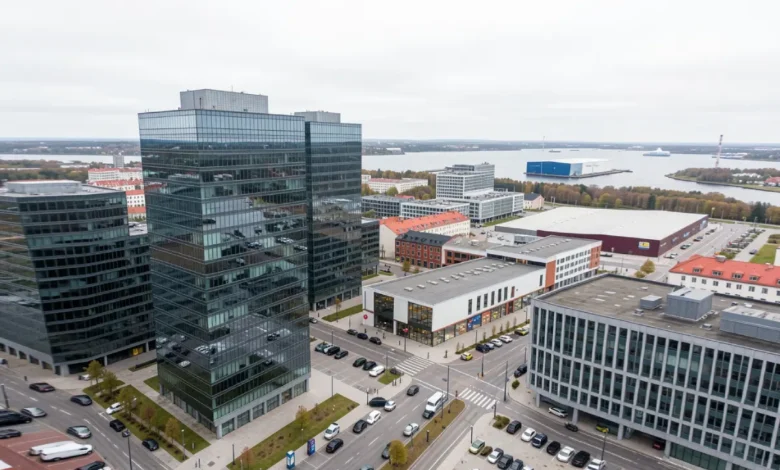
Baltic Property Trust is a real estate investment fund that acquires, develops, and refurbishes commercial properties across Estonia, Latvia, and Lithuania. It focuses on retail, office, and logistics assets. The fund operates through a Danish parent structure with an Estonian subsidiary registered as Baltic Property Trust Estonia AS. It has raised multiple funds since the early 2000s, targeting institutional and professional investors seeking exposure to Baltic commercial real estate.
The Baltic commercial real estate market, where BPT operates, has gone through a difficult cycle. Total investment volume across all three Baltic states fell to EUR 830 million in 2024, the lowest level in a decade. However, recovery is underway. Investment volumes are projected to return to around EUR 1 billion in 2025, and yields in the region remain significantly higher than in Western Europe, making the Baltics a credible destination for risk-aware capital.
What Baltic Property Trust Actually Is
Baltic Property Trust (BPT) is a real estate investment fund manager with roots in Denmark and a registered subsidiary in Estonia. Bloomberg describes the firm as one that invests in the “acquisition, development, and refurbishment of commercial properties in the retail, office, and logistics segments” across Estonia, Latvia, and Lithuania.
The fund has operated across multiple fundraising cycles. According to PERE, the firm was already on its fifth fund by 2009, at that point targeting depressed property prices in the Nordics and Baltics following the financial crisis. This track record places BPT among the earlier institutional players in Baltic commercial real estate, predating many of the regional funds that emerged after 2010.
The Estonian entity, Baltic Property Trust Estonia AS, is registered under company number 10908315 in Estonia’s commercial registry. The Danish parent, Baltic Property Trust Secura A/S, serves as the broader fund management vehicle.
Baltic Property Trust’s Investment Strategy
BPT targets three commercial property segments across the three Baltic capitals and their surrounding markets.
- Retail: Shopping centres, retail parks, and high-street commercial units
- Office: Business centres and multi-tenant office buildings, primarily in Tallinn, Riga, and Vilnius
- Logistics: Warehousing and distribution facilities serving Baltic and wider Nordic supply chains
The fund focuses on income-generating assets. This means properties with existing tenants and cash flows, rather than pure development plays. Value-add opportunities, such as refurbishments that increase occupancy or rental rates, are also part of the strategy.
This approach mirrors how other established Baltic real estate funds operate. East Capital Real Estate, for example, describes its Baltic Property Fund series as targeting “cash-flow generating commercial properties with good potential for value growth in the Baltic capital cities.” EfTEN Capital, currently described as the largest real estate fund manager in the Baltics, takes a similar income-first approach.
How the Baltic Property Market Has Performed
Understanding BPT requires understanding the market it operates in. The Baltics have experienced a sharp two-year slowdown in investment activity.
According to Colliers, total Baltic investment volume fell to EUR 830 million in 2024, the lowest recorded in the past decade. Office and hotel transactions contracted the most, with average transaction sizes roughly halving compared to prior years. Estonia generated around 60% of the total 2024 investment volume, supported by several large deals, while Latvia and Lithuania remained below expectations.
Despite this, retail held up. Retail assets represented 50% of the total 2024 investment volume and 68% of the top ten deals across all three Baltic states. This has practical implications for funds like BPT, which hold retail assets as a core segment.
Looking ahead, market sentiment is improving. Colliers’ Q4 2025 overview notes that “market sentiment is forecast to gradually improve amid stabilising economic conditions, easing inflation, and more favourable financing.” Investment volumes are expected to return to approximately EUR 1 billion in 2025.
Why Baltic Property Yields Attract Investors
One of the clearest arguments for Baltic commercial real estate is the yield gap compared to Western European markets.
Investment yields in the Baltics currently sit around 6 to 7% across major asset classes, including office buildings, logistics centres, and shopping centres. In more mature markets like Poland or Scandinavia, comparable assets trade at yields of approximately 4%. This gap reflects the higher perceived risk in the region, not a fundamental weakness in tenant demand or rental income.
For professional investors who can price and manage that risk, the spread is material. A 200 to 300 basis point yield premium over Western European peers, on assets with institutional-grade tenants and long leases, represents a genuine return opportunity. This is the core argument for Baltic-focused funds like BPT.
CBRE’s Baltic Real Estate Market Outlook 2025 notes that prime industrial properties are “forecasted to demonstrate positive trends in both rents and capital values,” while alternative asset classes, including data centres, multifamily residential, and student housing, are projected to see capital value growth. These trends are beginning to attract capital back into the region.
BPT Real Estate and the Management Side
Separate from the fund manager, there was a property management company called BPT Real Estate that operated in proximity to the Baltic Property Trust brand. BPT Real Estate was established in 2001 and ran property management operations across Tallinn, Riga, and Vilnius, administering business centres, retail properties, and logistics buildings.
In 2015, private equity firm BaltCap acquired BPT Real Estate. By 2022, BaltCap sold a 95% stake in BPT Real Estate to Newsec, a full-service property house operating across Northern Europe. Following the acquisition, Newsec became the largest independent real estate management company in the Baltics, with more than 84 commercial properties under management totalling 880,000 square metres across the three countries. BPT Real Estate rebranded under the Newsec name.
The distinction matters. Baltic Property Trust, the fund manager, and BPT Real Estate, the management company, share historical branding but are separate entities. Investors researching BPT should be clear about which operation they are looking at.
Risks Investors Should Factor In
The Baltic commercial real estate market carries specific risks that any investor in BPT or similar funds should consider carefully.
Geopolitical exposure sits at the top of the list. Estonia, Latvia, and Lithuania border Russia, and the war in Ukraine has increased investor caution about the region. According to Colliers, geopolitical risks are already “constraining new development and future growth” in the logistics sector specifically.
Office vacancy is a second concern. In Riga, Class A office vacancy is projected to remain at 18 to 20%, with around 120,000 square metres of vacant space available. Vilnius shows stronger demand but with a shift toward smaller, cost-efficient deals reflecting hybrid work patterns. Office assets held by funds like BPT face genuine leasing pressure in this environment.
Market liquidity is a third factor. The Baltic investment market is dominated by local buyers. According to Colliers, the return of international capital “remains uncertain, leaving local investors to drive the market in 2025.” This limits the exit options for fund managers and can affect asset valuations at the point of sale.
FAQs
What does Baltic Property Trust invest in?
Baltic Property Trust invests in commercial real estate across Estonia, Latvia, and Lithuania. Its primary segments are retail, office, and logistics properties.
Is Baltic Property Trust the same as BPT Real Estate?
No. Baltic Property Trust is a fund manager with Danish and Estonian entities. BPT Real Estate was a property management company that was acquired by BaltCap in 2015 and later sold to Newsec in 2022. They share historical branding but are separate businesses.
What returns can investors expect from Baltic commercial real estate?
Investment yields in the Baltics currently range from 6 to 7% across major asset classes, compared to approximately 4% in Western European markets. The premium reflects higher perceived risk in the region.
How has the Baltic real estate market performed recently?
Total investment volume fell to EUR 830 million in 2024, the lowest level in a decade. Retail assets held up strongest, accounting for 50% of total investment. Recovery is expected in 2025, with volumes projected to return to around EUR 1 billion.
Who are the main competitors to Baltic Property Trust in the region?
The main institutional fund managers operating in Baltic commercial real estate include EfTEN Capital (described as the largest real estate fund manager in the Baltics), East Capital Real Estate, and Baltic Horizon Fund, which is listed on the Nasdaq Tallinn stock exchange.