How to Build a DIY Solar Generator: A Complete Guide for 2026
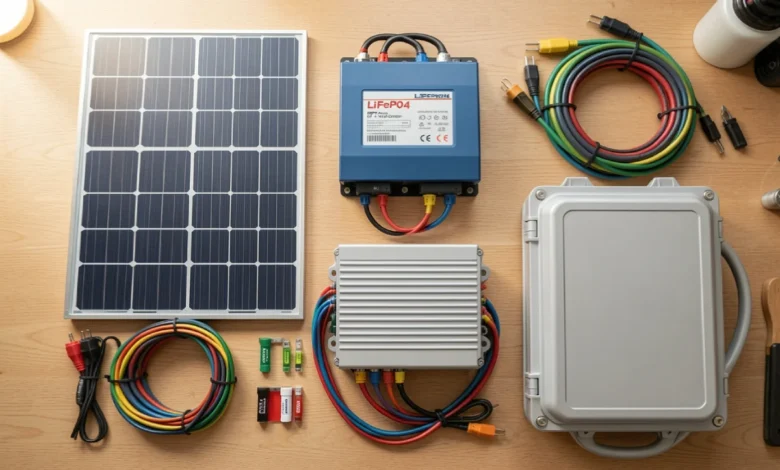
A DIY solar generator is a portable power system you build from individual components: solar panels, a battery, a charge controller, and an inverter. You can build a basic unit for $300 to $600, or a powerful setup for $1,300 to $1,800. It stores solar energy and converts it into usable AC or DC electricity for appliances, camping, or home backup power.
Rising electricity bills and more frequent grid outages have pushed many people toward solar. But commercial solar generators can cost $1,000 or more for a mid-range model. Building your own gives you the same capability at a fraction of the price, and you understand exactly how every part works.
This guide walks you through each step: what components you need, how to size your system, what it costs, and where most beginners go wrong.
What a DIY Solar Generator Actually Is
A DIY solar generator is not a single device you build from scratch. You select and connect ready-made components from different manufacturers to create a working power system. The result captures energy from the sun, stores it in a battery, and delivers it to your devices.
It does not involve making circuit boards or soldering electrical components at the circuit level. The core skill is wiring the right parts together safely. Most people with basic mechanical ability can do this with careful preparation.
The system works whether you are camping, running a home workshop, or keeping the lights on during a blackout.
Core Components for Your DIY Solar Generator
Every DIY solar generator needs the same five building blocks:
- Solar panels: Capture sunlight and produce direct current (DC) electricity. Monocrystalline panels are the most efficient option and are the standard choice for most builds.
- Charge controller: Sits between the panels and the battery. It prevents overcharging by regulating voltage and current. An MPPT (Maximum Power Point Tracking) controller is more efficient than a PWM model, especially in low-light conditions.
- Battery: Stores the energy your panels collect. LiFePO4 (lithium iron phosphate) is the best option for most builds. It lasts 3,000 to 5,000 charge cycles, handles deep discharge safely, and has no risk of thermal runaway.
- Inverter: Converts DC electricity from the battery into AC power that standard appliances use. Choose a pure sine wave inverter. Modified sine wave models are cheaper but can damage sensitive electronics.
- Enclosure and wiring: A weatherproof case with proper fusing protects your components and keeps your build safe.
A battery maintainer is optional but useful if you store the generator for long periods. Without one, an unused battery can degrade faster.
How to Calculate How Much Power You Need
Sizing your system before buying anything is the most important step. Buy undersized, and your generator will not run your appliances. Buy oversized, and you waste money.
Step 1: List every appliance you plan to run. Write down its wattage and how many hours per day you will use it.
Step 2: Multiply watts by hours. That gives you watt-hours (Wh). A 50W fan running for 4 hours needs 200Wh.
Step 3: Add up all appliance totals. That is your daily energy demand.
Step 4: Account for surge watts. Some appliances draw 2 to 3 times their running watts at startup. A refrigerator rated at 150W may surge to 450W when the compressor kicks in. Your inverter must handle this peak load.
Step 5: Factor in battery depth of discharge. LiFePO4 batteries can safely discharge to about 20% capacity. If your daily demand is 1,000Wh, size your battery for at least 1,200Wh to maintain battery health.
Here is a quick reference for common use cases:
- Weekend camping (lights, phone charging, small fan): 300 to 500Wh battery, 100W panel
- Van or off-grid cabin (small fridge, laptop, lighting): 1,000 to 2,000Wh battery, 200 to 400W panels
- Home emergency backup (fridge, router, lights, phone): 2,000 to 4,000Wh battery, 400 to 800W panels
Step-by-Step DIY Solar Generator Build
1. Gather Your Parts
Buy all components before you start. Confirm they are compatible. Your charge controller and inverter must match your battery voltage (12V, 24V, or 48V systems are most common for DIY builds).
2. Prepare Your Enclosure
Choose a weatherproof plastic or aluminum case large enough to hold your battery, charge controller, and inverter. Leave room for ventilation. Mark where your terminals, switches, and ports will go.
3. Mount the Battery
Secure the battery inside the case using foam or brackets. A loose battery shifts under movement and can damage connections.
4. Install the Charge Controller
Mount the charge controller inside the case. Connect the battery to the controller first, following the manufacturer’s polarity markings. Always connect in the correct order: battery first, then panels, then load.
5. Add a Fuse on Every Connection
Fuse each wire run close to its power source. This is non-negotiable for fire safety. Use appropriately rated fuses for each circuit based on wire gauge and expected current.
6. Connect the Inverter
Wire the inverter directly to the battery terminals with appropriately gauged cable. Thick cables (4 AWG or larger for most portable builds) reduce resistance and heat.
7. Wire Your Output Ports
Install DC output ports (USB, 12V cigarette lighter) and AC outlets on the case exterior. Run them through the inverter and charge controller load output.
8. Connect the Solar Panels
Run the solar panel cables through a weatherproof cable entry into the case. Connect them to the charge controller’s PV input last.
9. Test Before You Rely on It
Check voltage at every connection point with a multimeter. Charge the battery fully. Run your planned appliances one at a time and confirm the system handles them without tripping.
DIY Solar Generator Cost vs. Buying Pre-Made
Cost is usually the main reason people build instead of buy. The numbers support that choice.
A DIY system’s cost typically lands between $0.25 and $0.40 per watt-hour. Pre-made portable power stations usually run $0.50 to $0.85 per watt-hour. That gap adds up fast on a large system.
A DIY build with 3,600Wh of LiFePO4 storage, a 3,000W pure sine wave inverter, an MPPT charge controller, and wiring can come in between $1,300 and $1,800. A commercial unit with similar specs often costs $2,500 to $3,500 or more.
For a small portable system (300 to 500Wh), you can build it for $250 to $400. A comparable pre-made unit from brands like EcoFlow or Jackery typically starts at $500 to $700.
There is a trade-off, though. Pre-made units come with integrated battery management systems, warranties, and tested safety ratings. Your DIY build depends on your wiring quality and component choices. If something fails outside a warranty period, you only replace the broken component. With a pre-made unit, a single component failure after the warranty expires can make the entire device unusable.
For long-term use and larger systems, DIY wins on cost. For casual or occasional use where convenience matters more, a pre-made unit is a reasonable option.
Battery Chemistry: Why LiFePO4 Is Worth the Extra Cost
Most beginners consider lead-acid batteries because they are cheaper upfront. The real cost difference tells a different story.
A 100Ah 12V lead-acid battery costs $100 to $180. A comparable LiFePO4 battery runs $200 to $350. But lead-acid batteries only last 300 to 500 cycles and can only safely discharge to 50% of their capacity. LiFePO4 cells last around 3,000 to 5,000 cycles, have no risk of thermal runaway, and are significantly safer and more stable than other lithium chemistries.
If you run your system daily, a lead-acid battery may need replacement in under two years. A LiFePO4 battery in the same setup can last ten years or more. The higher upfront cost pays for itself several times over.
For most DIY solar generator builds in 2025, LiFePO4 is the right choice.
Common Mistakes Beginners Make
Skipping the Load Calculation
Most undersized builds come from guessing instead of calculating. A generator that cannot start your refrigerator is not useful in a blackout. Do the math before you buy anything.
Using the Wrong Wire Gauge
Thin wire on a high-current circuit creates heat and fire risk. Use a wire gauge chart to match your cable size to the expected current. For a 12V system pulling 100A, you need at least 2 AWG cable.
No Fusing on Individual Circuits
A single main fuse is not enough. Each branch circuit needs its own fuse. This is basic electrical safety and the step most beginner guides skip over.
Buying a Modified Sine Wave Inverter
They are cheaper, but they produce a choppy waveform that can damage motors, medical devices, and some electronics. A pure sine wave inverter costs a bit more and works with everything.
Ignoring Charge Controller Sizing
Your charge controller must handle the maximum current your panels can produce. If you plan to expand your panel array later, buy a controller rated for that future capacity now.
Final Thoughts
A DIY solar generator is one of the more practical builds you can take on. The components are widely available, the skills required are basic, and the savings over commercial units are real. DIY solar systems typically cost 50 to 70 percent less than professionally assembled alternatives.
The key is to plan carefully, size your system for your actual needs, and not cut corners on safety. Start with a small portable build to learn the process, then scale up once you understand how each part works together.
Whether you need backup power at home, reliable energy on the road, or an off-grid solution for a cabin, a well-built DIY solar generator will serve you for years.
DIY Solar Generator FAQs
How long does it take to build a DIY solar generator?
A basic portable unit takes 3 to 6 hours if you have your parts ready. A larger, more complex system may take a full weekend. Most of the time goes into planning and measuring, not the actual assembly.
Can a DIY solar generator power a refrigerator?
Yes, if you size it correctly. A standard household refrigerator uses 100 to 200W running and may surge to 400 to 600W at startup. A 1,000 to 2,000Wh battery with a 1,500W pure sine wave inverter handles this comfortably for 8 to 12 hours per charge.
Is it safe to build your own solar generator?
Yes, if you follow electrical safety basics: fuse every circuit, use the correct wire gauge, connect in the right order, and keep components secure. Avoid working on live circuits. If you are unsure about any step, consult a licensed electrician for review.
What is the lifespan of a DIY solar generator?
Solar panels typically last 25 to 30 years with a gradual efficiency decline. A LiFePO4 battery lasts 10 or more years under regular use. The charge controller and inverter generally last 10 to 15 years. The modular design means you replace only what fails, not the entire system.
Do I need a permit to build a DIY solar generator?
A portable, off-grid solar generator does not typically require a permit. If you connect your system to your home’s electrical grid or install permanent wiring, local permits and utility approval are usually required. Check with your local building department before any permanent installation.