Living Room Divider Ideas That Actually Work in 2026
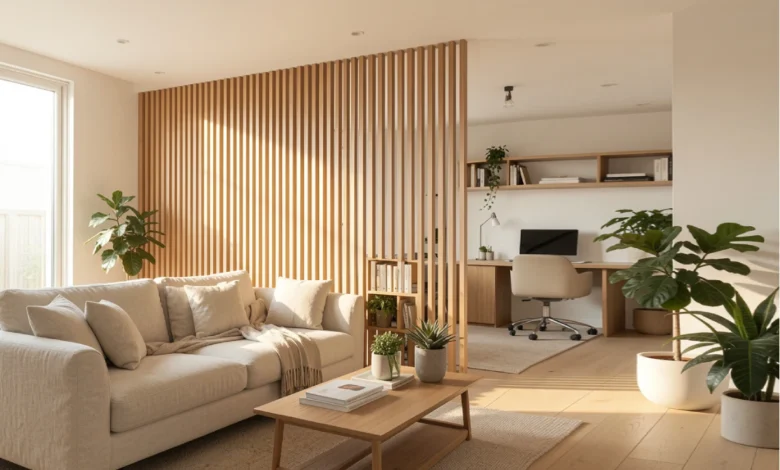
Living room divider ideas range from freestanding bookshelves and sliding glass panels to curtain dividers and wood slat screens. The best option depends on your space size, light needs, and budget. Most dividers work without permanent construction, making them ideal for renters and homeowners alike. Choose a style that defines your zones without cutting off natural light or making the room feel smaller.
Why Open-Plan Living Needs Boundaries
Open-concept living rooms looked great on paper. But without defined zones, they can feel chaotic. You end up with a TV blaring while someone tries to work, or dishes visible from the sofa.
Designers are noticing that more homeowners are gravitating toward the privacy of closed-concept layouts than in recent years. A well-chosen room divider gives you that separation without the cost or permanence of building a wall.
In 2026, trends are moving toward natural materials, earthy colors, and pieces that serve both functional and decorative purposes. A divider no longer just splits a room. It contributes to the overall design.
Best Living Room Divider Ideas by Type
Here are the most effective options available right now, from budget-friendly to investment-level:
Freestanding bookshelves. A bookshelf divider does double duty. It sections off your space while giving you storage and display room. Add plants, books, or framed photos to make it feel intentional rather than functional. This works especially well between a living area and a home office.
Wood slat panels Wood slat dividers subtly separate a space without blocking light, adding rhythm and texture in one clean move. They pair well with floating TV units and minimalist furniture. You can buy pre-made versions or install them wall-to-wall for a more architectural look.
Curtain dividers are easy to open and close, require minimal installation, and work well in small living rooms. Using a curved curtain rod allows fabric to wrap around corners, creating privacy without harsh edges. Linen or sheer fabrics keep the space feeling light.
Glass panels Frosted or fluted, divide a space while keeping light flowing through. They work well between a living room and an entryway or dining area. Glass partitions can be customized with details like fluted glass for privacy or contrast framing for a bold look.
Sliding doors give you full control. Open them when you want flow, close them when you need separation. They are a strong choice for separating a living room from a home office or guest sleeping area.
Bamboo screens. Bamboo is light, durable, and eco-friendly. It adds texture and warmth to a room without making it feel heavy. Sustainable materials like bamboo and reclaimed wood are growing in popularity as homeowners prioritize eco-friendly design without sacrificing aesthetics.
Furniture as a divider: A sofa placed back-to-back with a console table can define two zones without any additional structure. A tall sideboard or freestanding cabinet works the same way. This approach works best in larger, open-plan spaces.
How to Choose the Right Living Room Divider
Before you buy anything, answer three questions:
- How much light do you want to keep in both zones?
- Is the arrangement permanent, or do you need flexibility?
- Do you rent or own your space?
If light matters, stick to glass panels, slatted wood screens, or sheer curtains. These let brightness move through the room while still creating visual separation.
If you need flexibility, go freestanding. Rolling partitions mounted on wheels can shift positions when your needs change. These are especially useful in rental homes or multipurpose rooms where the layout might need to change.
For renters, avoid anything that requires drilling into load-bearing structures. Freestanding bookshelves, curtain rods mounted on ceiling tracks, and free-standing screens are all strong options.
Living Room Divider Ideas for Small Spaces
Small spaces need dividers that earn their footprint. Every piece should serve more than one purpose.
A bookshelf divider with open shelving on both sides works well here. One side faces the living area, the other faces a dining space or home office. You get storage, display space, and visual separation in one unit.
Sheer curtains hung from ceiling-mounted tracks take up almost no floor space. If you live in a small space, hanging two rods from the ceiling and installing sheer curtains can give you a soft, effective partition without taking up any floor area.
Half-height dividers, anything below eye level, preserve the sense of openness while still creating distinct zones. Pair one with a bold area rug on each side to reinforce the separation visually.
Materials and What They Cost You
The material you choose affects cost, maintenance, and how the divider fits into your room’s style.
Wood is the most versatile choice. It works in modern, Scandinavian, rustic, and mid-century spaces. Solid wood costs more but lasts longer. MDF and plywood panels are affordable and can be painted to match your walls.
Glass creates a polished, high-end look. Frosted or textured glass costs more than a basic screen but adds a level of finish that other materials cannot match.
Fabric (curtains, macrame, bead curtains) is the most budget-friendly option. It is also the easiest to change if you want to update the look without replacing the structure.
Metal frames with glass or fabric inserts sit in the mid-range price bracket. They work best in industrial, modern, or transitional spaces.
Common Mistakes to Avoid
Most divider mistakes come down to scale and light. Here is what to watch for:
- Choosing a divider that is too tall for the room, which makes the ceilings feel lower
- Blocking the only natural light source in a zone
- Using a divider that clashes in style with existing furniture
- Picking something too heavy or bulky for the floor space available
- Going too minimal, so the divider fails to actually define the zone
A good rule: the divider should feel like it belongs in the room, not like it was placed there as an afterthought.
Final Thoughts
Living room divider ideas have come a long way from folding screens and temporary panels. The best options today serve your space in at least two ways, separating zones and adding storage, texture, or style. Start with your light needs and your flexibility requirements, then choose a material that fits your existing decor. With the right choice, a divider makes your living room feel more intentional, not smaller.
FAQs
What is the cheapest way to divide a living room?
Curtain dividers are the most affordable option. A ceiling-mounted curtain track with linen panels can cost well under $150 and requires minimal installation. A freestanding folding screen is another low-cost option.
Can a bookshelf work as a room divider?
Yes. A bookshelf divider is one of the most practical choices because it combines storage with space definition. Make sure it is stable and, if it is tall, anchor it to the wall for safety.
How do I divide a living room without blocking light?
Use glass panels, slatted wood screens, or sheer curtains. These let light pass through while still creating visual separation between zones. Partial-height dividers are also effective because they define the space without reaching the ceiling.
Are room dividers still in style in 2026?
Yes. Room dividers have found new relevance in modern homes, with designers noting that more homeowners are gravitating toward the privacy of closed-concept layouts. The key is choosing one that looks deliberate rather than decorative.
Do room dividers work in rental apartments?
Absolutely. Freestanding options, including bookshelves, folding screens, and rolling partitions, require no permanent installation. Curtain rods mounted on ceiling tracks are also renter-friendly in most cases.