Rug Sizes for Living Room: How to Get It Right Every Time
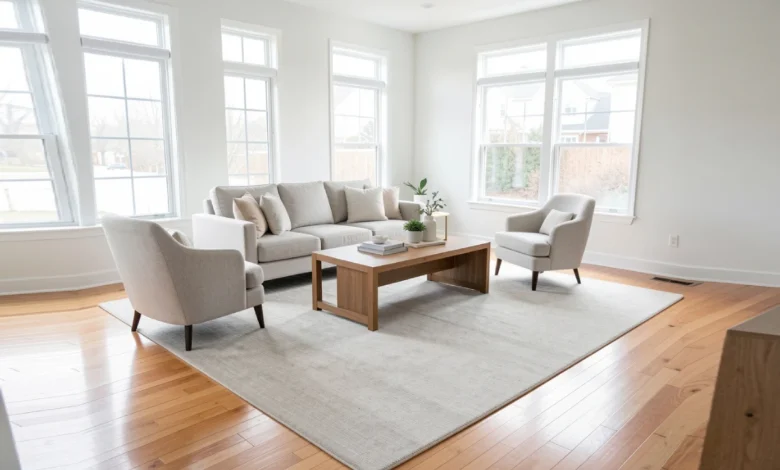
The most common rug sizes for a living room are 8×10, 9×12, and 10×14 feet. Your choice depends on room size and furniture layout. As a general rule, leave 18 inches of bare floor between the rug edge and the wall, and place at least the front legs of your sofa and chairs on the rug. When in doubt, go bigger. A rug that is slightly oversized almost always looks better than one that is too small.
A small living room, around 150 square feet, works well with a 6×9 rug. An average room around 200 square feet calls for an 8×10 or 9×12. Larger rooms above 300 square feet need at least a 9×12, and open-plan spaces often require a 10×14 or larger to properly anchor the seating zone. Get this one decision right, and the rest of the room tends to fall into place.
Why the Wrong Rug Size Ruins a Room
Most decorating mistakes are subtle. A rug that is too small is not subtle at all.
When a rug sits like a postage stamp in the middle of a large room, it makes the furniture look like it is floating. The seating area loses definition, and the room feels disconnected. Interior designer Emily Henderson puts it plainly: people consistently buy rugs that are too small because a 5×7 costs significantly less than an 8×10, but a rug that chops up a room wastes money regardless of the price tag.
The opposite problem, a rug that is too large, crowds the room and leaves no visual breathing room between the rug edge and the walls. Both mistakes signal the same thing: the rug was chosen without measuring first.
Standard Living Room Rug Sizes at a Glance
Standard rug sizes exist because they were designed to match common furniture footprints. Here is how the most popular sizes map to real living rooms:
- 5×7 or 6×9: Works only in very small living rooms or as a floating accent rug under a coffee table alone. Not recommended for seating arrangements.
- 8×10: The most versatile size on the market. Fits medium living rooms and supports front-legs-on placement for a three-seat sofa plus two chairs.
- 9×12: Suits larger living rooms where all furniture legs can sit fully on the rug. Works well with sectionals and open seating arrangements.
- 10×14: Best for large or open-plan living spaces. Defines a seating zone within a bigger room without going wall-to-wall.
The 8×10 offers the most flexibility across different rooms and layouts. If you can only own one size, it accommodates front-legs-on placement in medium rooms and fits queen bedrooms and home offices as well.
How to Measure Your Living Room for a Rug
Skip guessing. Pull out a tape measure before you open a single product page.
Start by measuring the full dimensions of your room. Then measure your furniture footprint: the width and depth of your sofa, chairs, and coffee table as a group. Allow 30 to 36 centimeters for walkways in larger rooms, or 18 to 24 centimeters in compact spaces, and use painter’s tape to mark where the rug edges will fall.
That last step matters more than most guides admit. Tape on the floor gives you a full-scale preview before you spend anything. Live with it for a day. Walk around it. Sit on the sofa and look down. You will quickly know if the size feels right or if you need to go up.
Leave at least 6 to 18 inches of exposed floor between the edges of your rug and the walls. This frame of flooring creates visual balance while allowing the rug to connect your furniture into one cohesive zone.
Which Rug Size Fits Your Living Room
Room size narrows your options. Furniture layout makes the final call.
Small living rooms (under 150 sq. ft.): A 6×9 rug works here. Place it so that the front legs of your sofa and the two chairs in front of it sit on the rug. This keeps the room feeling open rather than covered wall to wall.
Medium living rooms (150 to 250 sq. ft.): For an average-sized living room of around 200 square feet, an 8×10 or 9×12 rug gives the right proportion. An 8×10 handles front-legs-on placement well. A 9×12 works if you want all furniture fully on the rug.
Large living rooms (over 300 sq. ft.): A 9×12 accommodates most living room furniture at this size, with all legs of the sofa and chairs placed on the rug. For even more space, a 10×14 or larger makes a strong design statement and pulls the room together.
Open-plan spaces: Use the rug to zone the seating area, not fill the entire floor. A 10×14 defines a conversation zone without competing with the dining or kitchen area nearby.
Three Furniture Placement Rules That Work
Once you have the right size, placement decides whether it looks intentional or accidental.
Rule 1: Front legs on. Place only the front legs of your sofa and chairs on the rug. This arrangement anchors the space while still showcasing your flooring and creating an open, airy atmosphere. This is the most common method among interior designers and works well in medium-sized rooms.
Rule 2: All legs on. In a large room or open floor plan, go big enough for the entire furniture group to sit on the rug. This layout creates a unified and well-defined seating area, with the rug acting as a focal point that ties the room together.
Rule 3: Be consistent. If your sofa legs are off the rug, keep the chair legs off as well. If your sofa is all on, you cannot have the chairs all off. Consistency makes the layout look intentional rather than accidental.
One situation trips people up: sectionals. A large L-shaped sofa needs a rug that extends at least 6 to 8 inches beyond the sofa on each open side. If the rug ends right at the sofa’s edge, the furniture looks like it is spilling off.
Rug Size for Small Living Rooms Specifically
A small room does not need a small rug. This is one of the most counterintuitive rules in interior design.
A generously sized rug draws the room together even in smaller living areas. Large rugs create the illusion of more floor space, producing more balance and flow. In a tight space, a rug that is slightly too large reads as intentional and grounded. A rug that is clearly too small reads as an afterthought.
If budget is a constraint, consider placing a smaller rug as a floating accent directly under the coffee table only. This works specifically when your sofa backs up against the wall, since the rug under the sofa is invisible anyway. You do not need to waste rug coverage under the sofa if the sofa is against a wall and the rug would not be seen there.
How to Test a Rug Size Before You Buy
Two tools give you a real preview without spending a dollar.
The first is painter’s tape. Mark the full perimeter of the rug you are considering directly on the floor. Step back. Sit in your furniture. See how the proportions feel from every angle you normally experience the room. Adjust the tape if the size is off. This simple step helps you visualize scale, ensures furniture fits comfortably, and gives you confidence before you commit to a size or style.
The second is a bed sheet or an old tablecloth cut or folded to the target dimensions. It gives you the texture and visual weight of an actual rug better than tape lines alone.
Both methods take 15 minutes and save you from a $400 return.
FAQs
What is the most popular rug size for a living room?
The 8×10 is the most widely purchased size. It fits most standard living rooms and works with front-legs-on furniture placement for sofas and chairs.
Should a rug be bigger than the sofa?
Yes. Your rug should be at least 6 inches wider than your sofa on both sides, with 8 inches being the better target. A rug that ends at the sofa’s edge loses the anchoring effect entirely.
How much floor should show around a rug?
Leave 12 to 18 inches of bare floor between the rug edge and the wall in most rooms. In smaller spaces, 8 inches works. In large rooms, 18 to 24 inches creates a cleaner visual border.
Can a rug be too big for a living room?
Yes. A rug that extends within 6 inches of every wall starts to look like wall-to-wall carpet and reduces the room’s sense of proportion. The border of the bare floor is what gives a rug its framing effect.
What size rug works for an open-plan living room?
Start with a 10×14. Use it to define the seating zone only, not the entire open floor area. The rug should cover the furniture grouping and stop well before the dining or kitchen zone begins.