Eagleston Holly Tree: Care, Growth, and Landscape Uses
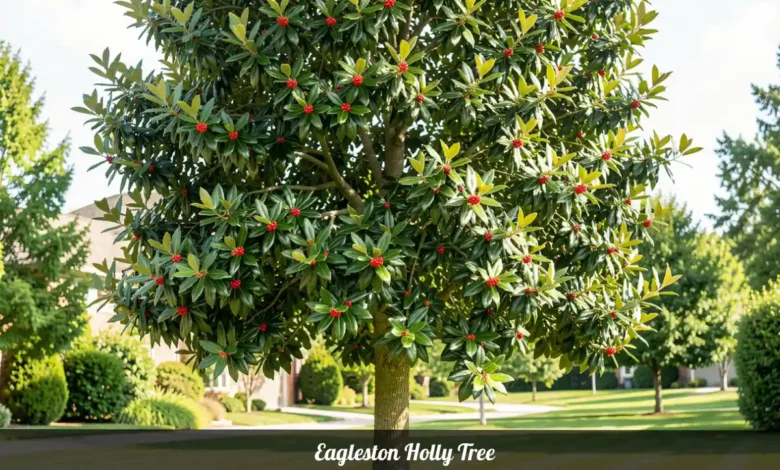
The Eagleston Holly (Ilex x attenuata ‘Eagleston’) is a hybrid evergreen tree that grows 20 to 25 feet tall with a spread of 10 to 20 feet. It thrives in USDA zones 6 to 9, tolerates a wide range of soils, and produces bright red berries each fall. You can grow it as a privacy screen, specimen tree, or formal hedge with minimal maintenance year-round.
It performs well in full sun to partial shade and adapts to clay, loam, and sandy soils. Once established, it handles drought and tolerates occasional flooding. Its pyramidal shape and dense evergreen canopy make it one of the most reliable choices for Southern and mid-Atlantic landscapes. Few hollies match its combination of toughness, ornamental appeal, and ease of care.
What Is the Eagleston Holly Tree
The Eagleston Holly is a natural hybrid of two native species: the Dahoon Holly (Ilex cassine) and the American Holly (Ilex opaca). This cross gives it traits from both parents, including the Dahoon’s tolerance for wet soils and the American Holly’s cold hardiness.
Its leaves are smooth, dark green, and oval-shaped with soft, slightly serrated edges. Unlike many other hollies, the spines are not sharp, which makes it safer to plant near walkways, patios, and high-traffic areas. In spring, it produces small white flowers that attract pollinators. By fall, clusters of round red berries appear and persist through winter.
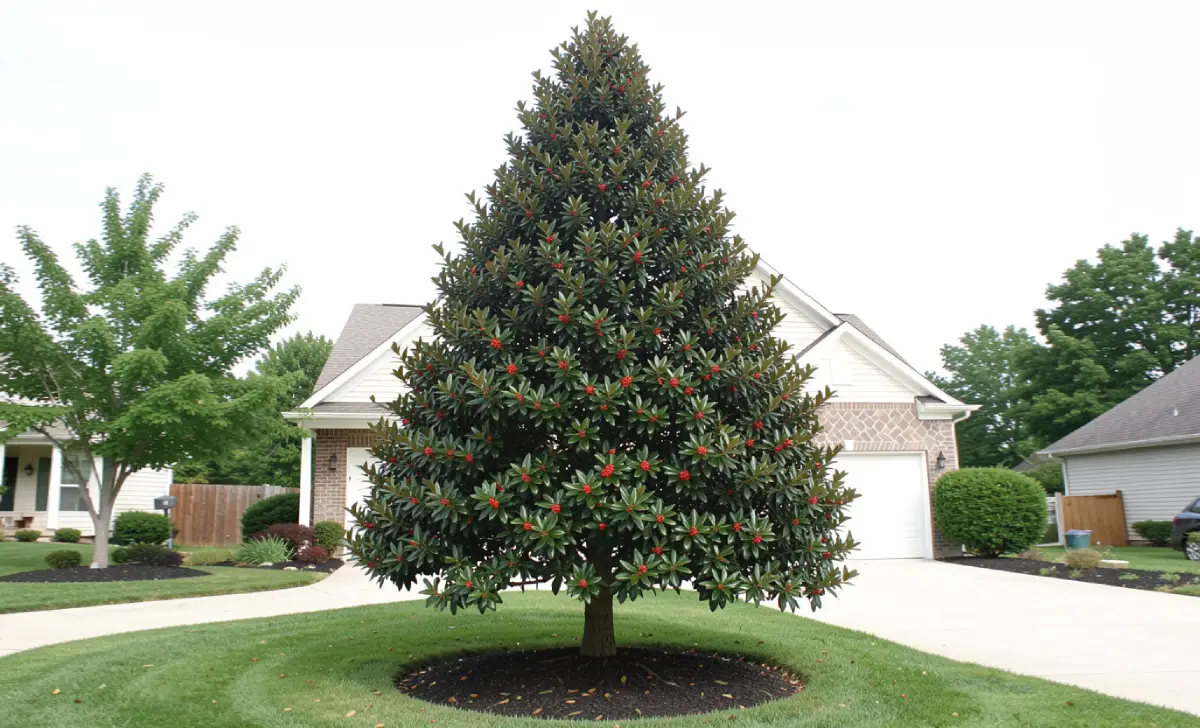
The tree’s dense, pyramidal canopy is one of its strongest selling points. It stays full from the base to the crown without heavy pruning, which is why landscape designers often choose it for formal and naturalistic settings alike.
Eagleston Holly Size and Growth Rate
Mature Eagleston Hollies reach 20 to 25 feet in height with a canopy spread of 10 to 20 feet. Most specimens grow 1 to 2 feet per year under good conditions, though growth slows slightly in poorer soils or heavy shade.
This moderate to slow growth rate works in your favor if you want a tree that holds its shape without constant pruning. It will take roughly 10 to 15 years to reach full size, depending on your climate and soil quality.
If you are planting for a privacy screen, space trees 6 to 8 feet apart. For specimen planting, give each tree at least 10 to 12 feet of clearance from structures, fences, and other trees.
How to Plant an Eagleston Holly Tree
Timing matters. Plant in early spring or fall to give roots time to establish before summer heat or winter cold arrives. Avoid planting in the middle of summer unless you can water consistently for the first several weeks.
Follow these steps for the best results:
- Dig a hole twice as wide as the root ball and the same depth.
- Place the tree so the root flare sits at or slightly above the soil line.
- Backfill with the original soil; avoid amending heavily unless drainage is very poor.
- Water deeply right after planting and mulch 2 to 3 inches around the base, keeping mulch away from the trunk.
- Water every two to three days for the first four to six weeks, then taper off as roots establish.
Plant in full sun for the densest canopy and heaviest berry production. Partial shade works, but you will notice thinner growth and fewer berries over time.
Eagleston Holly Care: Watering, Soil, and Fertilizing
Once established, Eagleston Holly is one of the lower-maintenance trees you can grow. It tolerates drought, adapts to clay and sandy soils, and does not need frequent intervention to stay healthy.
Watering
For the first year, water deeply once or twice a week. After that, deep watering every two to three weeks during dry periods is usually enough. Avoid shallow, frequent watering, which promotes weak surface roots.
Soil
Eagleston Holly prefers slightly acidic soil with a pH between 5.5 and 6.5, but it adapts to slightly alkaline conditions as well. It handles clay, loam, and sand, and it tolerates brief periods of standing water, which makes it a good fit for low-lying areas prone to seasonal flooding.
Fertilizing
Apply a slow-release, balanced fertilizer in early spring before new growth begins. A product formulated for acid-loving plants, such as an azalea or holly fertilizer, gives the best results. Avoid fertilizing in late summer or fall, which can push new growth that is vulnerable to cold damage.
Pruning
Light pruning in late winter or early spring keeps the tree tidy. Remove dead or crossing branches and shape lightly if needed. Avoid heavy pruning during the growing season, which can stress the tree and reduce berry production.
Tree Form vs. Shrub Form: Which to Choose
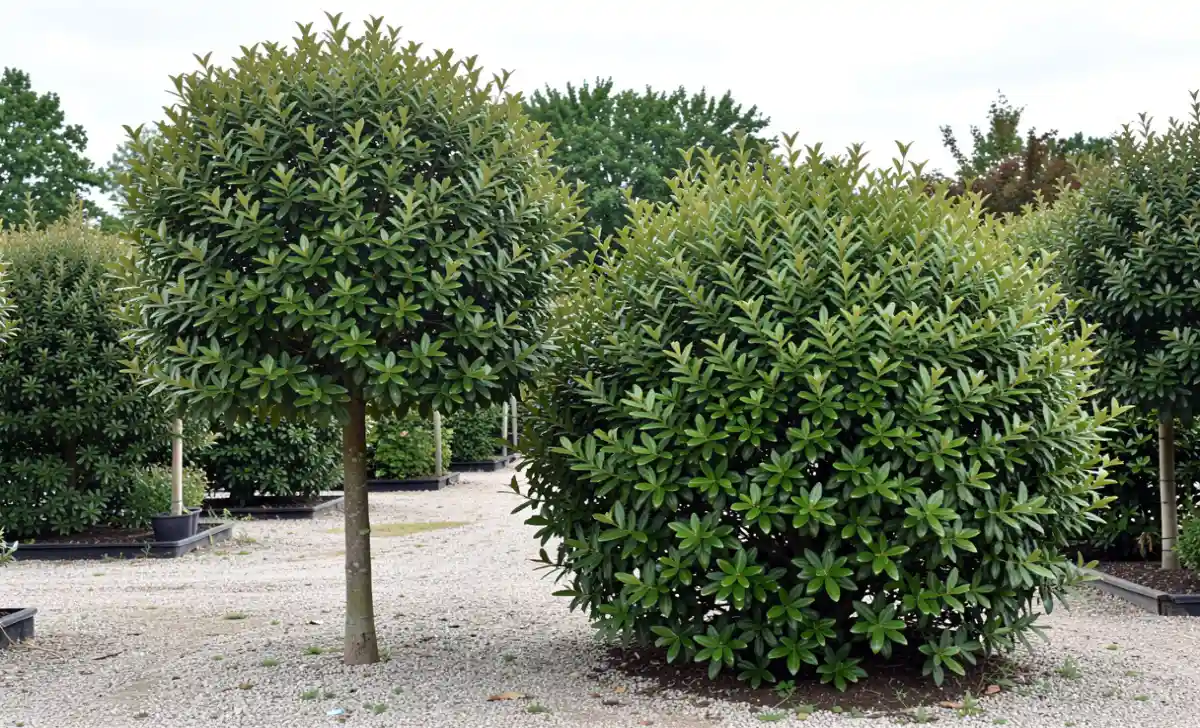
You have two main options when buying an Eagleston Holly: tree form and shrub form. The right choice depends on your landscape goal.
Tree form means the nursery has removed lower branches to create a single clear trunk. This gives you a classic specimen look, works well along driveways or entries, and allows foot traffic underneath the canopy. It also works as a small shade tree in compact spaces.
Shrub form keeps branches all the way to the ground, creating a fuller, denser look. This is the better choice for privacy screens, windbreaks, and hedgerows. Shrub form also provides better cover and nesting habitat for birds.
If you want flexibility, buy a shrub form and limb it up gradually over two to three years. This gives you more control over the final shape than starting with a pre-trained tree form.
Eagleston Holly vs. East Palatka and Savannah Holly
Choosing the right holly species depends on your size needs, soil, and maintenance expectations. Here is how the Eagleston stacks up against two close relatives.
Eagleston vs. East Palatka Holly
East Palatka Holly has a more strongly pyramidal shape and grows slightly faster than the Eagleston. Its leaves are larger and flatter. Many landscape professionals now prefer Eagleston because it holds a tighter, more compact form and requires less corrective pruning over time. Eagleston also shows stronger disease resistance in humid climates.
Eagleston vs. Savannah Holly
Savannah Holly grows larger, often reaching 30 to 40 feet at maturity, and has spiny leaves that can be a hazard near walkways. If you need a taller screen or windbreak and have plenty of space, Savannah Holly makes sense. For most residential landscapes, Eagleston’s smaller size and spineless foliage make it the easier choice.
Common Problems to Watch For
Eagleston Holly is more disease-resistant than many hollies, but it is not trouble-free. Knowing what to watch for helps you catch problems early.
Leaf miners are the most common pest. They leave pale, winding trails inside leaves. Damage is mostly cosmetic and rarely threatens the tree’s health. Remove affected leaves in late winter before adults emerge.
Scale insects can appear on stems and undersides of leaves. Look for small, waxy bumps. Treat with horticultural oil in early spring before new growth starts.
Root rot is a risk in poorly drained soils. If leaves turn yellow and drop outside of the normal fall cycle, check drainage around the root zone. Improve drainage before planting rather than after.
Berry toxicity is worth noting if you have pets or young children. The red berries are toxic if eaten in quantity. They are safe for birds, which is part of the tree’s ecological value, but keep them out of reach of dogs, cats, and small children.
FAQs About Eagleston Holly
What USDA zones does Eagleston Holly grow in?
It grows in zones 6 through 9, covering most of the Southeast, mid-Atlantic, and parts of the lower Midwest.
How far from my house should I plant an Eagleston Holly?
Plant at least 8 to 10 feet from your foundation to allow room for the root system and canopy spread at maturity.
Does Eagleston Holly need a male pollinator to produce berries?
Like most hollies, it benefits from a nearby male pollinator for the heaviest berry set. A male holly of any compatible species planted within 50 feet will improve berry production significantly.
When do Eagleston Holly berries appear?
Berries develop in early fall and remain on the tree through winter, providing color and wildlife interest from October through February in most regions.
Is Eagleston Holly salt-tolerant?
It has moderate salt tolerance. It performs well in coastal areas that are not directly exposed to sea spray, but it is not the best choice for front-line coastal planting.