HMS Photovoltaik: Smart Solar Systems That Maximize Energy Output
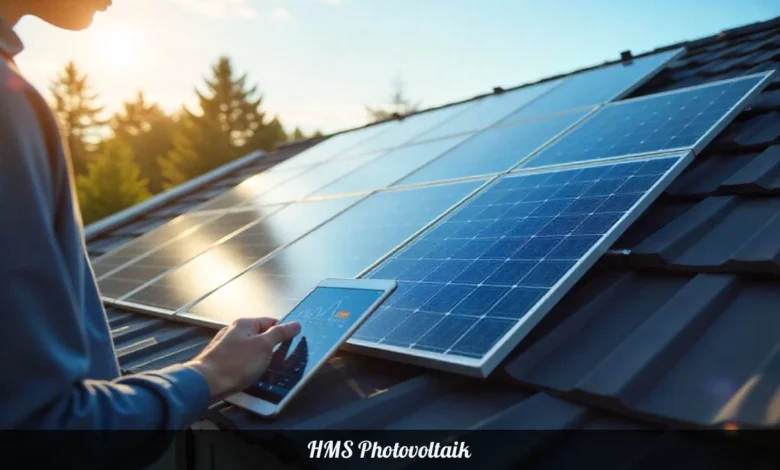
HMS Photovoltaik combines advanced microinverter technology with smart monitoring systems to create modular solar installations. Each panel operates independently with its own microinverter, increasing energy yield by 15-25% compared to traditional systems while providing real-time performance tracking and enhanced safety through low-voltage operation.
Solar panels cover more rooftops every year, but not all systems perform equally. HMS Photovoltaik represents a shift in how we capture and convert sunlight into electricity. This technology addresses the core limitations of traditional solar setups through microinverter architecture and intelligent monitoring.
You’ll learn what sets HMS systems apart, how they work, their real-world performance data, and whether they match your energy needs.
What Is HMS Photovoltaik
HMS Photovoltaik refers to modular solar installations that use individual microinverters mounted behind each panel instead of a single central inverter. The acronym typically stands for Hybrid Modular System or Hoymiles Microinverter System, depending on the manufacturer.
Each solar module functions as an independent power generator. When one panel experiences shade or accumulates dirt, the others maintain full output. This architecture solves the biggest weakness of string inverter systems, where connected panels perform only as well as the weakest unit.
The technology combines three elements: photovoltaic panels that capture sunlight, microinverters that convert DC to AC power at the module level, and cloud-based platforms that track performance in real time.
Modern HMS setups support power ranges from 350W to over 2000W per microinverter. They work with residential rooftops, commercial buildings, and utility-scale installations.
How HMS Photovoltaik Microinverters Work
Traditional solar systems connect panels in series to a central inverter. HMS takes a different approach.
Each panel connects to its own microinverter, typically weighing under 2 kilograms and mounted directly behind the module. These devices perform Maximum Power Point Tracking individually, finding the optimal voltage and current for each panel throughout the day.
The conversion happens in three steps:
Solar cells absorb photons and generate DC electricity. The microinverter immediately converts this DC power to AC electricity. The system synchronizes with your home’s electrical grid or storage battery.
This panel-level conversion operates at low DC voltage, usually under 60V. Compare that to string inverters, which can reach 600-1000V. Lower voltage means reduced fire risk and safer maintenance.
Communication modules inside each microinverter transmit performance data wirelessly to a gateway. You can monitor voltage, temperature, power output, and efficiency for every individual panel through smartphone apps or web dashboards.
When the grid goes down, rapid shutdown functionality automatically activates within milliseconds. This meets safety codes in most countries and protects utility workers during outages.
Performance Gains Over Traditional Systems
Real-world case studies demonstrate substantial efficiency improvements with HMS Photovoltaik. A German homeowner reported a 38% increase in energy efficiency after switching from traditional PV to HMS.
Panel-level optimization leads to a 15-25% higher energy yield compared to conventional photovoltaic systems. This gain comes primarily from eliminating the weakest-link problem.
Shading presents the clearest advantage. When a tree branch covers part of one panel in a string system, the entire array suffers reduced output. With HMS, only that specific panel underperforms while others continue at maximum capacity.
Users in shaded installations have reported a 20-30 percent increase in output according to a 2025 study. The difference becomes more pronounced in partially obstructed locations like urban rooftops with nearby buildings or chimneys.
Temperature variations across your roof also matter. South-facing panels heat up more than north-facing ones. Dust accumulation differs between exposed and sheltered areas. Microinverters compensate for these differences automatically.
Monitoring capabilities catch problems early. When output drops on a specific panel, you receive immediate alerts. This prevents small issues from becoming major efficiency losses.
Core Components and Technical Architecture
A complete HMS Photovoltaik installation includes several integrated elements.
Solar Panels: Most systems use monocrystalline modules for their high efficiency ratings of 19.7% to 23%. These panels convert more sunlight per square meter than polycrystalline or thin-film alternatives. Select panels based on efficiency rating, temperature coefficient, and degradation rate.
Microinverters: These attach directly behind each panel. They handle DC to AC conversion, perform MPPT tracking, and communicate performance data. Quality units last 20-25 years with minimal maintenance.
Smart Junction Boxes: These enable panel-level diagnostics and facilitate communication between inverters and monitoring tools. They relay voltage, current, and temperature data continuously.
Communication Gateways: A central device collects data from all microinverters and connects to cloud services. This creates the interface for mobile apps and web dashboards.
Battery Interface Units: Modern systems include ports for connecting lithium-ion storage. This allows you to store excess energy generated during peak sunlight hours for use after sunset.
Monitoring Platform: Cloud-based software tracks real-time generation, consumption patterns, and system health. You can view daily production graphs, identify underperforming panels, and receive maintenance alerts.
The modular design means you start with as few panels as needed and expand later without reconfiguring existing equipment.
Installation Requirements and Process
Before installing HMS Photovoltaik, evaluate several factors.
Check your roof’s structural integrity. Solar panels plus microinverters add weight that aging roofs may not support safely. Get a professional assessment if your roof is over 15 years old.
Measure available space and sun exposure. South-facing roofs in the Northern Hemisphere receive optimal sunlight. East and west orientations work but generate less power. North-facing installations rarely justify the investment.
Calculate your energy needs. Review 12 months of electricity bills to determine average daily consumption. Size your system to cover 80-90% of this usage for the best return on investment.
Research local regulations and permits. Many jurisdictions require electrical permits and grid connection approvals. Some homeowner associations restrict visible panels. Factor these timelines into your planning.
The installation follows these steps:
A site assessment determines optimal panel placement, angles, and system sizing. Professional installers mount racking structures securely to your roof. Solar panels attach to the racking with microinverters clipped behind each module.
Installers run AC cabling to connect microinverters and to your electrical panel. They install the communication gateway and connect it to your internet router. A final inspection verifies proper operation and grid synchronization.
The monitoring app activates, allowing you to track energy production immediately.
A 6 kWp HMS Photovoltaik system can save up to $1,200 per year in electricity bills and reduce CO₂ emissions by over 3 tons annually.
Real-World Applications Across Sectors
HMS Photovoltaik adapts to diverse installation scenarios.
Residential homes benefit from transparent energy management. Homeowners see exactly which panels produce the most power and when. The systems work well with sloped roofs, skylights, and chimneys that create partial shading.
Commercial buildings reduce operating costs through peak load management. Office complexes and warehouses with variable energy demand throughout the day optimize usage patterns based on real-time generation data.
Agricultural operations power irrigation systems, greenhouse climate control, and refrigeration with consistent solar backup. Farms in remote areas without reliable grid access achieve energy independence.
Educational facilities use HMS installations as teaching tools. Students monitor real-time energy production while the school reduces electricity expenses.
A 2 MW solar farm reduced system outages by 62% in the first year of using HMS microinverters and cloud analytics. This demonstrates viability at the utility scale.
Industrial parks implement HMS for dynamic load management between facilities. Energy flows are monitored and optimized across multiple buildings, reducing grid dependency.
The flexibility extends to unconventional applications. Carport structures, building facades, and ground-mounted arrays all support HMS technology.
Cost Analysis and Financial Returns
Initial investment varies by system size and location. Microinverters cost more per watt than string inverters, typically adding 10-15% to total installation expenses.
A residential 6 kW system ranges from $15,000 to $21,000 before incentives. This includes panels, microinverters, racking, installation labor, and permits.
Financial incentives improve returns significantly. The U.S. federal solar tax credit provides a 30% reduction on qualified equipment through 2032. Many states and utilities offer additional rebates or performance payments.
Global solar investment exceeded $450B in 2025, surpassing all other generation sources. This capital flow drives continued cost reductions.
Calculate your payback period by dividing the total cost by the annual savings. In areas with high electricity rates, systems pay for themselves within 6-8 years. Lower-cost regions extend this to 10-12 years.
After payback, panels continue generating electricity for 25-30 years with minimal degradation. Quality microinverters match this lifespan when properly maintained.
The Smart Export Guarantee in the UK and net metering programs in the U.S. let you sell excess generation back to the grid. This adds 10-20% to your annual returns, depending on local rates.
Energy independence provides value beyond dollars. You reduce exposure to rising utility rates and gain backup power when paired with batteries.
Maintenance and Long-Term Reliability
HMS Photovoltaik requires minimal ongoing maintenance compared to conventional systems.
Clean panels 2-3 times annually to remove dust, pollen, and bird droppings. Rain handles light debris, but accumulated grime reduces efficiency by 5-10%. Use soft brushes and water without harsh chemicals.
Check microinverter health through your monitoring app monthly. Look for consistent output across panels. Sudden drops indicate potential problems requiring professional inspection.
HMS microinverters are TÜV Rheinland certified, weather-resistant, and built for longevity, typically lasting 20-25 years. The IP67 rating protects against dust and water in harsh conditions.
Inspect electrical connections and mounting hardware annually. Loose bolts or corroded terminals reduce performance and create safety hazards. Most issues become visible through monitoring before causing failures.
Panel degradation occurs naturally. Expect output to decline 0.5% per year. High-quality panels degrade more slowly, maintaining 85-90% capacity after 25 years.
Microinverter warranties typically cover 15-25 years, depending on the manufacturer. String inverters need replacement after 10-12 years, while microinverters last the life of your system.
The monitoring platform’s predictive alerts catch problems early. When a microinverter shows abnormal temperature or voltage patterns, you receive notifications days or weeks before complete failure.
Safety Features and Certifications
HMS Photovoltaik prioritizes electrical safety through multiple mechanisms.
Low-voltage DC operation eliminates the high-voltage risks of string inverter systems. The low-voltage design at DC reduces electrical risks according to recent technical analysis. This protects installers during setup and homeowners during maintenance.
Rapid shutdown compliance meets NEC 2023 requirements in the United States and similar codes worldwide. When you disconnect power, microinverters shut down within one second, de-energizing roof-level wiring.
HMS systems comply with strict international certifications, including UL 1741, VDE-AR-N 4105, and EN 50549. These standards verify grid synchronization, emergency disconnection, and fault protection.
Ground fault detection monitors for insulation failures or damaged wiring. The system automatically isolates affected circuits before creating shock hazards.
Arc fault protection identifies high-resistance connections that could spark fires. This feature has become standard in quality microinverters since 2020.
Built with die-cast integration and rated IP67 for water and dust resistance, the HMS series is designed to withstand harsh environmental conditions. They operate reliably in temperature ranges from -40°C to +85°C.
Integration With Energy Storage
Pairing HMS Photovoltaik with batteries maximizes self-sufficiency.
Battery storage stores excess solar generation for use after sunset or during grid outages. This shifts your energy consumption to match production patterns instead of forcing production to match consumption.
Modern battery systems integrate seamlessly with microinverter architecture. The storage controller communicates with your monitoring platform, optimizing charge and discharge cycles based on predicted weather and usage patterns.
Lithium-ion batteries dominate current installations. They offer 10-15 year lifespans, 90-95% round-trip efficiency, and compact sizes suitable for garage or basement mounting.
Capacity sizing depends on your goals. A basic 10 kWh battery provides evening power for essential loads. Larger 20-30 kWh systems achieve near-complete grid independence when paired with adequate solar capacity.
Time-of-use electricity rates benefit most from storage. You charge batteries during the day with solar generation, then discharge during expensive peak evening hours. The savings often exceed what you’d earn from net metering.
Backup power capability requires an additional transfer switch and a critical loads panel. During outages, your system automatically disconnects from the grid and powers selected circuits from solar and battery.
Integration with Tesla Powerwall helped a German homeowner reach 91% energy self-sufficiency after switching to HMS Photovoltaik.
Current Market Trends and Growth
Global solar installations are on track for another record year. In the first six months of 2025, the world added 380 GW of new solar capacity, 64% higher than during the same period in 2024.
This explosive growth stems from multiple factors. Solar costs have dropped 90% over the past decade while efficiency has improved steadily. Government incentives accelerate adoption across residential and commercial sectors.
Modern solar panels now exceed 22-24% efficiency in real-world conditions thanks to advancements in monocrystalline and bifacial panel technology. Continuing improvements make systems more compact and productive.
China dominates manufacturing capacity. The global solar photovoltaic capacity reached 2,000 GW in 2025. It took 68 years to reach 1,000 GW, but only two years to add the next 1,000 GW.
Microinverter adoption accelerates as prices decline. Early premium pricing limited HMS to enthusiasts and commercial projects. Now, residential installations increasingly choose microinverters over string inverters despite slightly higher costs.
India recorded 24 GW of installations in the first half of 2025, a 49% increase over 2024. Developing nations recognize solar as the fastest path to energy access.
Building-integrated photovoltaics emerge as the next frontier. Solar roof tiles, window films, and facade panels blend generation seamlessly into architecture. HMS microinverters enable these distributed installations.
Future Developments in Solar Technology
Several innovations will reshape HMS Photovoltaik within the next decade.
Perovskite solar cells promise efficiency exceeding 30%. Oxford PV achieved 28.6% efficiency in tandem perovskite-silicon solar cells. Production costs may drop 40% below current silicon panels by 2030.
These materials can be manufactured as thin, flexible films. Apply them to curved surfaces, vehicles, and building materials impossible to cover with rigid panels. The HMS microinverter architecture supports these diverse form factors.
Artificial intelligence enhances system management. Predictive algorithms forecast daily generation based on weather patterns, adjusting battery charge schedules and load management automatically. They detect performance degradation before you notice output changes.
Bifacial panels capture sunlight from both front and rear surfaces. Place them over reflective roofing materials or elevated structures to boost generation by 10-15% without additional roof space.
Blockchain-enabled peer-to-peer trading may allow neighborhoods to share excess solar generation directly. Your monitoring platform automatically buys from neighbors during cloudy periods and sells your surplus during peak sun.
Vehicle-to-grid integration turns electric cars into mobile batteries. Park your EV, and it supplements home power during evening peaks. HMS systems coordinate this bidirectional power flow seamlessly.
Grid-forming inverters enable microgrids that operate independently of utility infrastructure. Communities achieve resilience against natural disasters while supporting grid stability during normal operation.
Environmental Impact and Sustainability
Solar energy dramatically reduces carbon emissions compared to fossil fuel generation.
Standard home installations reduce carbon emissions up to 1 ton per year, according to a 2025 environmental report. Multiply this by millions of installations globally for substantial climate benefits.
The HMS 500W model requires just 10 square meters of rooftop space to generate approximately 2,400 kWh annually, equivalent to the annual carbon absorption of around 1,080 mature pine trees.
Manufacturing does produce emissions, primarily from refining silicon and assembling components. Life cycle analysis shows solar panels offset their production carbon within 2-3 years of operation. They then provide 20-25 years of clean generation.
Recycling becomes increasingly important as early installations reach end-of-life. Current recycling rates sit around 10% but infrastructure is expanding. Panels contain valuable material, including silicon, silver, and aluminum, worth recovering.
HMS microinverters use fewer rare earth materials than string inverters. Their longer lifespan reduces replacement waste. The modular design allows component-level repairs instead of full system replacements.
Water usage for panel cleaning remains minimal compared to other energy sources. Even in dry climates, annual consumption totals less than 20 gallons per household system.
Solar generation produces zero air pollution during operation. No particulates, sulfur dioxide, or nitrogen oxides enter the atmosphere. This improves local air quality, particularly in urban areas.
Final Thoughts
HMS Photovoltaik delivers measurable advantages over conventional solar installations through microinverter technology and smart monitoring. The panel-level optimization, enhanced safety, and detailed performance tracking justify the modest price premium for most applications.
Real-world data confirms 15-38% efficiency gains in typical installations, particularly those facing partial shade or complex roof geometries. The modular architecture provides flexibility to start small and expand as needs or budgets allow.
Initial costs run 10-15% higher than string inverter systems, but 20-25 year microinverter lifespans eliminate the need for inverter replacement. Federal tax credits and local incentives reduce upfront investment by 30-50% in many regions.
System monitoring transforms solar from a passive installation into an active energy management tool. You see exactly what each panel produces, catch problems early, and optimize consumption patterns based on generation data.
Consider HMS Photovoltaik if you value: detailed performance visibility, maximum energy harvest from shaded or complex roofs, enhanced safety through low-voltage operation, or scalable systems that grow with your needs.
FAQs
What makes HMS Photovoltaik different from traditional solar panels?
HMS uses individual microinverters for each panel instead of one central inverter. This allows panels to operate independently, so shading or dirt on one module doesn’t reduce output from others. You also get detailed monitoring of each panel’s performance.
How much does HMS Photovoltaik cost compared to regular solar?
Expect to pay 10-15% more than string inverter systems initially. A typical 6 kW residential installation costs $15,000-$21,000 before incentives. However, longer lifespan and higher energy yields offset the premium over 20-25 years.
Can I install HMS Photovoltaik myself?
Many HMS systems feature a plug-and-play design suitable for DIY installation with basic electrical knowledge. However, grid connection requires a licensed electrician to work in most jurisdictions. Permits and inspections remain mandatory regardless of who installs the system.
How long do HMS microinverters last?
Quality microinverters typically last 20-25 years with minimal maintenance. Compare this to string inverters needing replacement after 10-12 years. Most manufacturers provide 15-25 year warranties depending on the specific model.
Does HMS Photovoltaik work during power outages?
Standard grid-tied systems shut down during outages for safety. Adding battery storage and a transfer switch enables backup power for critical loads. The system automatically disconnects from the grid and runs on solar plus battery during outages.