4x6x12 Wood Beam: Actual Size, Uses, Price & Buying Guide
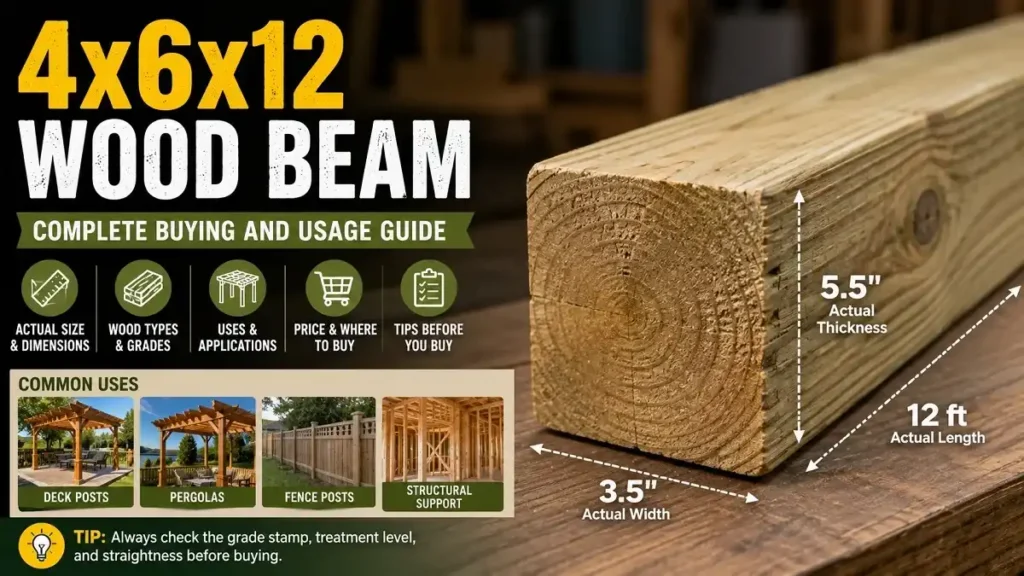
A 4x6x12 wood beam is commonly sold for posts, pergolas, fences, outdoor framing, and other projects that need heavier lumber. A typical finished 4×6 is about 3.5 inches by 5.5 inches and 12 feet long, though the exact size can vary slightly by product.
The bigger question is which one you should buy. Species, grade, treatment, moisture, and how you plan to use the lumber all matter. This guide helps you compare those details before you spend your money.
4x6x12 Quick Specifications
| Specification | Typical Details |
|---|---|
| Nominal size | 4 in. × 6 in. × 12 ft. |
| Common actual size | About 3.5 in. × 5.5 in. × 144 in. |
| Common species | Southern yellow pine, Douglas fir, cedar |
| Common grades | #2, #2 & Better, and other structural grades |
| Treated options | Above-ground, ground-contact, and heavier treatment levels |
| Typical uses | Posts, pergolas, fences, outdoor framing, and approved beam applications |
| Typical treated weight | Often around 70–90 lb, but moisture and species can change it |
💡 Shopping Tip
Retailers may call this size a 4×6 timber, 4×6 post, dimensional lumber, treated timber, or simply 4×6 lumber. Search those terms too if “4x6x12 wood beam” does not bring up local stock.
What Size Is a 4x6x12 Actually?
The 4-inch by 6-inch measurement is the nominal size, not always the size of the finished piece. After lumber is dried and surfaced, a common 4×6 measures about 3.5 inches thick by 5.5 inches wide.
The 12-foot length is normally close to 144 inches. However, some products measure slightly more than the common 3.5-by-5.5-inch size. This is why you should check the retailer or manufacturer specifications before buying brackets, post bases, or other hardware.
Rough-sawn timber can also be closer to its nominal dimensions because less material is removed during finishing.
What Is a 4x6x12 Used For?
A 4×6 gives you a wider face than a standard 4×4. That can make it useful for pergola posts, gate posts, fence supports, outdoor structures, decorative timbers, and some framing jobs.
It can also be installed horizontally in certain applications, but the 12-foot length should not be confused with its safe span.
⚠️ 12 Feet Long Does Not Mean a 12-Foot Span
A 4x6x12 is 12 feet long, but that does not mean it can safely span 12 feet without support. Safe span depends on the species, grade, beam position, supports, and load.
Using a 4×6 as a Post vs. a Beam
A 4×6 used vertically works as a post. You may see this setup in pergolas, fences, gates, and other structures where the load travels down to a footing or post base.
A horizontal 4×6 works as a beam or other framing member. Its safe span cannot be determined from the nominal dimensions alone. A beam that works for a short pergola span may not be suitable for a floor, roof, or other load-bearing application.
There is also no universal answer to how much weight a 4×6 can support. For structural work, use the span tables, grade, and design requirements that apply to your project. Local code requirements may also affect the size and grade you need.
Which 4x6x12 Should You Buy?
The right choice depends on where the lumber will go and what you expect it to do. Pressure-treated Southern yellow pine, Douglas fir, and cedar each solve a different buying problem.
| Wood Type | Good Choice For | What to Check |
|---|---|---|
| Pressure-treated Southern yellow pine | Outdoor posts, fences, pergolas, and exposed framing | Treatment category and grade |
| Douglas fir | Framing, covered structures, and projects calling for Douglas fir | Grade, moisture condition, and exterior protection if needed |
| Cedar | Visible pergolas and decorative outdoor projects | Cost, grade, and appearance |
Pressure-treated pine is often the practical choice for exposed outdoor work. Southern yellow pine accepts wood preservatives well and is widely sold in treated form.
Douglas fir is common in structural and general framing lumber. If it will be exposed outdoors, make sure the product and finish are suitable for that environment.
Cedar costs more in many markets, but its appearance and natural resistance to decay make it attractive for visible outdoor structures.
Ground Contact vs. Heavier Treatment
Do not assume every pressure-treated 4×6 has the same level of protection. A label may identify the lumber for above-ground use, ground contact, or a heavier exposure category.
You may also see treatment categories such as UC4A or UC4B. UC4A is commonly associated with general ground-contact use, while UC4B is intended for more demanding ground-contact applications. Some retailers describe UC4B products as heavy-duty or critical structural timber.
The treatment label matters more than the color of the wood. If your plans call for a certain treatment category, match that requirement rather than buying any piece marked “pressure treated.”
What Does the Lumber Grade Mean?
The grade stamp helps identify whether a piece of lumber meets a certain set of quality and structural rules. It may show the species or species group, grade, moisture information, and grading agency.
#2 is a common construction grade. Knots and other allowed defects are normal, so a #2 timber does not need to look perfect.
You may also see #2 & Better. This means the lumber meets at least #2 requirements and some pieces in the group may meet a higher grade.
For structural work, buy the grade called for in the plans or specifications. A timber that looks cleaner is not automatically the right structural grade.
How Much Does a 4x6x12 Weigh?
Weight can vary more than many buyers expect. Wood species, treatment, and moisture all affect how heavy a 12-foot piece feels.
Some treated 4x6x12 products are roughly in the 70-to-90-pound range. Freshly treated or wetter lumber may be heavier, so plan for help when loading and unloading long pieces.
You may also see lumber labeled green. In this context, green usually means the wood has a higher moisture content; it does not mean the lumber is pressure treated. Green lumber can be heavier and may change slightly as it dries.
How Much Does a 4x6x12 Cost?
There is no reliable nationwide price for every 4x6x12. Species, grade, treatment, location, and local inventory all affect the final cost.
Standard pressure-treated Southern pine can sometimes be found in the $30 range at major U.S. retailers, while Douglas fir, cedar, higher grades, or specialty treatments may cost more. Treat that as a shopping reference rather than a fixed price.
Also consider transportation. A 12-foot timber may require a suitable truck, trailer, or store delivery. Hardware such as post bases, brackets, bolts, and exterior-rated fasteners can add to the project cost as well.
Where Can You Buy a 4x6x12?
Home Depot, Lowe’s, Menards, regional building suppliers, and local lumber yards may stock this size. The exact species and treatment available often depend on where you live.
Big-box stores are convenient when you need common construction lumber. A local lumber yard is worth checking when you need a specific species, grade, rough-sawn finish, treatment category, or better-looking timber for an exposed project.
Check online inventory before making the trip when possible. Make sure you are comparing actual dimensions, grade, species, and treatment rather than price alone.
What Should You Check Before Buying?
A 12-foot timber can look straight from the side but still have a twist. Stand at one end and sight down its length before putting it on your cart.
Look for major bows, twists, damaged edges, and large splits. Knots are normal in many construction grades, but the grade stamp and project requirements should guide structural use.
For treated lumber, find the treatment label and confirm that it matches the exposure you need. If hardware must fit closely around the timber, verify its actual dimensions too.
✅ Before You Load It
Check the actual size, straightness, twist, splits, grade stamp, treatment label, moisture condition, and overall damage. A few minutes at the lumber rack can save a return trip.
Cutting and Fastening a 4×6
A standard circular saw may not cut through the full thickness of a 4×6 in one pass. Mark a square line around the timber and make the cut carefully from more than one face if needed.
Pre-drilling can reduce splitting when you install large screws or bolts. For pressure-treated lumber, use connectors and fasteners approved for contact with the treatment used in the wood.
If you plan to stain treated lumber, avoid choosing a finish date based on a fixed number of weeks or months. Let the wood dry enough for the product you want to apply, then follow the finish manufacturer’s directions.
Common 4x6x12 Buying Questions
Is a 4x6x12 actually 12 feet long?
The listed length is normally 12 feet, or 144 inches. Width and thickness are the dimensions more likely to differ from the nominal 4-by-6 size. Check the individual product specifications when exact measurements matter.
What does S4S mean?
S4S means “surfaced four sides.” All four faces have been surfaced to create a smoother, more consistent piece of lumber. Rough-sawn timber keeps more of its sawmill texture and may have different actual dimensions.
Is pressure-treated lumber the best choice for every outdoor project?
Not always. Treatment is useful when the lumber faces moisture, decay, insects, or ground contact, but the correct treatment level depends on the application. Cedar or properly protected Douglas fir may also suit some exposed or covered projects.
Should I buy from a big-box store or a lumber yard?
For a standard treated post or general construction piece, a big-box store may have exactly what you need. Try a lumber yard when the project calls for a specific species, grade, treatment, rough-sawn size, or appearance.
Choose by Use, Not Just by Size
For an outdoor post, check the treatment rating and grade first. For an exposed pergola, species and appearance may matter more. If the 4×6 will span horizontally and carry a structural load, confirm the required span, grade, and design before buying.
The “4x6x12” label gets you to the right lumber rack. The grade stamp, treatment label, actual dimensions, and intended use tell you whether the piece on that rack is actually right for your project.