Black Walnut Wood: Complete Guide to Properties, Uses & Value
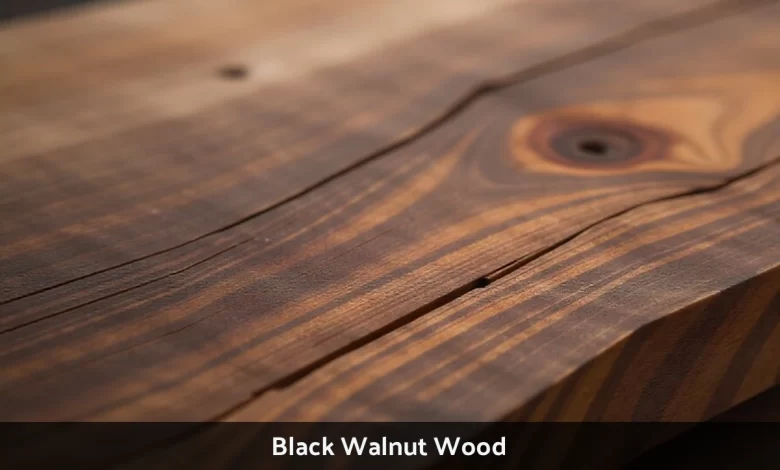
Black walnut wood stands out as one of North America’s most prized hardwoods. Its rich chocolate brown color, strength, and workability make it a top choice for furniture makers, woodworkers, and builders. This wood comes from the Eastern Black Walnut tree (Juglans nigra), which grows across the eastern United States. Whether you’re building custom furniture, installing premium flooring, or working on a fine woodworking project, understanding black walnut’s characteristics will help you make the right choice for your needs.
What Makes Black Walnut Wood Unique
Black walnut heartwood ranges from light pale brown to dark chocolate brown with darker streaks. The sapwood appears pale yellow-gray to nearly white, creating a striking contrast. This natural color variation adds depth and character to finished pieces.
The grain is usually straight but can be irregular, with a medium texture and moderate natural luster. You’ll also find figured patterns like curl, crotch, and burl that make certain boards especially valuable. The wood develops a natural patina over time, adding to its appeal.
With an average dried weight of 38 pounds per cubic foot and a Janka hardness rating of 1,010 lbf, black walnut sits between softer woods like cherry (950 lbf) and harder species like hard maple (1,450 lbf). This makes it durable enough for furniture and flooring while remaining gentle on cutting tools and knife edges.
Physical Properties and Technical Specs
Black walnut offers excellent working characteristics. The wood has a specific gravity of 0.51 (basic) to 0.61 (at 12% moisture content). Its dimensional stability makes it reliable for projects where wood movement could cause problems.
Key technical specifications include:
- Modulus of rupture: 14,600 lbf/in²
- Crushing strength: 7,580 lbf/in²
- Shrinkage rates: 5.5% radial, 7.8% tangential
Black walnut is rated as very durable for decay resistance, though it is susceptible to insect attack. This means it performs well indoors but needs protection for outdoor applications. The wood naturally resists moisture and rot better than many other domestic species, making it suitable for bathrooms and kitchens with proper finishing.
Black Walnut Wood in Furniture and Cabinetry
Furniture makers prize black walnut for good reason. The wood machines cleanly, glues well, and accepts finishes beautifully. You rarely need to stain walnut since its natural color provides such rich appeal.
The wood responds well to steam bending, opening up design possibilities for curved elements. Common uses include furniture, cabinetry, gunstocks, interior paneling, veneer, and turned items.
High-end furniture makers choose black walnut for:
- Dining tables and chairs
- Kitchen and bathroom cabinets
- Bedroom sets and dressers
- Live-edge slabs for countertops
- Custom bar tops and shelving
The wood’s stability means joints stay tight over time. Your walnut furniture will maintain its beauty for generations with basic care. Many craftsmen combine walnut with lighter woods like maple or white oak to create a stunning contrast.
Working with Black Walnut Wood
Black walnut is typically easy to work provided the grain is straight and regular. You’ll get clean cuts with sharp tools and minimal tearout. Planer tearout can sometimes occur when surfacing pieces with irregular or figured grain, so take lighter passes on these boards.
The wood produces a faint, mild odor when worked. This smell is characteristic of the Juglans species and helps identify genuine black walnut. While severe reactions are uncommon, black walnut has been reported as a sensitizer, with most reactions involving eye and skin irritation. Always wear dust protection and work in well-ventilated areas.
Tips for working with walnut:
- Keep cutting tools sharp for the best results
- Sand progressively through grits for a smooth finish
- Apply finish coats to preserve the natural color
- Pre-drill for screws near board edges
- Allow wood to acclimate before milling
Black Walnut for Flooring and Paneling

Walnut flooring adds warmth and sophistication to any space. The wood’s hardness rating makes it suitable for residential flooring, though it’s softer than oak or maple. Black walnut flooring is popular for its rich color and durability, adding warmth and sophistication to interior spaces.
The wood performs well for interior paneling and wainscoting. Its natural resistance to moisture makes it appropriate for rooms with higher humidity, though you should still seal it properly. Many homeowners choose walnut for accent walls, creating focal points that draw attention.
Unlike lighter woods that darken with age, walnut actually lightens slightly over time when exposed to sunlight. Regular maintenance with oil or wax helps slow this process and keeps the wood looking its best.
Current Pricing and Market Value
Black walnut commands premium prices in today’s market. Select and better grade 4/4 walnut sells for $5.25 per board foot, while 8/4 thickness goes for $6.25 per board foot. Quartersawn walnut fetches $7.50 per board foot due to its enhanced stability and unique grain pattern.
In Ohio and Indiana, stumpage prices for high-quality walnut range from $2,500 to $3,000 per thousand board feet, with delivered veneer logs exceeding $4,000 per thousand board feet. Missouri veneer logs peaked at $5,364 per thousand board feet in early 2025.
Price factors include:
- Board width (wider boards cost more)
- Grade and clarity (fewer defects increase value)
- Figure patterns (figured wood commands premiums)
- Sapwood content (more heartwood increases price)
- Local supply and shipping distance
Live-edge black walnut slabs 14 to 20 inches wide sell for $9.00 per board foot, while slabs over 36 inches wide reach $12.50 per board foot. These prices reflect strong demand for this premium domestic hardwood.
Special Applications and Uses
Beyond furniture and flooring, black walnut serves many specialized purposes. The wood’s strength and shock resistance make it ideal for gunstocks, where it has been used for centuries. Its tonal qualities appeal to musical instrument makers for guitar backs and acoustic components.
Woodturners favor walnut for bowls, vases, and decorative pieces. The wood turns cleanly and takes a high polish. Its density makes it suitable for cutting boards and kitchen utensils, though you should maintain a food-safe finish.
Experts often recommend mixing walnut with other woods like apple, pear, pecan, and almond when smoking meat to tone down its sharp, sometimes bitter flavor. The wood produces strong smoke for grilling and barbecue applications.
Craftsmen also use walnut for:
- Decorative boxes and jewelry cases
- Picture frames and wall art
- Custom knife handles and scales
- Pen blanks and small turned items
- Architectural millwork and trim
Sustainability and Environmental Impact
Black walnut is not listed in CITES Appendices and is reported by IUCN as a species of least concern. The wood qualifies as a renewable resource when harvested from well-managed forests.
Black walnut trees grow throughout the eastern United States, from Kansas to the Atlantic coast. While the species has a wide range, it makes up only about 2% of eastern hardwood forest cover. This relative scarcity contributes to its premium pricing.
Many suppliers now source from sustainably managed forests and urban tree removal programs. Salvaged walnut from old barns and buildings provides another eco-friendly option. When you buy from responsible suppliers, you support forest health and wildlife habitat preservation.
The wood’s natural resistance to decay means fewer chemical treatments are needed. This aligns with green building practices and reduces environmental impact. Properly maintained walnut furniture can last for generations, making it a sustainable long-term investment.
Identifying Genuine Black Walnut
The semi-ring-porous gradation in pore size from earlywood to latewood helps separate black walnut from nearly all other imported walnut lookalikes, which tend to be diffuse porous. Real black walnut shows this gradation when you examine the end grain closely.
Many retailers label products as walnut simply because the color mimics natural walnut wood. To verify authenticity, look for:
- True chocolate brown heartwood with pale sapwood
- Visible grain patterns and pore structure
- Solid construction with traditional joinery
- Natural weight and density
- Consistent color throughout the piece
In mid-century and antique furniture, black walnut is most commonly confused with Honduran mahogany, though walnut lacks the ribbon patterning seen in quartersawn mahogany. When purchasing, ask for species verification and buy from reputable dealers who can document wood sources.
Commercial walnut lumber is typically steamed during kiln drying. This process evens out the color difference between heartwood and sapwood, making more of the board usable. Un-steamed walnut shows deeper reds, purples, and browns with whiter sapwood.
Maintenance and Care Tips
Caring for black walnut is straightforward. Dust regularly with a soft cloth to prevent buildup. Clean spills immediately to avoid moisture damage. For deeper cleaning, use mild cleaners specifically designed for wood surfaces.
Oil finishes saturate the grain and add subtle warmth to the color. They also slow the natural lightening process that occurs with sun exposure. Reapply oil finishes every six to twelve months, depending on use and conditions.
Polyurethane and varnish provide durable protection for high-use surfaces. These finishes create a moisture barrier and resist scratches better than oil. Apply multiple thin coats rather than one thick coat for best results.
Keep walnuts away from:
- Direct sunlight for extended periods
- Extreme temperature changes
- Standing water or high humidity
- Heat sources like radiators or fireplaces
- Harsh chemical cleaners
With proper care, walnut furniture and flooring will maintain their beauty for decades. The wood develops character over time, with the natural patina adding to its appeal.
Frequently Asked Questions
Is black walnut suitable for outdoor projects?
Black walnut has good decay resistance but remains susceptible to insects. It’s best for indoor applications. If you must use it outdoors, apply proper sealants and keep the wood off the ground with adequate drainage.
How does walnut compare to oak for flooring?
Walnut is softer than oak (1,010 vs 1,290 Janka rating) but offers superior color and figure. It works better for lower-traffic areas or homes where aesthetics matter more than maximum durability.
Why is black walnut so expensive?
The species makes up only 2% of eastern hardwood forests. High demand from domestic and international markets, combined with limited supply, drives prices up. Quality, color, and workability justify the premium cost.
Can you stain black walnut wood?
You can stain walnut, but most woodworkers avoid it. The natural color is the main appeal. Clear finishes or oil preserve the authentic appearance while protecting the wood.
How long does walnut furniture last?
With proper care, walnut furniture can last for generations. The wood’s dimensional stability and decay resistance contribute to its longevity. Many antique walnut pieces remain functional after 100+ years.