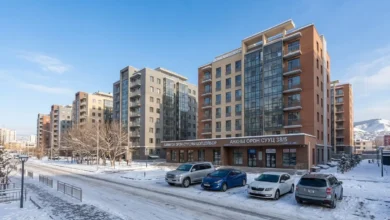
Small Studio for Rent: What to Know Before You Sign a Lease
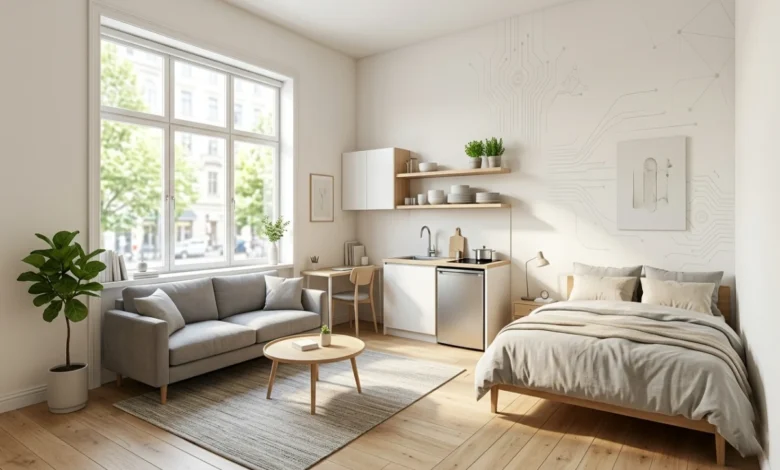
A small studio for rent combines your sleeping, living, and kitchen space into one open area, typically between 300 and 600 square feet. The national average rent for a studio sits around $1,480 per month, though costs shift sharply by city and neighborhood. Studios run 20 to 30 percent cheaper than one-bedroom apartments, making them one of the most cost-effective solo-living options available today.
What Exactly Is a Small Studio for Rent?
A studio apartment is a self-contained living space that combines the bedroom, living room, and kitchen into one open area. Unlike traditional apartments with separate rooms, a studio typically consists of a single multi-functional space, often with a small bathroom set apart. Some studios feature a partial wall or alcove that creates a bit of separation within the layout, but the defining characteristic is the absence of distinct rooms.
That setup works well for solo renters who spend most of their time out of the apartment, or anyone who values location over square footage. The question is not whether studios are worth renting. It is whether you are picking the right one for the right price.
How Much Does Renting a Small Studio Cost in 2026?
The average rent for a studio apartment in the U.S. is $1,480 per month. That number hides a wide range. A studio in Kansas City might run you $1,000 per month, while the same square footage in Manhattan could cost four times that.
Renters paid about 2.81% less for a new studio lease in 2025 than in 2024. The national median asking price for a studio apartment was flat or lower year over year every month of 2025 except February. That trend signals a slight softening in the studio market, giving renters more room to negotiate than in previous years.
Costs also depend on what the rent includes. Some buildings fold utilities into the monthly figure. Others charge separately for electricity, gas, and parking, which can add $150 to $300 per month to your actual cost. Always calculate the all-in number before comparing listings.
Best Cities to Find an Affordable Studio for Rent
Not every city treats your budget the same way. In high-demand markets such as New York, San Francisco, Boston, and Washington, monthly costs are often far above the national average, especially in walkable neighborhoods close to jobs and public transportation. In more moderately priced cities such as Chicago, Atlanta, Phoenix, and Dallas, renters may still find studios that cost less than one-bedroom units by a meaningful margin.
If your job allows remote work, midsize cities offer the best value right now. The median rent for a one-bedroom apartment in Toledo, Ohio, is $727 per month. In Cedar Rapids, Iowa, it sits at $750, while Akron, Ohio, comes in at $770. Studio rates in these cities run even lower.
One counterintuitive market to watch: the Midwest is no longer the guaranteed bargain it once was. The Midwest had the largest year-over-year price increases for one-bedroom apartments of any other region in 2025, driven by high demand, restrictive zoning, and a lack of sufficient new supply. Research specific cities rather than assuming a region is automatically affordable.
What to Look for in a Small Studio for Rent
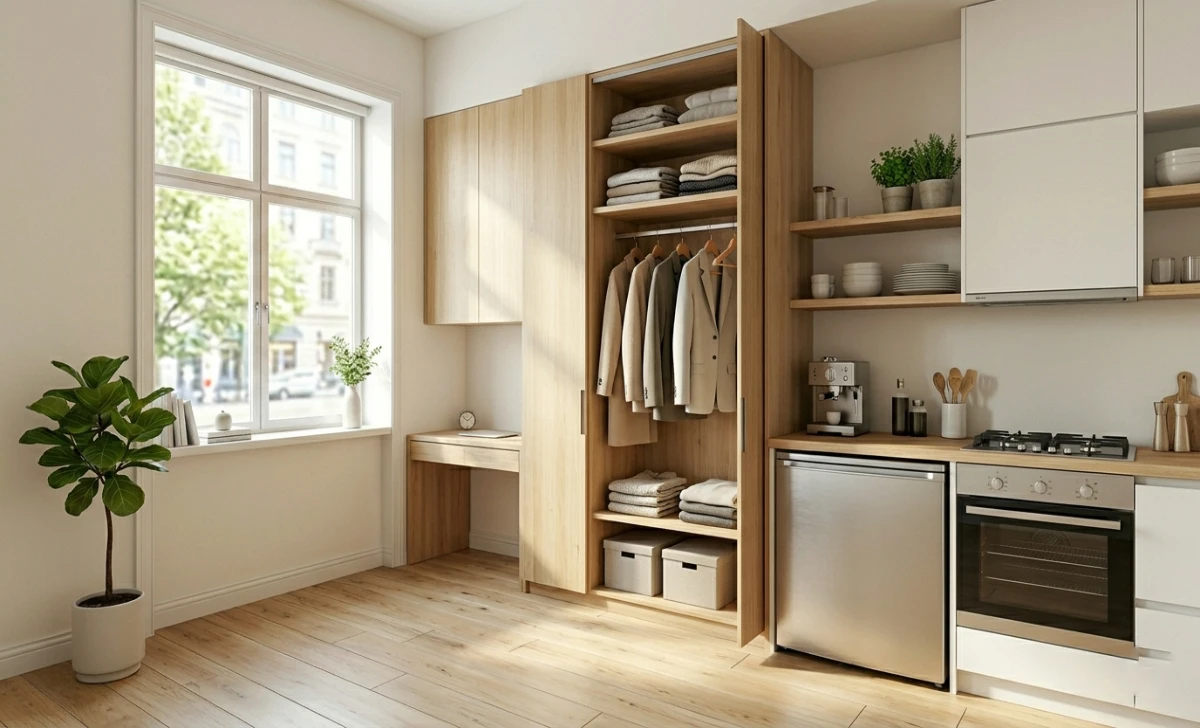
Finding a studio is one thing. Finding a studio you can actually live comfortably in is another. Square footage matters less than how that footage is used.
High ceilings counter the feeling of being cramped, opening up these smaller apartments and creating the illusion of more space. Big windows provide natural lighting and tend to visually expand the size of studio apartments. Ample storage is another critical feature, so check the size and number of closets.
Beyond the visual, think about daily function. Kitchen usability is an important factor, especially for people who cook frequently. Full-size appliances, counter space, and ventilation can make a noticeable difference. In older buildings, check heating, cooling, sound insulation, and natural light, since those features strongly affect the quality of life in a compact home.
Ask these questions during every showing:
- Does the layout allow for a clear sleeping zone separate from the desk or couch?
- Are the appliances full-size or miniature versions?
- Where does natural light come in, and for how many hours per day?
- What is the actual square footage, not the estimated or listed figure?
- Is there in-unit laundry, or do you share with the building?
A studio with 400 square feet and high ceilings will feel bigger than a 450-square-foot unit with low ceilings and a cramped kitchen. Layout beats raw numbers every time.
How to Rent a Small Studio Faster and Smarter
Timing your search can save you real money. Aim to sign leases during January and February, when fewer people move, and potential deals appear. Landlords become more willing to negotiate in November and December as vacancy concerns increase. Avoid May through September, which is the peak season when prices surge, and competition is strongest.
If you find a studio you want in peak season, do not wait. Good deals move quickly regardless of the season.
Your application matters as much as your timing. Landlords and property managers sift through multiple applications, so put together a renter’s resume that includes proof of income, references, and rental history. A polished and complete application can be a competitive edge in tight markets.
Also, look at neighborhoods with higher vacancy rates. Landlords with more vacancies are often more willing to offer incentives like lower rent or flexible lease terms. A slightly longer commute can translate into hundreds of dollars in monthly savings.
Studio vs. One-Bedroom: Which Actually Makes More Sense?
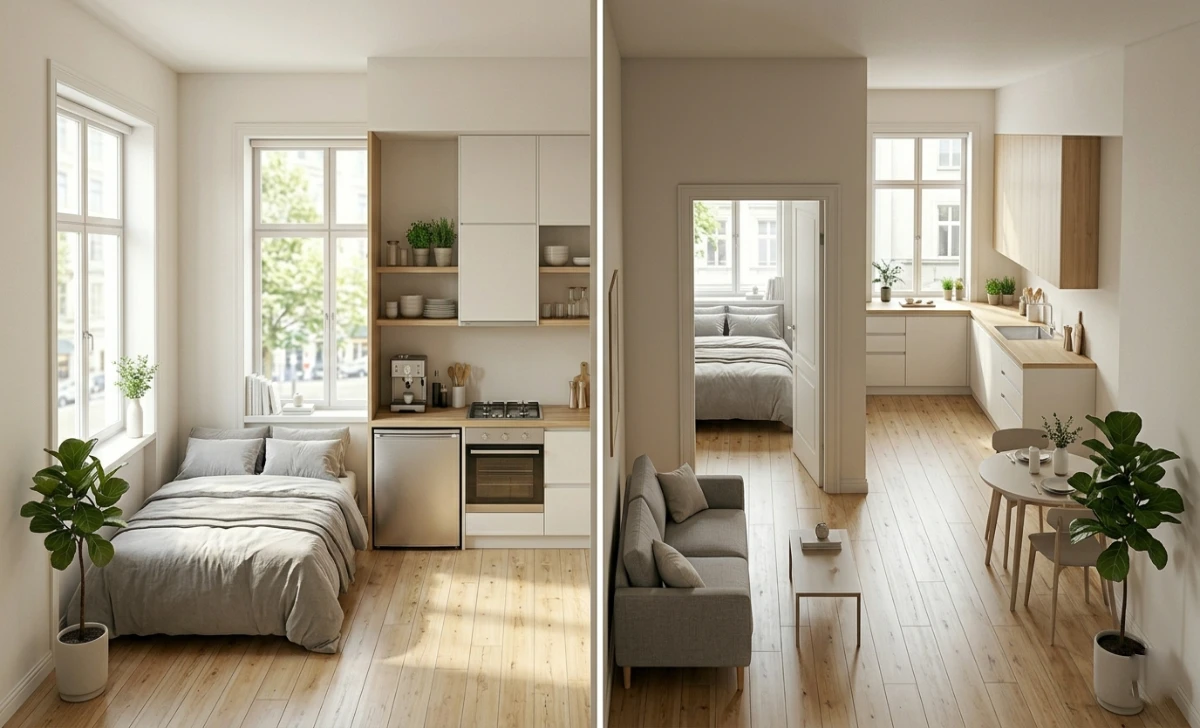
Studios are typically 20 to 30 percent cheaper than one-bedroom apartments and work well for minimalists, young professionals, or anyone prioritizing location over space. One-bedroom apartments provide distinct living and sleeping spaces, better storage, and more room for working from home, making them better for couples or anyone who values defined zones.
The math often favors studios for solo renters who spend most of their waking hours outside the apartment. But if you work from home five days a week with no separation between your desk and your bed, the savings may not outweigh the cost to your focus and sleep.
Studios are especially appealing to students, young professionals, and anyone seeking a cozy home. If that describes you, and the city offers a well-laid-out unit in a walkable neighborhood, a small studio for rent might be the most financially sound choice you can make right now.
FAQs About Small Studios for Rent
What is the average size of a small studio apartment?
Studio apartments generally range between 300 and 600 square feet. Micro-studios in dense cities like New York can fall as low as 300 square feet, while more generous layouts in midsize cities often reach 550 to 600 square feet.
Is renting a studio apartment worth it?
For solo renters on a budget who want access to a desirable neighborhood, yes. Studios cost 20 to 30 percent less than one-bedrooms and carry lower utility bills. The trade-off is limited privacy and storage.
What is the cheapest month to rent a studio apartment?
January and February tend to offer the best deals, as post-holiday demand drops and landlords are more willing to negotiate. Waiting until fall, specifically October and November, can also save 5 to 10 percent compared to peak summer pricing.
How do I make a small studio feel larger?
Look for units with high ceilings and large windows. Use furniture placement to designate specific zones, like placing a bookshelf between a desk and a bed to create a visual separation without walls.
What should I check before signing a studio lease?
Verify the actual square footage, check whether utilities are included, inspect closet space, confirm appliance size, test cell service and window light levels, and read the lease for early termination clauses and rent increase caps.