Home Organization Ideas That Actually Keep Your Space Tidy
Home organization works best when you start with decluttering, then build simple systems that are easy to maintain. Focus on one room at a time, use labeled storage, and make use of vertical and hidden spaces. The goal is not a perfect home. It is a home where everything has a place, and putting things back takes no effort. Consistent habits, not one big overhaul, keep spaces tidy long-term.
Why Most People Stay Disorganized
You probably do not have a storage problem. You have a clutter problem. Most homes have enough space. The issue is that items accumulate without a clear place to go, and over time, the pileup feels impossible to undo.
A 2024 survey by the National Association of Professional Organizers found that the average American spends 55 minutes a day looking for lost items. That is nearly six hours a week. Getting organized is not just about how your home looks. It directly affects how much time and mental energy you spend every day.
The good news: you do not need a renovation or a big budget. You need a starting point and a plan.
Start with Decluttering Before Anything Else
This is where most people skip ahead, and it is the biggest mistake. Buying bins and baskets before you declutter means you are organizing things you do not need.
Professional organizer Shelley Wehner puts it clearly: start with decluttering. It creates a clean slate and makes it easier to see what storage solutions are actually necessary.
Use the four-box method to get through this fast:
- Keep: items you use regularly
- Donate: items in good condition you no longer need
- Sell: items with value worth listing
- Trash: anything broken, expired, or beyond use
Work through one category at a time, such as clothes, books, or kitchen gadgets. Trying to do everything at once leads to burnout. Spend 20 to 30 minutes per session if your schedule is tight.
A Room-by-Room Home Organization Plan
Once you have decluttered, move through your home one room at a time. Tackle the space that affects your daily routine the most. For most people, that is the kitchen or the bedroom.
Kitchen
The kitchen collects clutter faster than any other room. Start by clearing countertops completely. Keep only the items you use daily within reach. Pull-out shelves are ideal for kitchen and pantry cabinets; they make it easy to reach items stored at the back without digging.
Group items by category: baking supplies together, snacks together, spices together. Use lazy Susans in corner cabinets and on refrigerator shelves to keep smaller items visible and accessible.
Bedroom and Closet
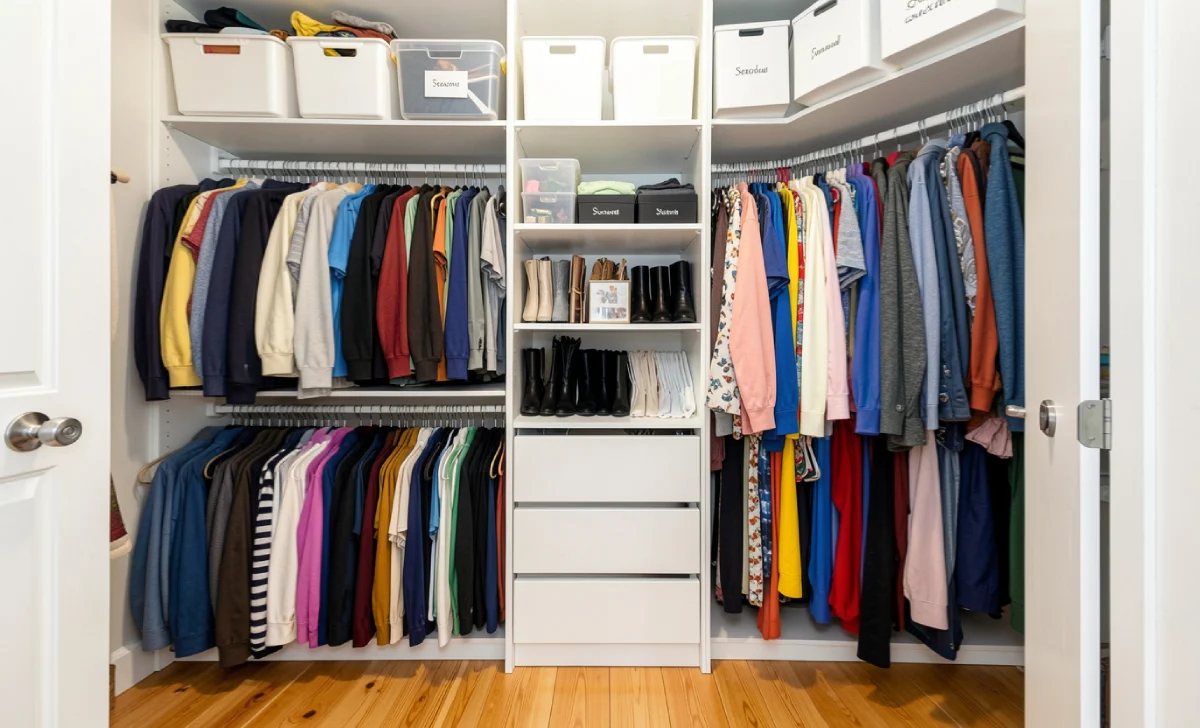
Take everything out of your closet and assess each item. If you have not worn something in the past year, donate or sell it. Then categorize what remains by type and use vacuum-sealed bags or labeled bins for out-of-season clothing.
Store seasonal items under the bed or in high closet spaces. This frees up the areas you reach into every day and keeps your closet from feeling cramped.
Entryway
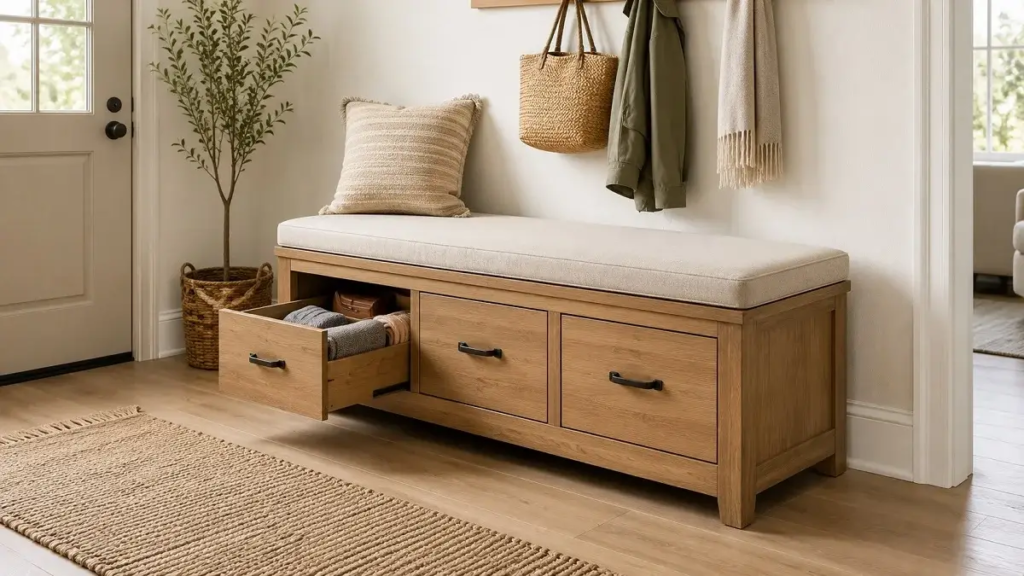
Create a dedicated drop zone for everyday items like keys, bags, and mail. Use hooks, small trays, and wall-mounted organizers to keep this area tidy. A small basket or tray near the door takes 10 seconds to use and saves you from searching the whole house for your keys.
Storage Solutions That Make a Real Difference
Not all storage products are worth the money. Focus on solutions that address the specific problems in your home, not products that just look good on social media.
Use vertical space. Most homes waste the space between the top of furniture and the ceiling. Add shelving above doorways, use tall bookcases, and install over-the-door organizers in closets and bathrooms. Over-the-door organizers work well for shoes in a closet or toiletries in a bathroom, and wall-mounted shelving and stackable containers make use of vertical space that is often ignored.
Invest in clear, labeled containers. When you can see what is inside a bin, you use it. When you cannot, you forget it is there. Clear bins with labels work in pantries, bathrooms, garages, and under-sink cabinets. Labeling everything removes guesswork and ensures everyone in the household can find things and put them back where they belong.
Add hidden storage where you can. Furniture with built-in storage, such as storage ottomans, beds with drawers, or storage benches, is both practical and space-efficient. These pieces work especially well in small apartments or homes with limited closet space.
The One-In, One-Out Rule for Long-Term Order
Getting organized is the easy part. Staying organized is where most people struggle.
The one-in, one-out rule is a simple strategy to prevent clutter from re-accumulating. When you bring a new item into your home, one similar item goes out. A new mug replaces an old one. New shoes mean an old pair gets donated.
To make this work without much effort:
- Keep a donation box in a convenient spot, like a closet or near the door
- Act immediately when you bring something new home
- Apply the rule to permanent items, not consumables like groceries or toiletries
- Do a quick monthly check to catch anything slipping through
Professional organizers increasingly point to intention as the key. Instead of decluttering for its own sake, people who maintain tidy homes curate what they keep to items they truly use. This makes ongoing maintenance easier and keeps the space feeling calm.
Building Habits That Make Organization Stick
No system works if the habits around it break down. The goal is to make tidiness the path of least resistance, not a daily battle.
Start small and focus on one habit at a time, such as making your bed daily or clearing your desk every evening. Use reminders until the habit feels automatic, and do monthly check-ins to see what is working and what needs adjusting.
A few habits that take less than five minutes and make a big difference:
- Clear the kitchen counter before bed every night
- Put away laundry the same day it is clean
- Spend five minutes tidying one room each morning
- Deal with mail the day it arrives: act, file, or trash
Block 20 to 30 minutes a couple of times a week for ongoing tasks like managing mail, seasonal decor, and general tidying. Keeping these tasks on a schedule prevents small areas of clutter from growing into bigger problems.
When to Bring In a Professional Organizer
Sometimes, a fresh set of eyes is the fastest way to move forward. A professional organizer can assess your space, suggest storage solutions you might not have considered, and help you work through areas where you feel stuck.
This is especially worth considering for major spaces like a garage, basement, or home office that have built up clutter over several years. A single session with a professional can create systems you maintain for years.
If hiring a professional is not in your budget, look for community groups, YouTube tutorials, or books on home organization. Many professional organizers share their methods publicly, and the core principles apply to most homes and budgets.
FAQs
What is the best way to start organizing a messy home?
Start with decluttering, not buying storage products. Pick one room or one category, use the four-box method (keep, donate, sell, trash), and work through it in short sessions. Once you know what you are keeping, you can decide what storage you actually need.
How do I keep my home organized with kids?
Give children their own labeled storage at a height they can reach. Make putting things away as simple as taking them out. Bins without lids, baskets, and color-coded containers make it easier for kids to participate. A short tidy-up routine before bed helps reset shared spaces.
What are the best home organization products for small spaces?
Over-the-door organizers, under-bed storage bins, stackable clear containers, and multi-use furniture with built-in storage are the most useful in small homes. Prioritize vertical storage and containers with lids to maximize every inch.
How often should I declutter my home?
A full declutter once or twice a year works for most households. Pair that with the one-in, one-out rule and a brief monthly check to catch smaller buildups before they become larger ones.
Is it worth hiring a professional organizer?
For complex spaces or if you have tried and failed to get organized on your own, yes. A professional organizer can create a customized plan in a fraction of the time it might take you alone. Many charge by the hour and can accomplish a lot in just one or two sessions.